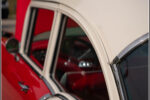
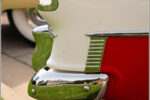
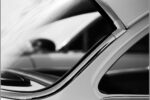
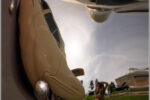
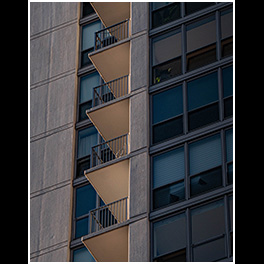
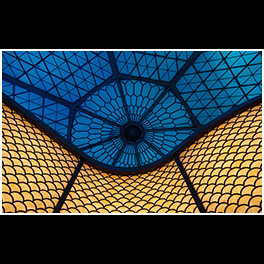
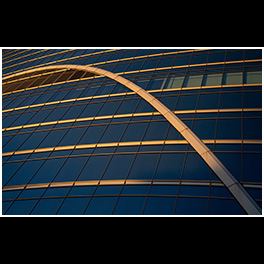
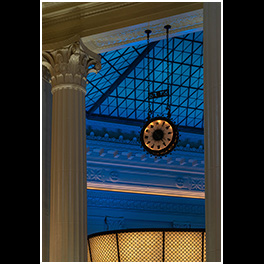
“Window Into the Past”
a new sight
photos from joshua l. smith


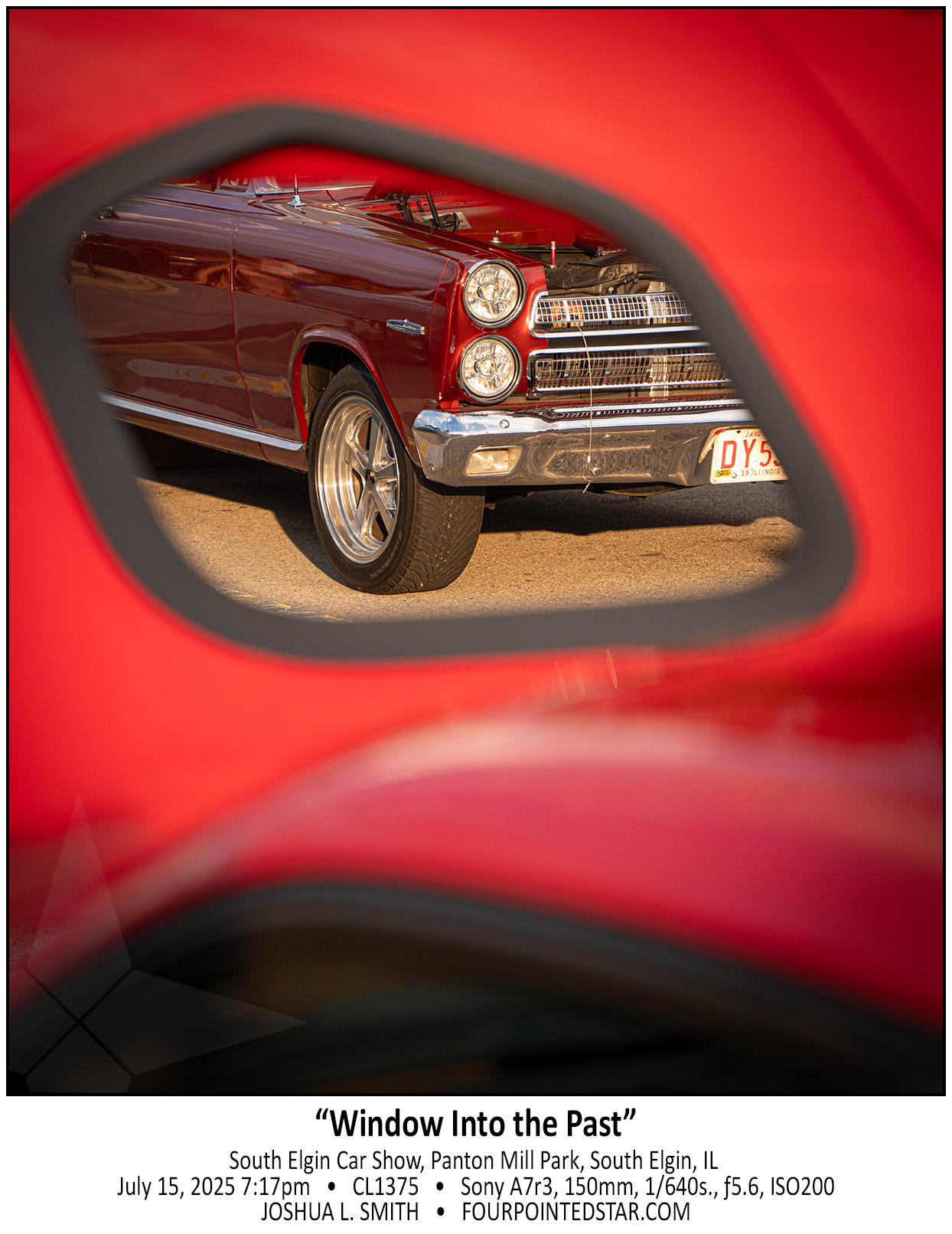
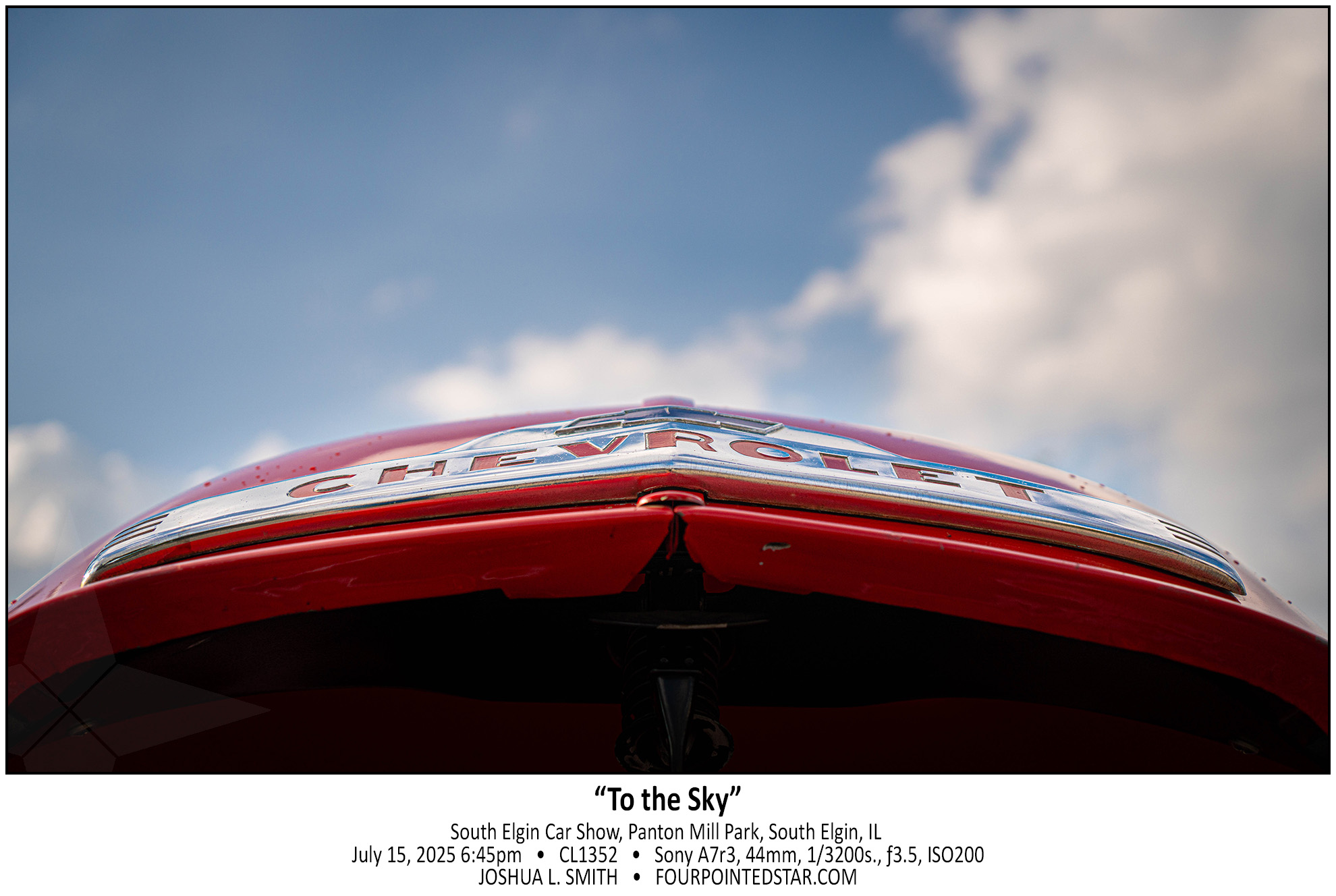
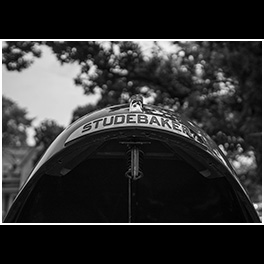
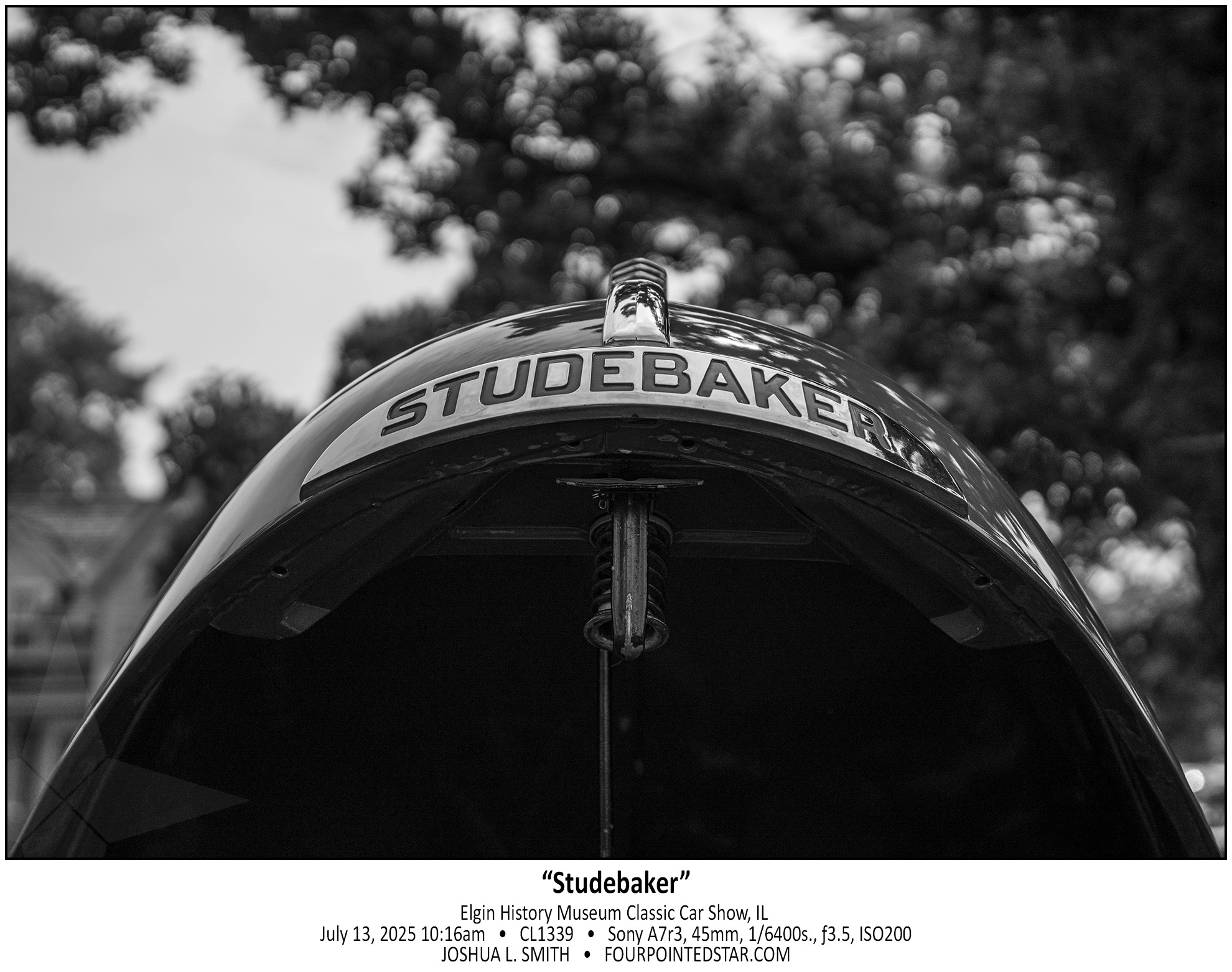
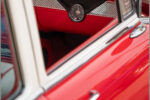
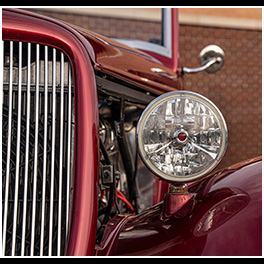
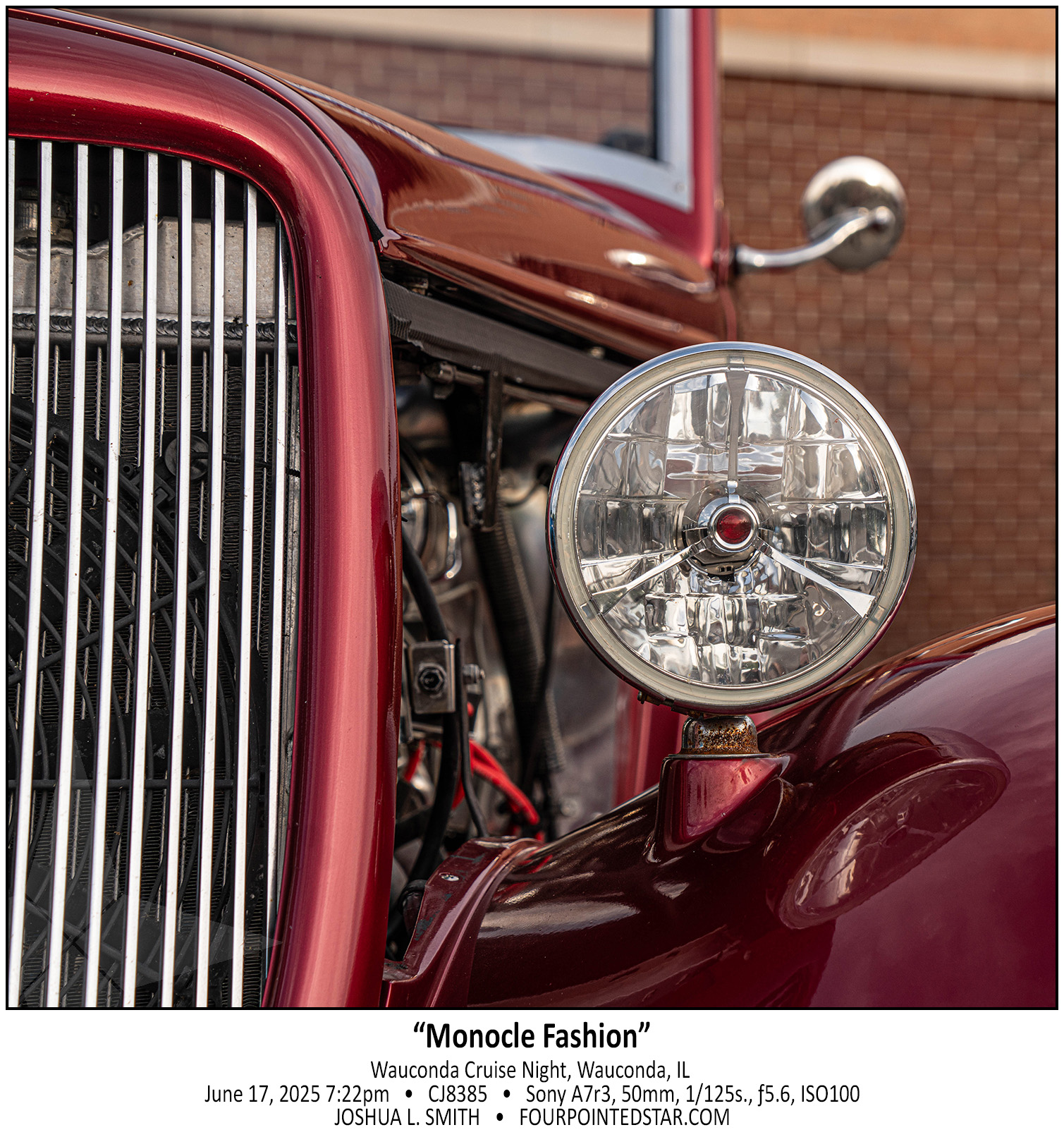
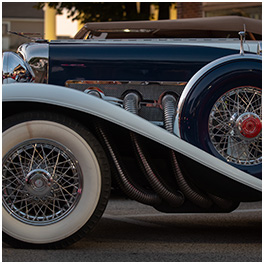
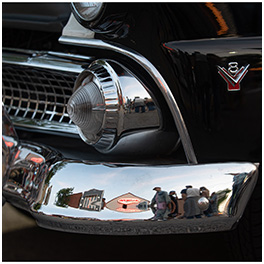
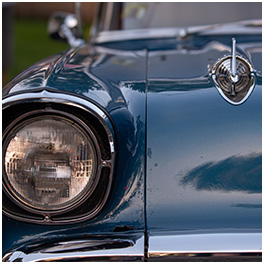
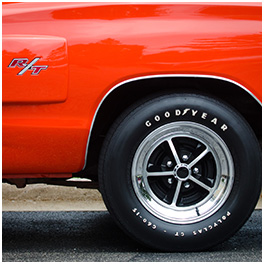
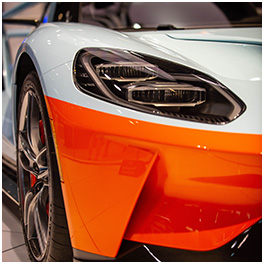
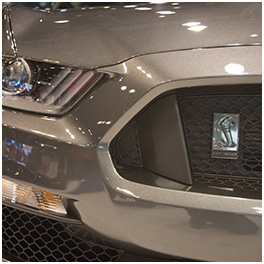
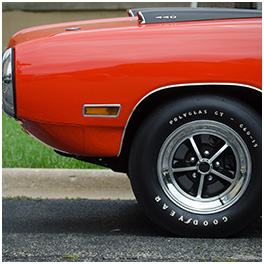
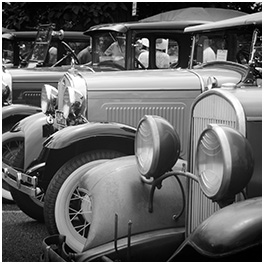
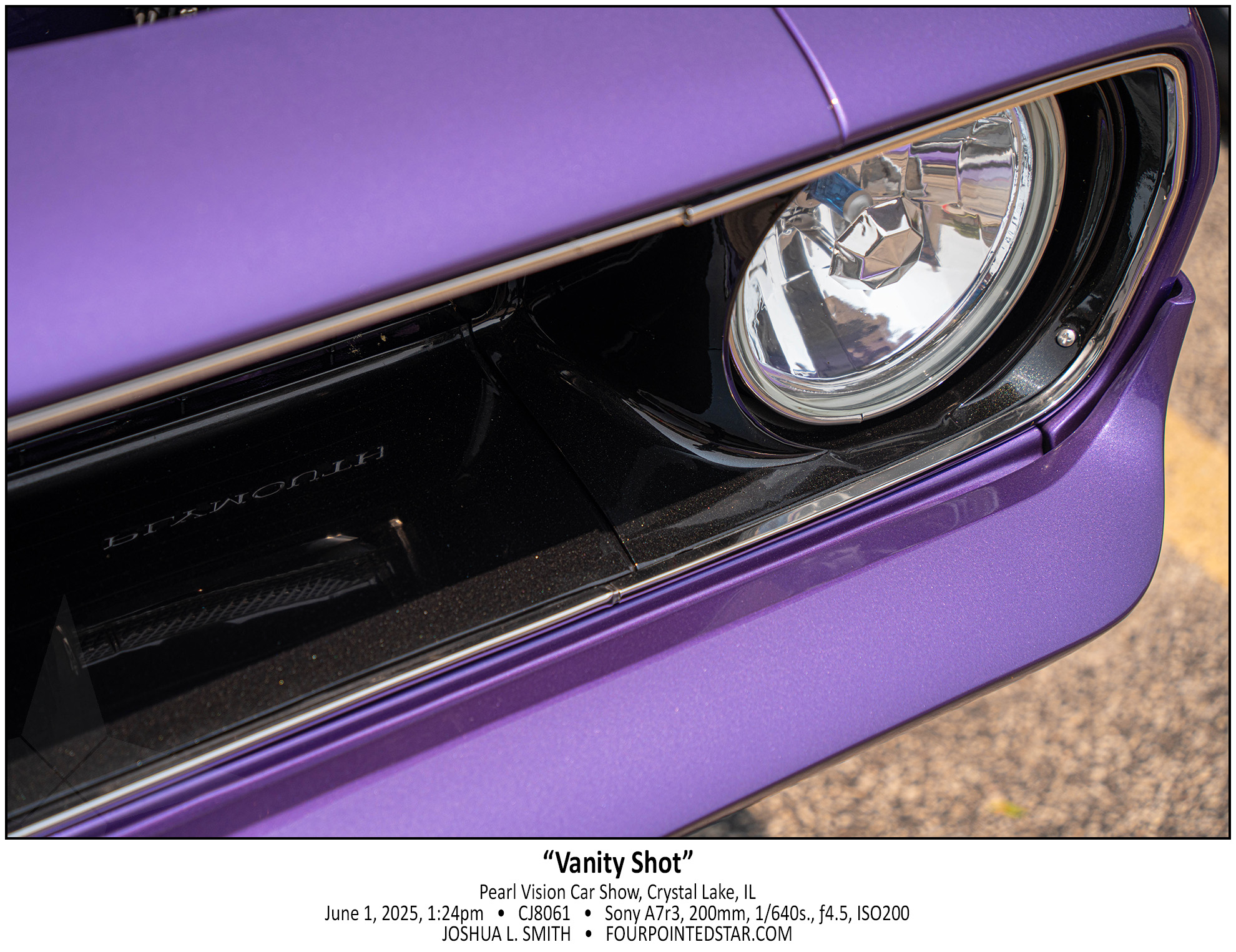
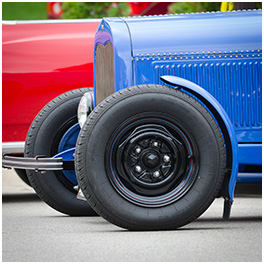
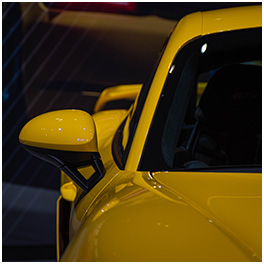
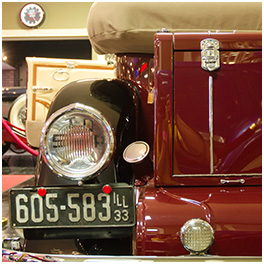
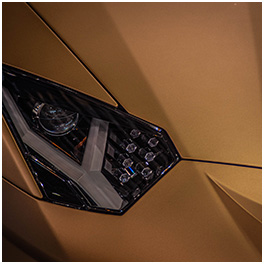
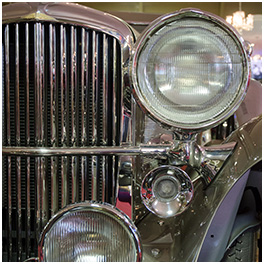
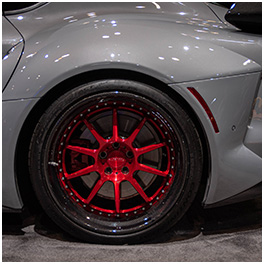
It gets harder and harder to capture different or unique angles of cars at car shows. I have hundreds of photos of antique car details and thousands of photos of cars; so at each show that I attend now, I am looking for something different, a new sight – like photographing a classic through a hood.

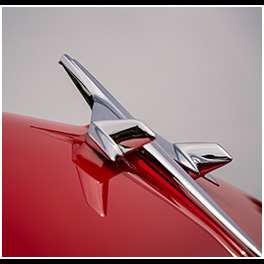
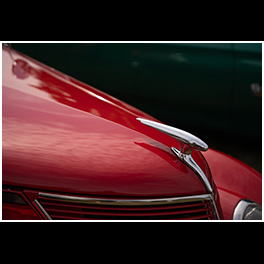
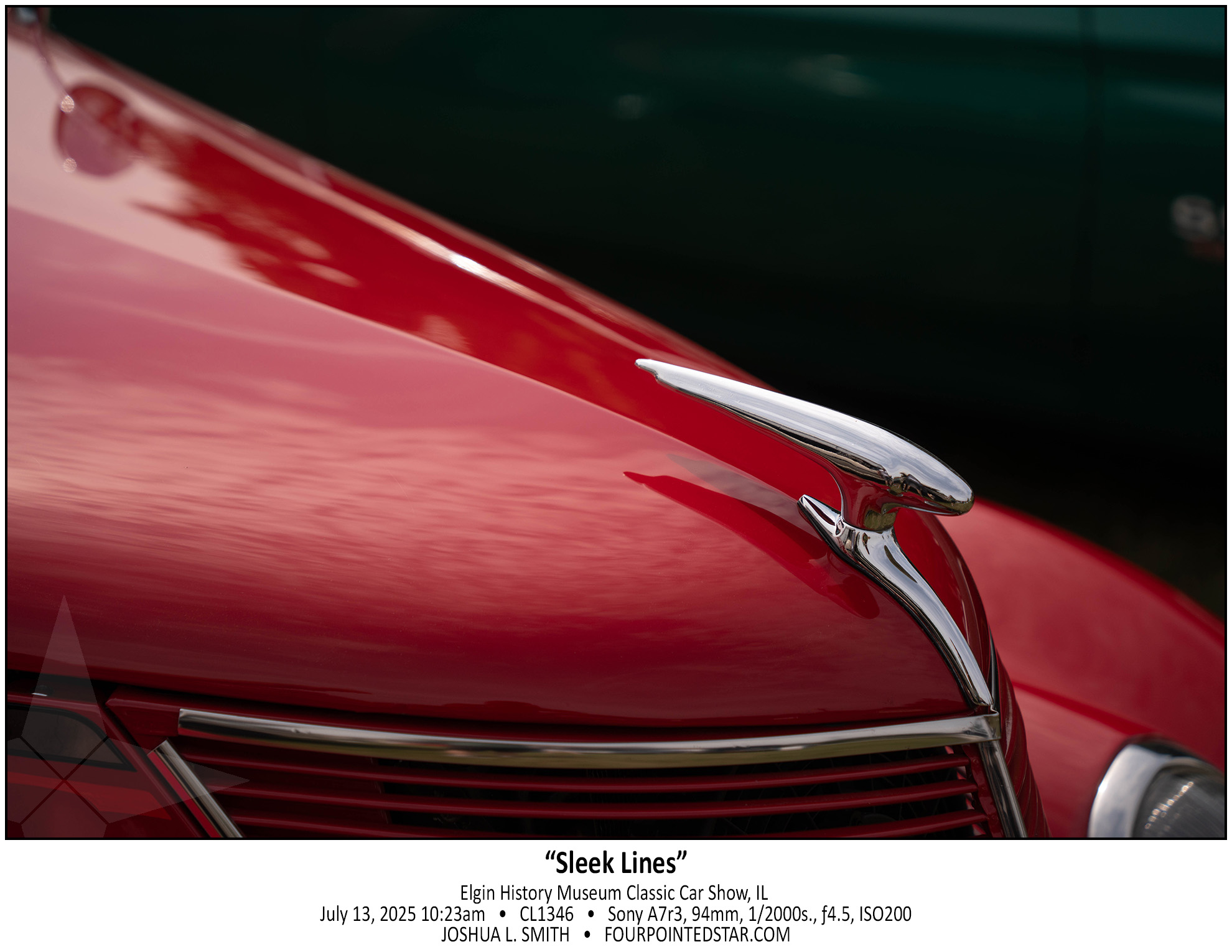
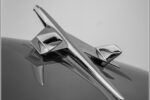
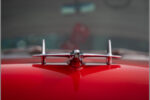
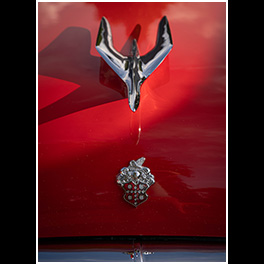
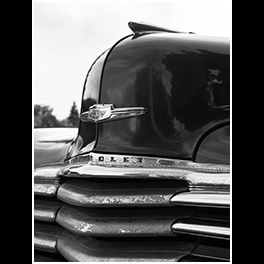
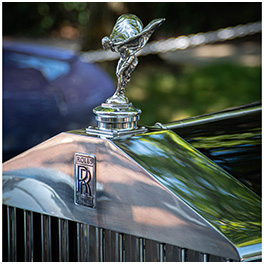
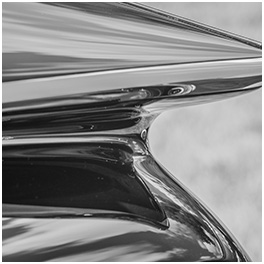
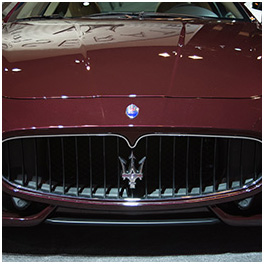
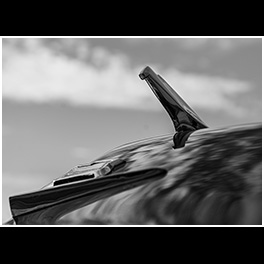
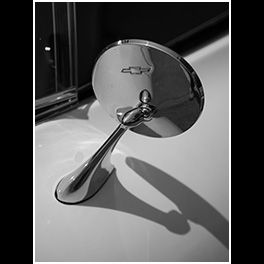
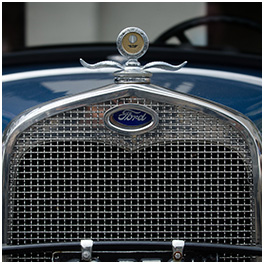
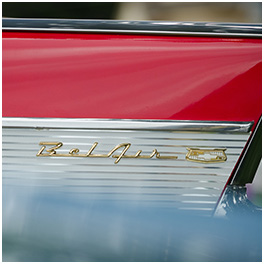
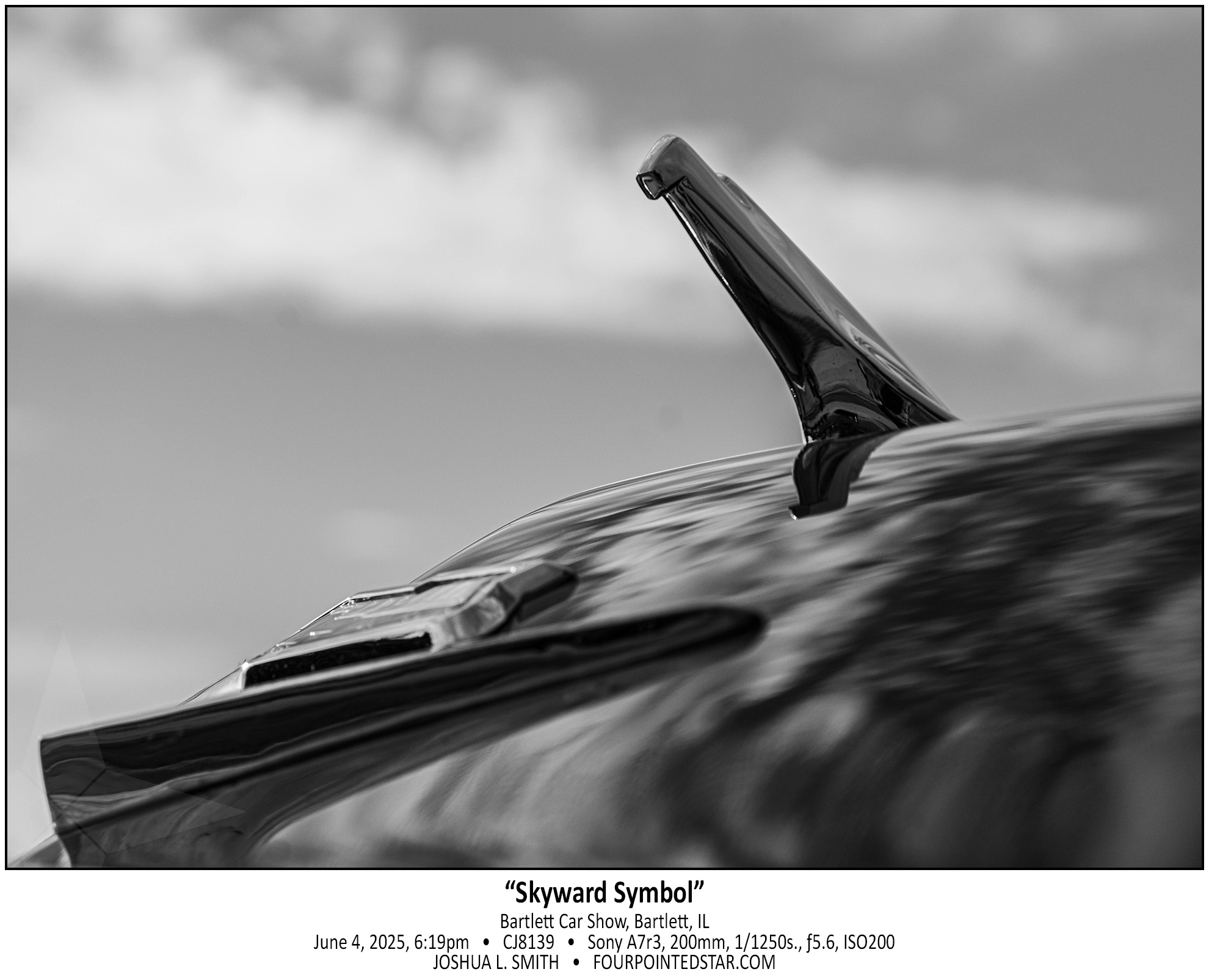
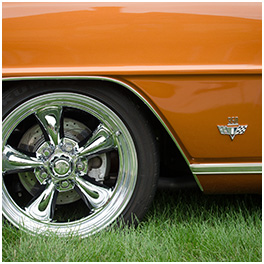
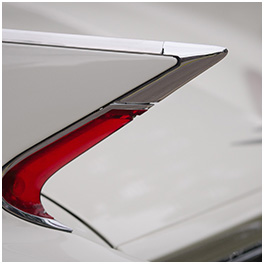
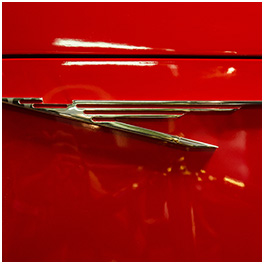
I first saw this car at the Elgin History Museum Classic Car Show; it wasn’t in a great spot to capture a photo of the entire car, but I captured a very minimalist photo of the hood ornament (“Sleek Lines”, July 26, 2025). The owner was sitting directly behind the car at the South Elgin show and explained that the “hood ornament” is also the hood handle. This was such a cool car to photograph. 🙂

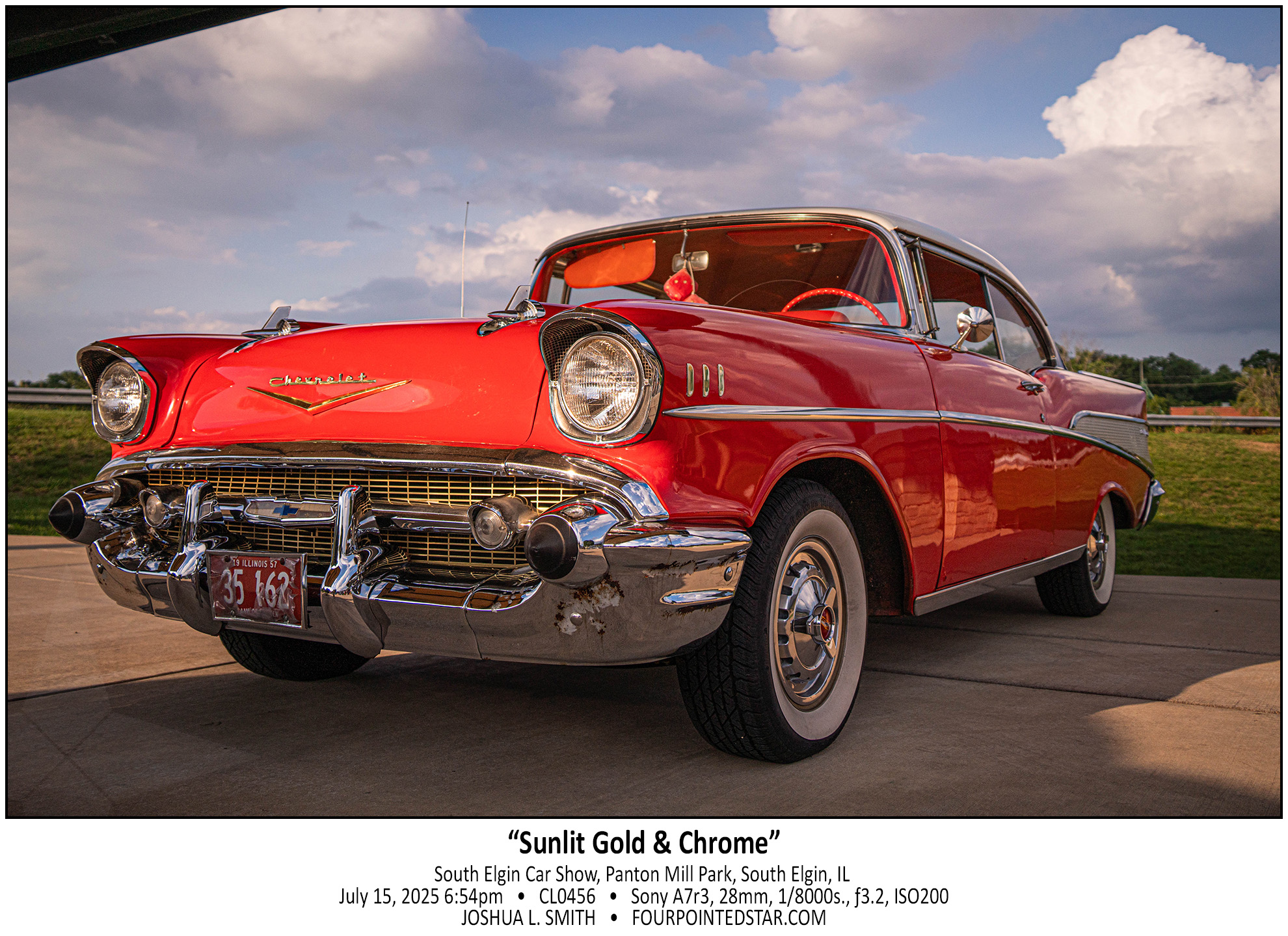
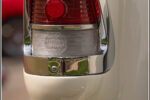
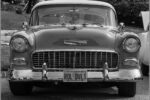
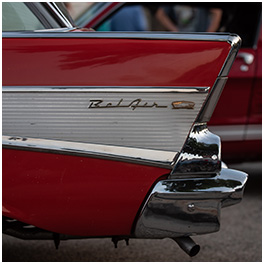
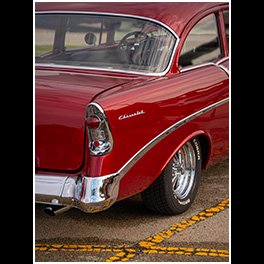
This is the “classic car” – the 55 to 57 Chevy Belair, a true work of art. Its very interesting to see the style and design change each year; a 1955 Belair shows what the new style will be, but the details are more reserved, and by the time the “57 Chevy” came out, “reserved” was not the word you would use for the car at all.

I tried this photo a week before with a tree in the background, and it just didn’t work. I posted the photo simple because it was unique, but now that I have this image? I like that other photo even less! LOL. I love the balance of color and detail and the overall saturation as well!

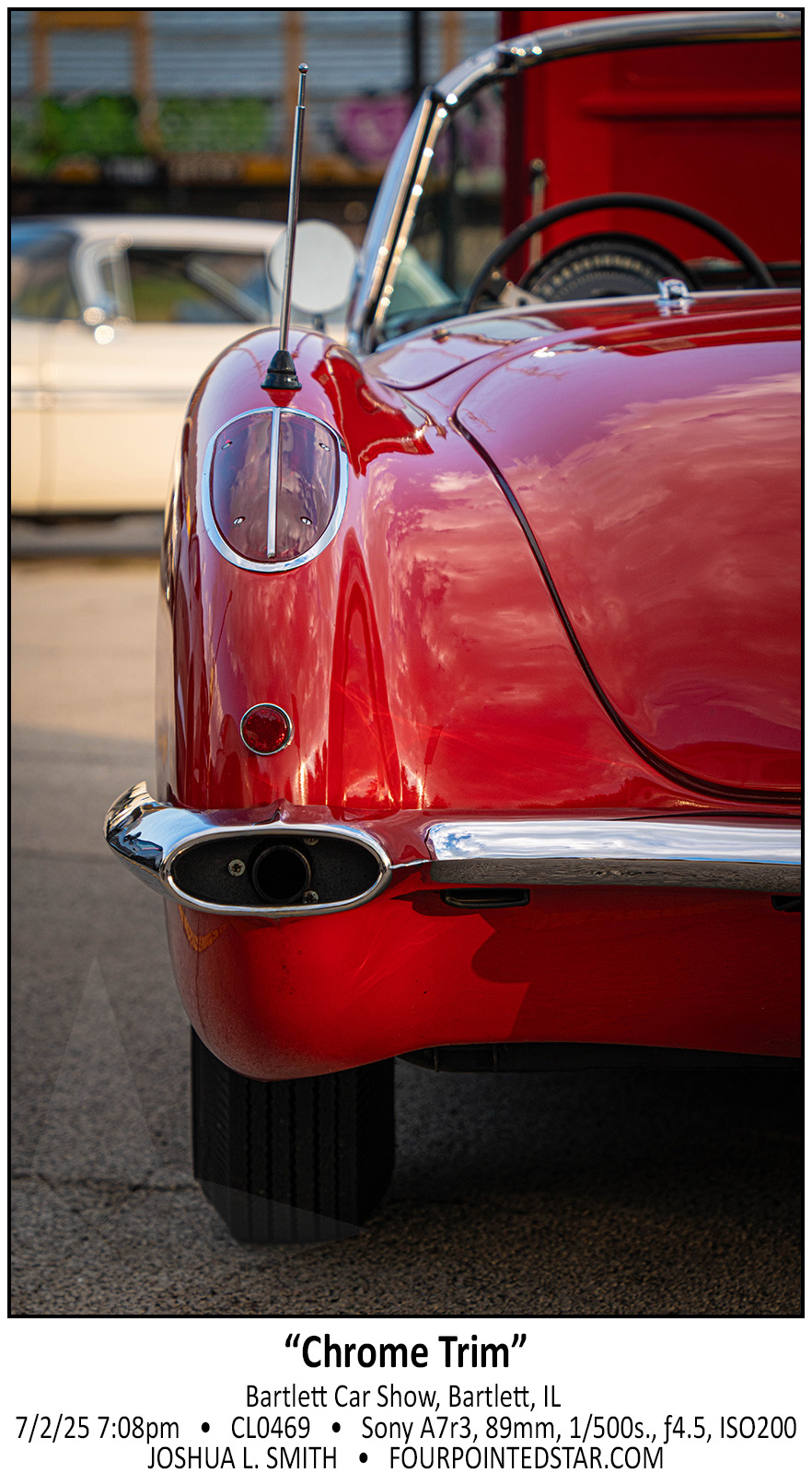
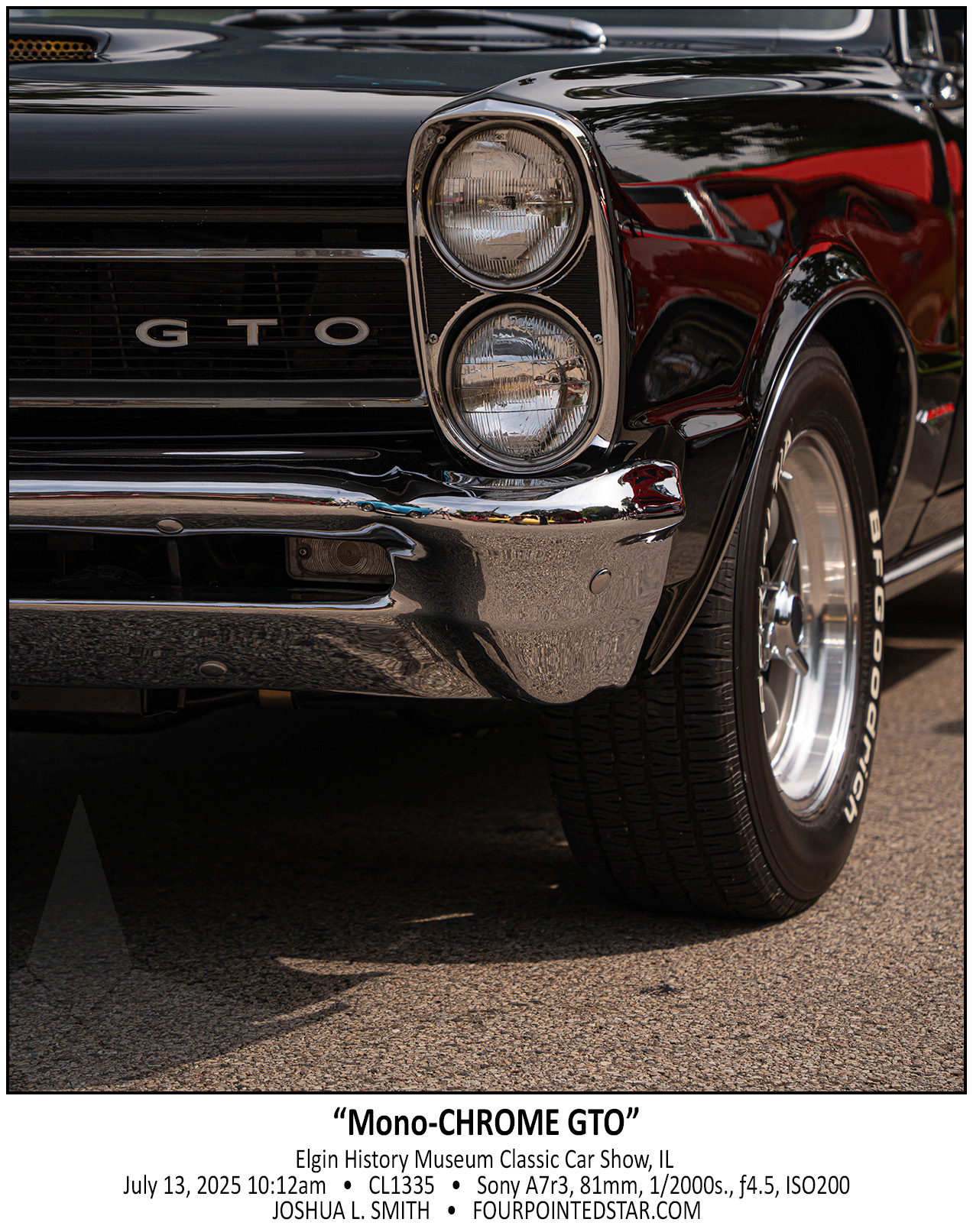
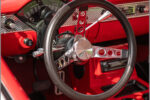
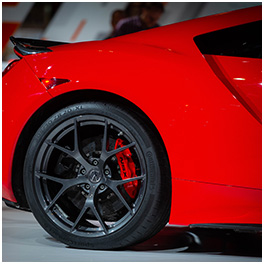
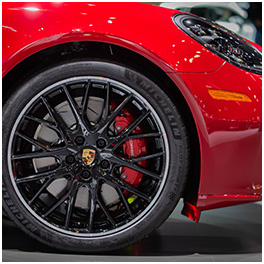
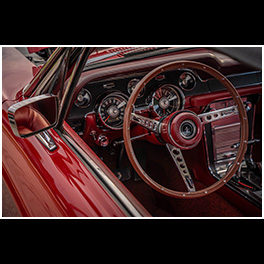
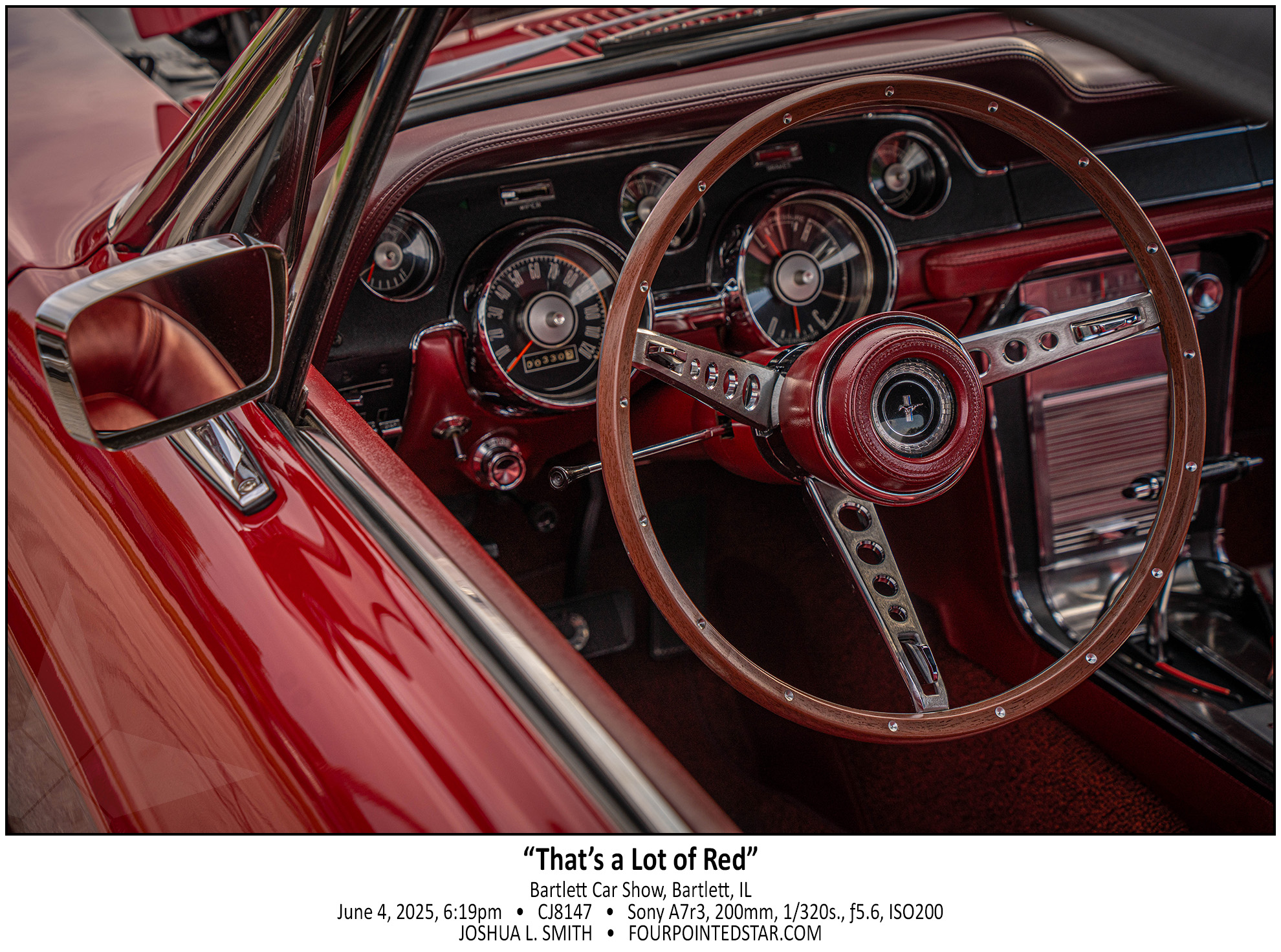
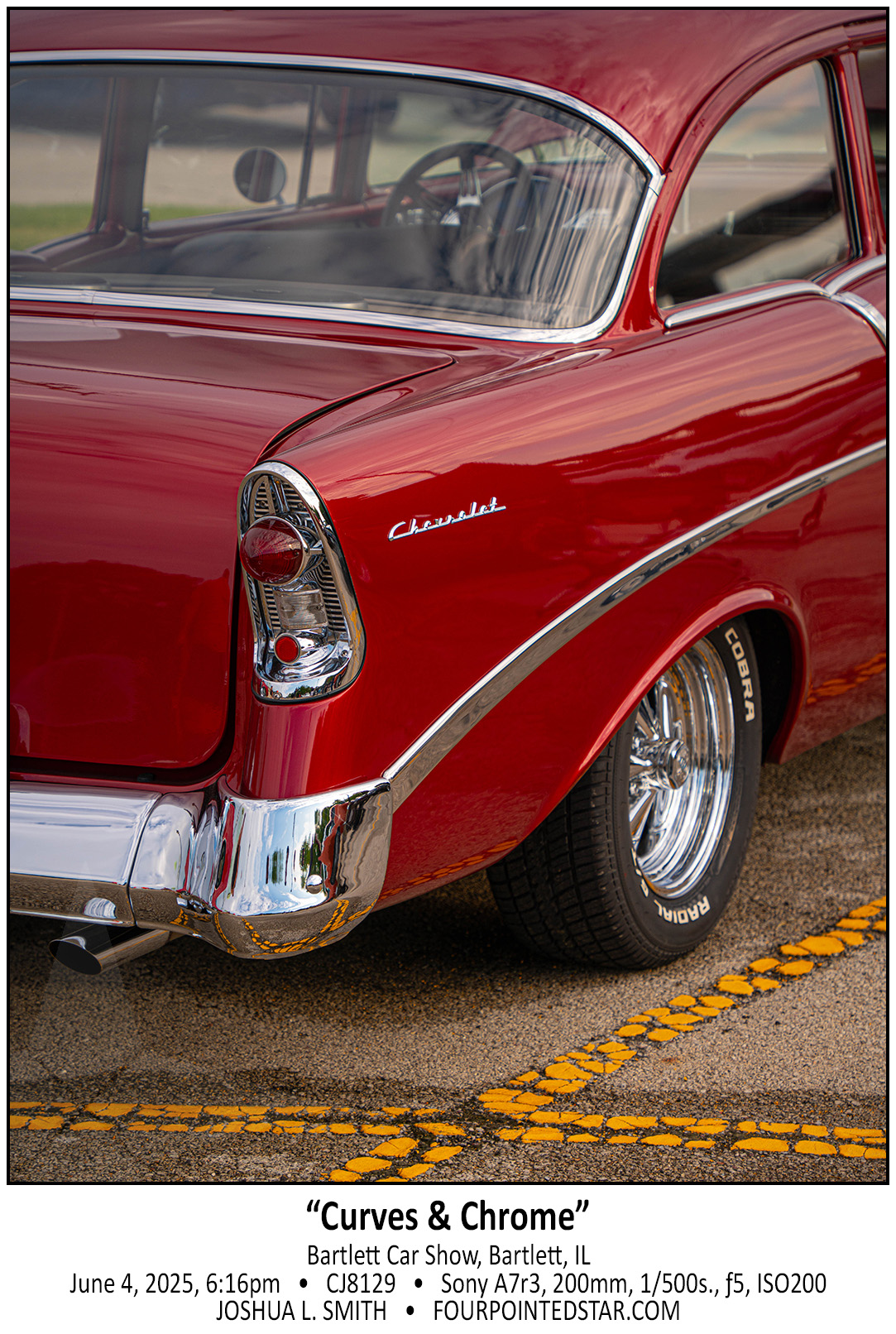
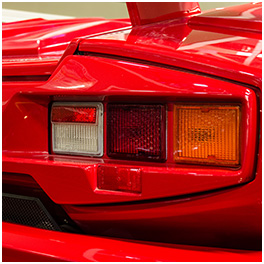
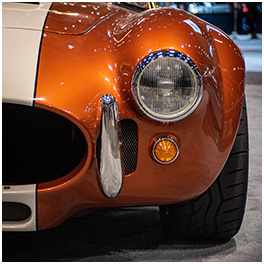
Maybe it’s that my eye is drawn to the red cars, or perhaps it’s that red is a favorite color for collector cars, but I have so many photos of red cars at car shows! This classic Corvette at the monthly downtown Bartlett Car Show was is near perfect condition and absolutely gorgeous.


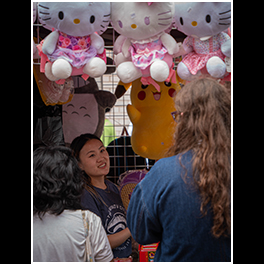
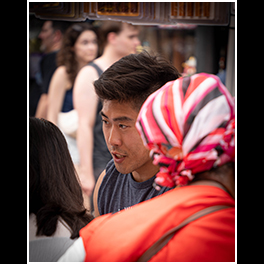
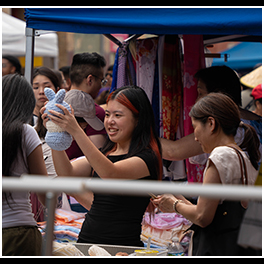
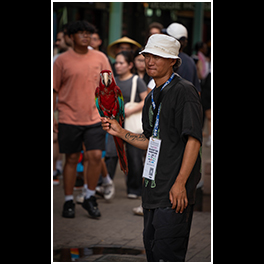
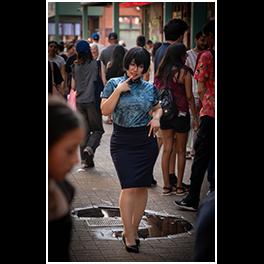
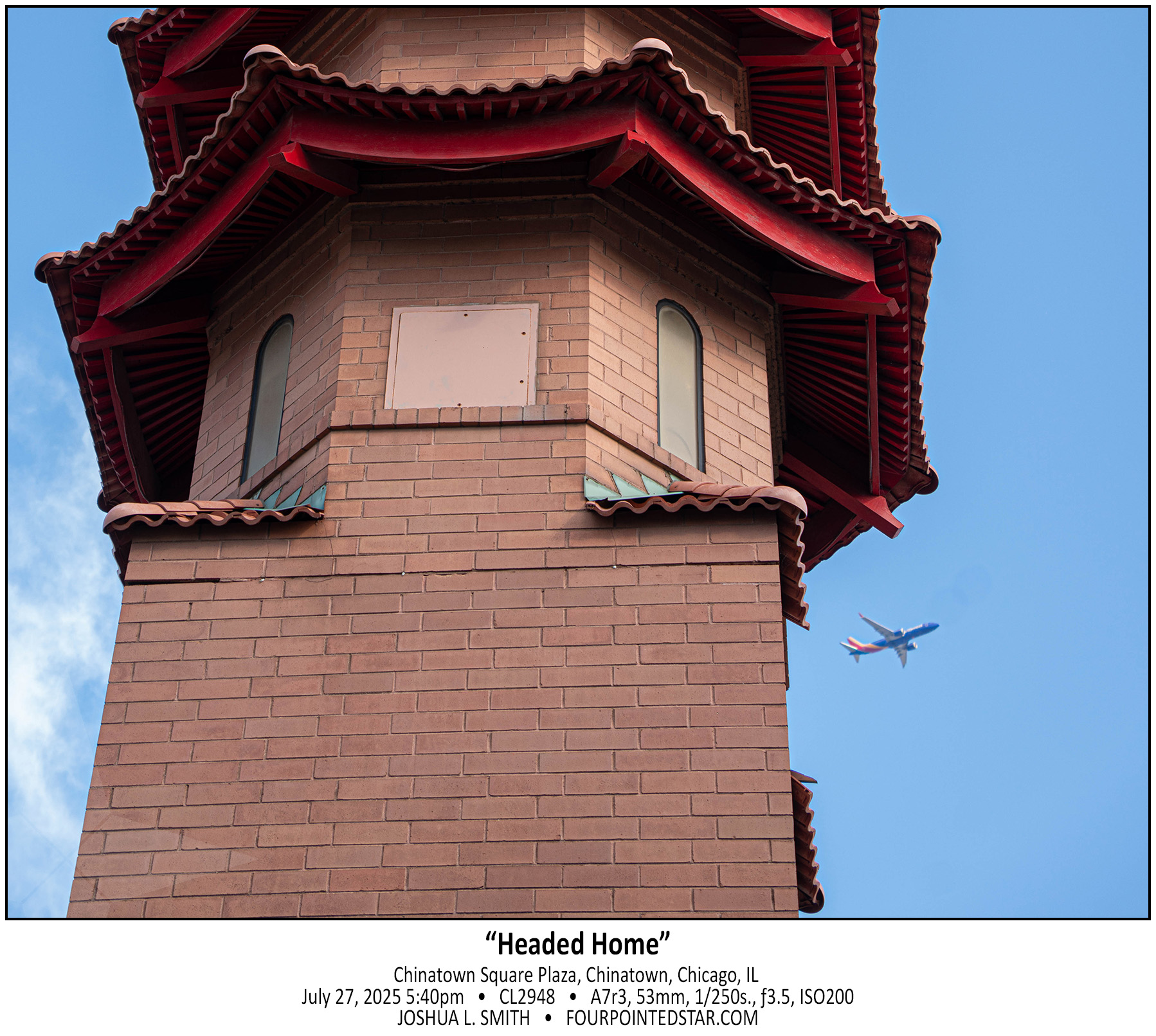
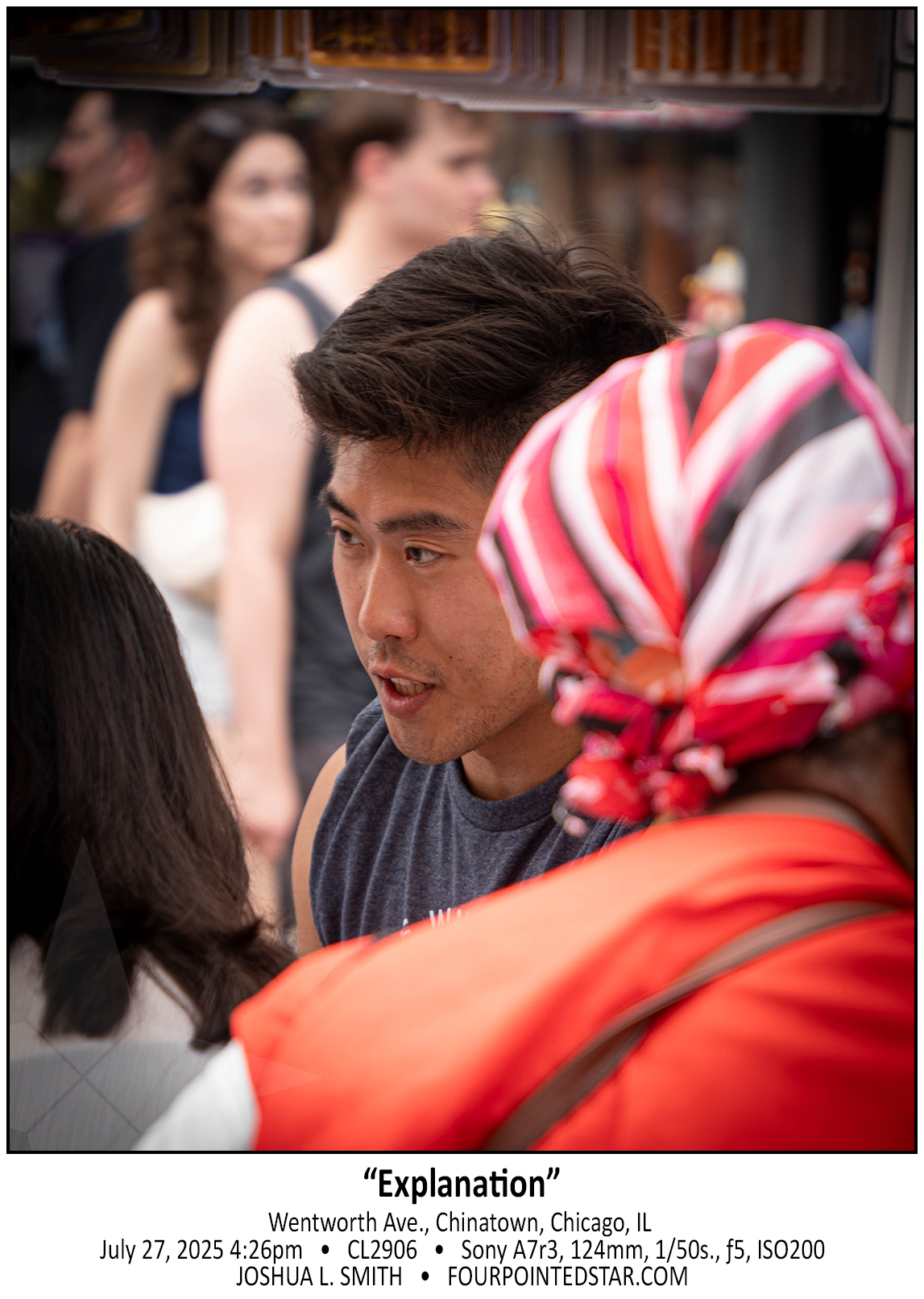
Leaving at the end of a trip is always sad and happy; I’m typically glad to head back to my home and my routine, but sad to leave the destination and certain that I would love to spend a day or two more there! The photo walk in Chinatown was hot and humid, but I was sad the day was over and that we were headed home.


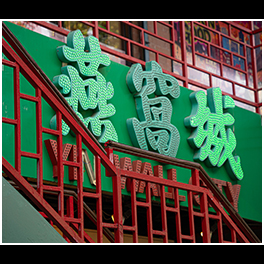
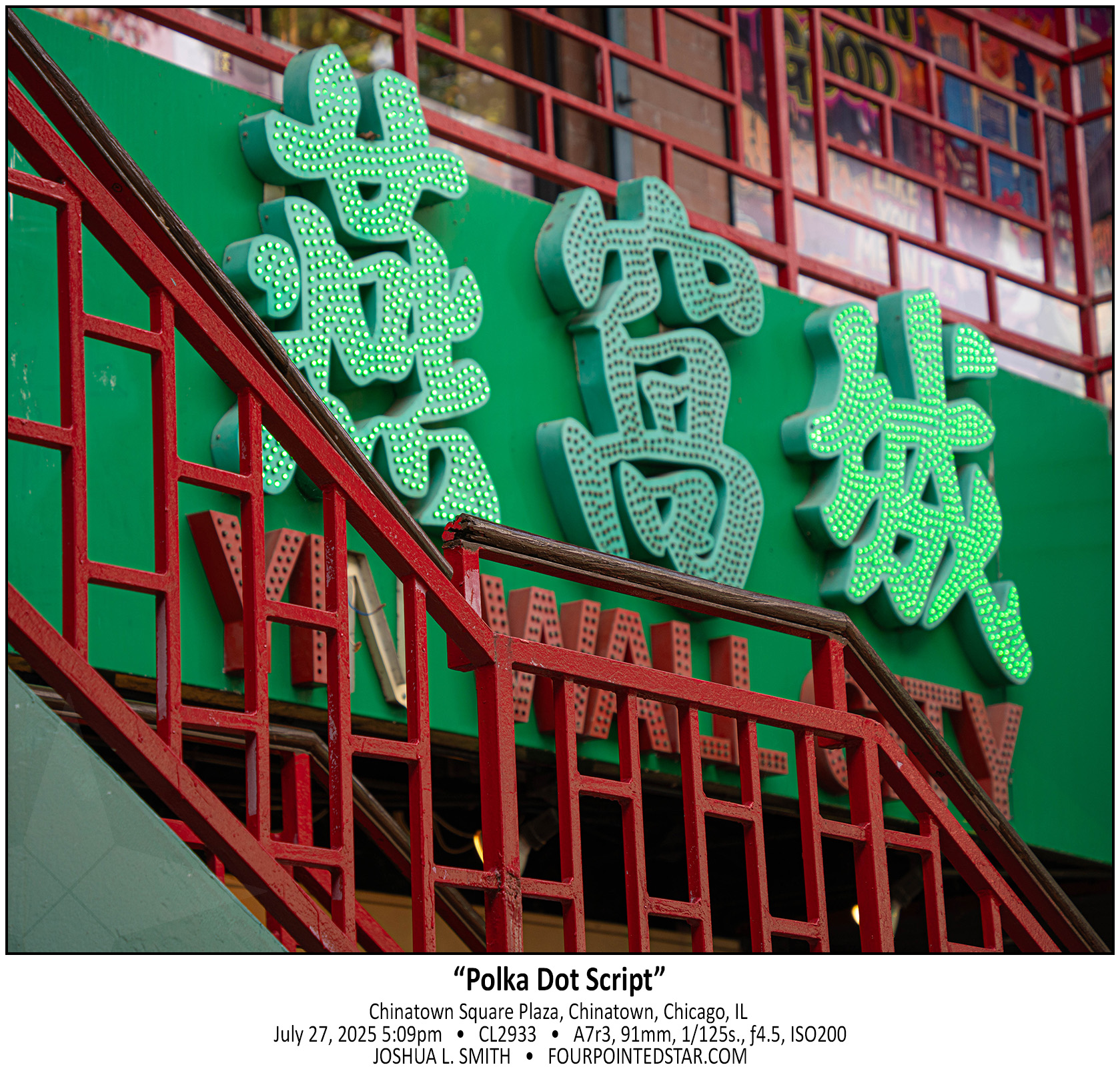
I love the beauty and fluidity of Chinese characters; in English, signs are typically written in block letters, but the majority of the text through Chinatown is written in a script that I would describe as “cursive”.

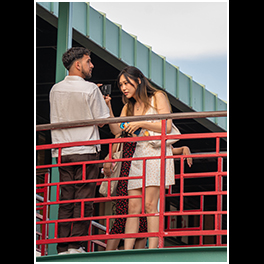
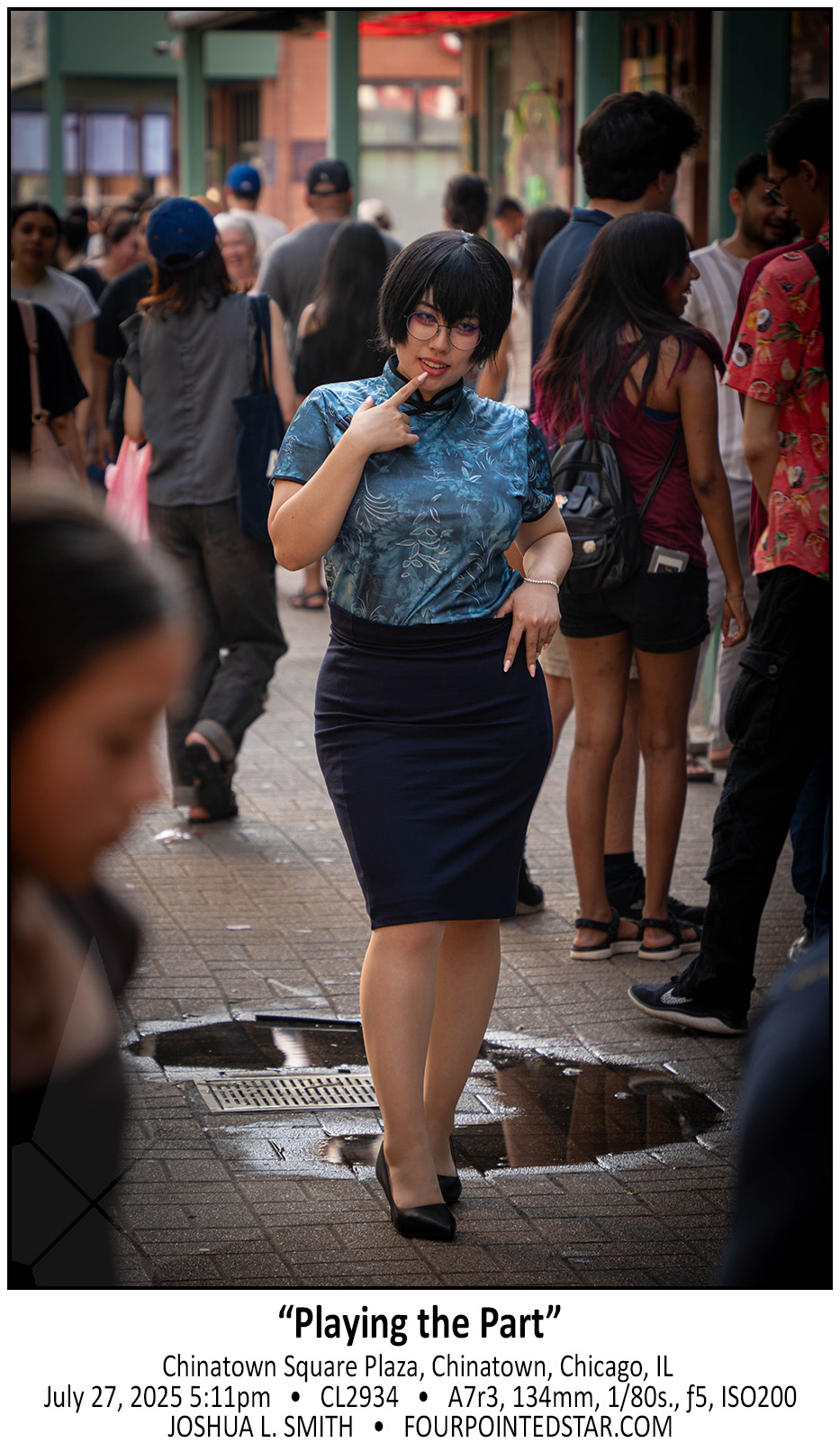
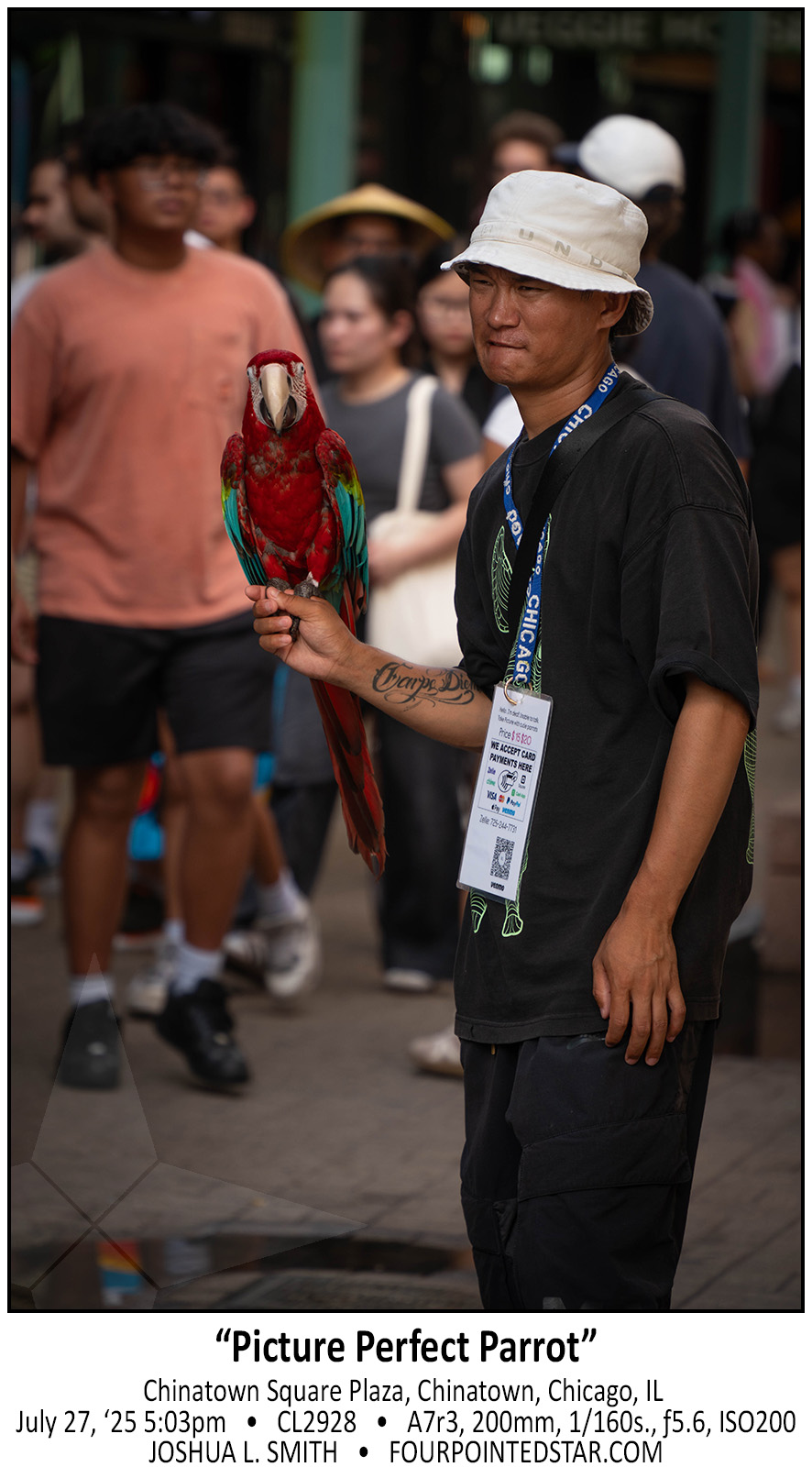
The photographer and cosplayer knew the photo that they wanted; they captured 3 photos and disappeared back into the crowd. But it reminded me of regular life, I do not know what character she was portraying, or what the backstory was, but for a brief moment I noticed her existence. This happens with everyone, we rarely know their story or the character they are portraying, and they move on through our life so quickly.

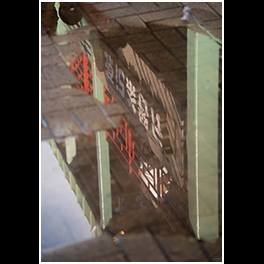
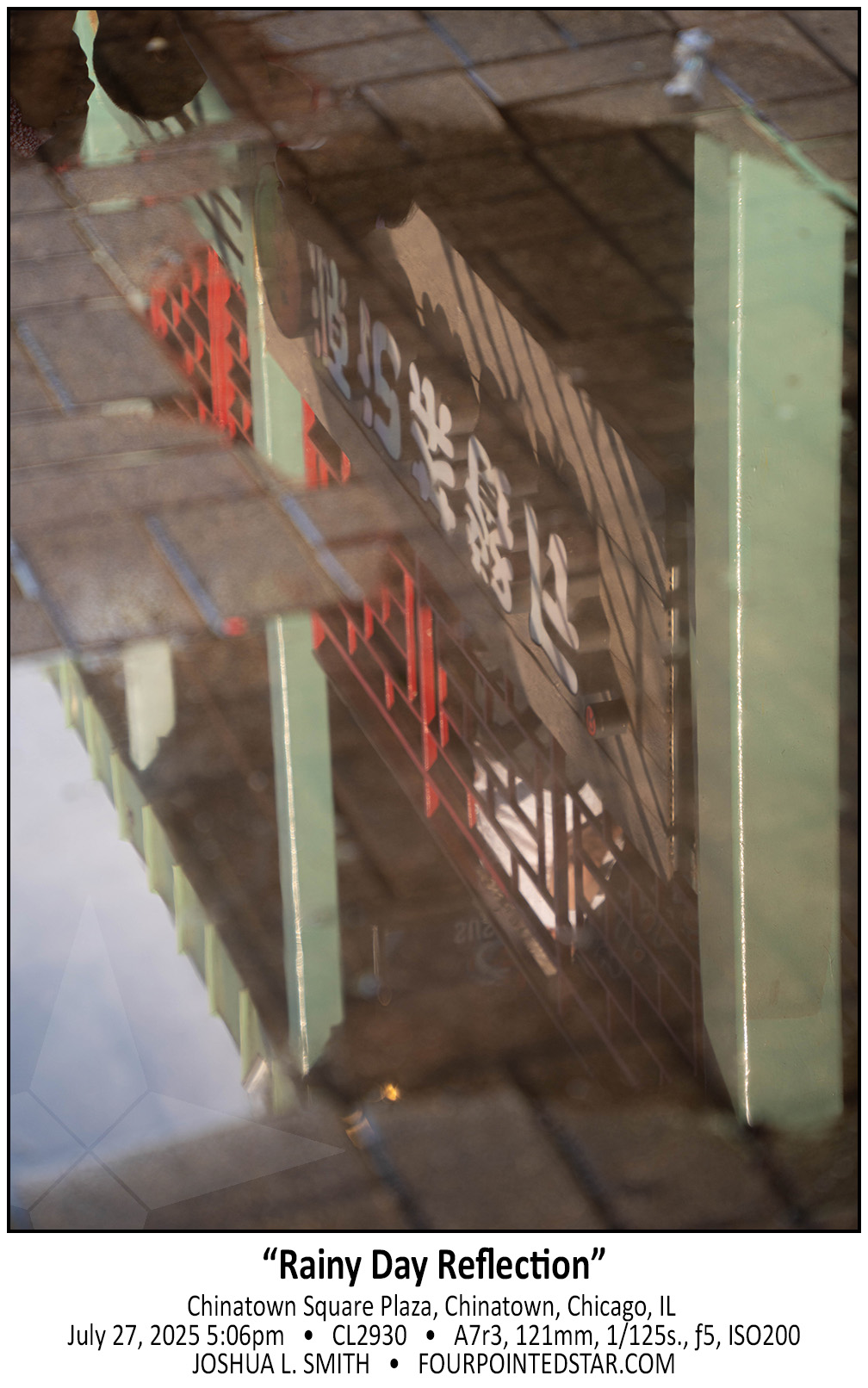
I’m not even sure where the puddles came from that day – it was over 90°F / 32.2°C out – but the puddles made for fun reflections. A couple of other photographers on the walk really used them to their advantage, I just used them as an abstract framing device.


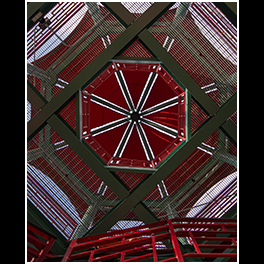
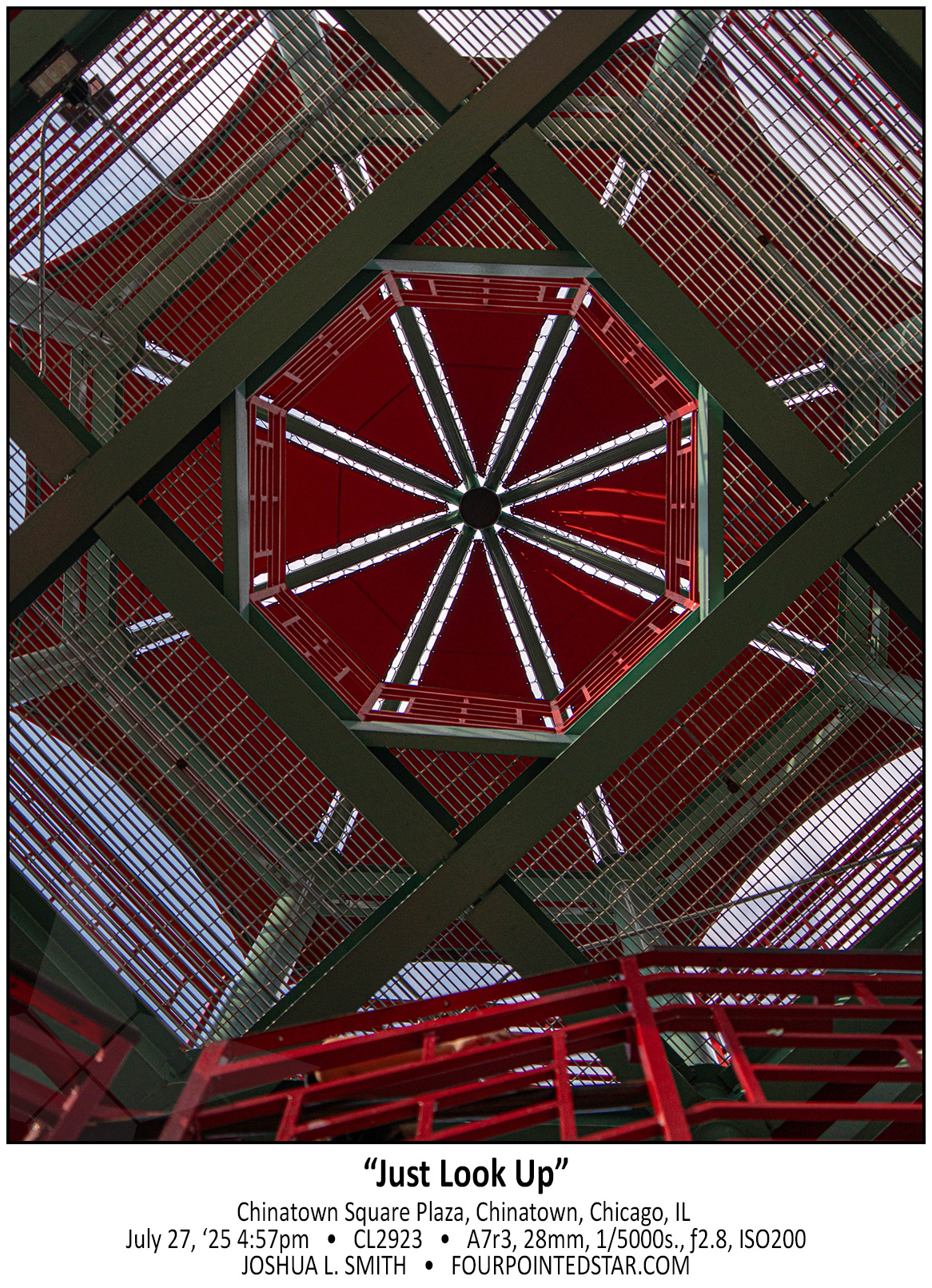
Pardon me if I’ve photographed this structure before, but I’m obligated to capture an image each time that I visit Chinatown! I do need to remember to bring a wider lens next time that I visit though; I would love to capture the staircase as the border of the photo.


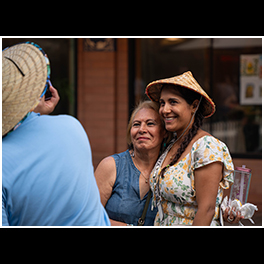
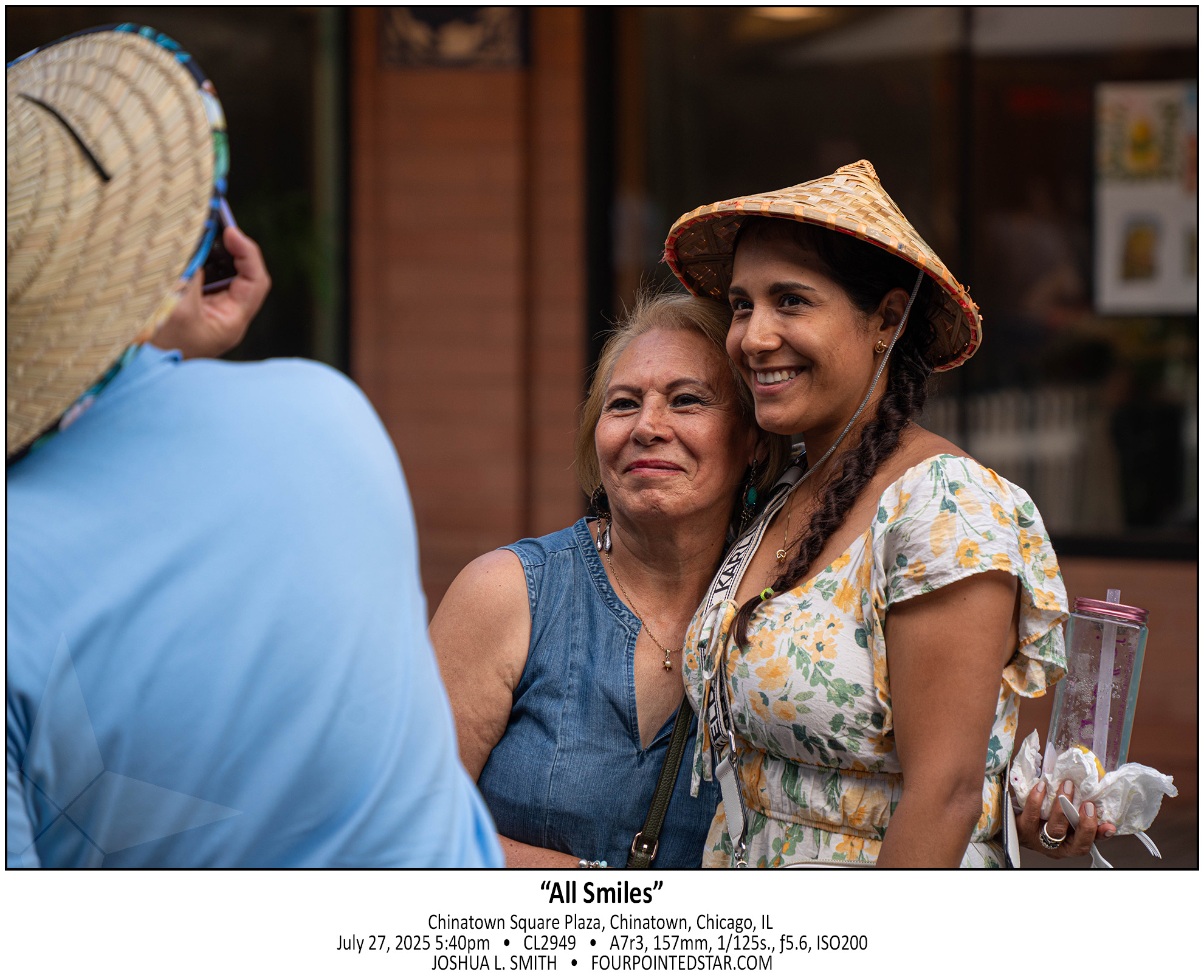
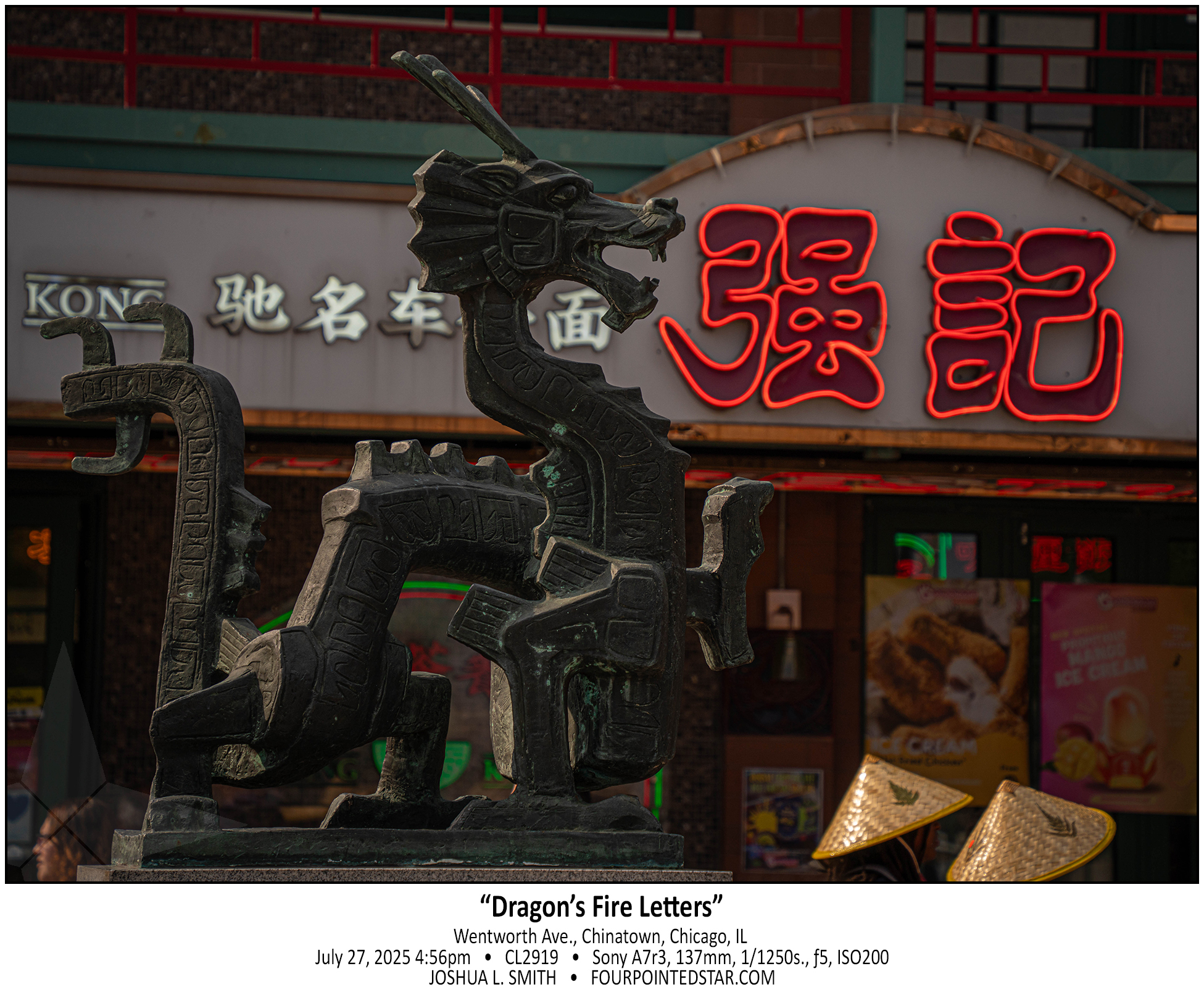
As I composed this image, I thought it would be funny to have the red characters coming “out” of the dragon’s mouth like they were flames; I had a little inside chuckle as I composed the image at my own ingenuity. Then some pedestrians were reading the inscription on the statue, so I waited – just as they walked away the people with the traditional hats walked by. The moral of the story: sometimes you should let people read about the statue so that you can get a better image!


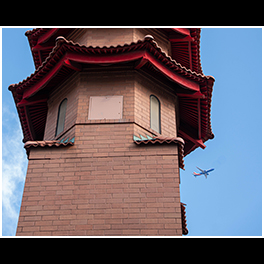
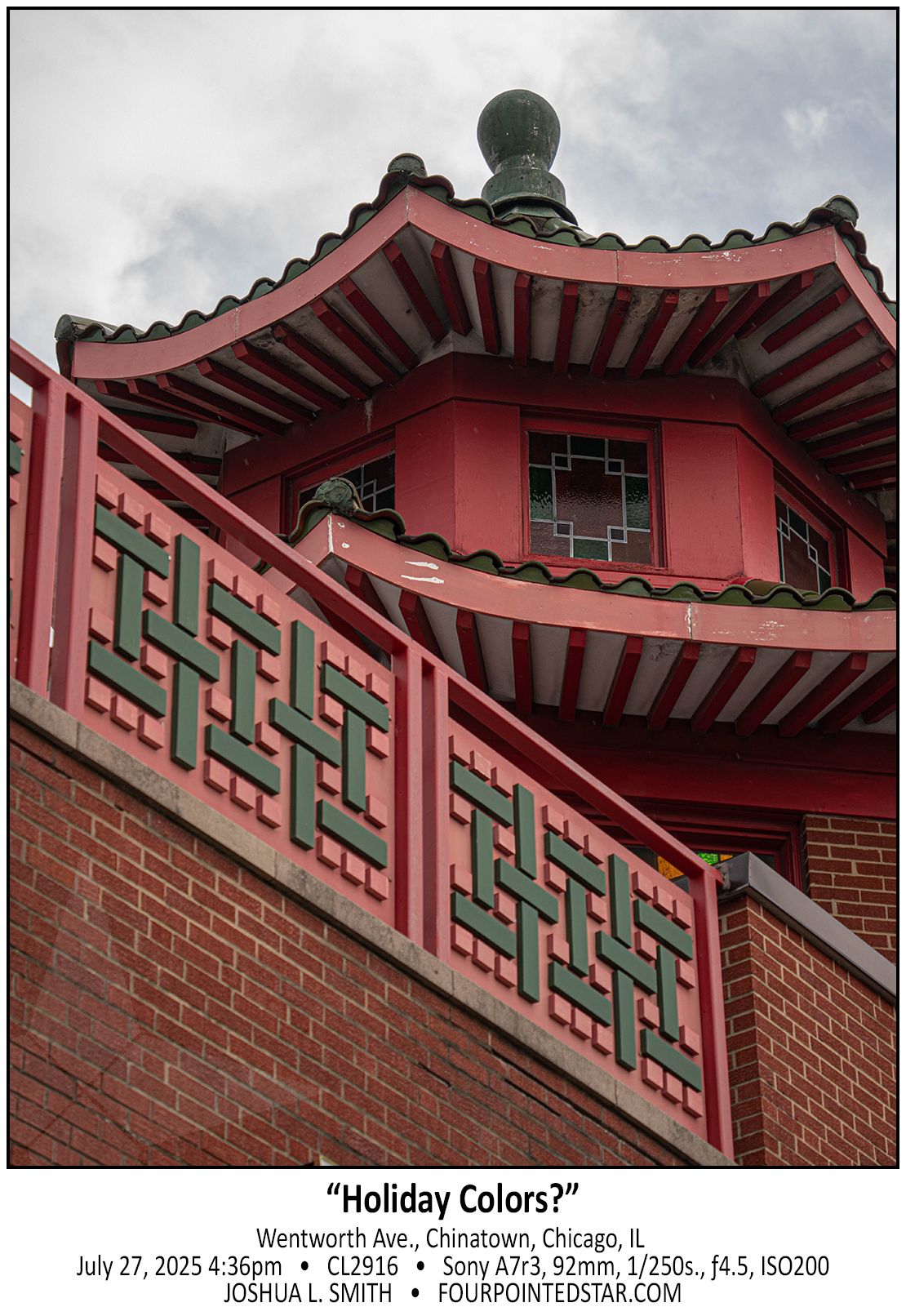
The traditional architecture shown throughout Chinatown in Chicago is incredibly repetitious. Repeating patterns and colors flow throughout each structure, and I enjoyed attempting to compose images that eliminated the power lines and non-traditional structures, yet still displayed the beauty and form.


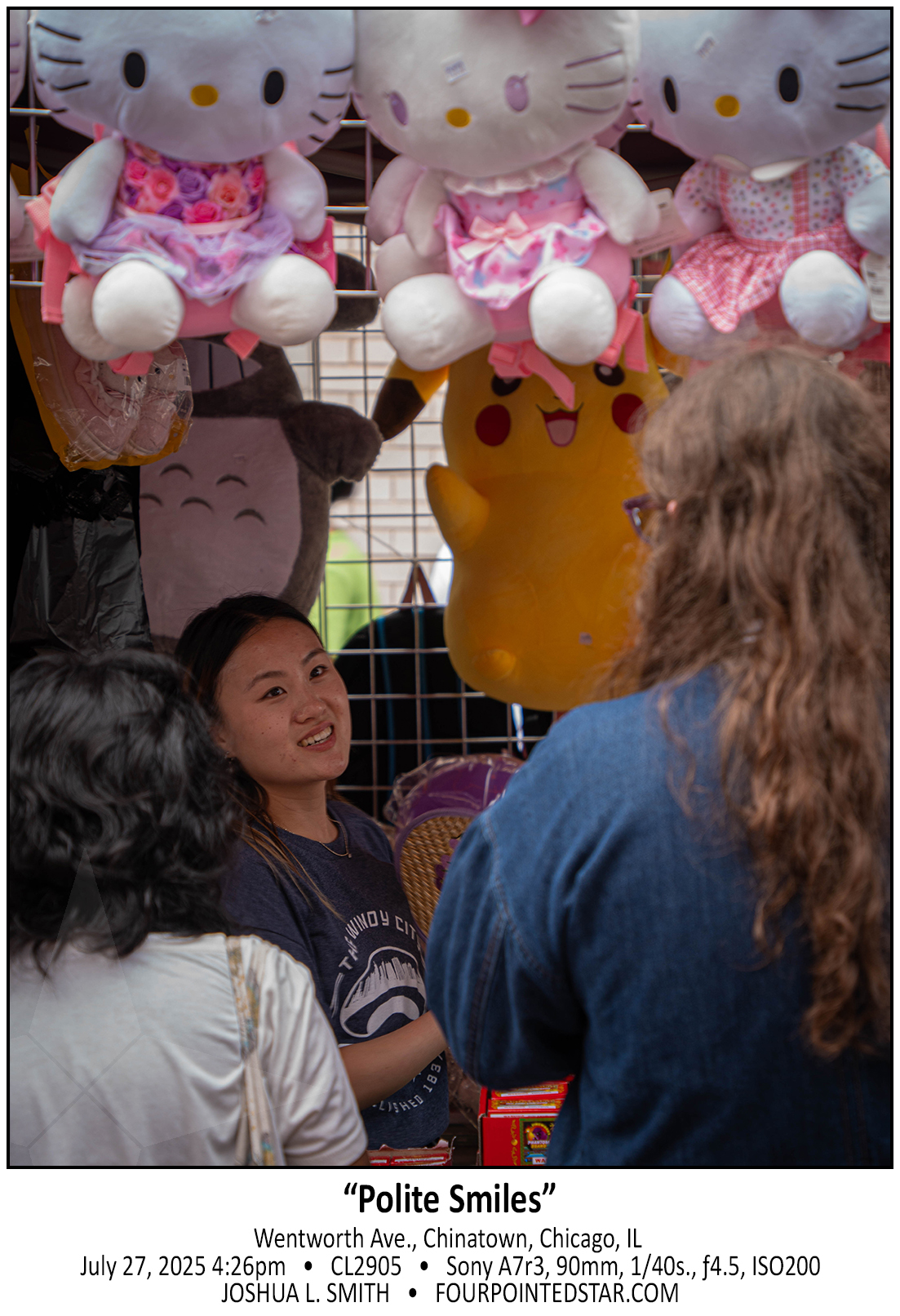
I try to lead a photo walk monthly, but… well, life gets in the way. In late July, we had 7 people on our Chinatown walk, and I wasn’t sure what I would photograph on the trip. This was one of the first photos that I took, something about the Slurp Slurp made me smile. 🙂

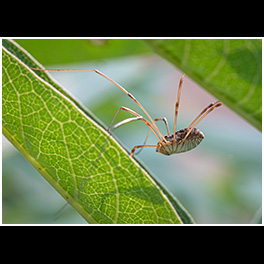
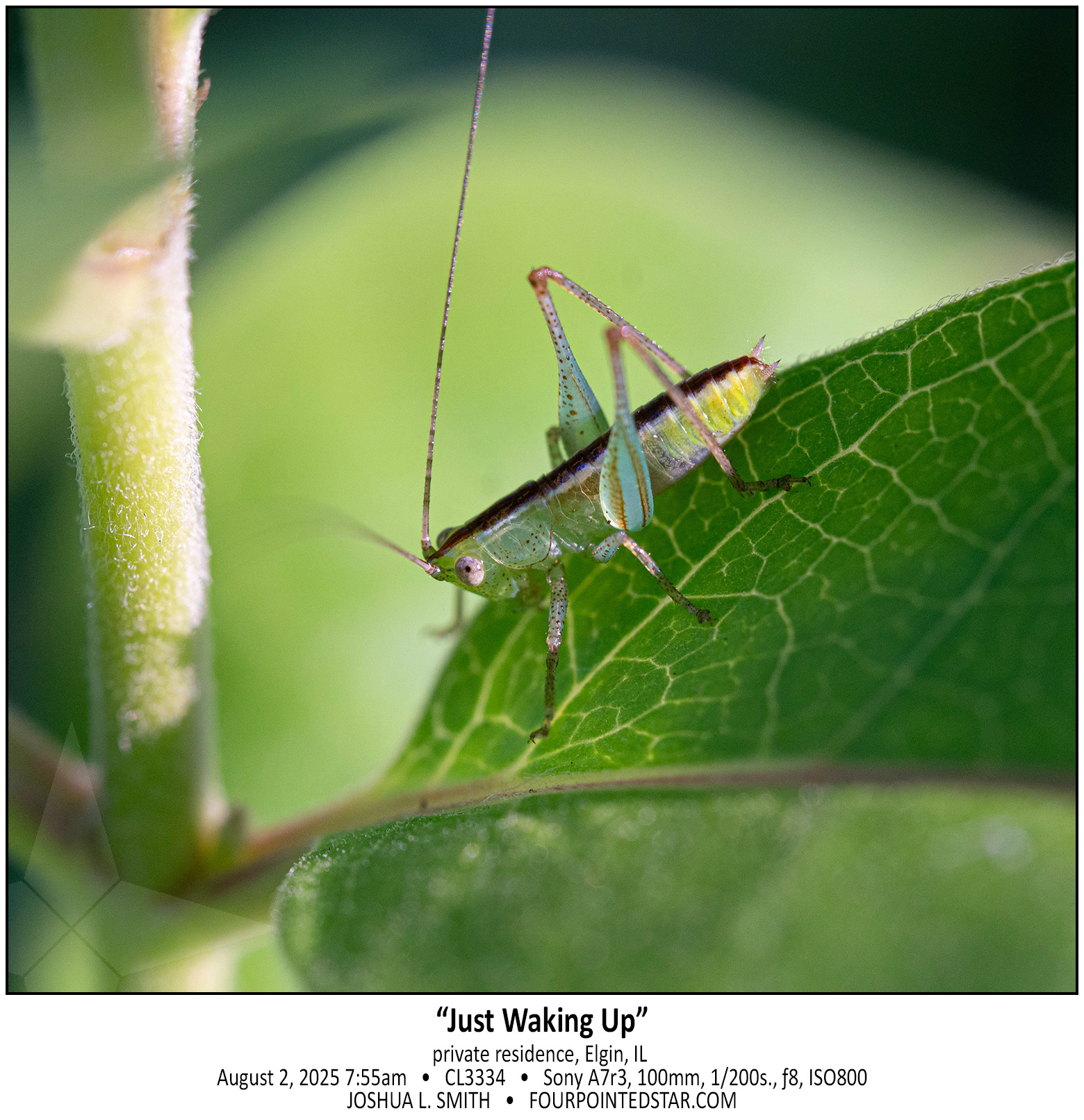
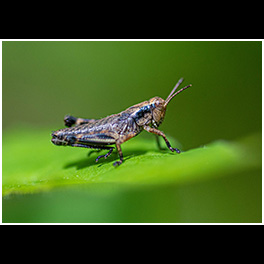
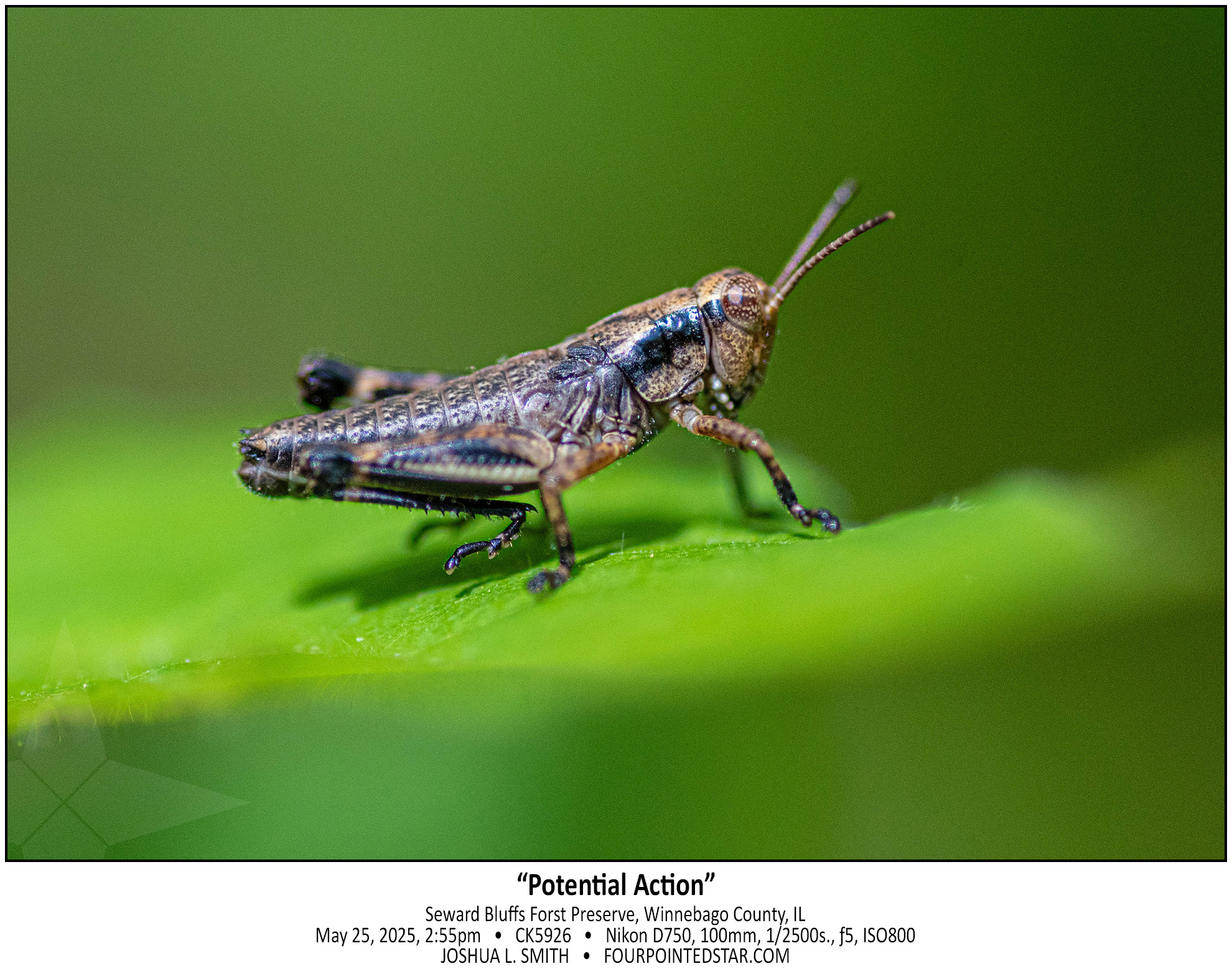
This grasshopper was so tiny that it was almost transparent, but it stood still for its portrait and even twitched its antenna when requested. Maybe the freckles are from the sunny days before, and it didn’t tan, just got spots instead.

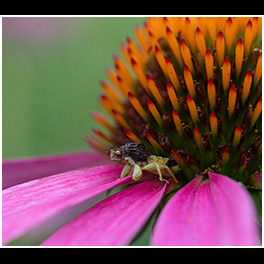
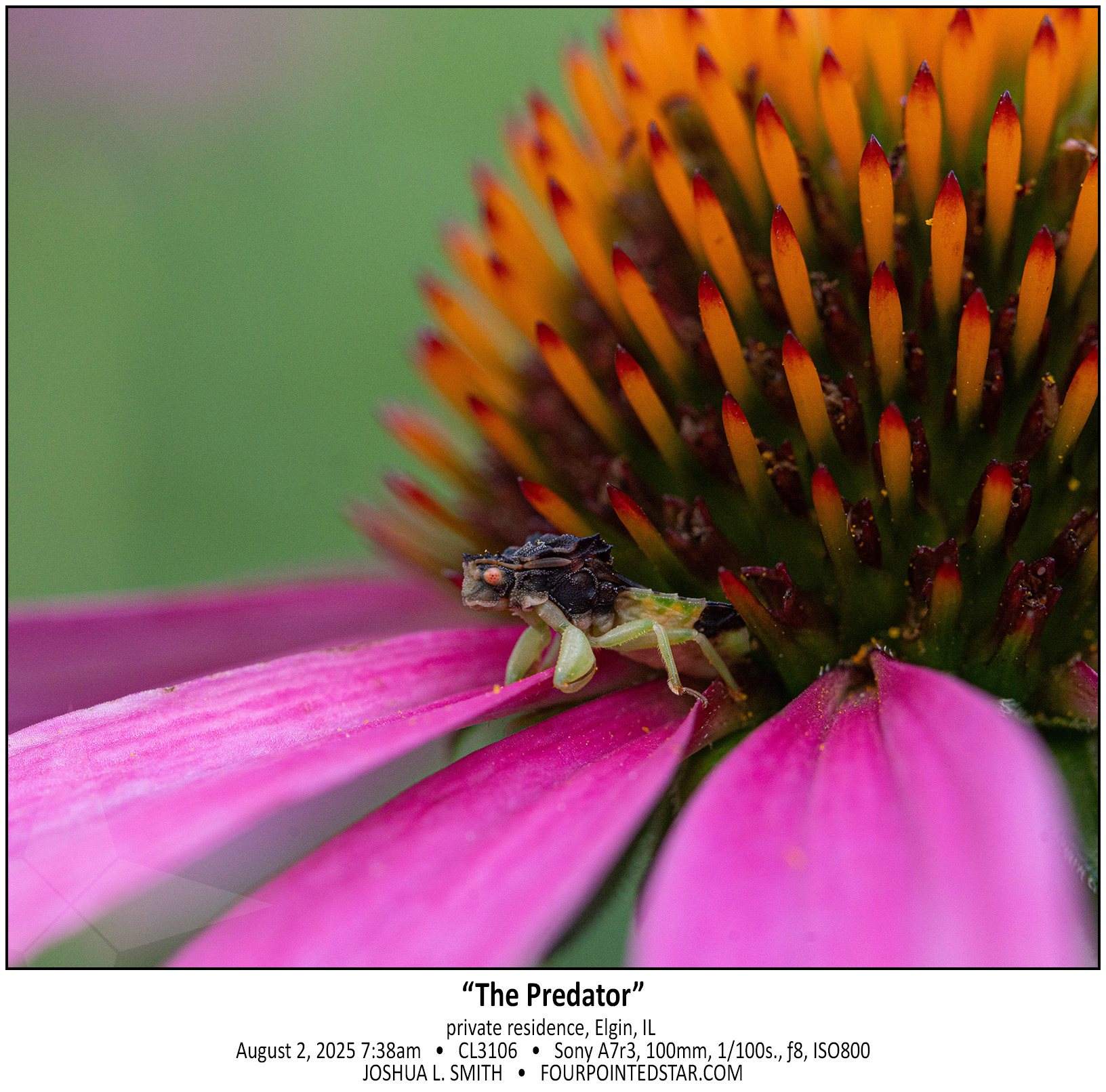
This insect would be terrifying if it were larger. The ambush bugs can attack and eat insects that are up to 10x their weight, and those forearms are meant for holding onto the prey. Every once in a great while, I’ll spot one of these monsters who has ventured out of their hiding spot, and their angular body makes for a fantastic photograph.

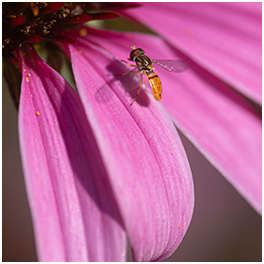
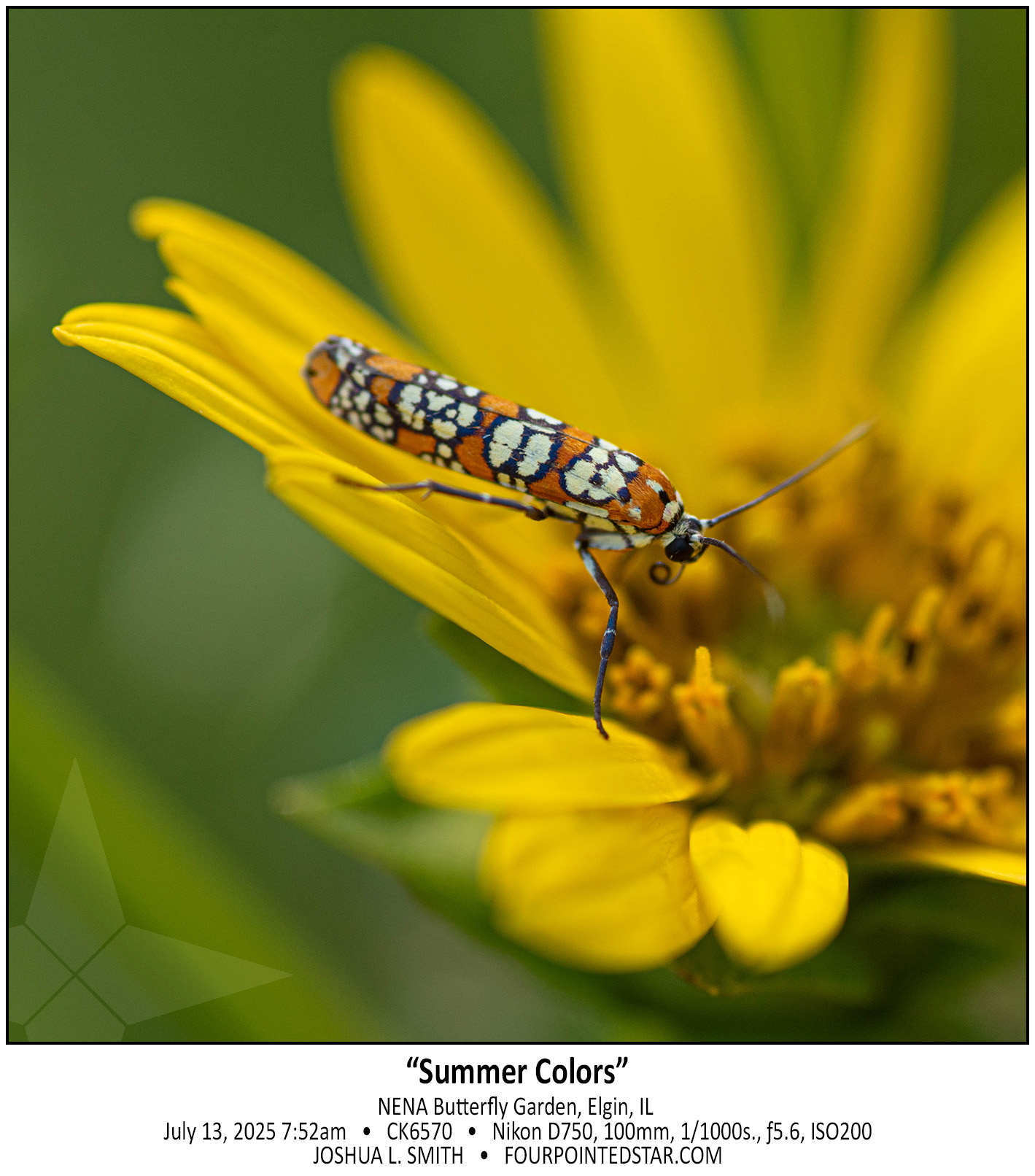
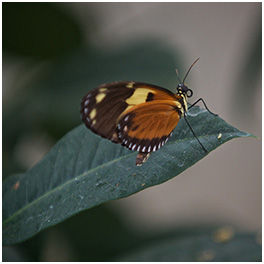
You know that feeling after your dad bought a Ford Taurus growing up, and then it seemed like you saw Ford Tauruses everywhere? That’s how I feel about this orange speckled insect! Back in 2010, I took a photo of one with my iPhone, and I love the photo. Then last year, I found another one at a local butterfly garden. This year I’ve seen them in my yard, on a client’s landscaping, and at the same butterfly garden; maybe they’re not as rare as I thought!

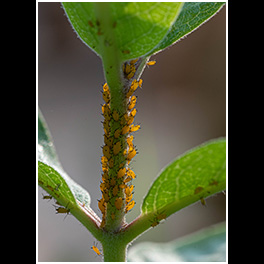
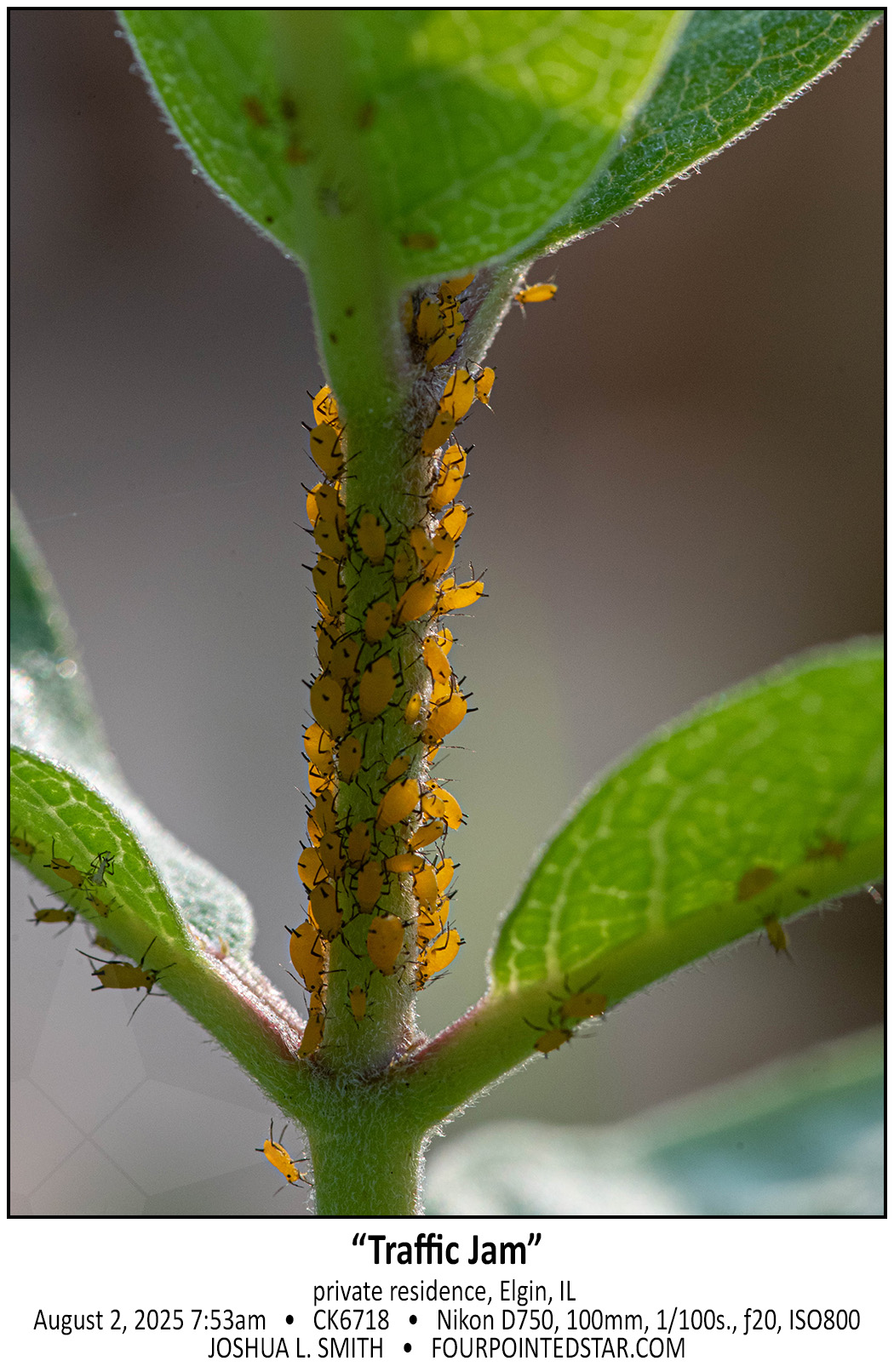
What a perfect metaphor for a Monday! A traffic jam of aphids sucking the life out of this plant!
I am fascinated by aphids visually; they definitely follow a “pack” mentality, and hilariously are often only hanging on by their front feet and jaws. And their bodies are so simple or small that they just glow in the sunlight.

I don’t think anything better exemplifies “if you build it, they will come” than nature. When we purchased our home, the previous owner had already planted an extensive garden, but the previous tenant had not kept up with it. Over the almost 10 years, we have gradually expanded the garden and focussed on planting native plants; and this means that we see all sorts of pollinators as well as other creepy crawlies that are a bit higher up the food chain. Perhaps “if you plant it, they will come” is our interpretation.

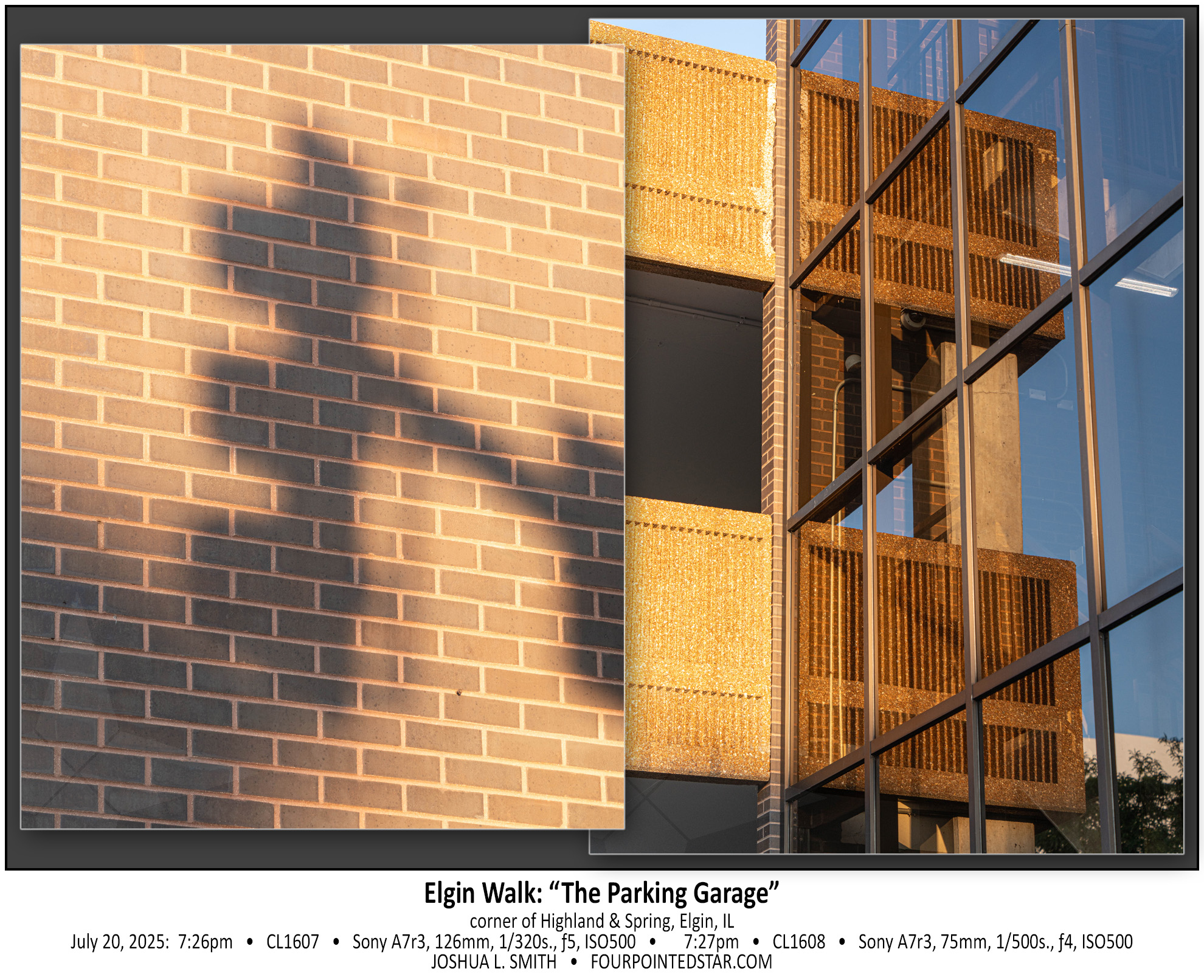
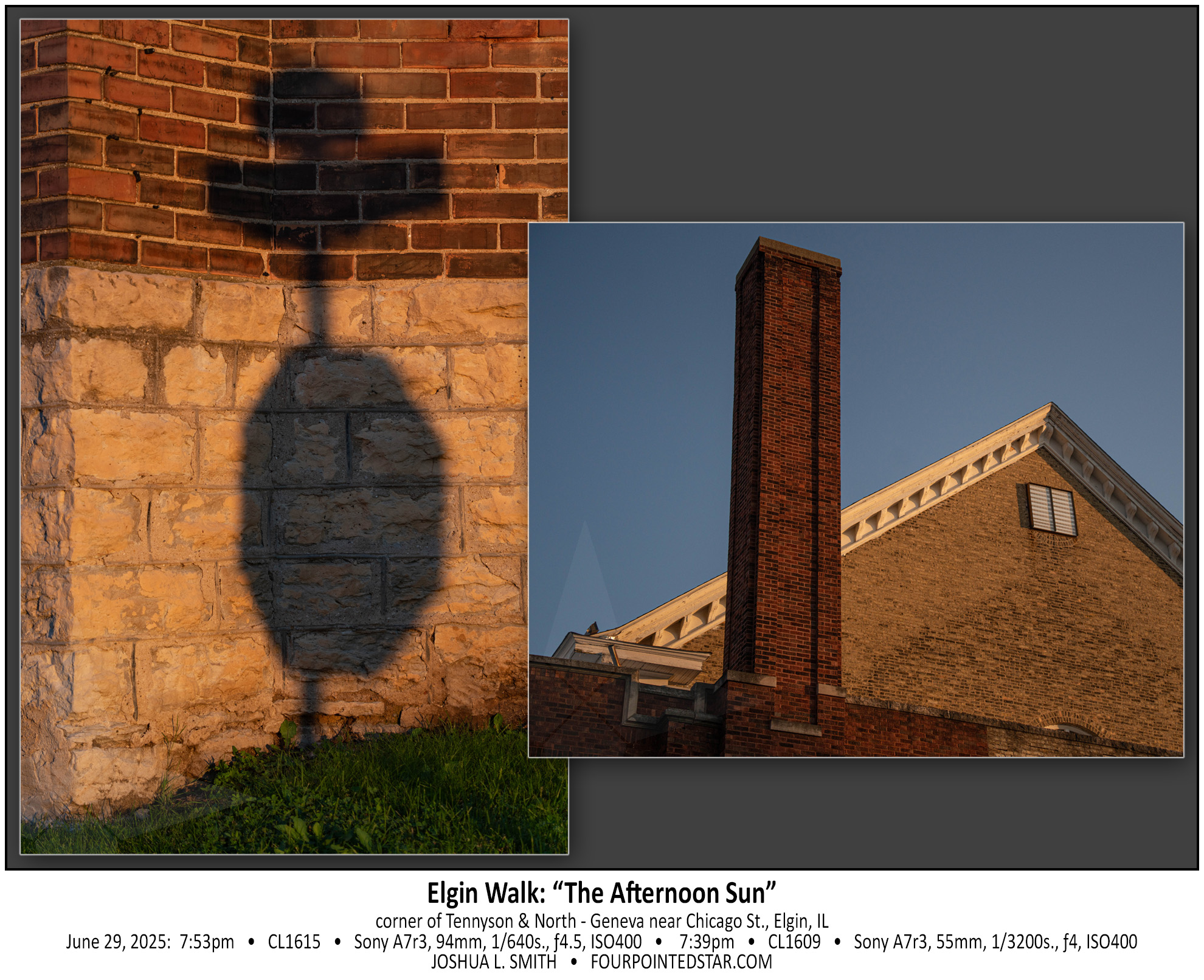
When we started our photo walk, I wanted to capture images that I may not normally see or look for. The stop light shadow immediately grabbed my attention, but I will admit that my second photo, the reflection, is the type of photo that I have taken many times over.

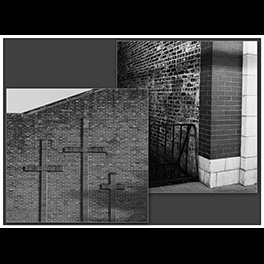
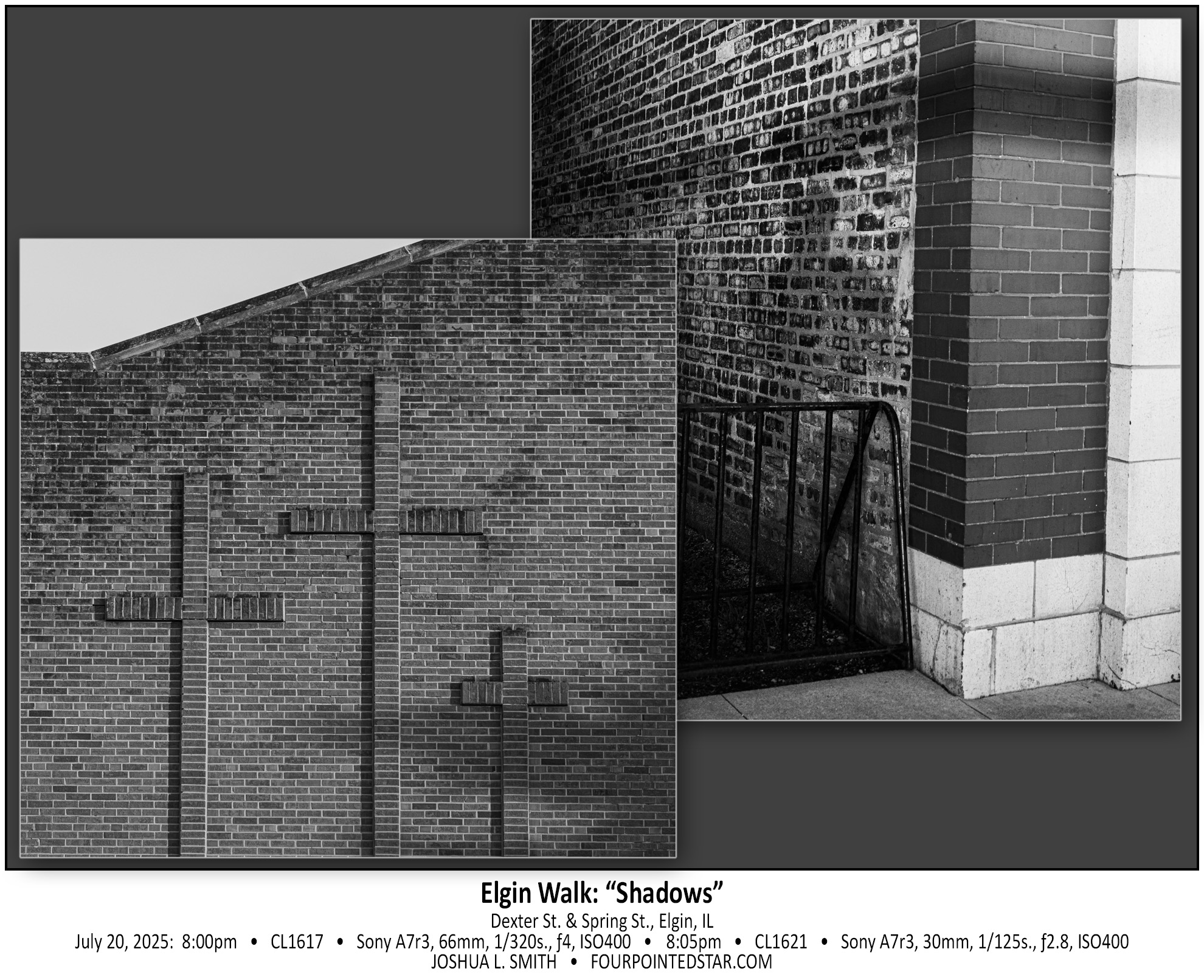
There are some photos that I like that I don’t want to “define” why; the crosses photo fits in that category – I love the symmetry and texture of the image. As we walked along Spring Street, I saw my shadow walking along the brick but it took me a bit to capture the right photo since normally my elbow would be extending from my head when I click the shutter button.

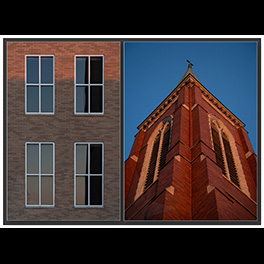
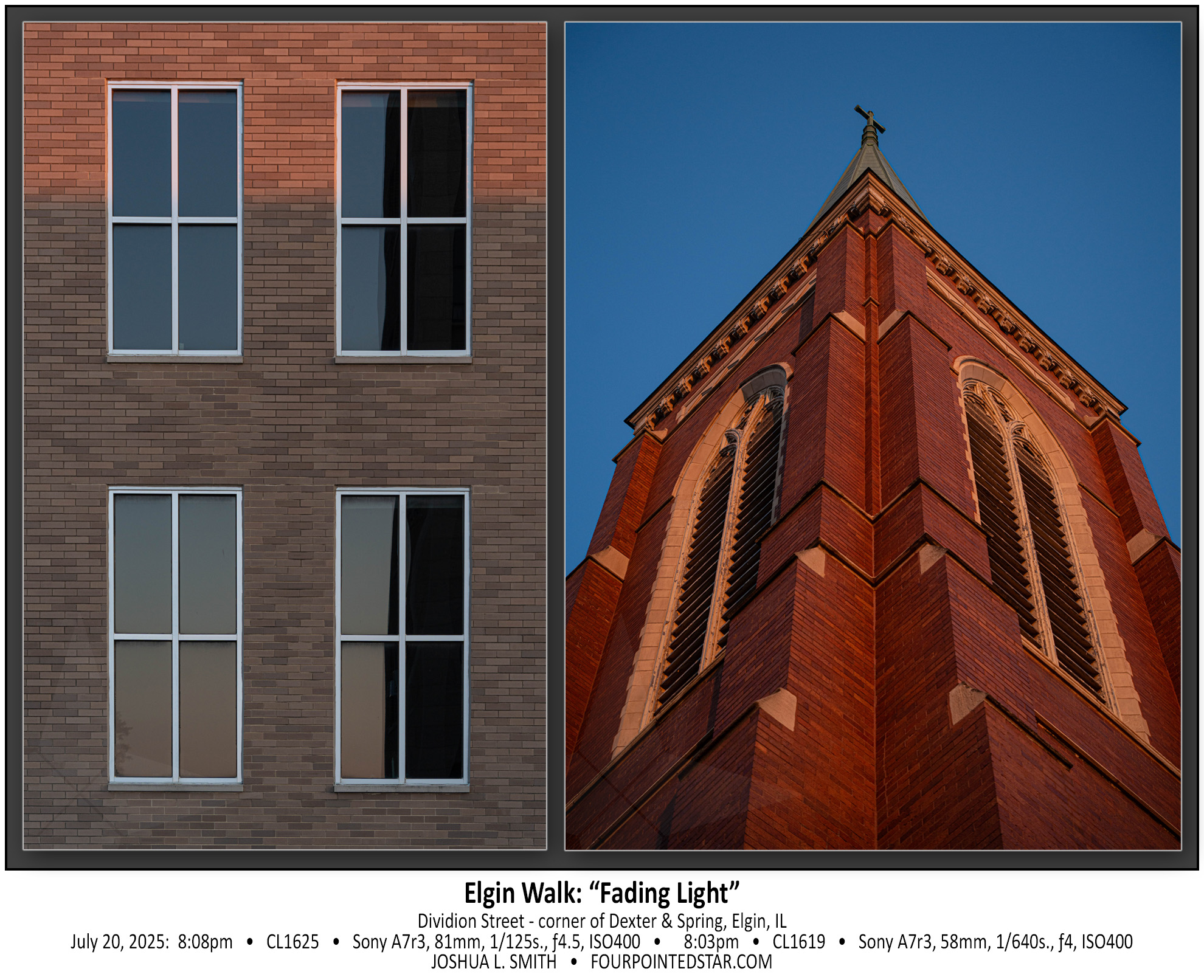
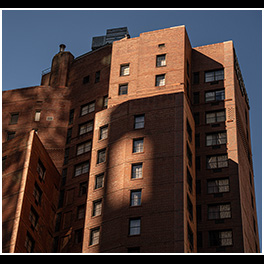
I loved the way the evening light played with the reddish bricks on the steeple, but when I saw the shadows on the RR Donnelly building? The way the straight shadow played across the rectangular windows and contrasted with the darkness of the second building’s window reflection? That was simply too good to pass up!


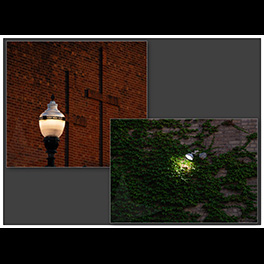
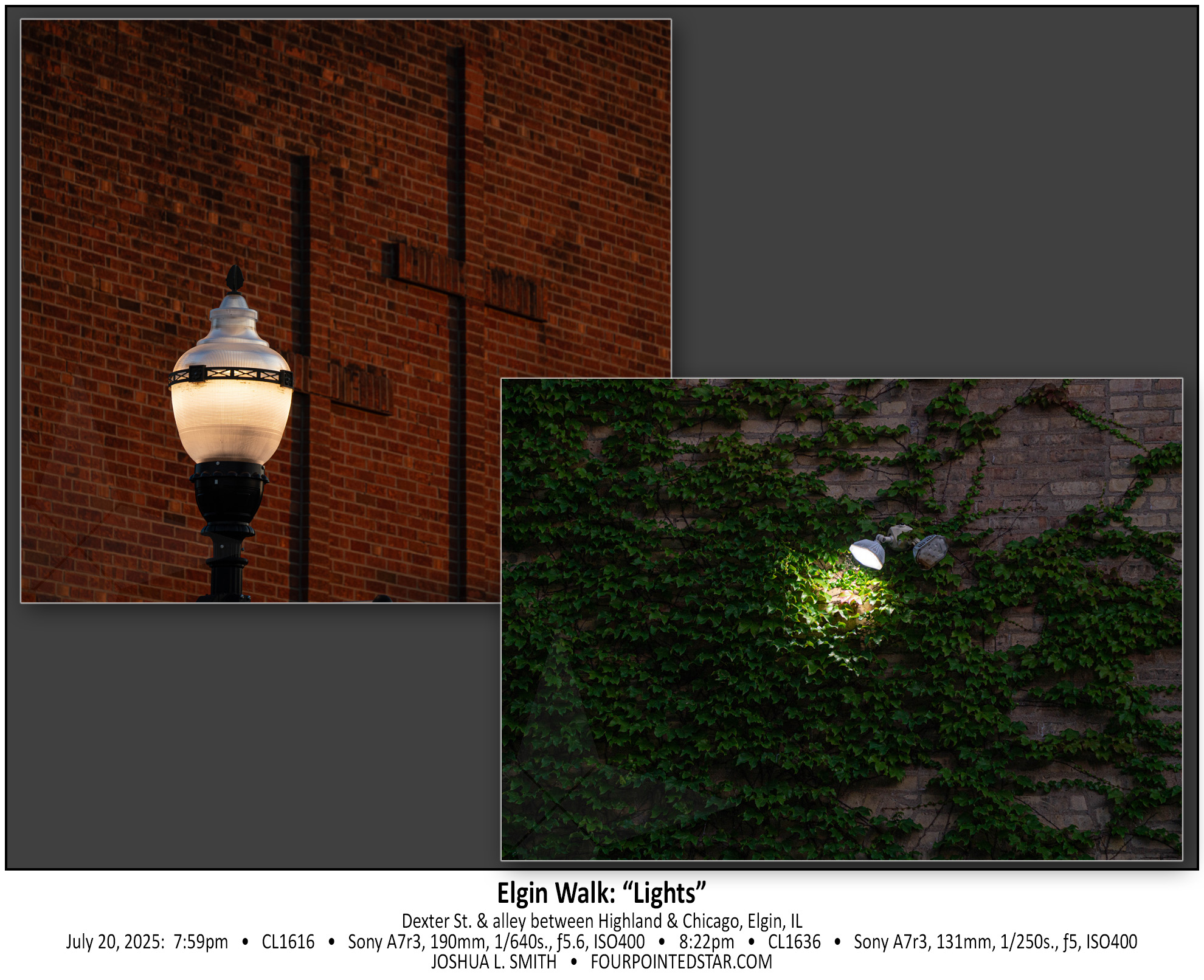
We crossed the street at Dexter for the express purpose of the church photo; it was obvious to me that the street lamp and raised bricks were a perfect composition. But I spent quite a bit of time working on the exact composition for the vines; I wanted to keep the sparse vines to the right, but the light pointed to the left … and I ended up with a photo that I wouldn’t normally take that I really enjoy.

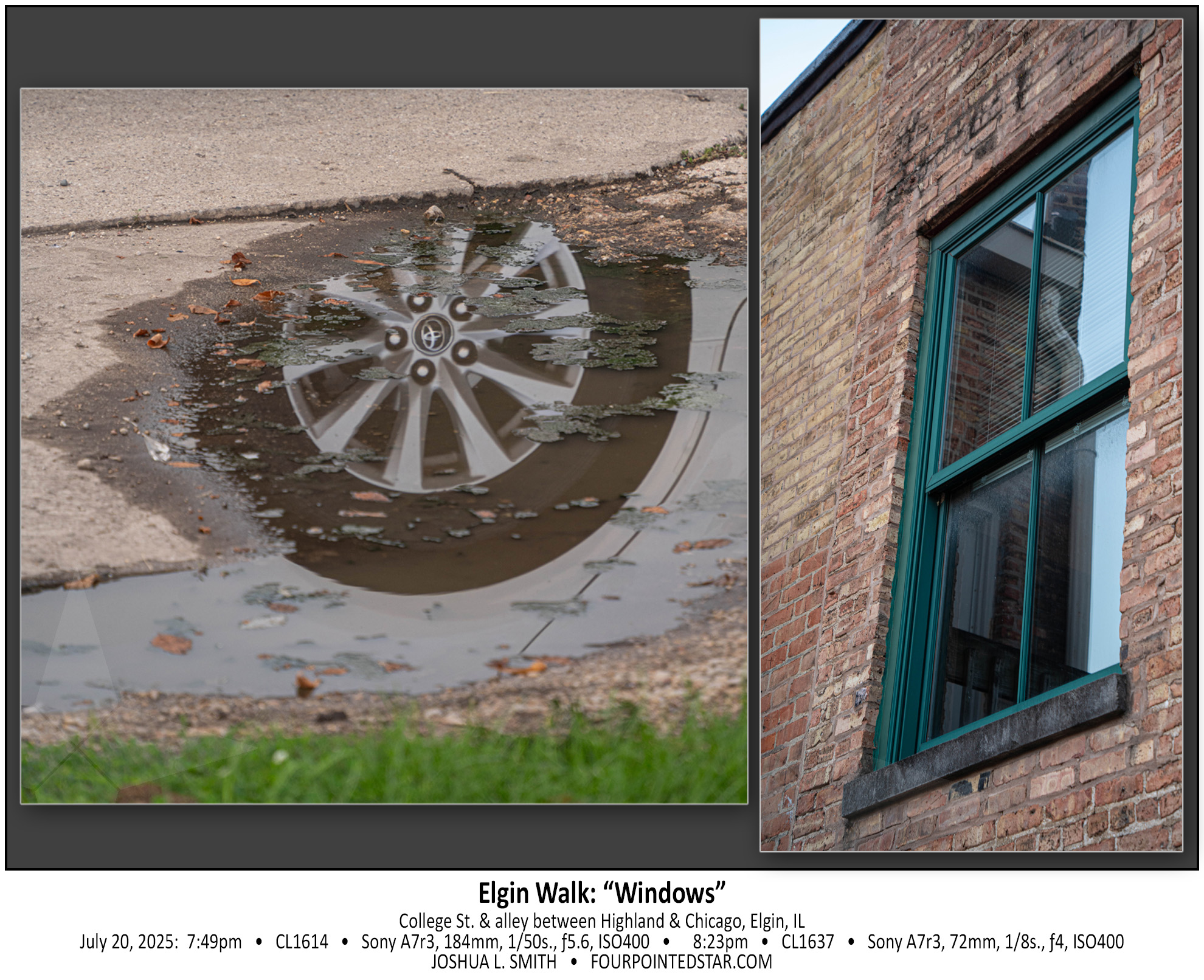
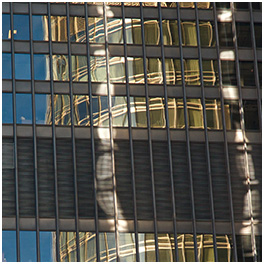
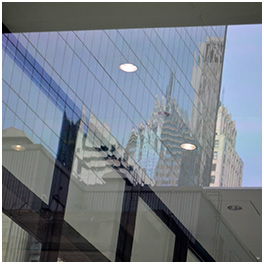
I love looking for interesting reflections in windows; the window offers a perfect frame and typically distorts the view. Recently though, I’ve been drawn to photos of reflections in puddles; a very similar concept, but a different and less predictable frame and outcome.

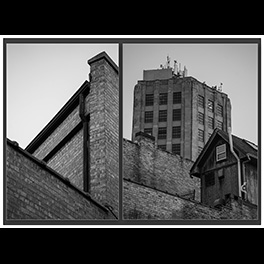
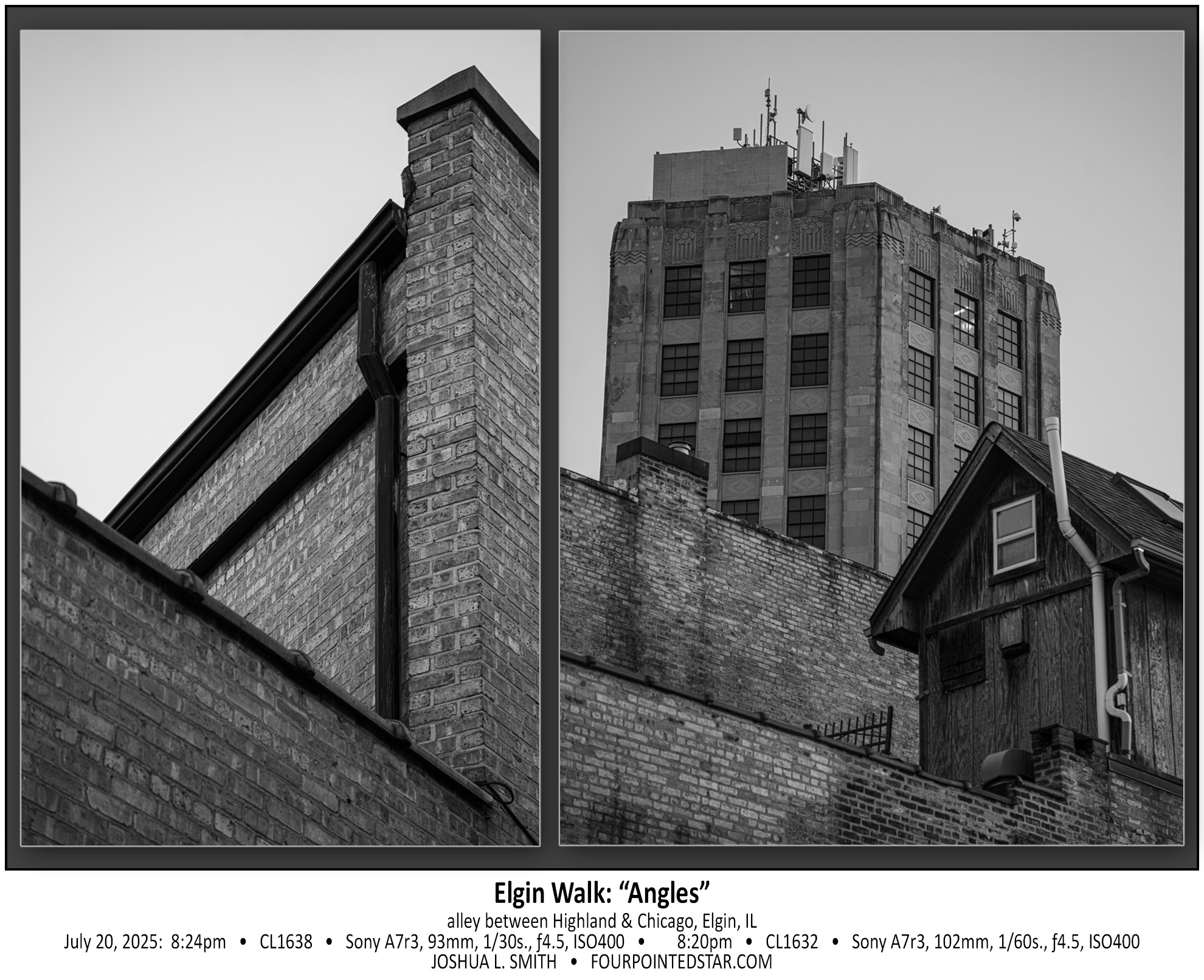
My friend and I took a nice slow walk around one of Elgin’s historic neighborhoods. Our meandering path matched our meandering conversation as we talked about life and pressed our shutter buttons. I remarked to him “I’m just not really feeling it”, but I continued to capture interesting images. As I tried to pick 7 images to post for this week, they all seemed to be missing something; but as pairs of photos?
The strong red-ish light of the sun played strongly across each scene, but was most evident on the brick buildings leading to the wonderful hues in these photos.


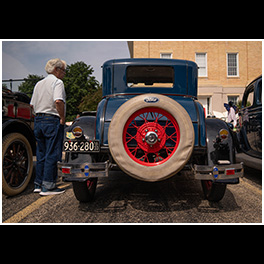
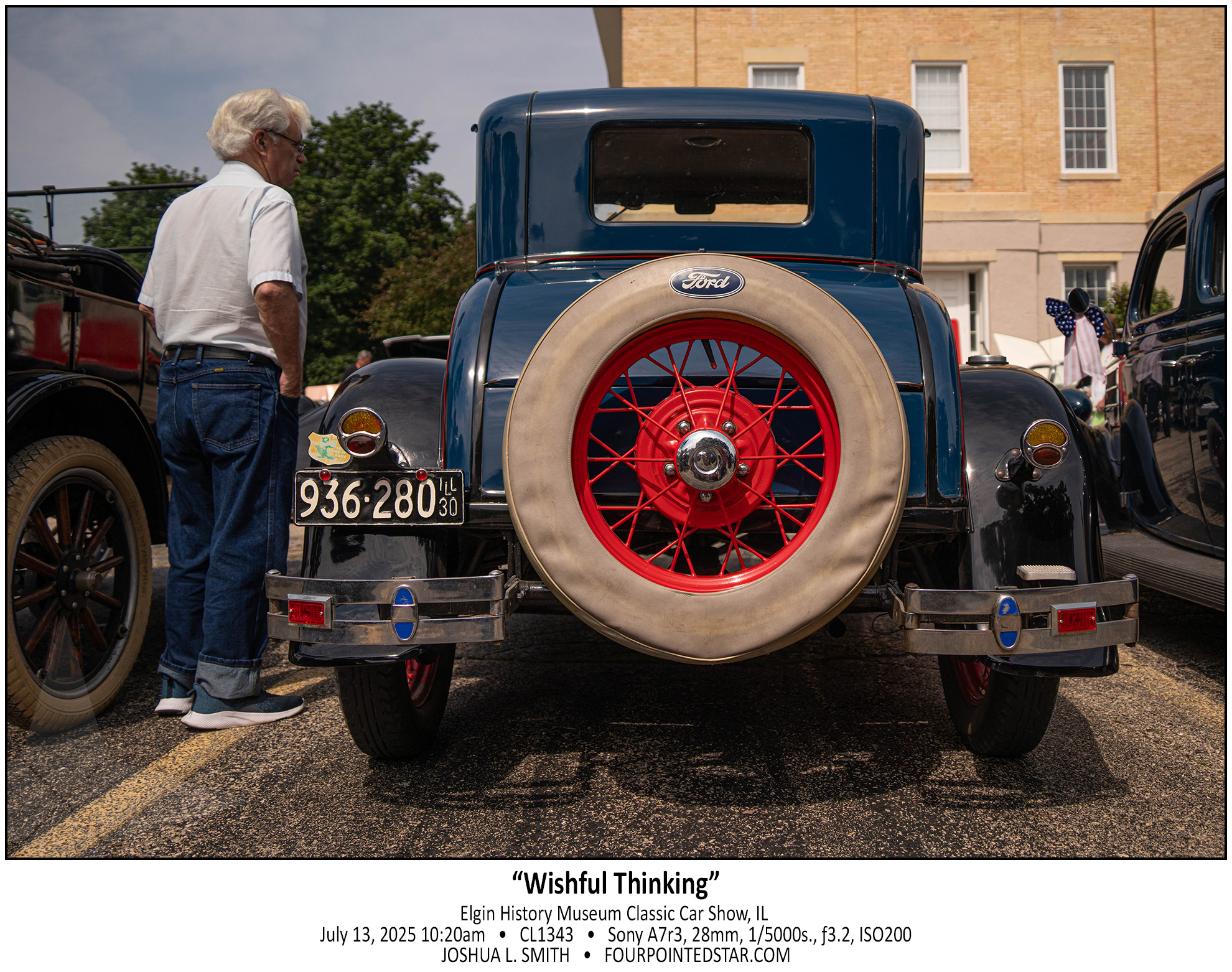
These cars harken back to a simpler time, and it’s always fascinating to see an older generation stare into an older car. I often wonder, does he remember his dad working on a Model A? Did he learn to drive on a similar car in the late 50’s or early 60’s? Or is he just admiring a 100 year old vehicle?

I’m not sure that I like this photo; one of my primary motivations for liking nearly any photo is that it feels balanced. And for some reason, this image does not feel balanced to me, but I’m not even sure that I could even define why I don’t feel that it’s balanced.


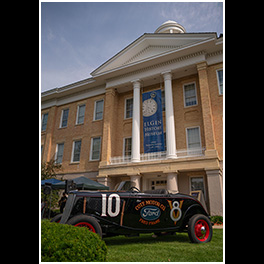
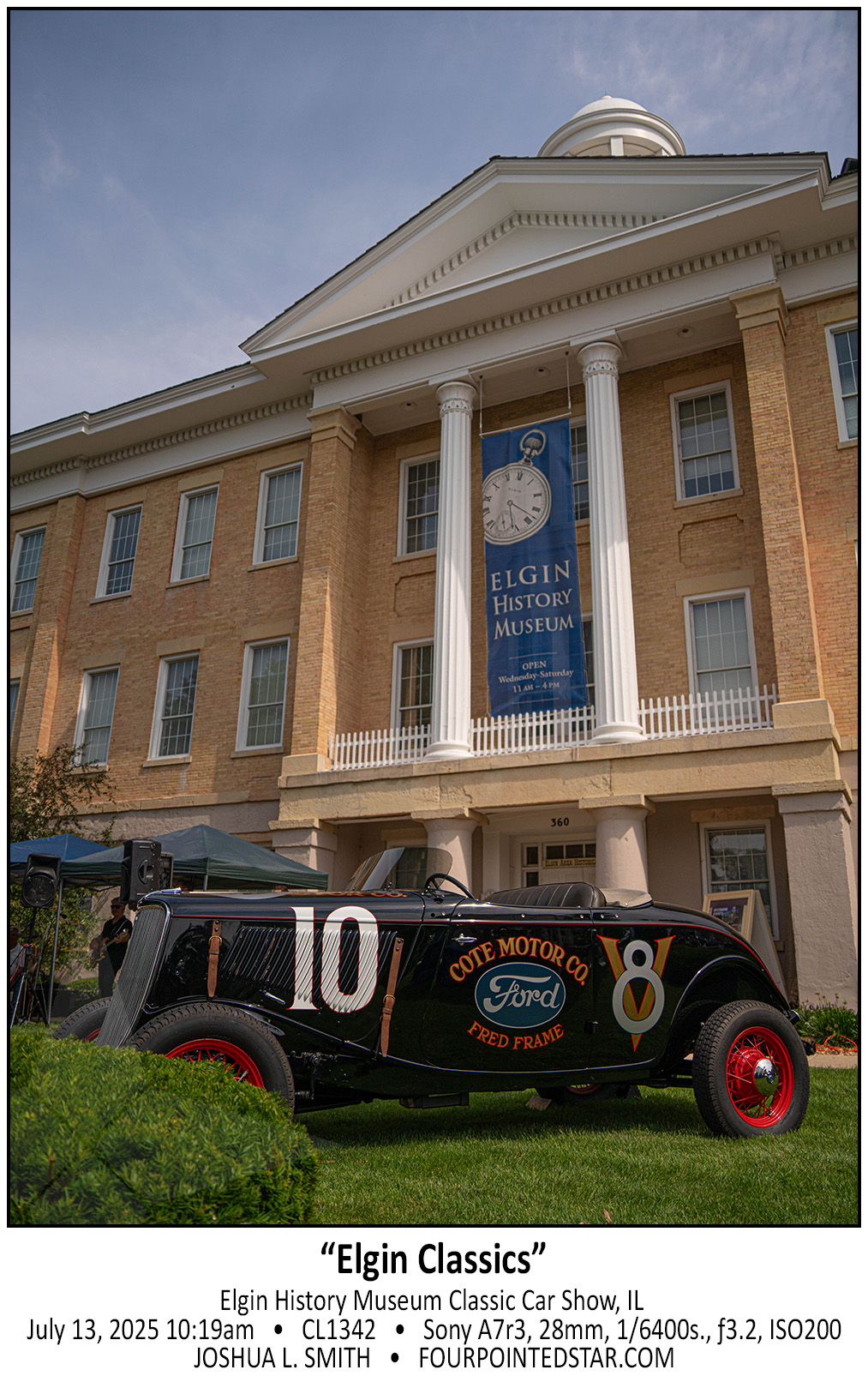
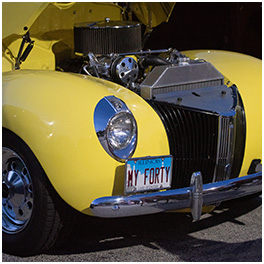
Every year, the Elgin History Museum puts on such a great car show! They hold it on the grounds of the museum with “Old Main” serving as the backdrop, and this year, this fantastic Ford coupe was posing in front of Old Main – the perfect photo op.

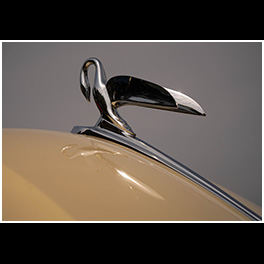
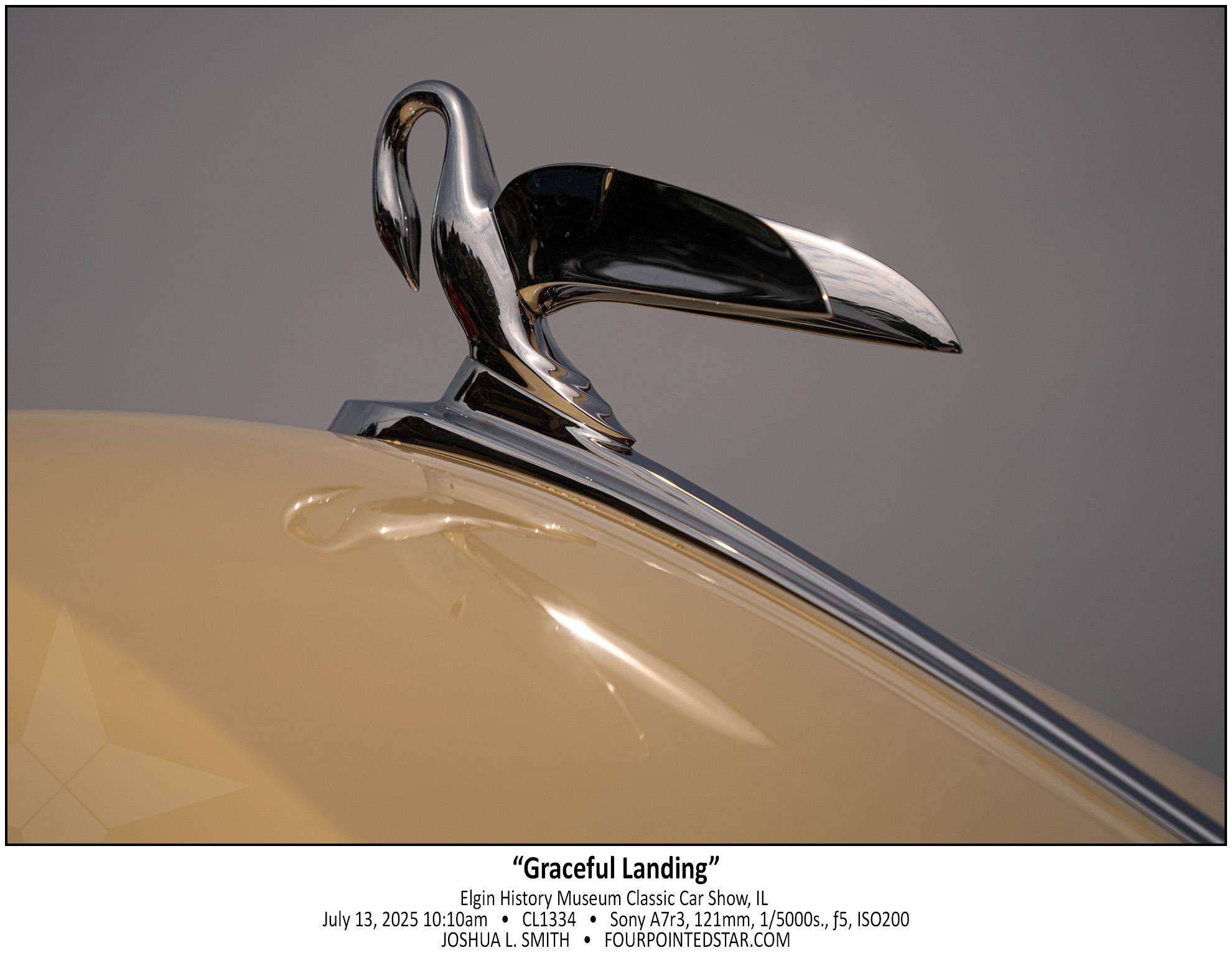
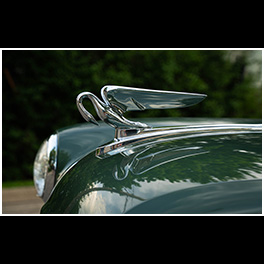
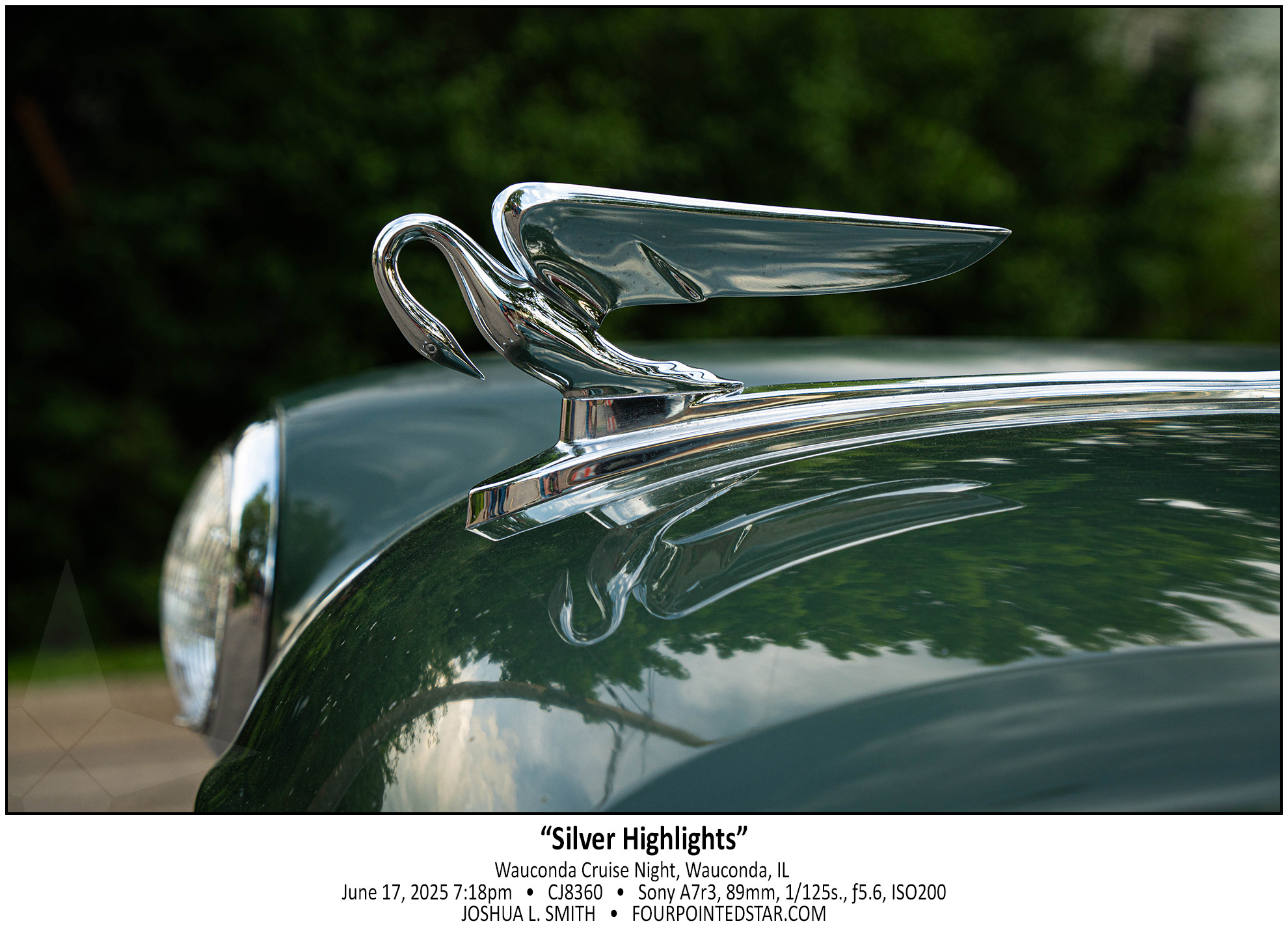
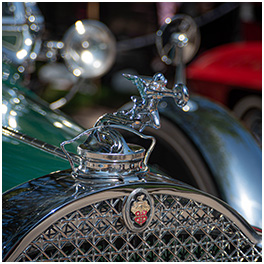
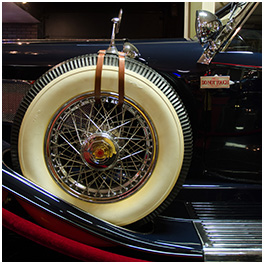
This Packard was sitting next to the 1955 Chevy, and while I took my photos of the Chevy, I was continuously drawn to the unique hood ornament and the unique color – a cream with a hint of yellow. I love the graceful pose of the hood ornament – a swan landing in the water – absolutely gorgeous.

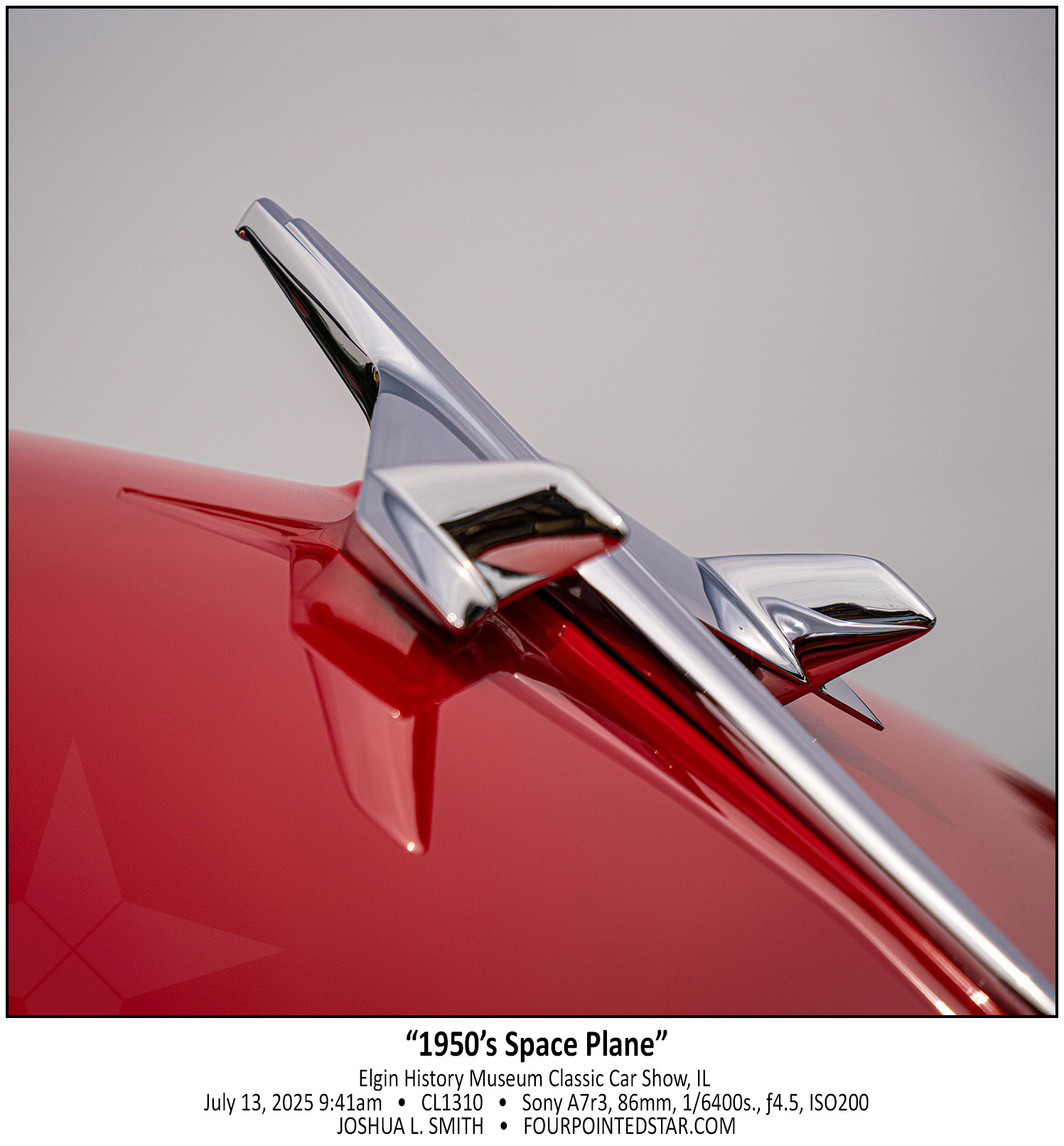
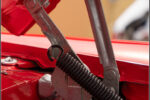
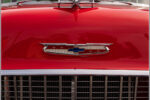
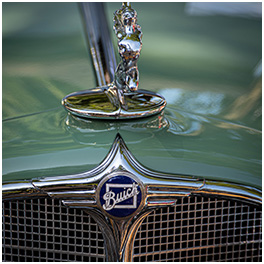
Let’s just assume at this point that I won’t tire of hood ornaments. (Spoiler… there’s another photo of one this week too!) This is the same 1955 Chevy that I used for my 24 photo challenge as well, so if you want to see 20+ more images of this car, click here.

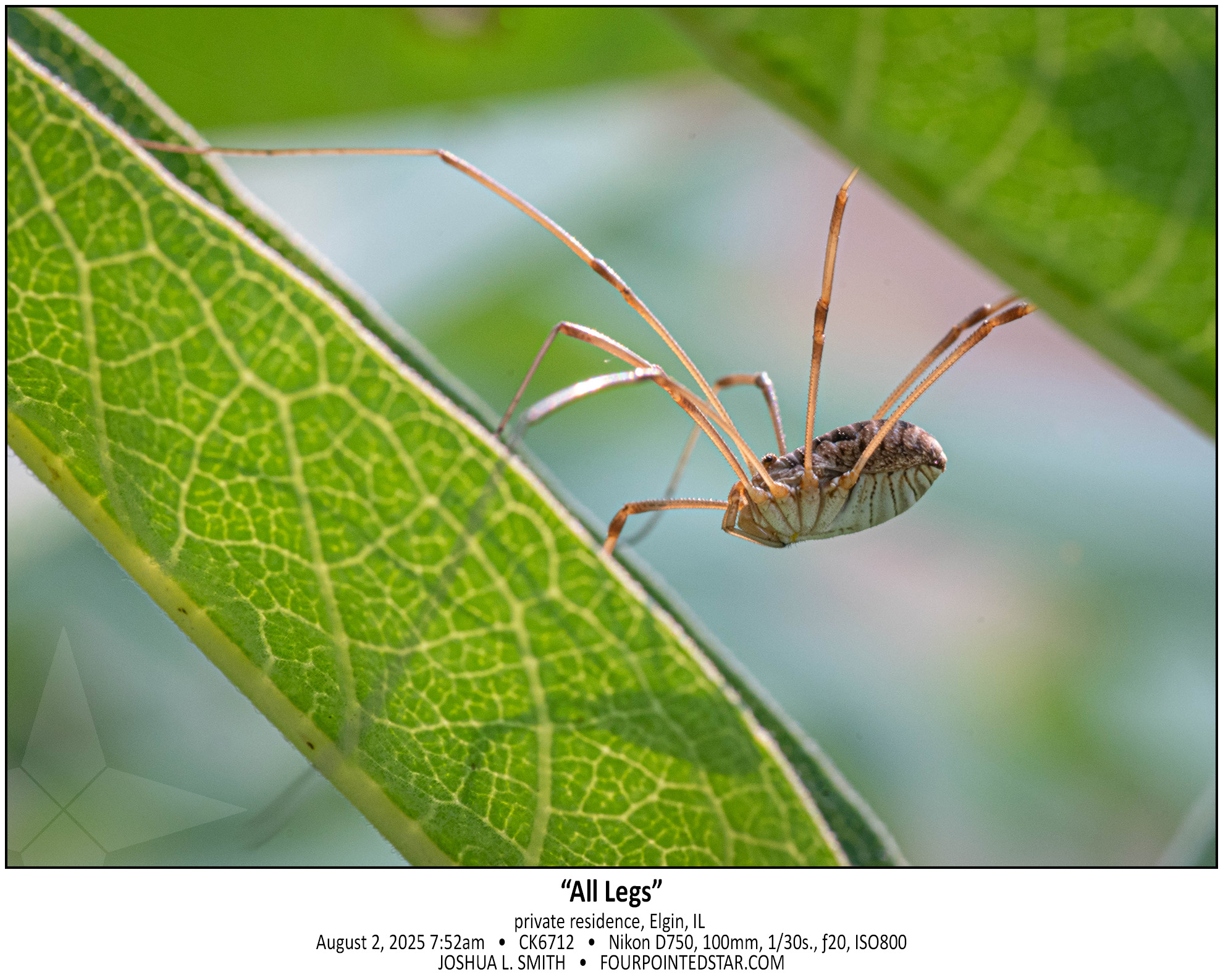
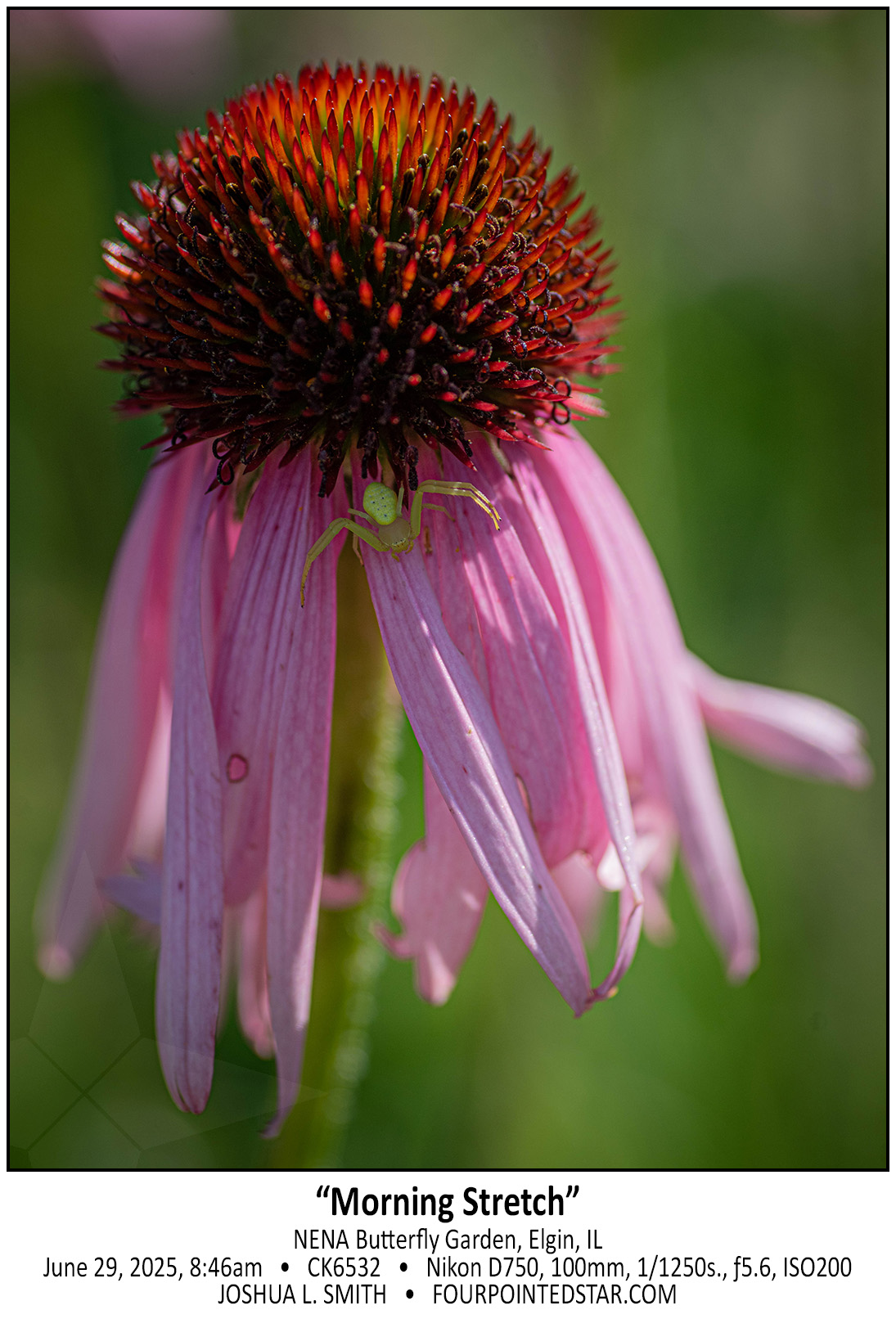
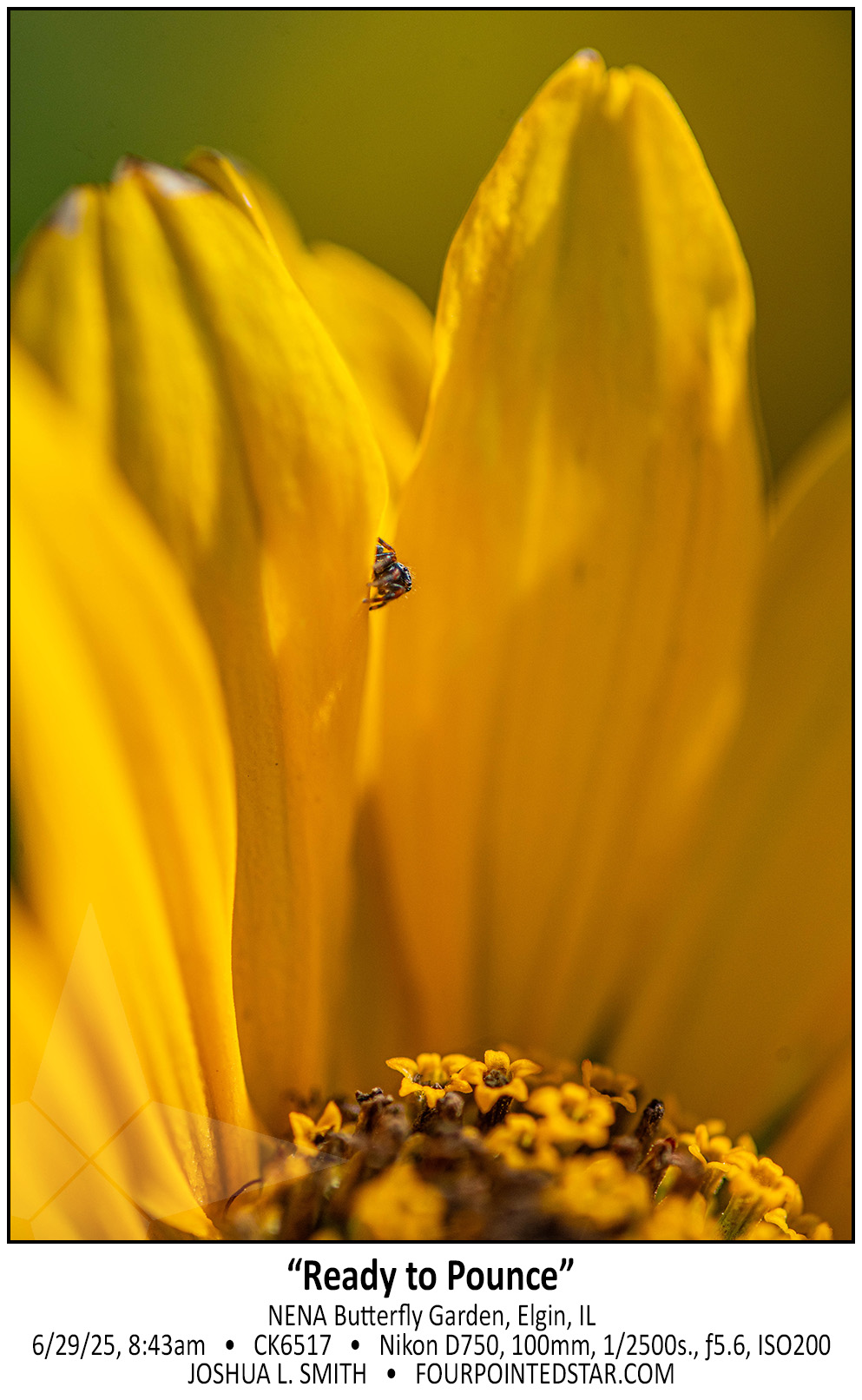
This particular morning, I saw very few spiders. While I do enjoy capturing a bee in a flower, it’s more fun to photograph other insects as they pollenate. Spiders are even more unique; typically they’re “hiding”, hunched in an area of the plant that is out of the way, but paying attention to YOU the photographer. It’s a cat-and-mouse game, but for the spider, it’s a monster-and-mouse game.

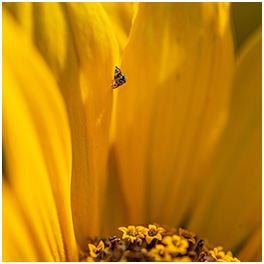
I took a much closer photo of this tiny jumping spider but the photo lacked any sense of scale. While the photo doesn’t show nearly any detail for the spider, this photo gives a much better sense of scale and shows how hard it can be to see these spiders, let alone capture them.


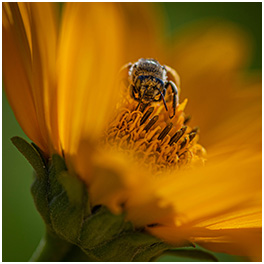
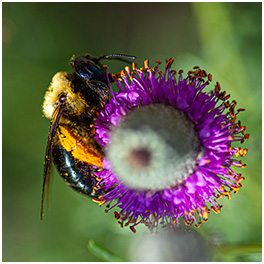
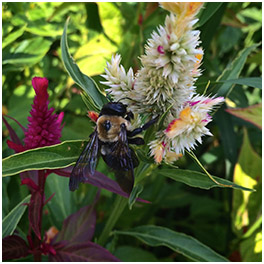
I will never admit how many photos it took to get this particular image: the bee would fly off, the bee’s face would be too dark or too light, the focus wouldn’t be correct, etc. As it is, there are still elements that I wish I could fix; I dislike that the center is so out of focus, and I wish that the bee’s were just a little more in the sunlight. But I love that the image implies that the bees are circumnavigating the flower, an insect Juan Elcano if you will.

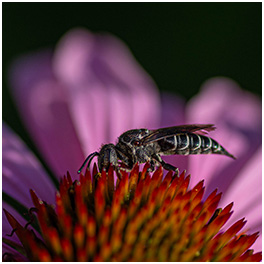
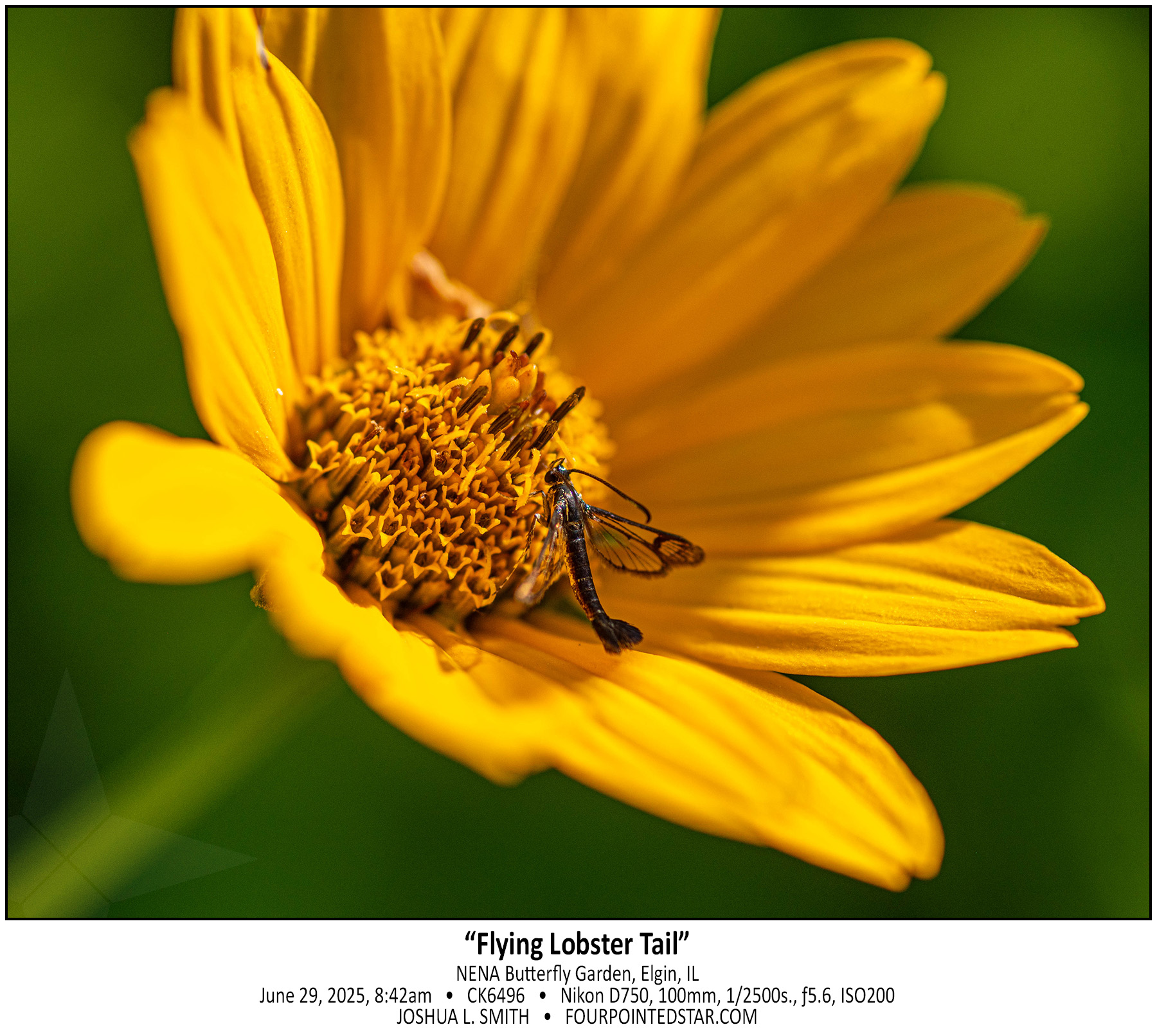
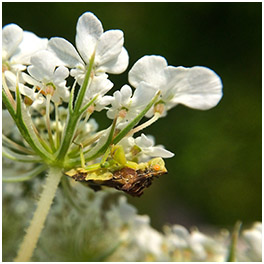
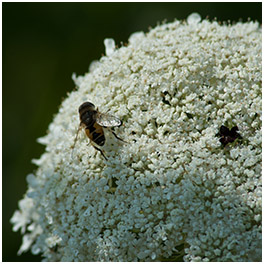
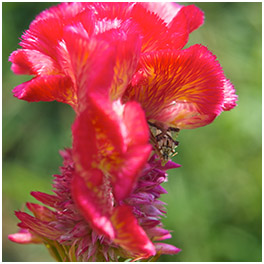
It’s amazing how the simple addition of the pointy tail on this insect makes it go from “cute, like a bee” to “terrifying and menacing”. I love photos like this one; all the texture in the head and torso, the contrast in the vibrant flower and the insect body, and the hint of sunlight in the eye.

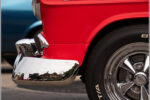
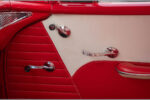
Shortly after I’d taken my first photos of the apple for the original photo challenge, I was editing a photo that I’d taken of a Duesenberg, and it occurred to me that I should take the photo challenge at a car show. So today, while at the Elgin History Museum’s car show, I chose a red 1955 Chevy Coupe. I followed the same pattern as with the apples: no bracketing, each shot is planned, every shot is unique. I took 29 images, and I have 25 photos to show below.
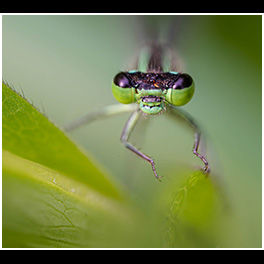
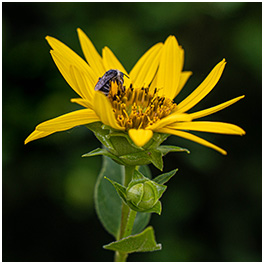
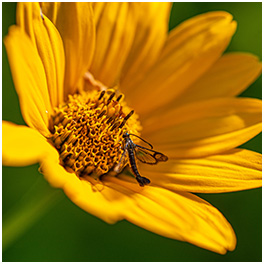
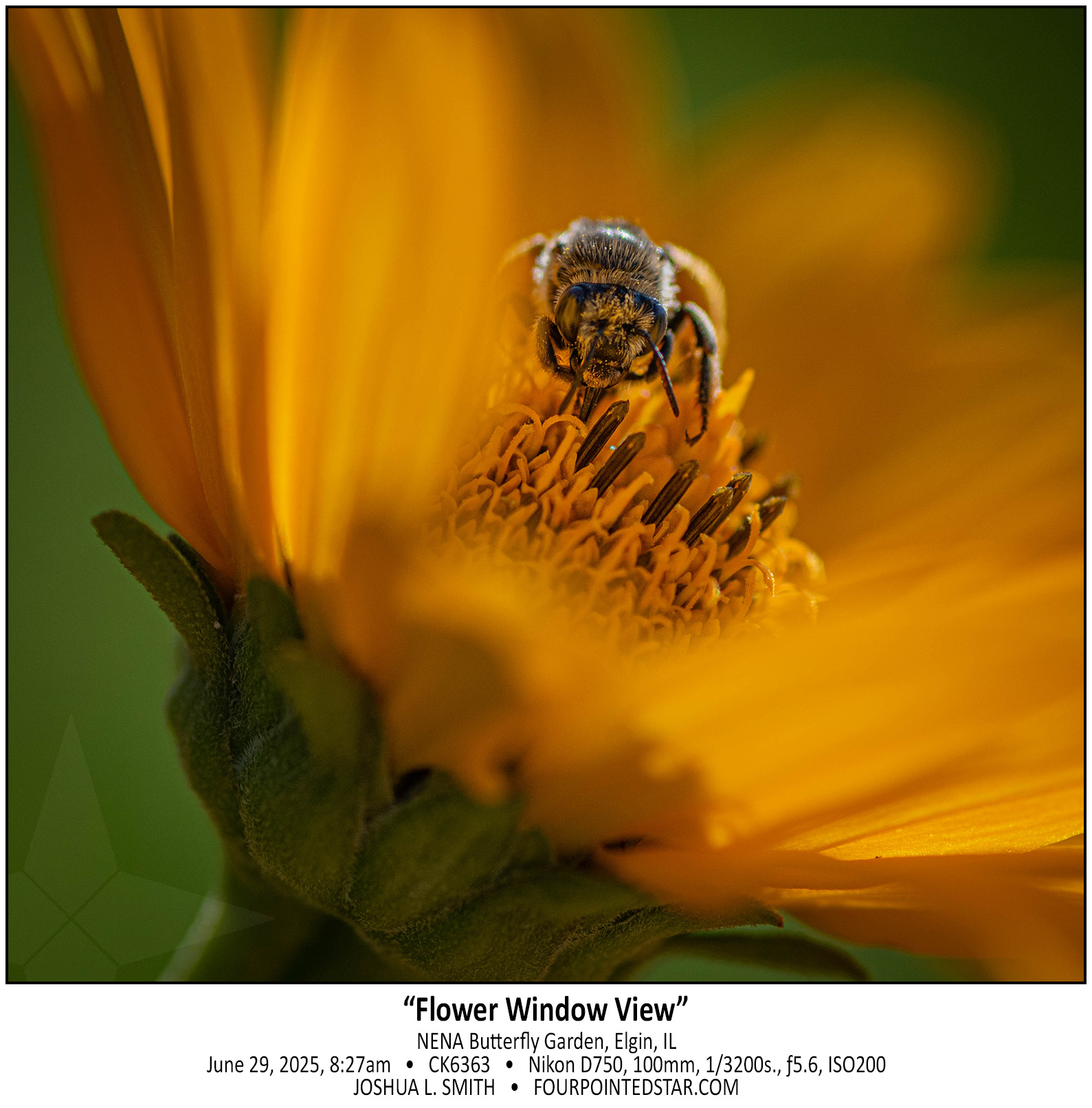
Any photographer knows that there are acceptable photos, there are good photos, and then there are photos that you feel lucky to capture; and you have to display all three types. Bees rarely stay on a flower for longer than a few seconds, and this image took advantage of a flower’s askew petals; lining the two up wasn’t skill, it was luck. But a good photographer knows that the more often you go out to take photos, the more likely you are to get lucky.

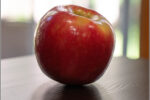
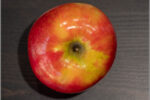
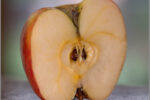
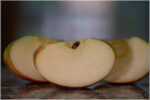
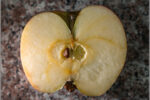
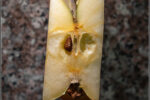
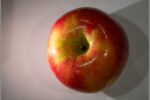
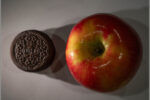
I’ve started my first photography class; I’ve never taken classes before, so this is a new adventure. The instructor mentioned in the first lesson the Apple Challenge – take 36 unique photos of an apple. So I took the challenge seriously. I bought 4 apples, ate one of them, and used the other 3 for my photos. Instead of my normal “take a bunch of photos” and “bracket everything”, I took 1 photo for each “pose”. Over 2 different days, I took 46 photos and the lightly edited final 40 images are below. (I did end up retaking 6 photos, as the original image was terribly out of focus or similarly flawed.)


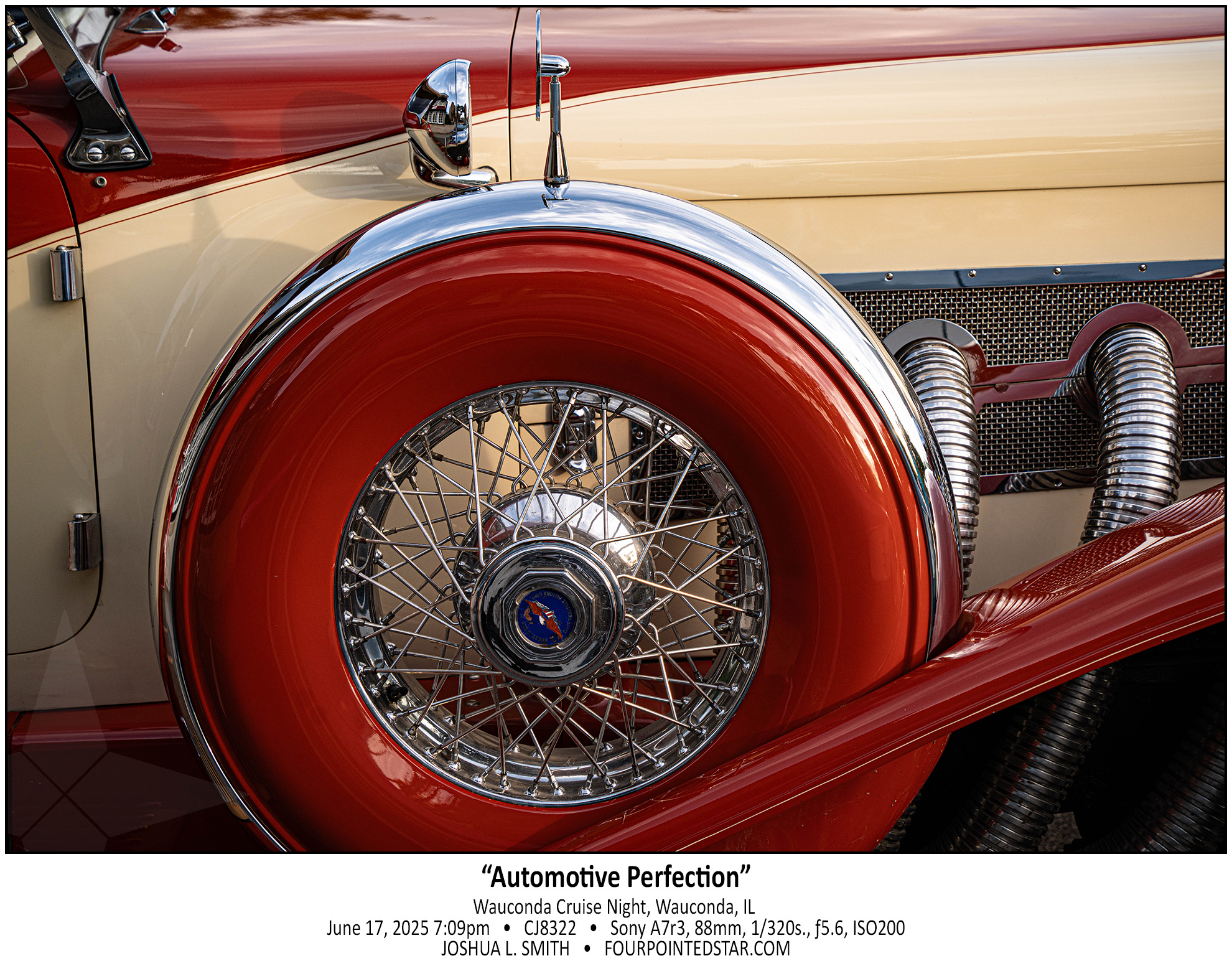
I have attended a half dozen or more Wauconda Cruise Nights over the years, and every time at the north-west end of Main Street, there are two Duesenbergs – gorgeous cars from years ago. Each time that I attend, I make sure to walk past them; and after this past Cruise Night, I thought “they’d be a fun ’36 Apple’ challenge”. So, next time that I attend, my goal is to take as many unique photos of the car that I can possibly imagine.

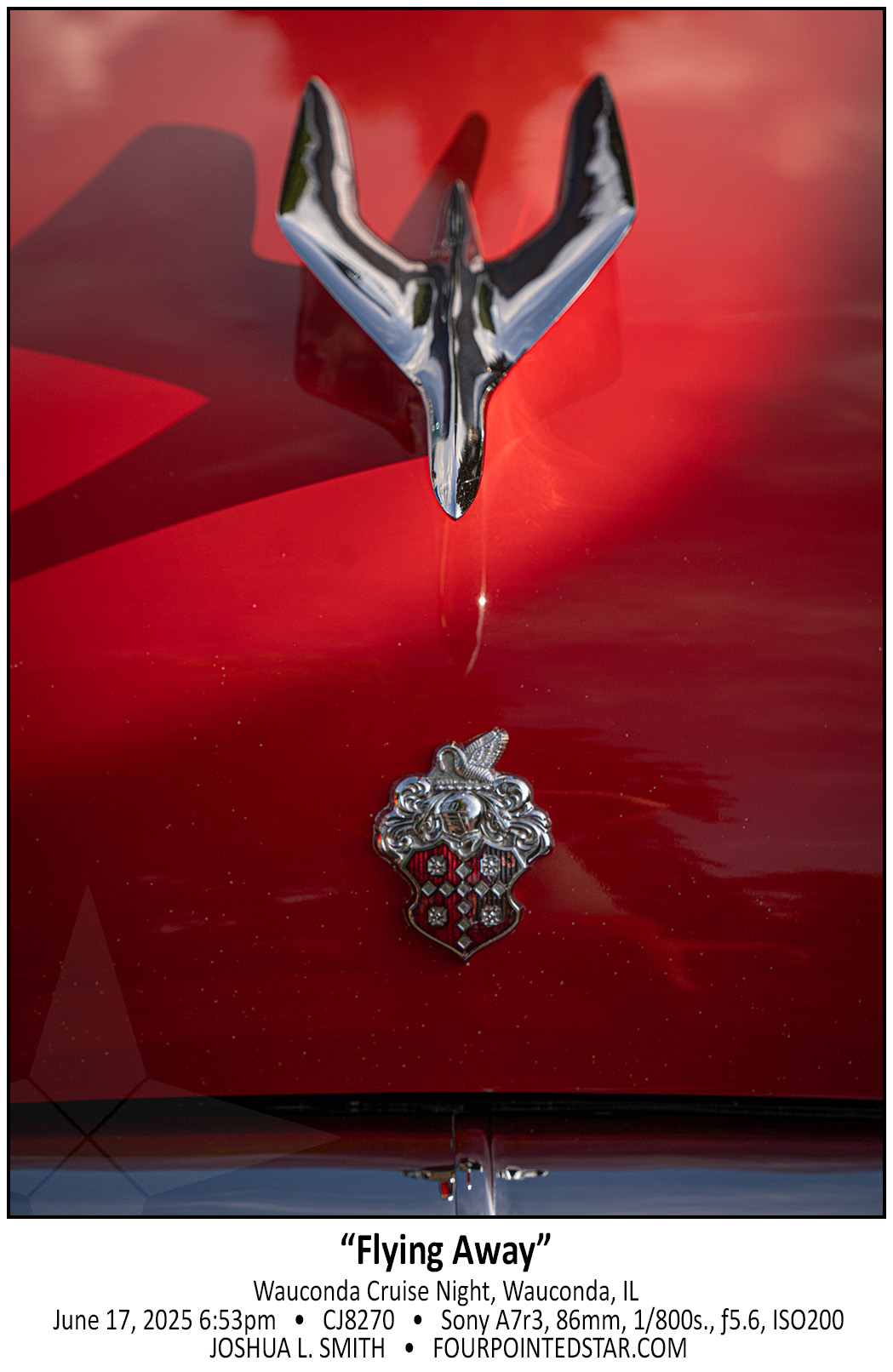
This Packard was the first car that I saw as I walked into Wauconda’s Cruise Night in June. Packard’s are uncommon but have a wonderful 1950’s style; it was an easy photograph, even with the crowd that had gathered around it. It went on to win the award for the car show that evening too.

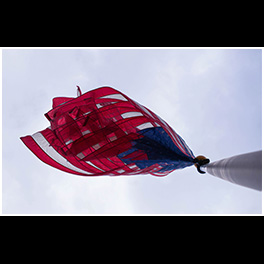
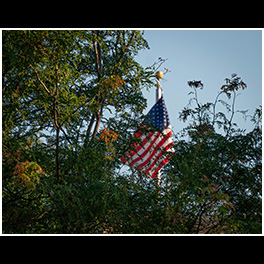
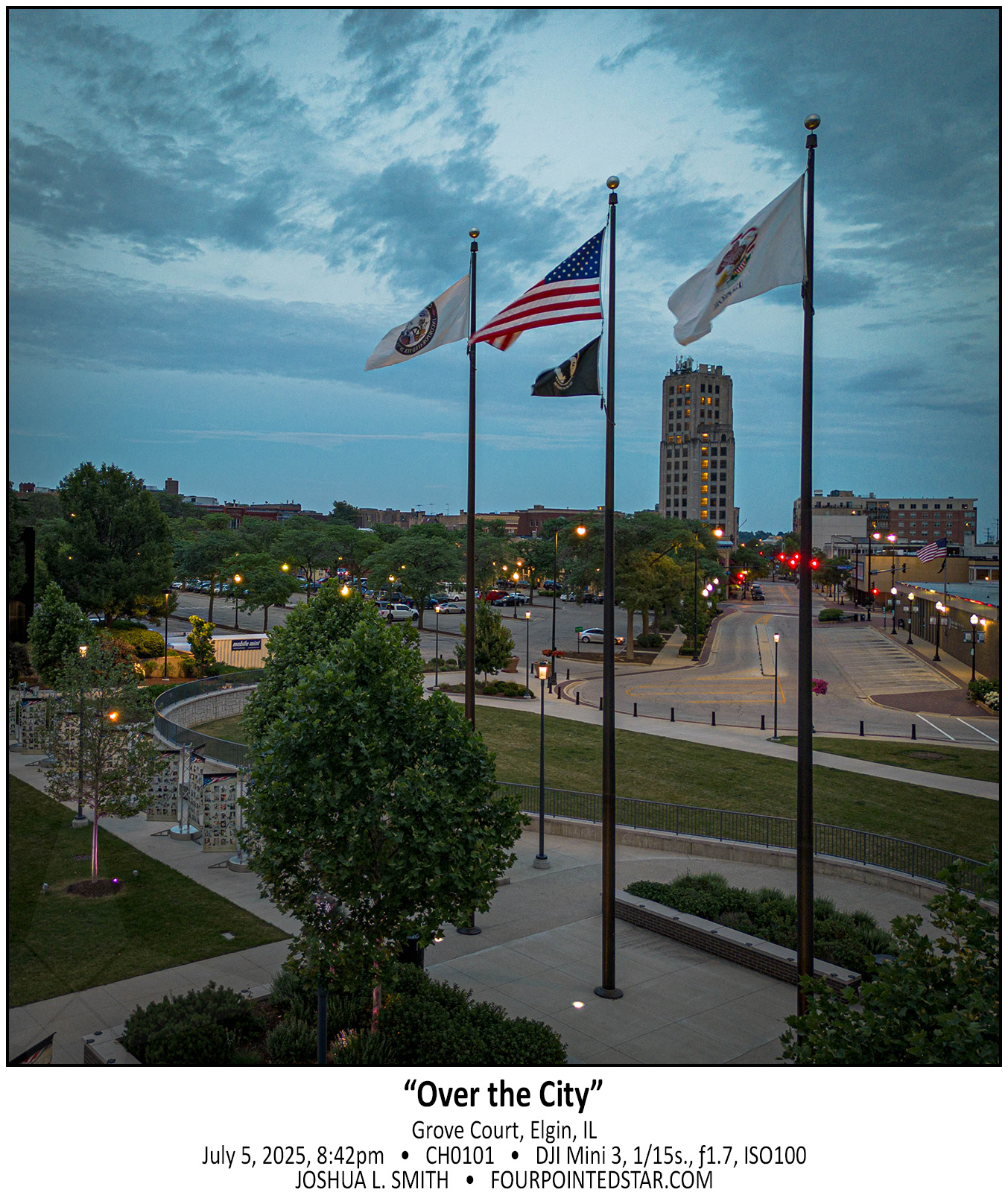
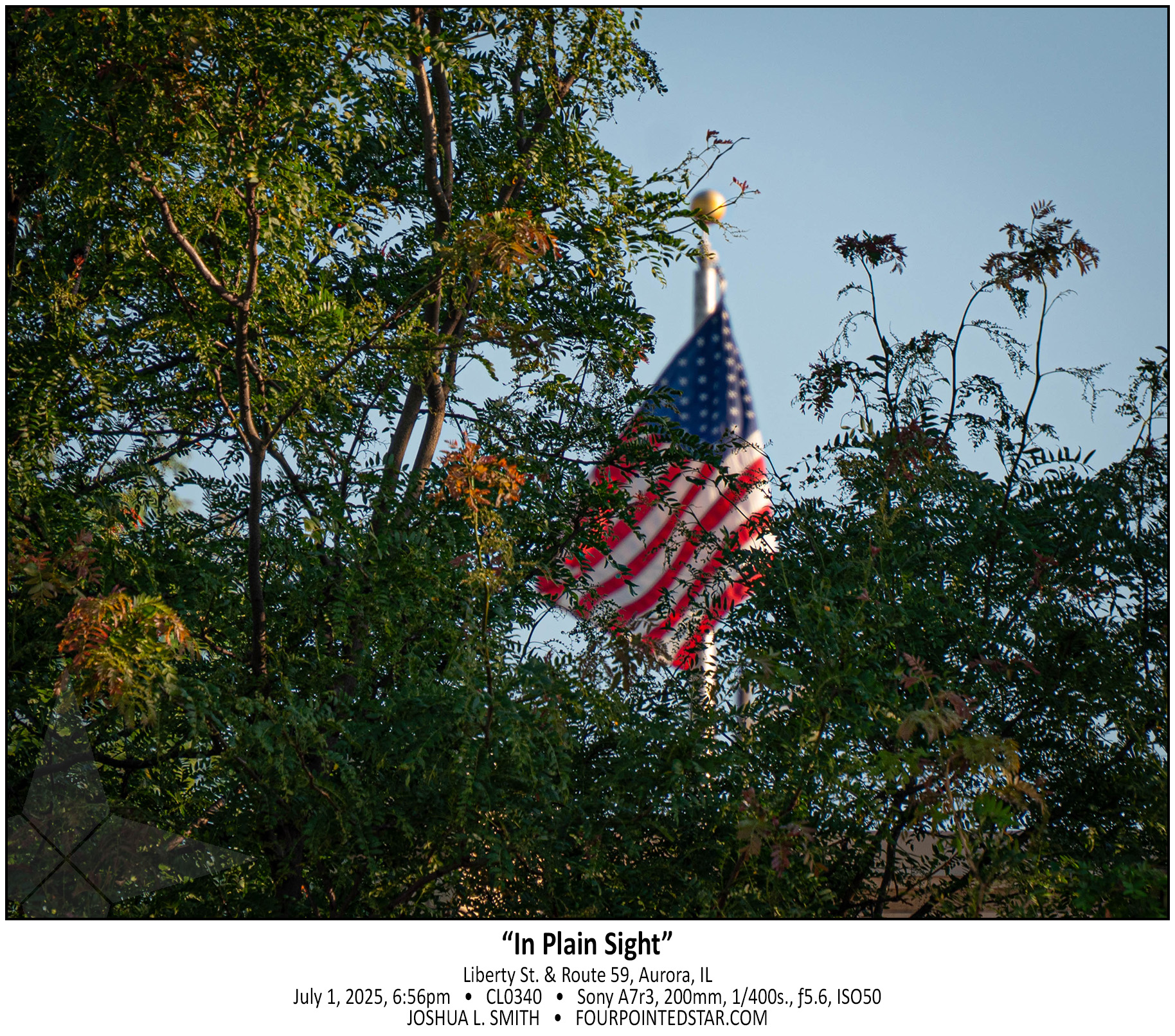
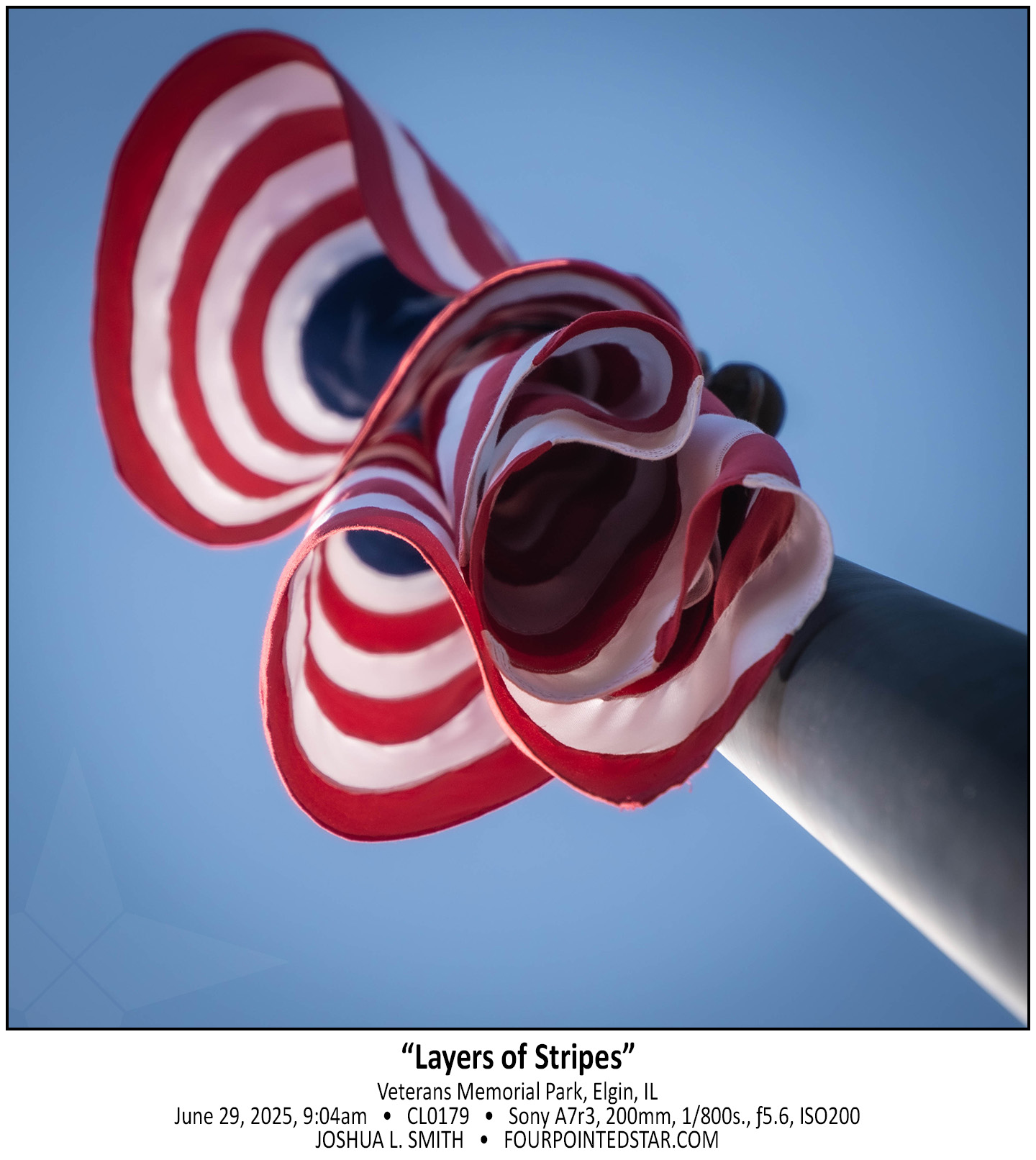
My original thought was that tonight’s photo – the last of the week of flags – would be of a flag with the sunset from the drone, but a huge cloudbank rolled in and ruined that plan. So, I improvised. 🙂

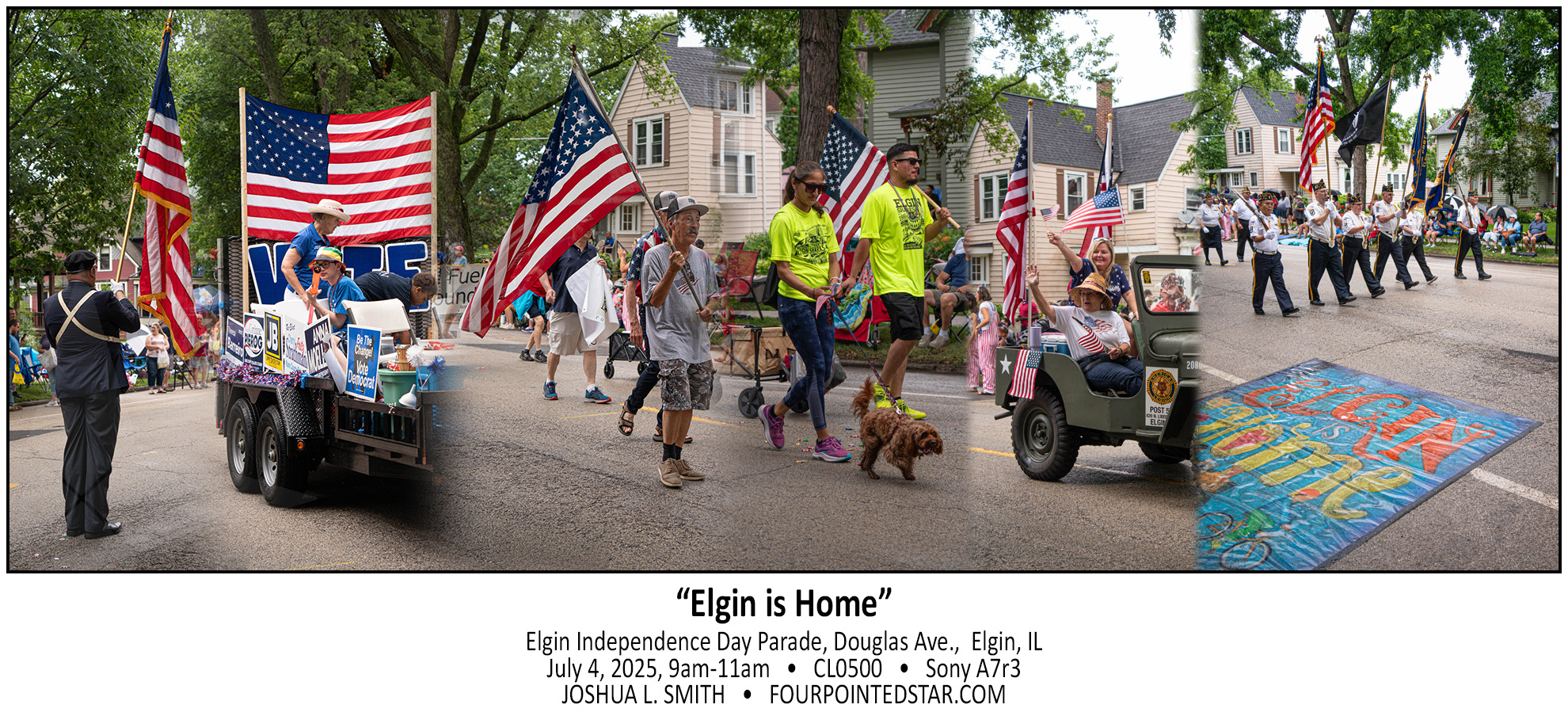
A good Independence Day Parade is full of red, white, and blue – clothing, bunting, streamers, balloons, and so many American flags large and small. So in keeping with this week’s theme, here are a few flags from my hometown’s Fourth of July parade.

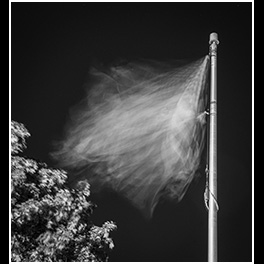
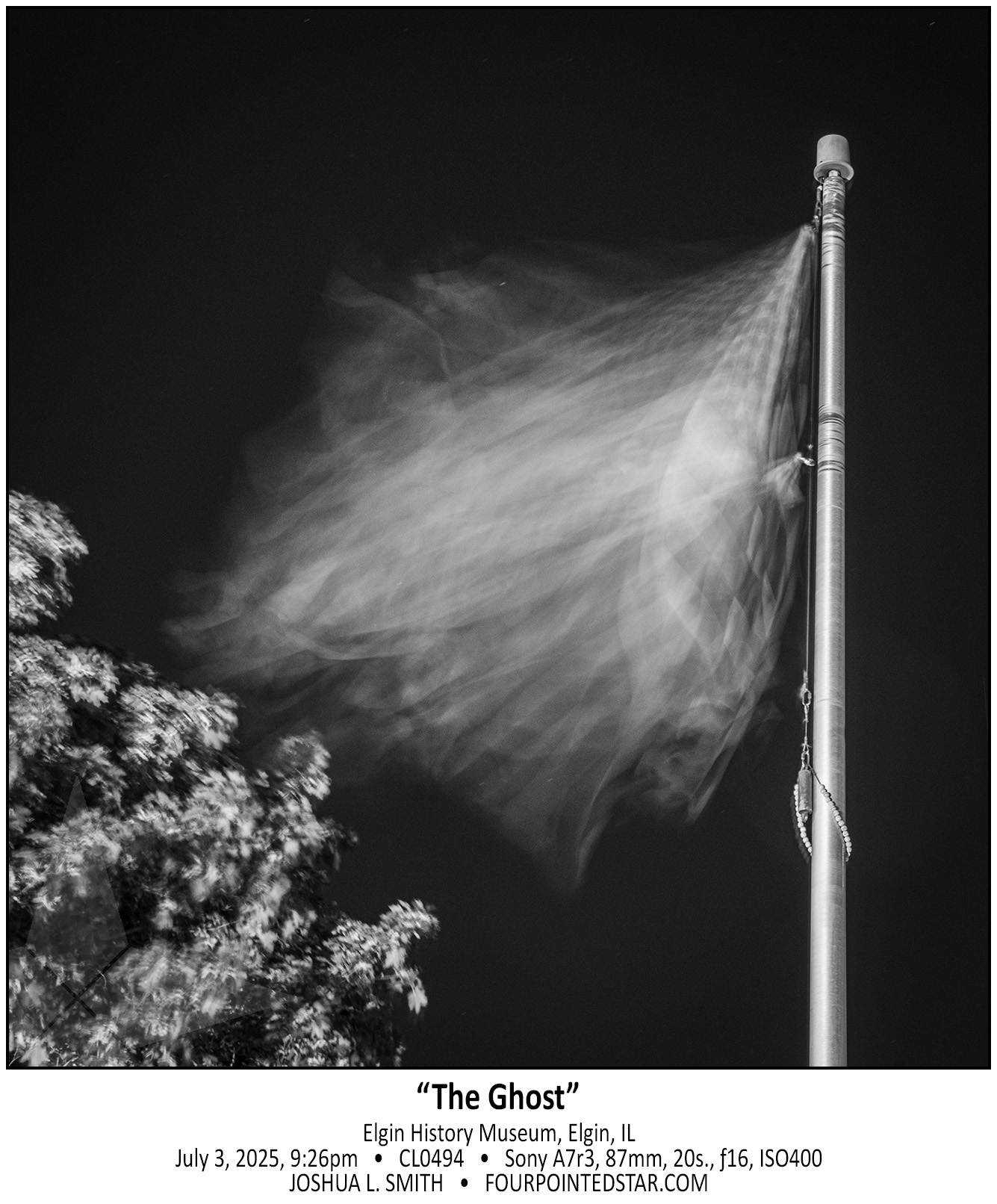
I’ve captured this style of image of an American flag multiple times; a single long exposure of a flag as it waves in a breeze. The trick is the breeze can’t be too strong or you don’t get variations in the waving, but … that means that you might encounter a night like last night, where you stand outside for an hour because the wind just isn’t blowing most of the time.

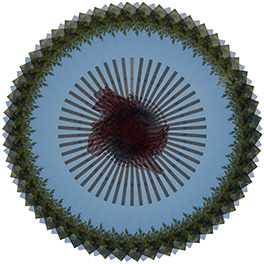
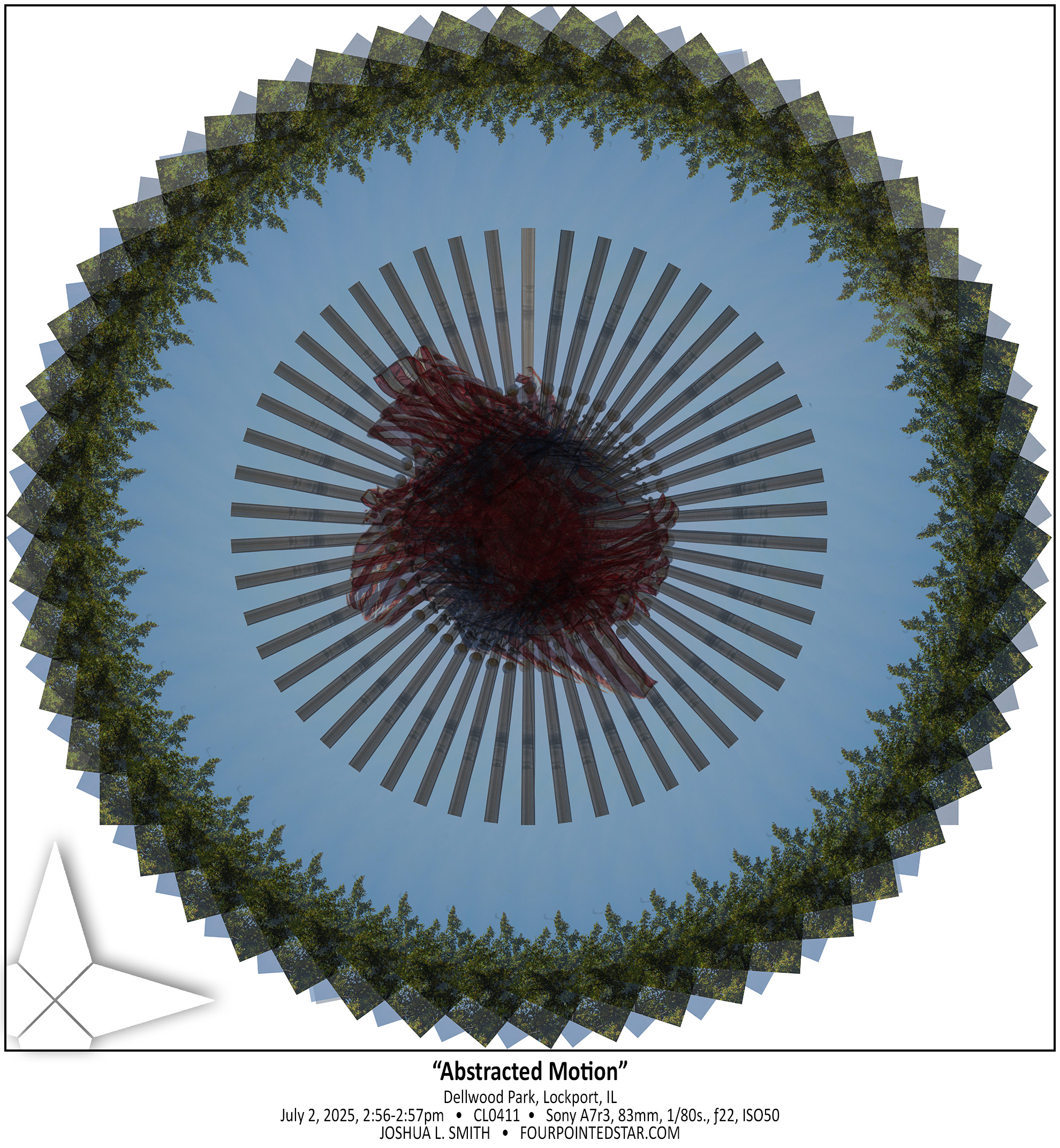
Let’s call this image a work-in-progress, ok? As photographers if we’re honest with ourselves, none of our images turn out EXACTLY how we want them to, especially when we’re trying something new. However, I am very happy with this composite. I wanted to do another multiple exposure this week, but this time with a lot more images – 50 is a lot, right?
I captured the same flag at roughly 1 second intervals for 2 minutes for this creation, and each flagpole is rotated exactly 1/50th of the circle. While the blending/opacity did not turn out with the effect that I wanted, I am exceedingly happy with the happy accidental bushes around the edge!
p.s. I’ll let you guys figure out why I chose 50 images. 😉


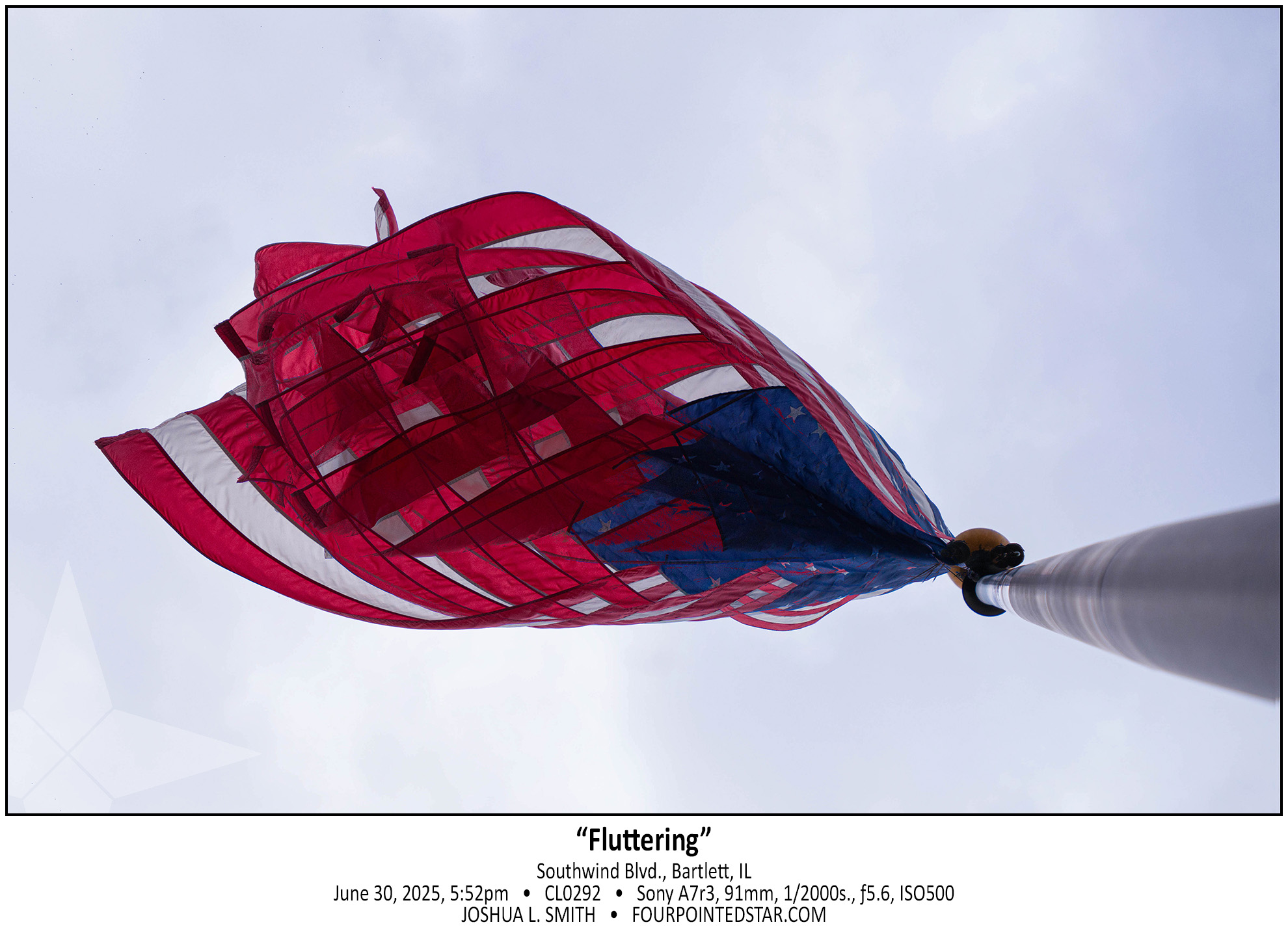
Doesn’t everyone lay down in the lawn of a random business’s lawn because their flag is waving in the correct direction for the image that you’d like to create? This is 5 exposures merged so that each images partly shows through, and I quite like it; if you look closely, you can see where the stars bleed through in some spots too.
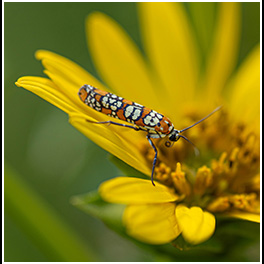
Since we’re celebrating the July 4th holiday this week, I chose our flag as my subject for this week’s photos. While normally my photos are taken in the past and then I choose 7 images for the week from an event or along a theme, I’ve decided that this week’s photos should be taken daily and be relatively unique compositions.

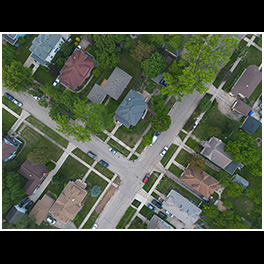
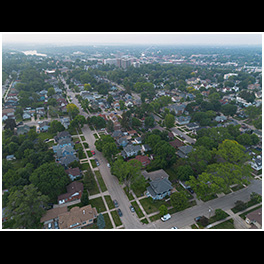
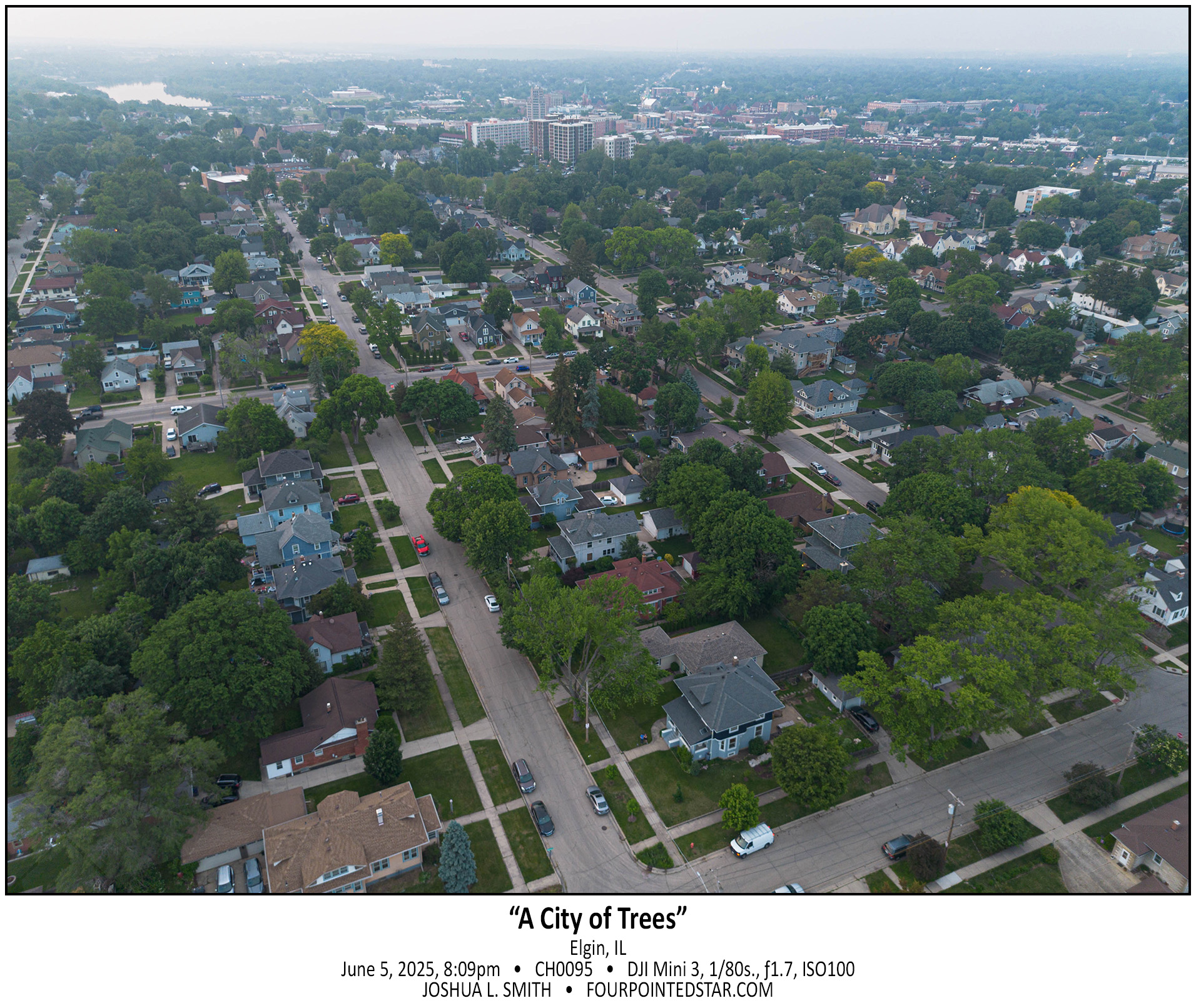
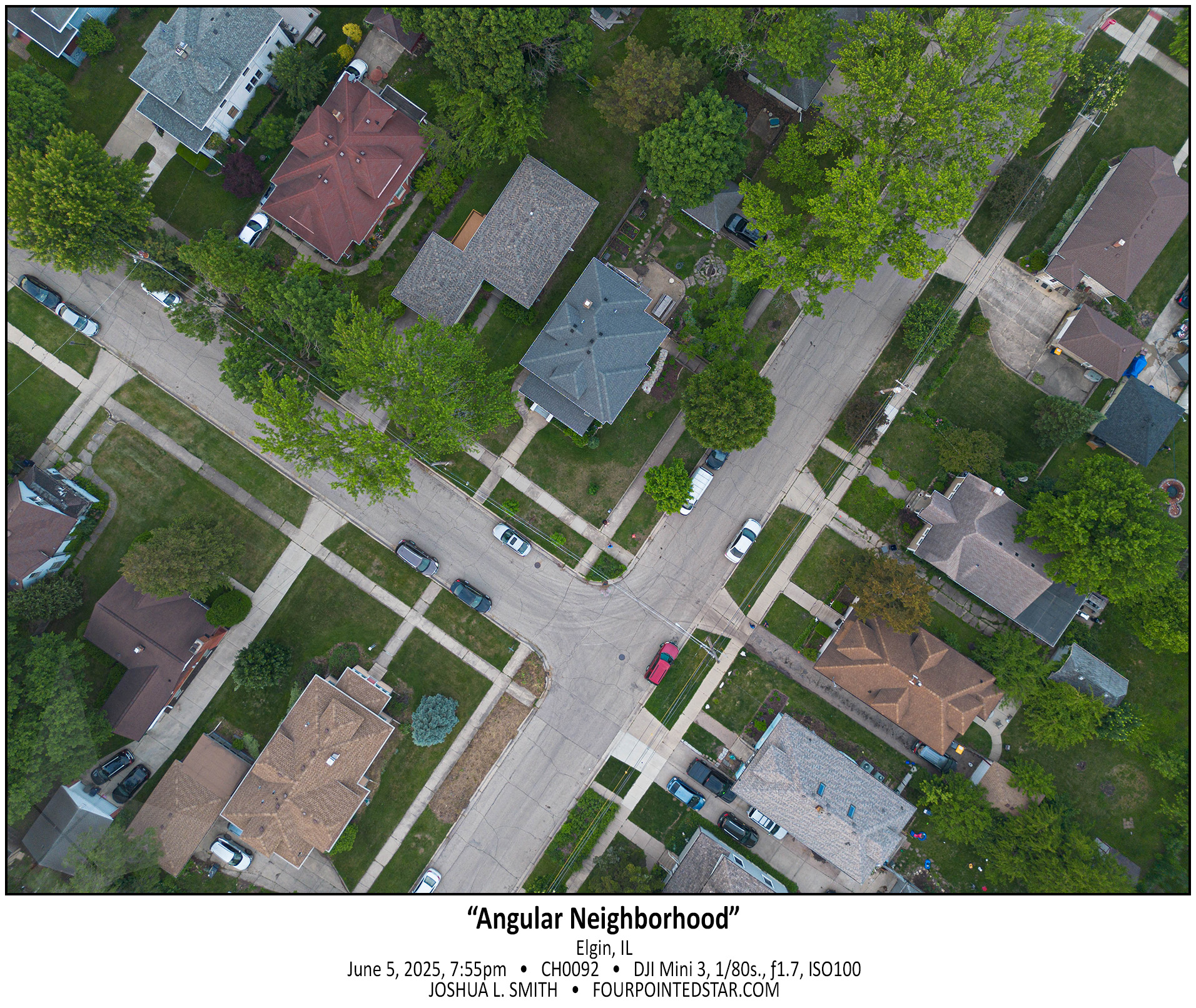
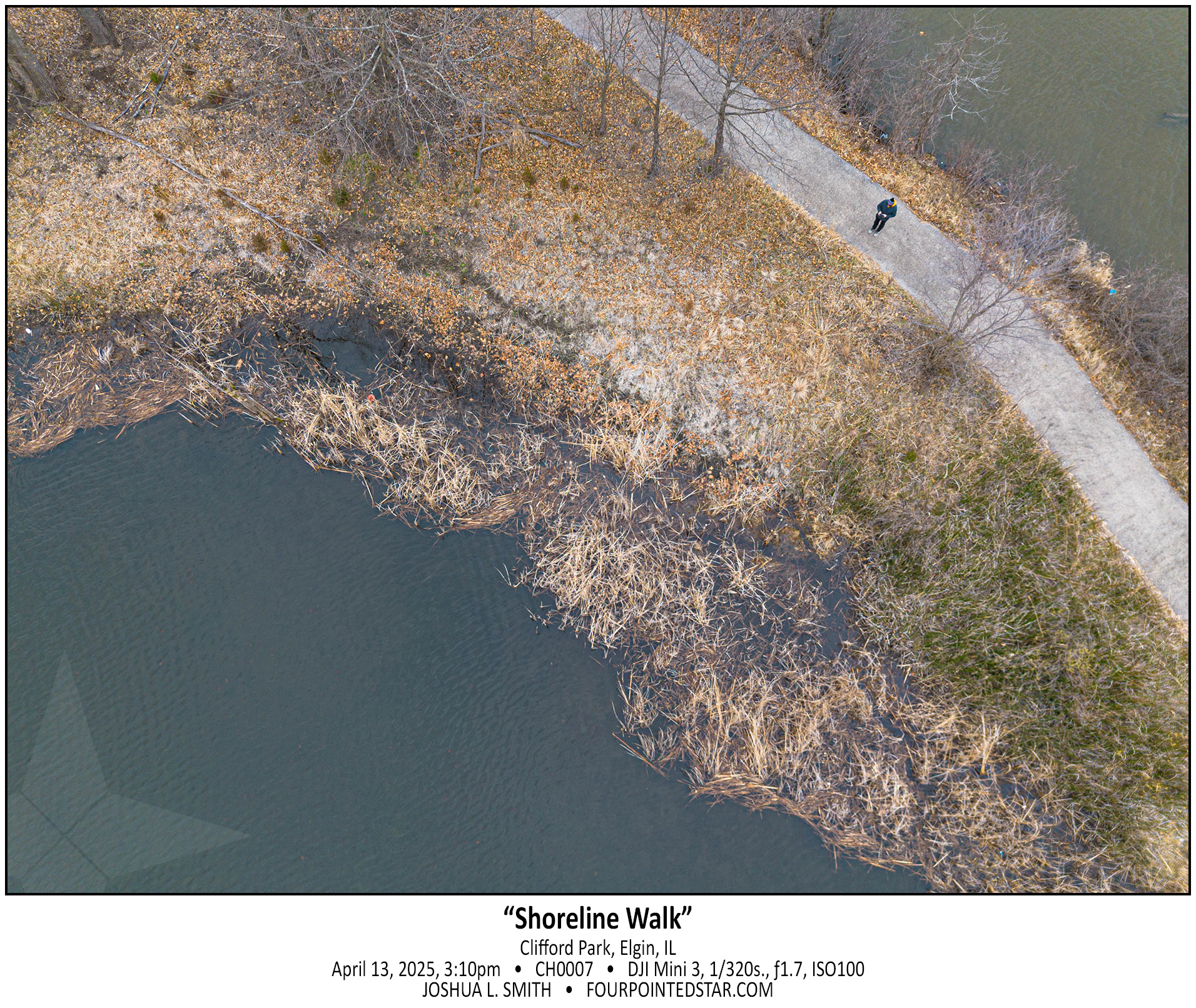
A few years back, I attended a camera club meeting about street photography. One of the attendees asked about the privacy of those that you photograph, and the speaker responded “as long as they are in public, there should be no expectation of privacy.” A drone blurs this line even further; while a photo taken 300 feet away will to show fantastic resolution, you can easily see my neighbors back yards in this photo. Anyway, as much as I enjoyed trying to create an interesting composition with my own neighborhood, I won’t fly the drone over residential property any longer.
…view older images with the thumbnails below…

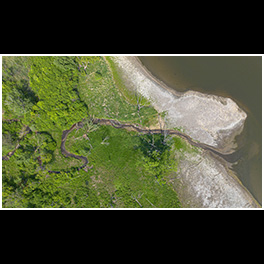
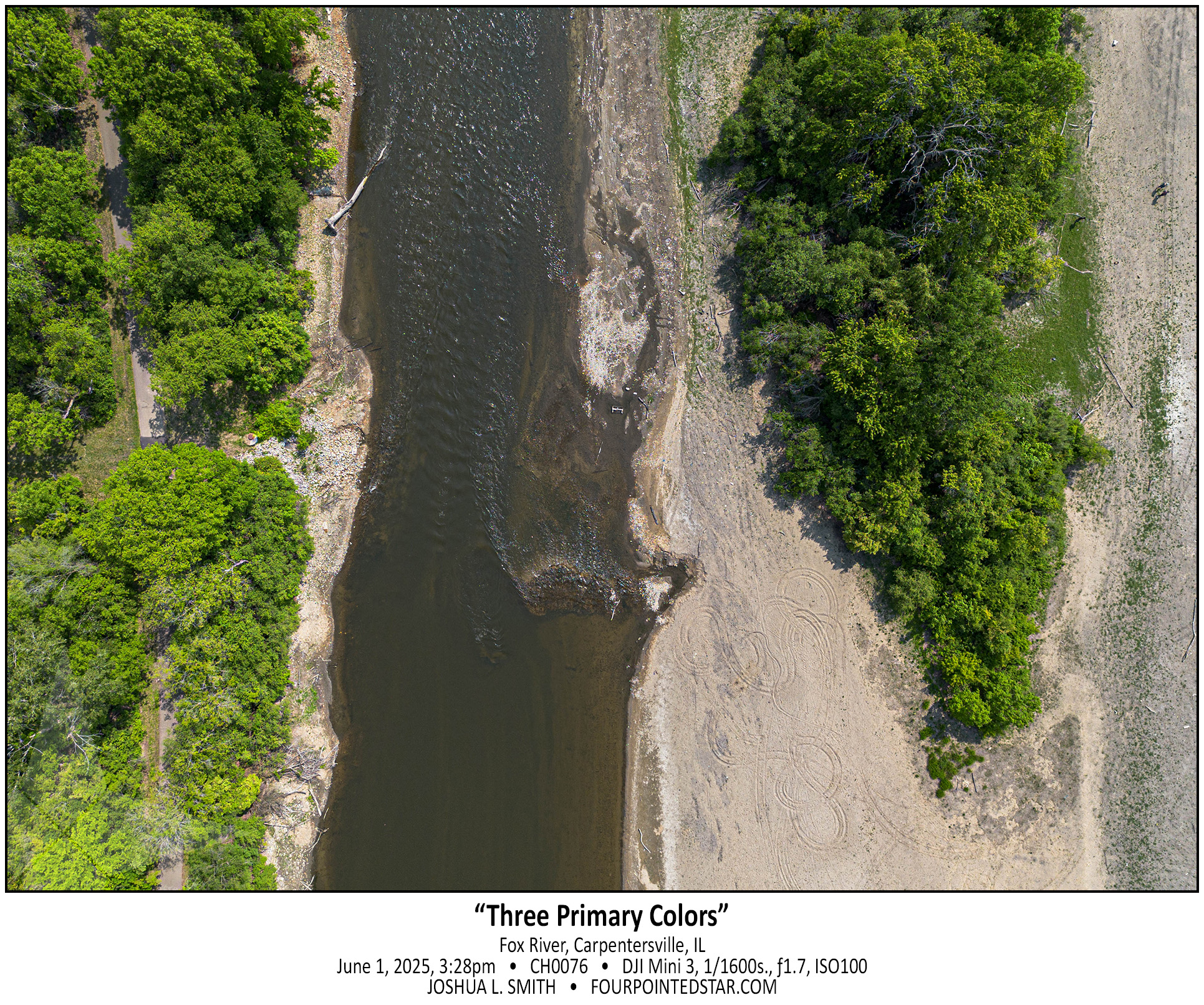
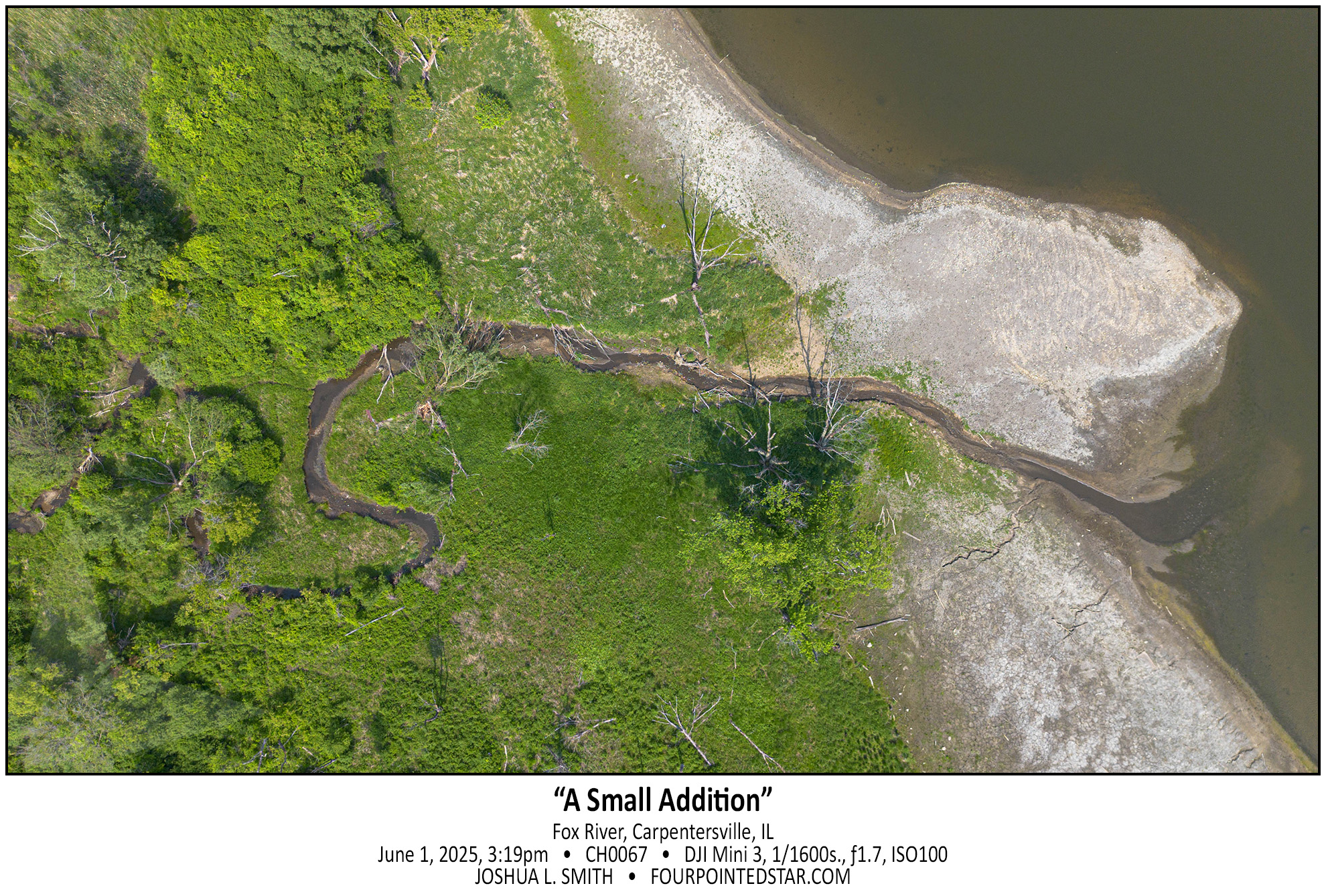
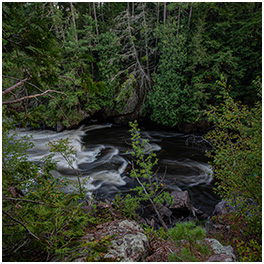
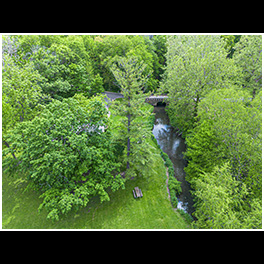
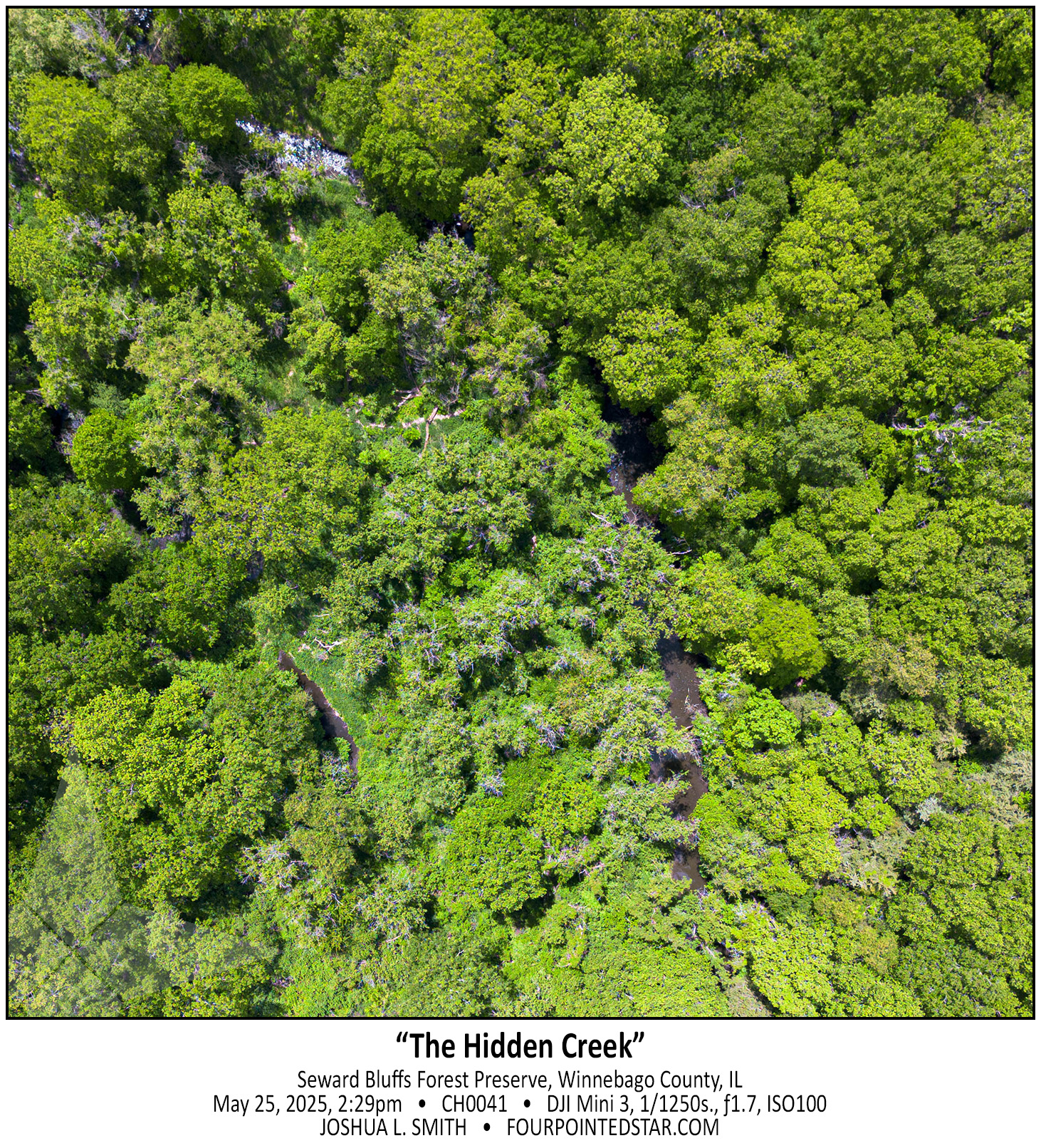
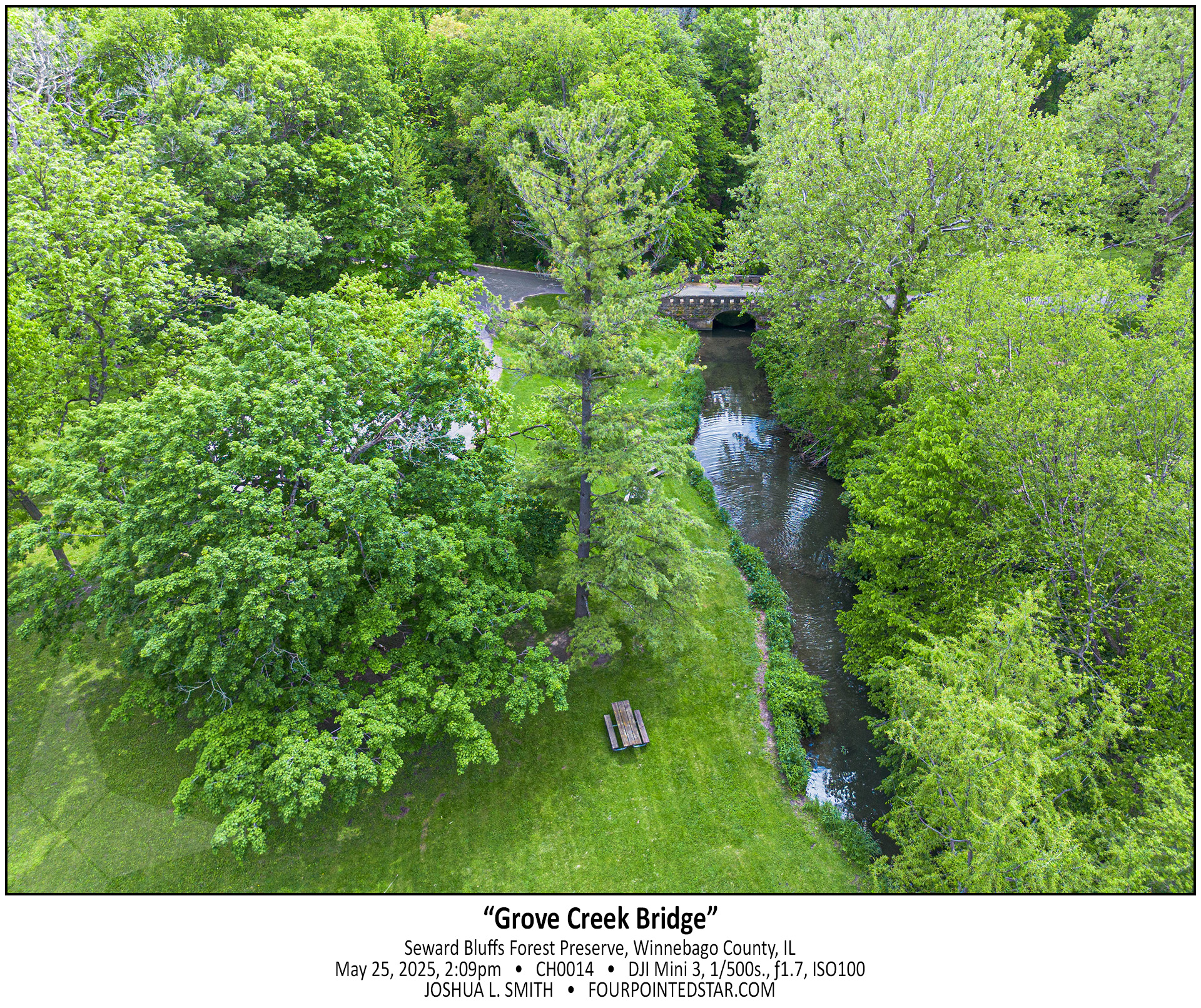
Now this is exactly why I wanted a drone. I hovered over this particular creek as it enters the Fox River for at least 5 minutes, flying the drone to different compositions and then taking a photo. I love the colors, textures, and the winding creek at it flows through the center of the image.
…view older images with the thumbnails below…

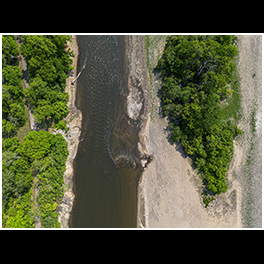
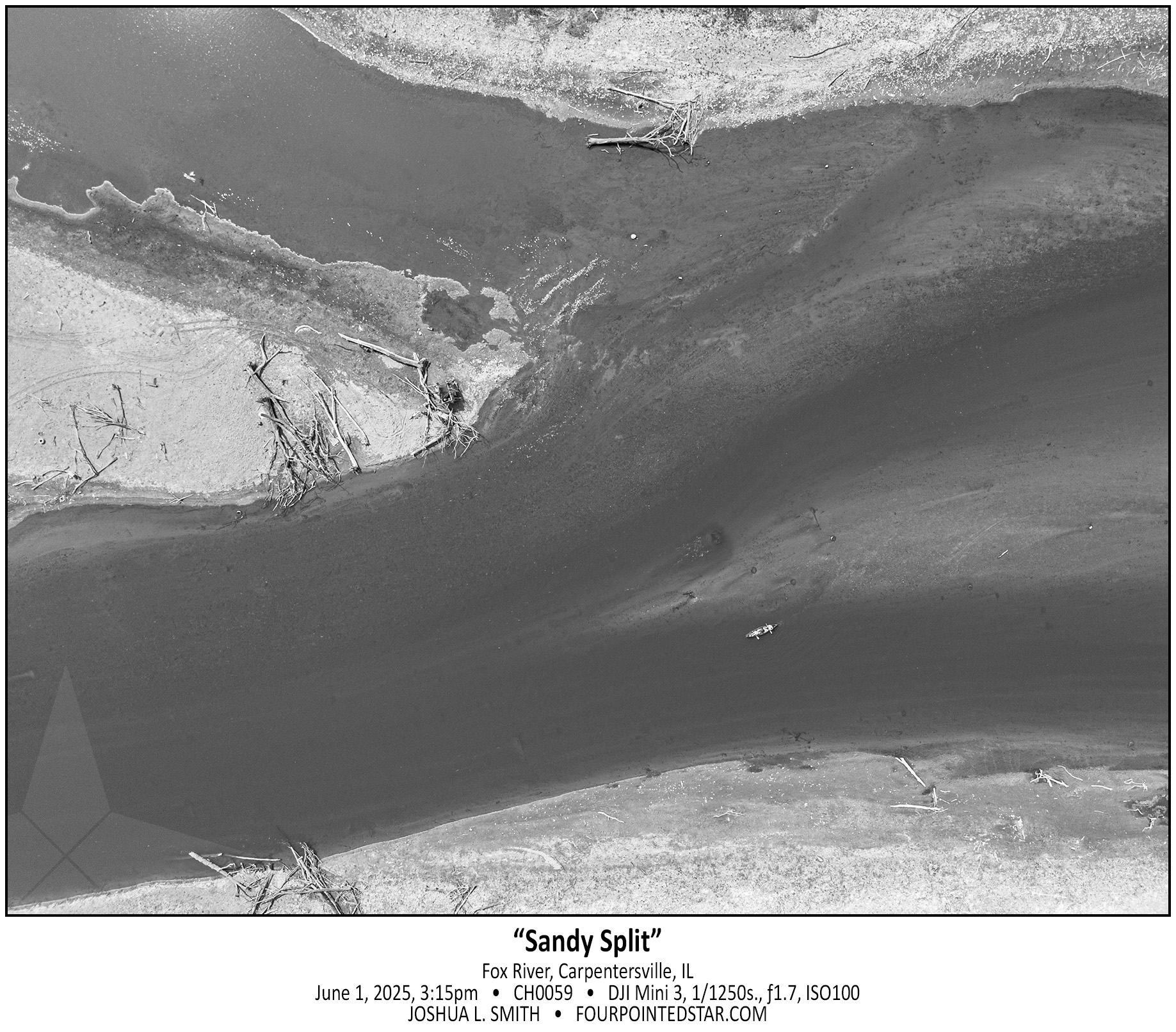
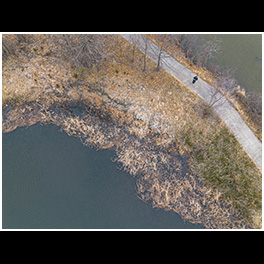
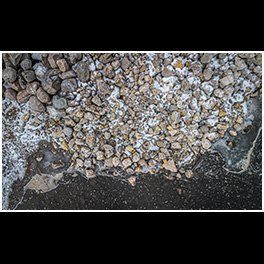
It can often be difficult to convey a sense of scale, and while I love the pattern of this image, you can’t really tell the scale … until you notice the canoe in the lower right. And once you see the canoe, you can feel the power of a river that carried those logs downstream.
…view older images with the thumbnails below…

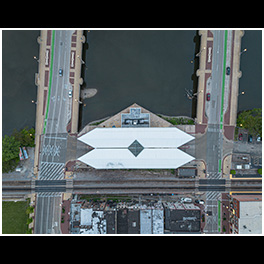
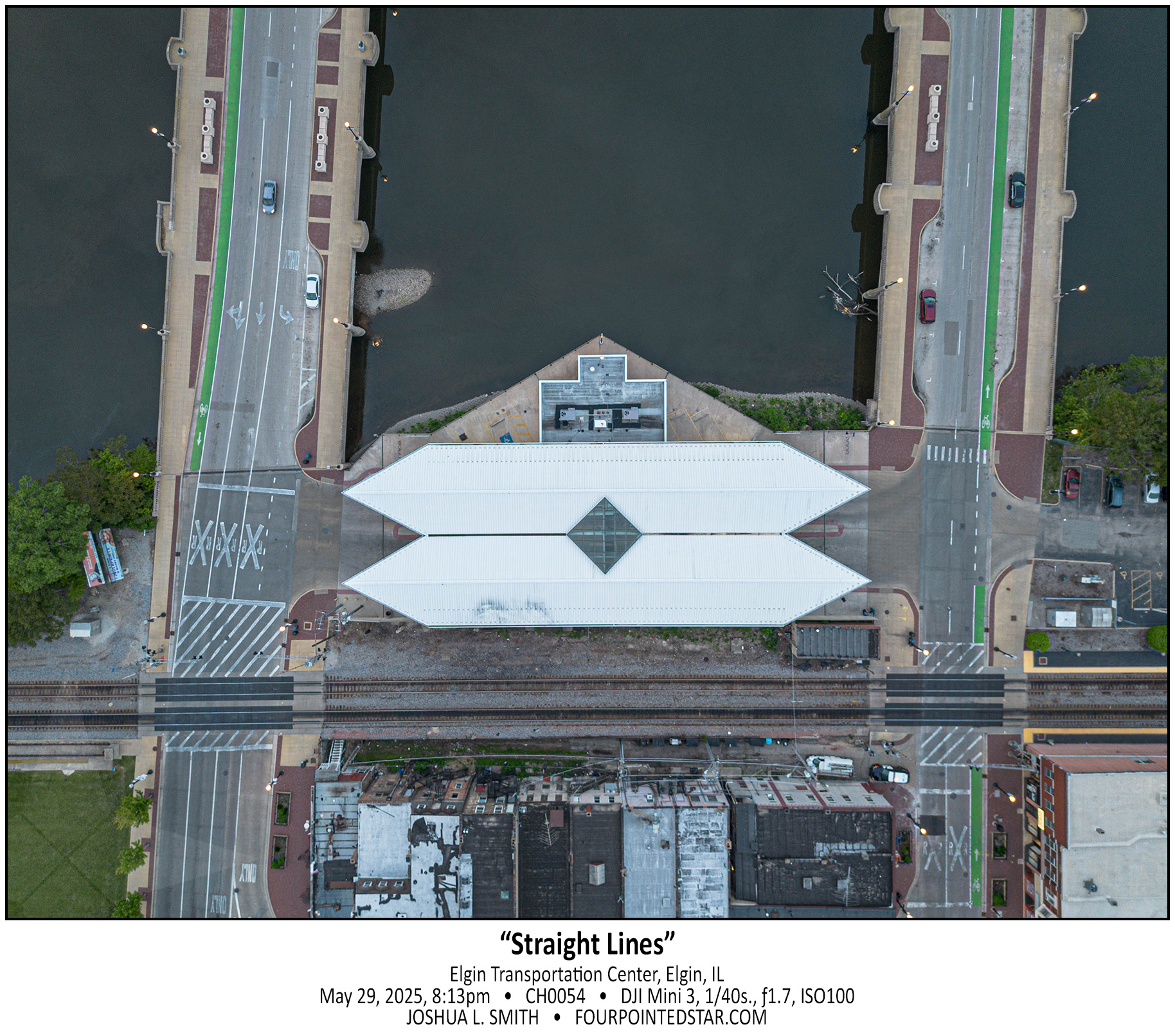
You can easily create a strong image by composing in a way that highlights a strong central focus, and when I thought of this image, my intent was to capture the unique roof of the Elgin Transportation Center. However, once overhead, the tilt of Chicago and Highland became the obvious centers of the image; I simply love how the railroad tracks, row buildings, and the transportation center give the basis for the roads to “lean” against.
…view older images with the thumbnails below…

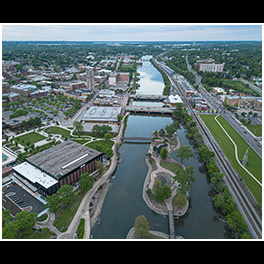
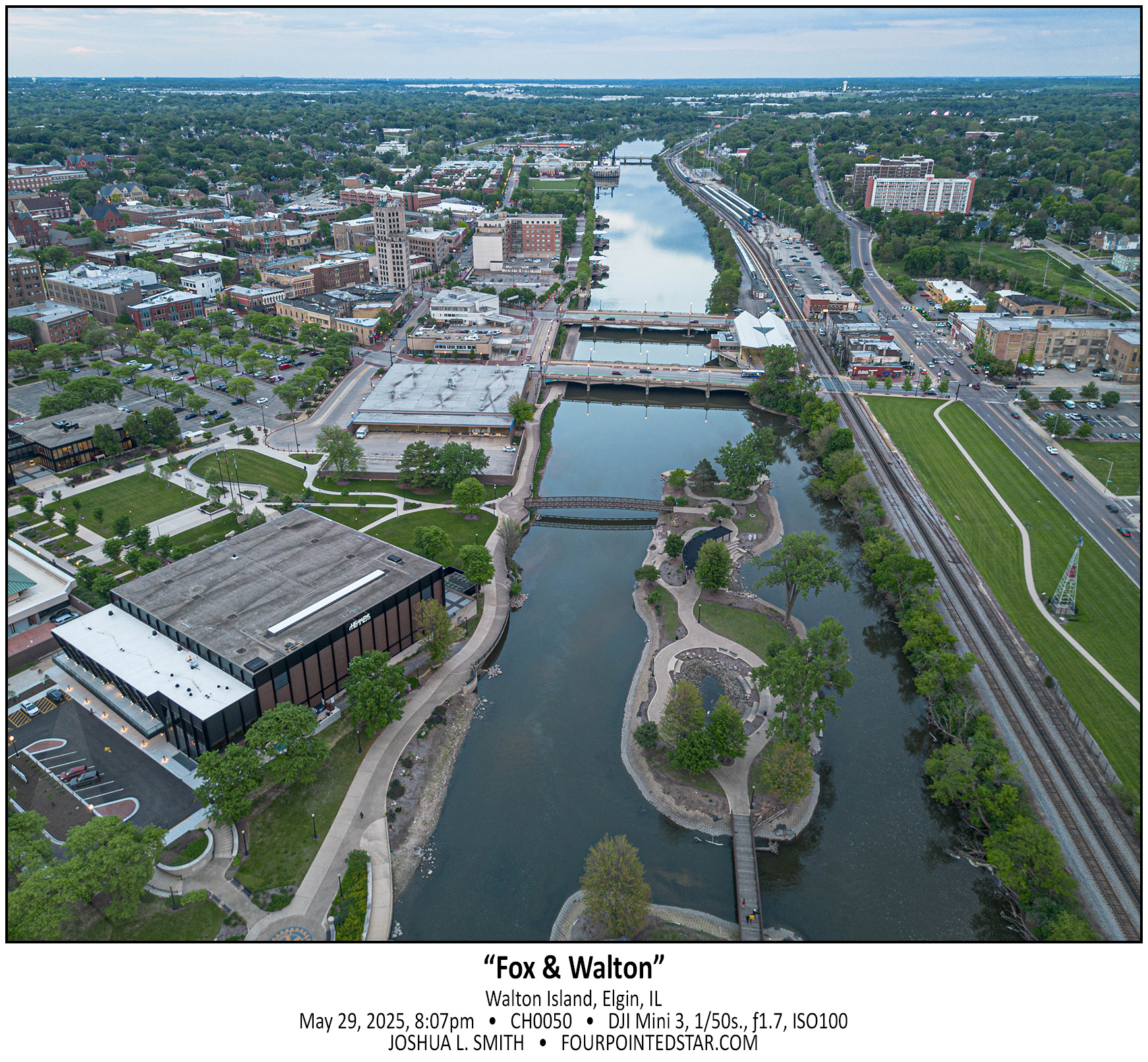
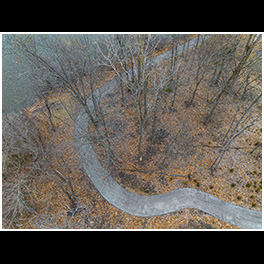
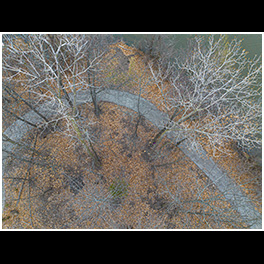
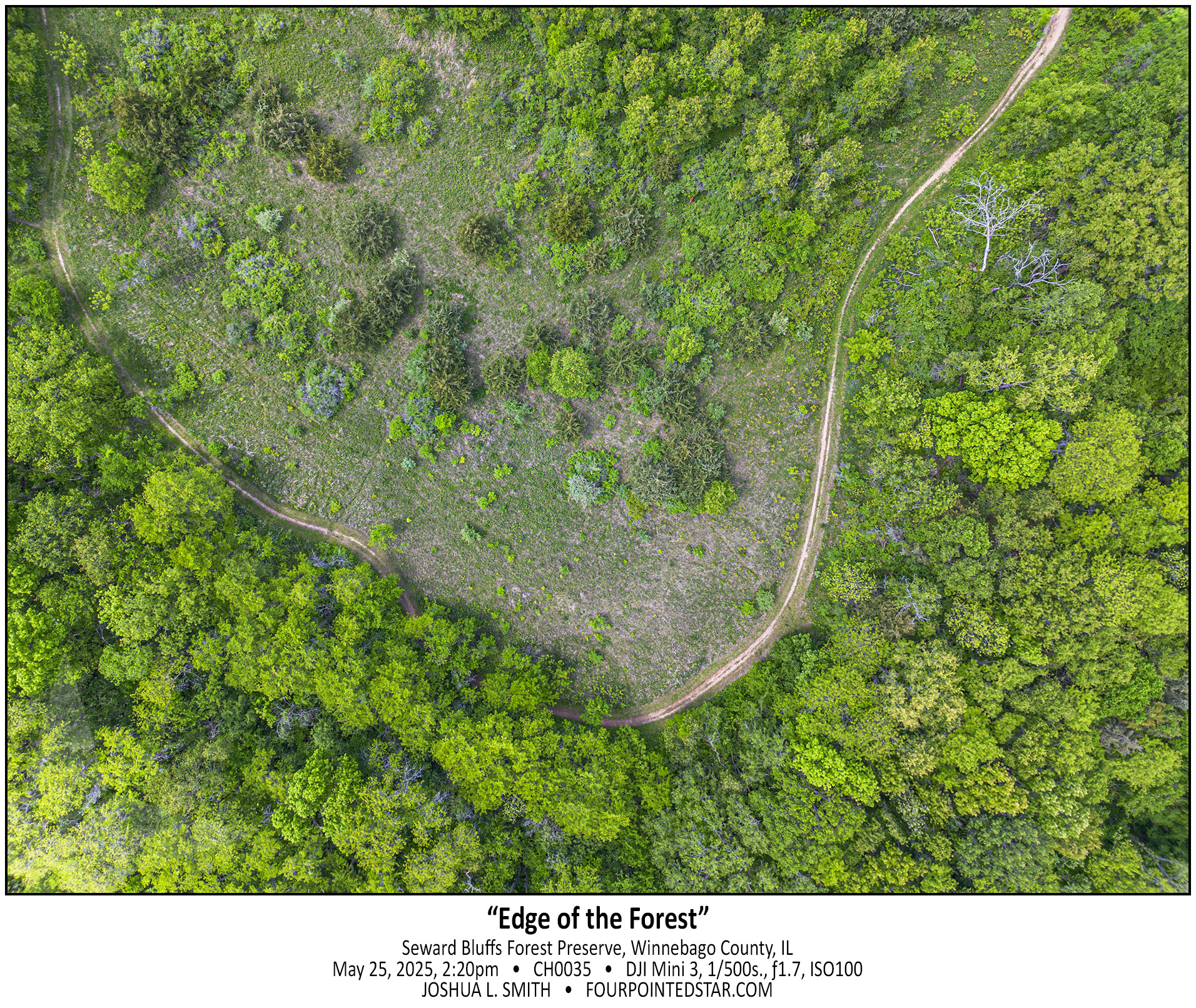
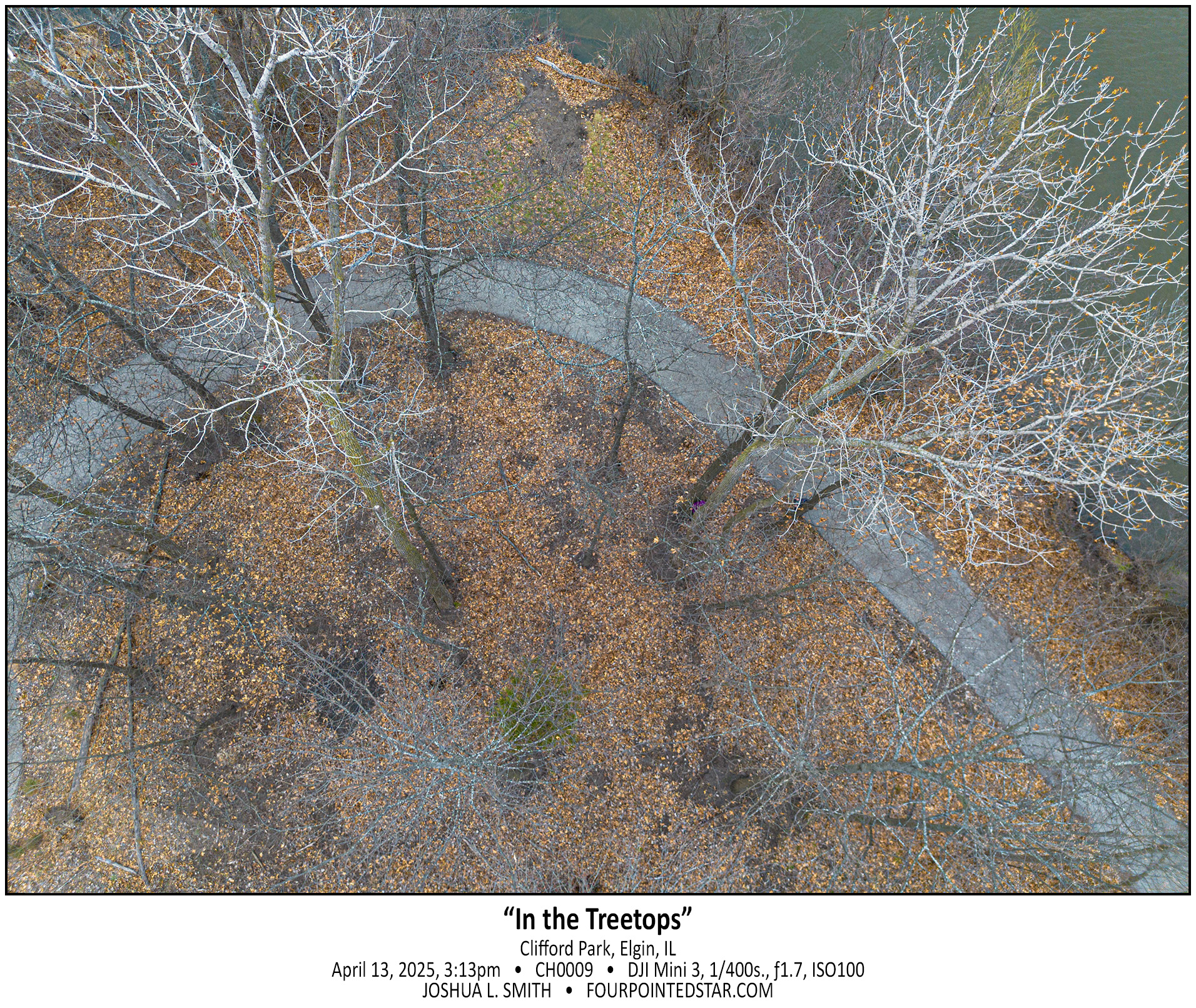
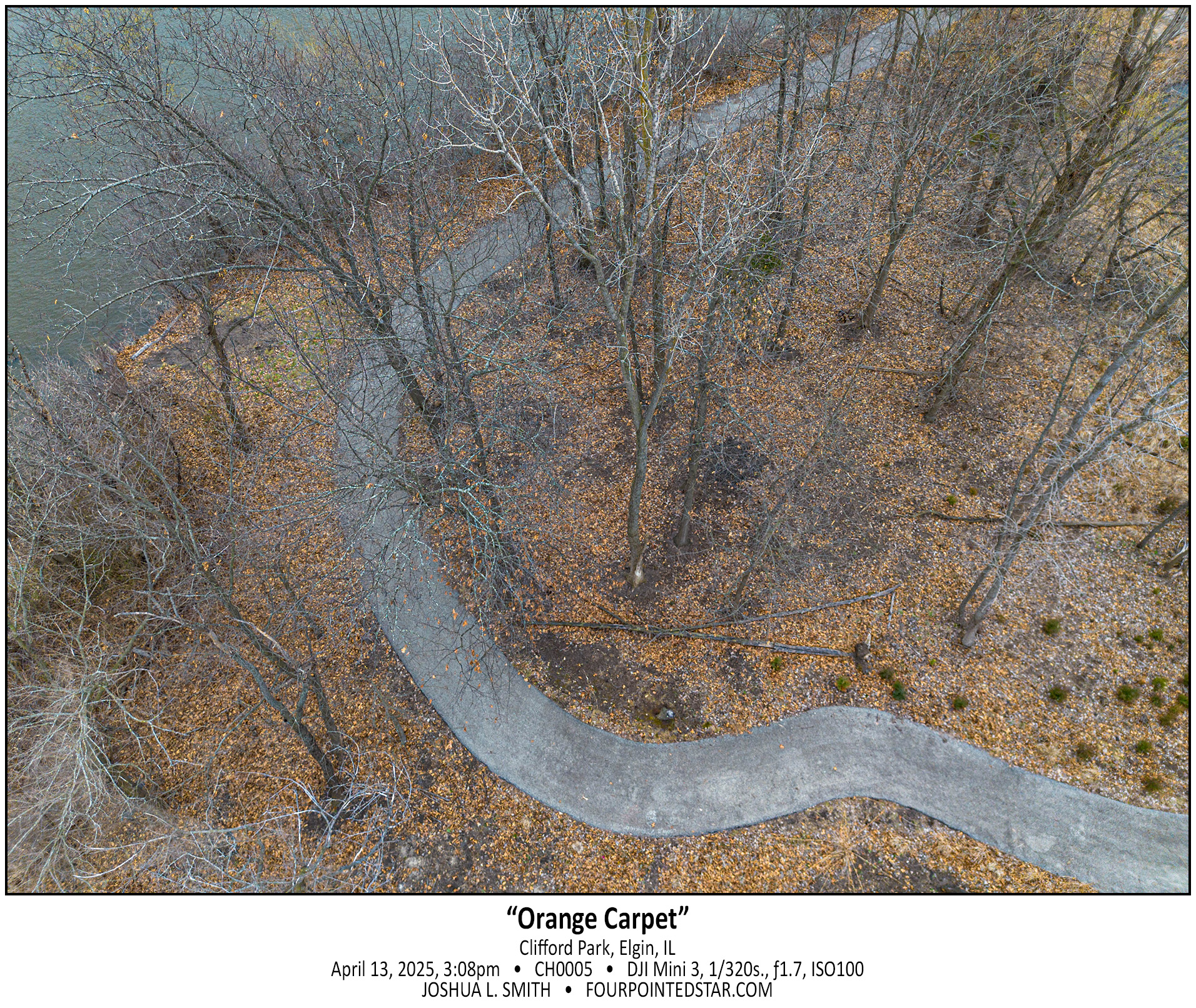
I’m new to this – drone photography; but I already love it, I can make shapes and abstracts out of our surroundings. Since I have a small drone, there are limitations to height, so my original vision of a photo of all of Walton Island taken from directly overhead didn’t work out, but that’s part of photography; adapting to your limitations to capture a new scene.
…view older images with the thumbnails below…

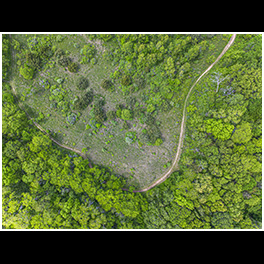
My favorite images tend to be the images that I consider well balanced; to me, no element feels too weighty. This image genuinely confuses me though; I spent probably too much time cropping, re-cropping, and then un-cropping the frame to get it to feel “right”. Don’t get me wrong, I really enjoy the image; but I was very indecisive about it; and just now, I re-wrote, deleted, and then edited this text a dozen times.
…view older images with the thumbnails below…

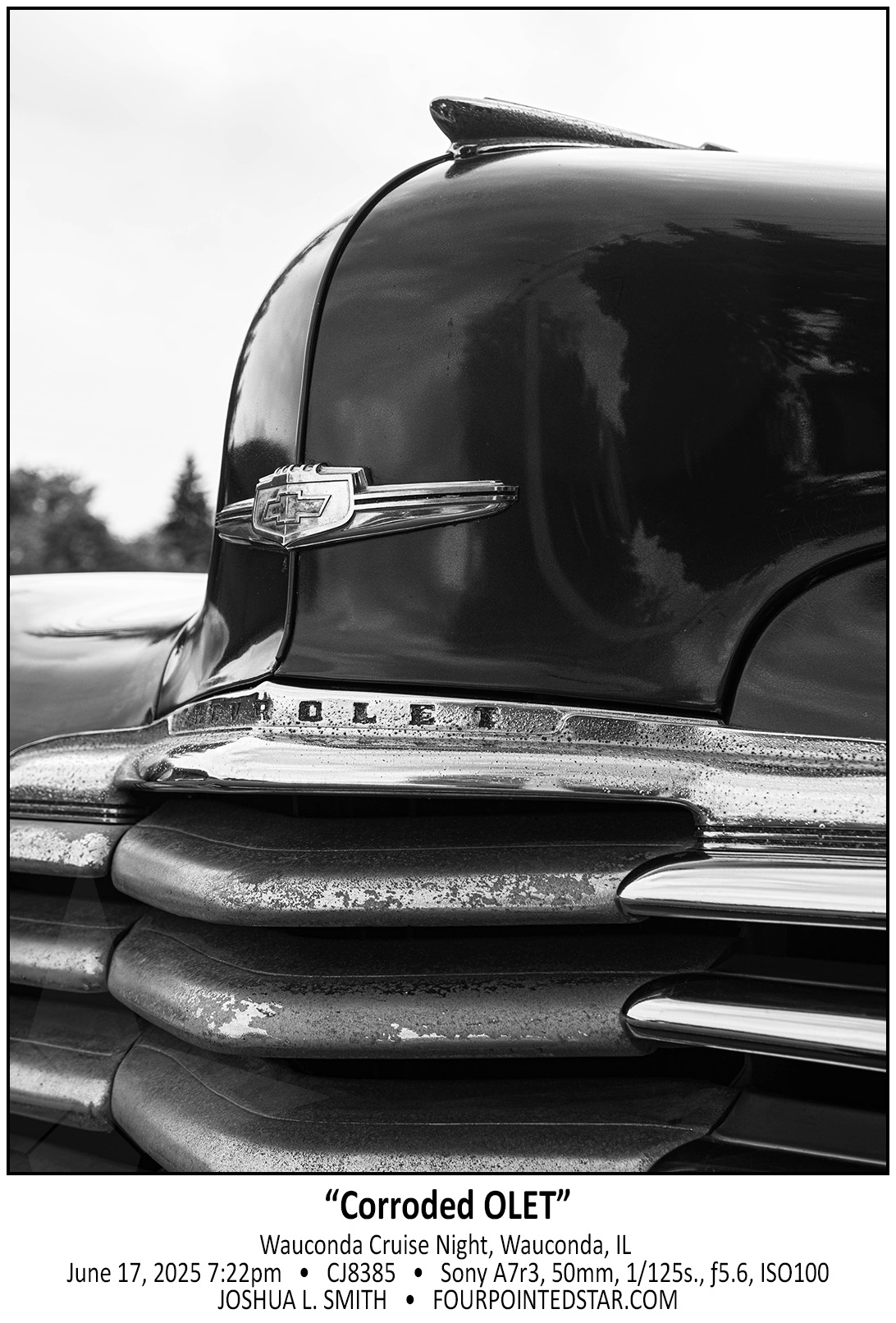
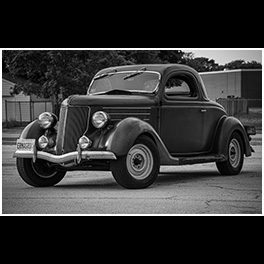
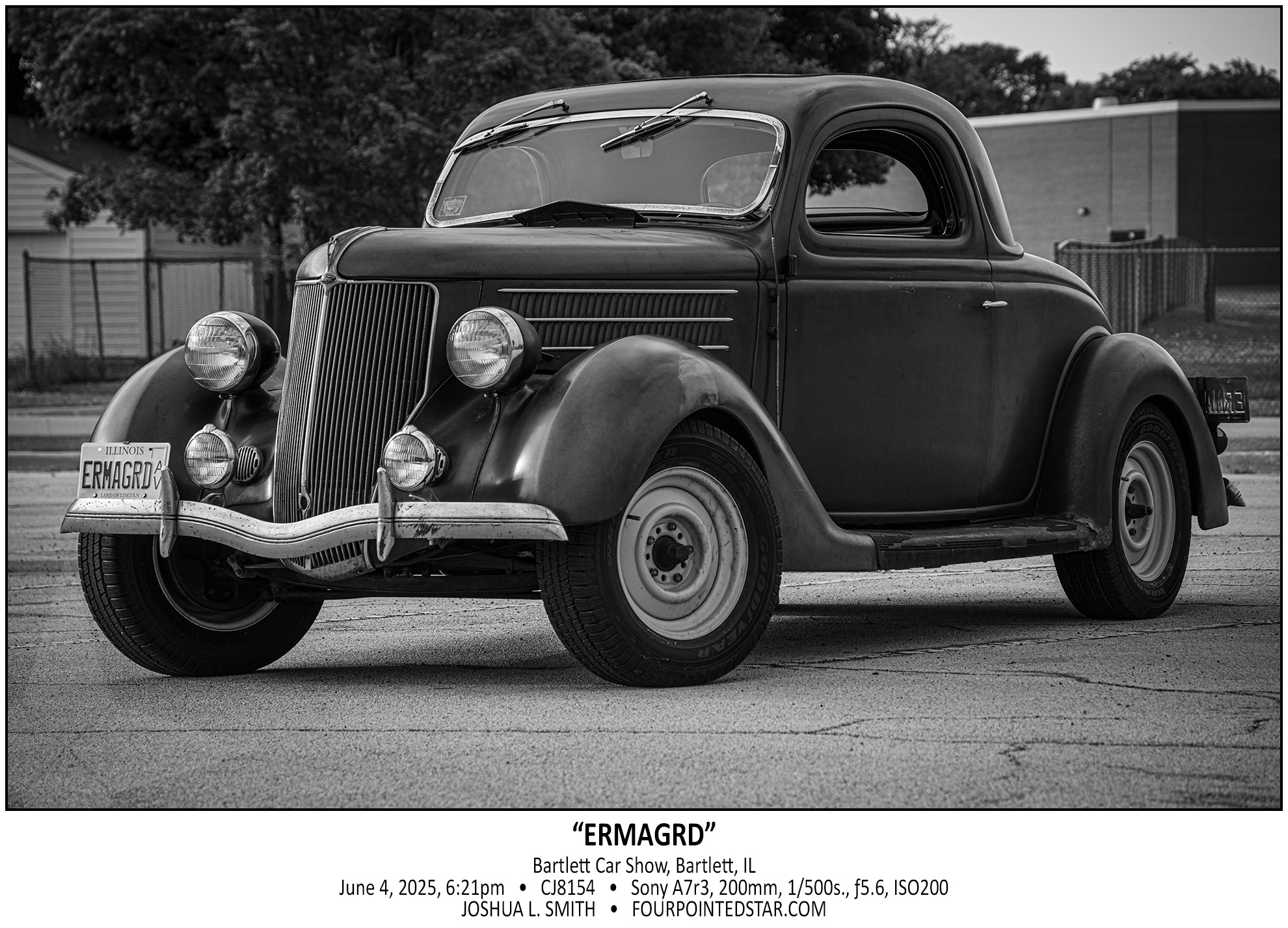
Oh my goodness, this car’s plate made me laugh out loud at the show. And I think what made it funnier is the juxtaposition of the meme-worthy license plate and the 1930’s classic Ford Coupe. But, even without the plate, this car deserved to be captured as a monochrome.
…view older images with the thumbnails below…

…view older images with the thumbnails below…