Tagged: 28-200 f2.8-5.6

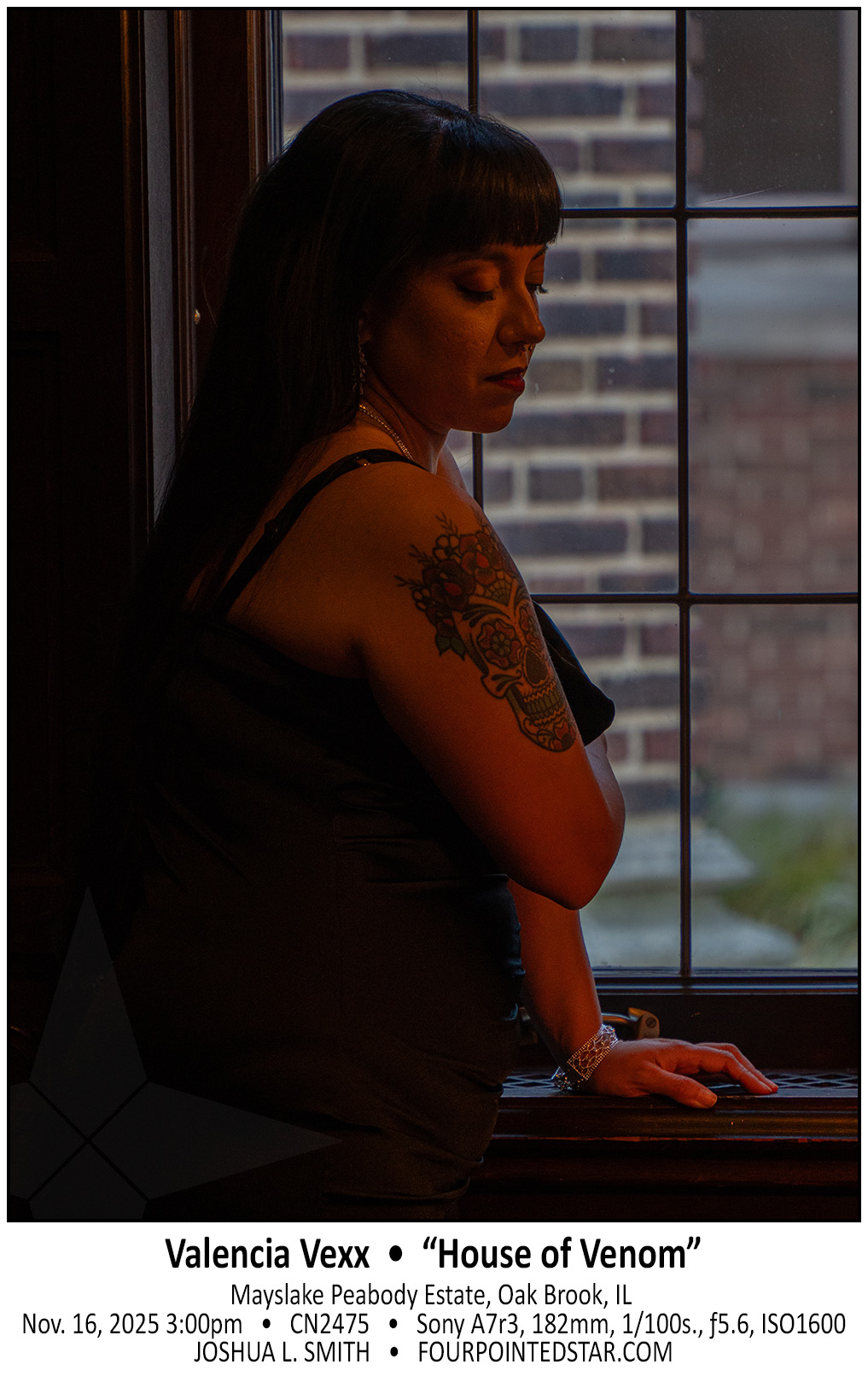
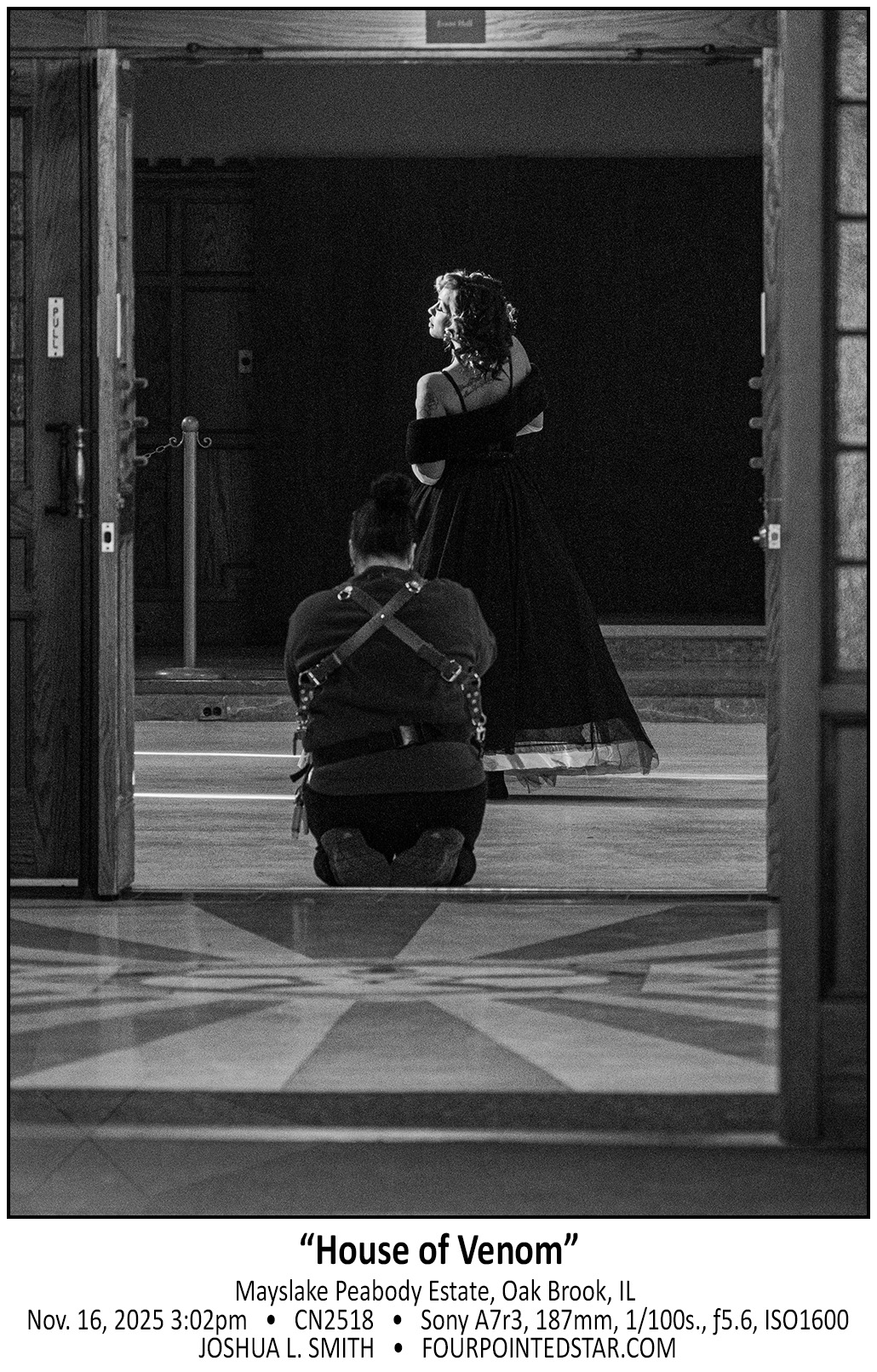
I’ve never attended a portrait event before; in fact, I often joke that I will photograph anything, except for people.

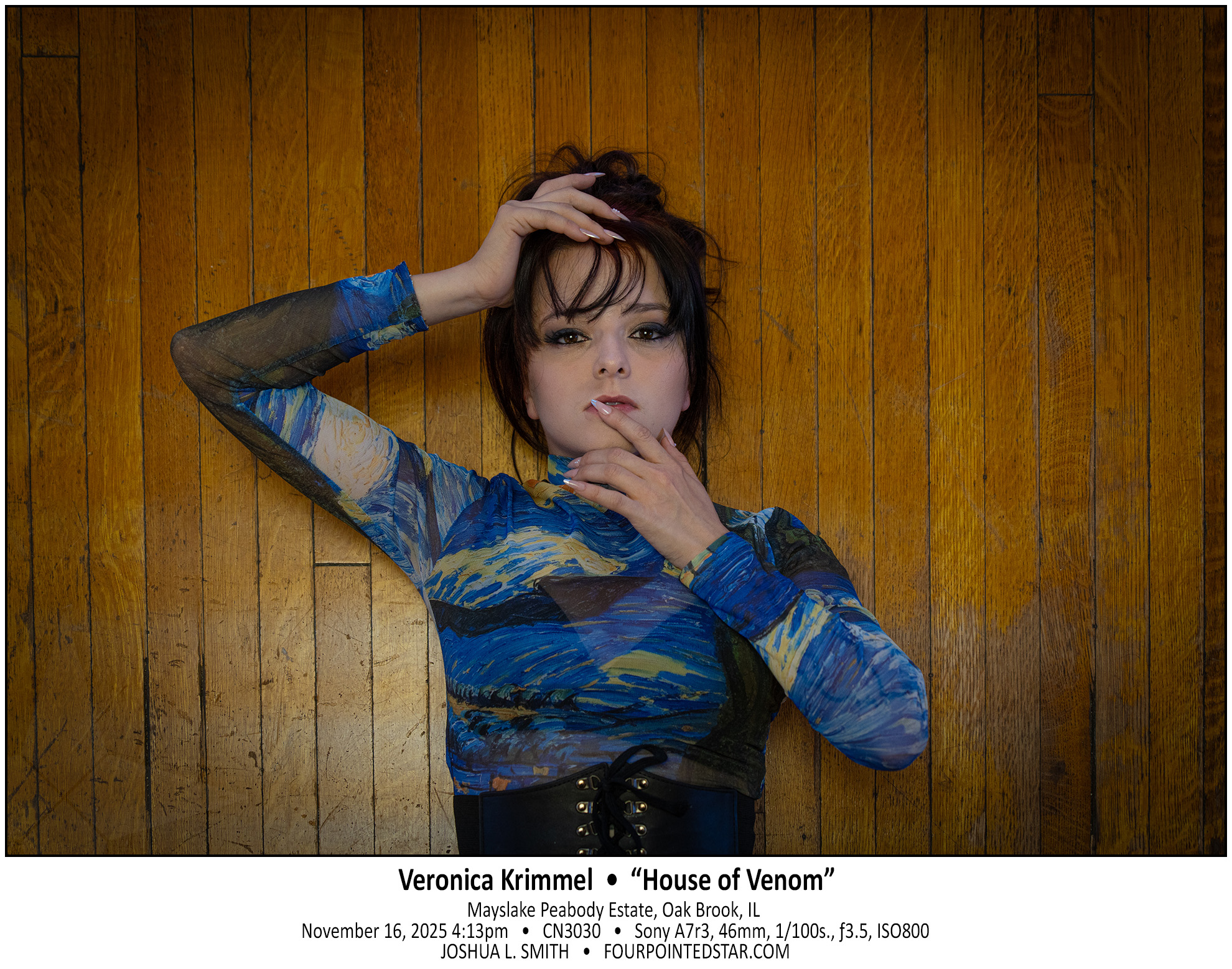
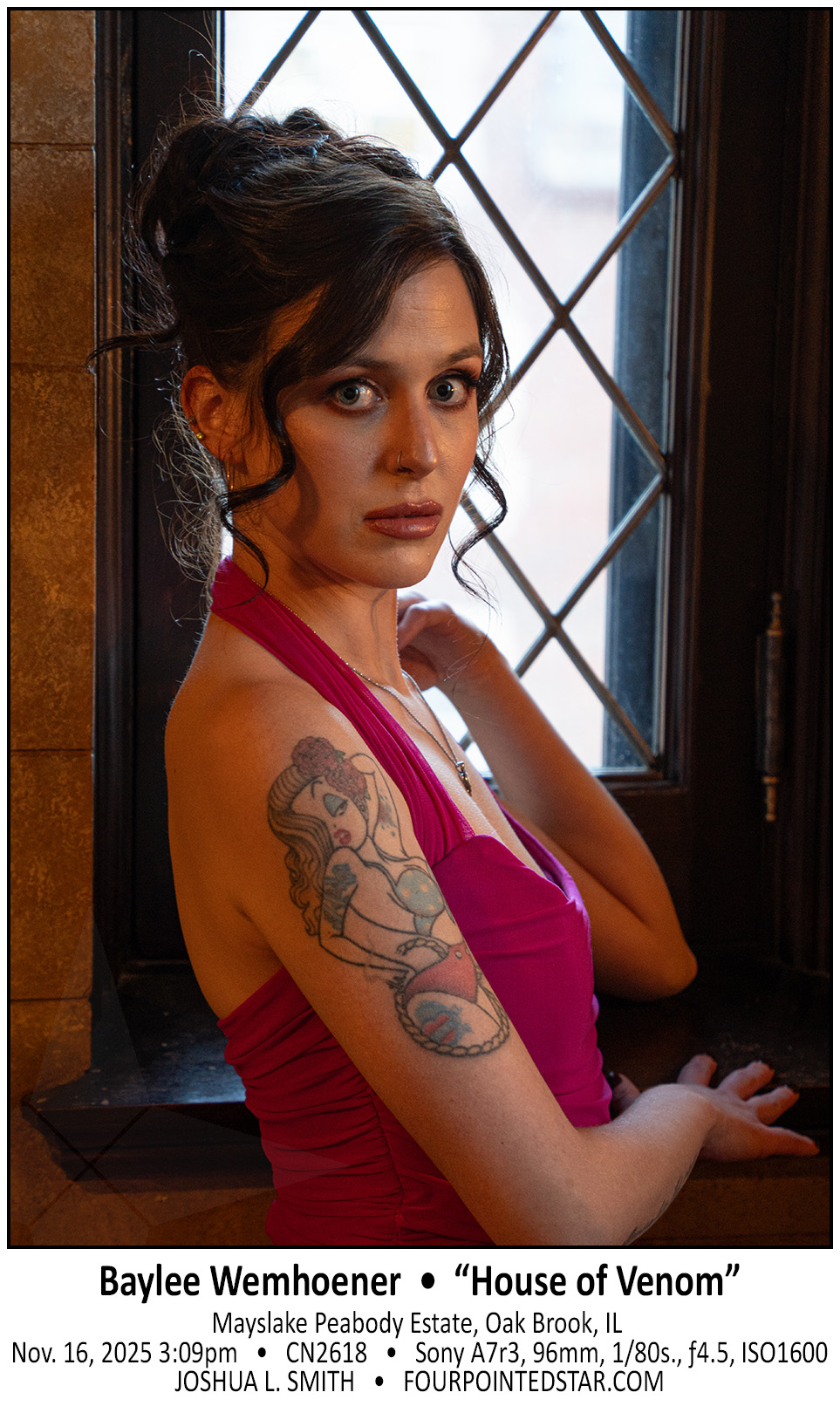
For some reason when I saw the “House of Venom” photoshoot, I signed up. The models were very welcoming, and I’m very thankful for Baylee and Veronica for helping me. They posed without my directing and were kind and welcoming. After working with those two, I felt a bit more confident and was able to work with a few other models as well.

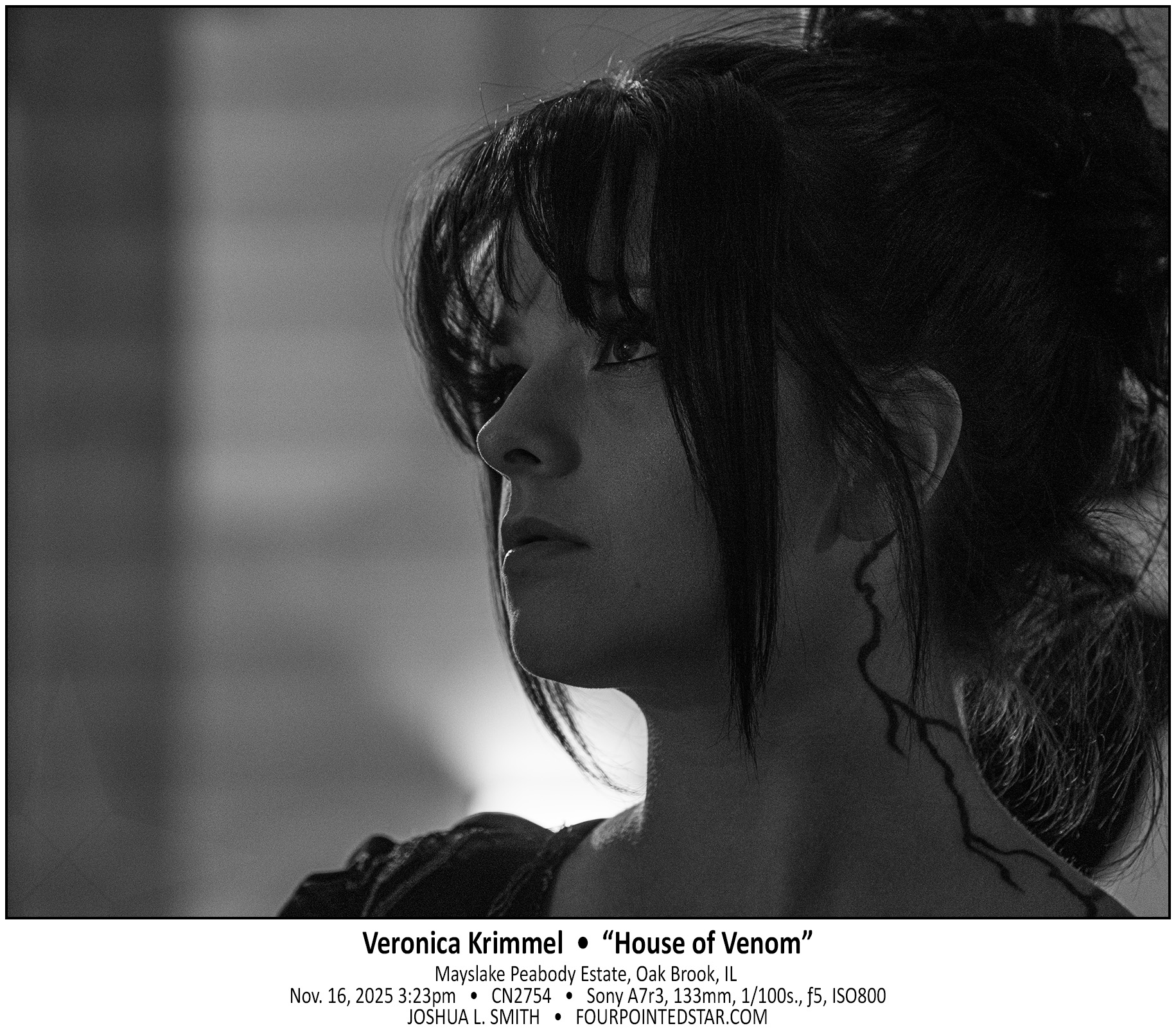
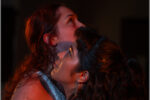
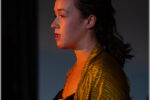
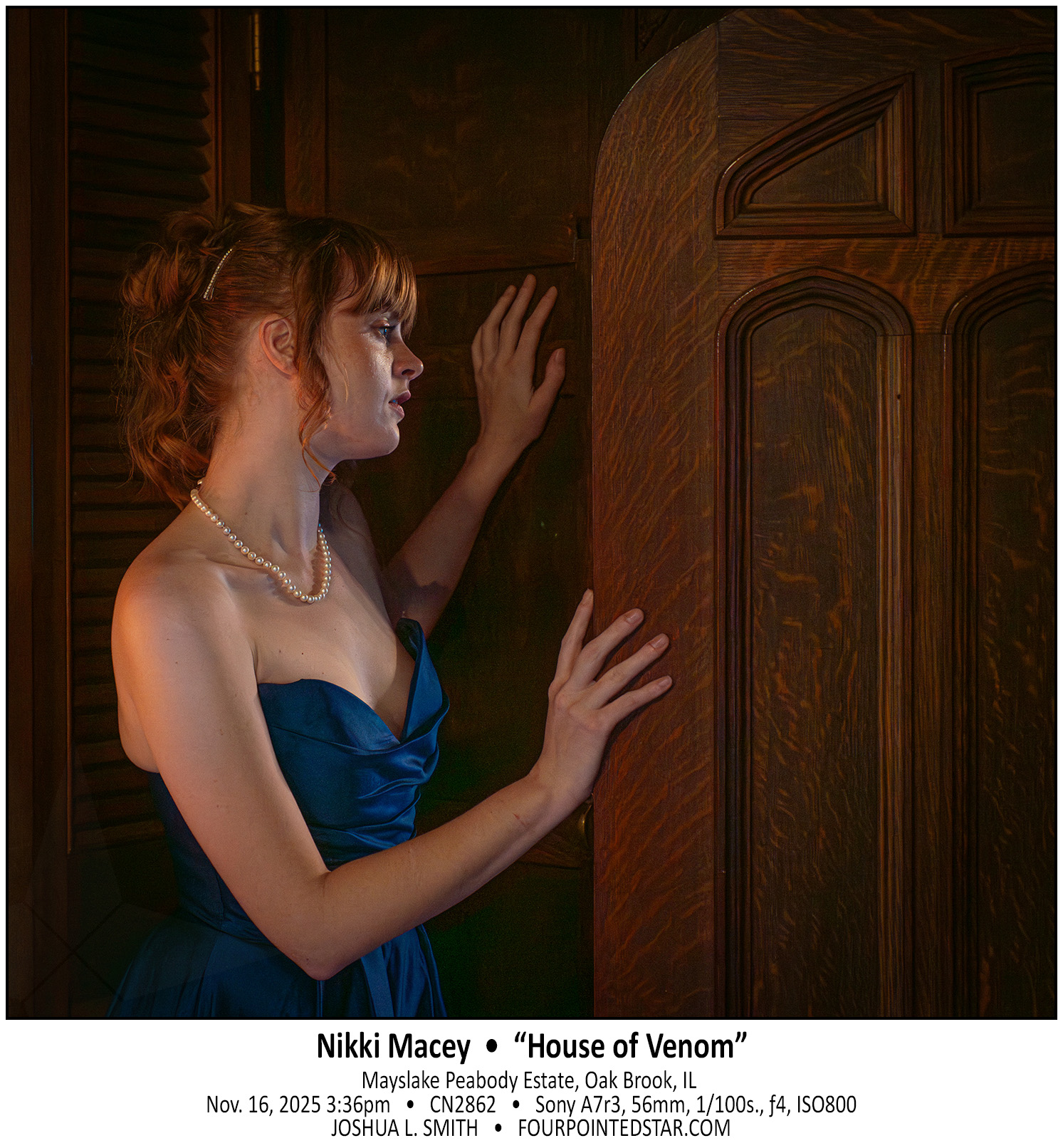
When I first arrived, I mostly took photos over other people’s shoulders (which was welcomed and encouraged by some of the photographers), and then worked with Baylee (pink dress), Nicki (blue dress), and Veronica (starry night top laying on the floor). That first image of Nicki is easily my favorite maybe followed by the monochrome profile photo of Veronika.

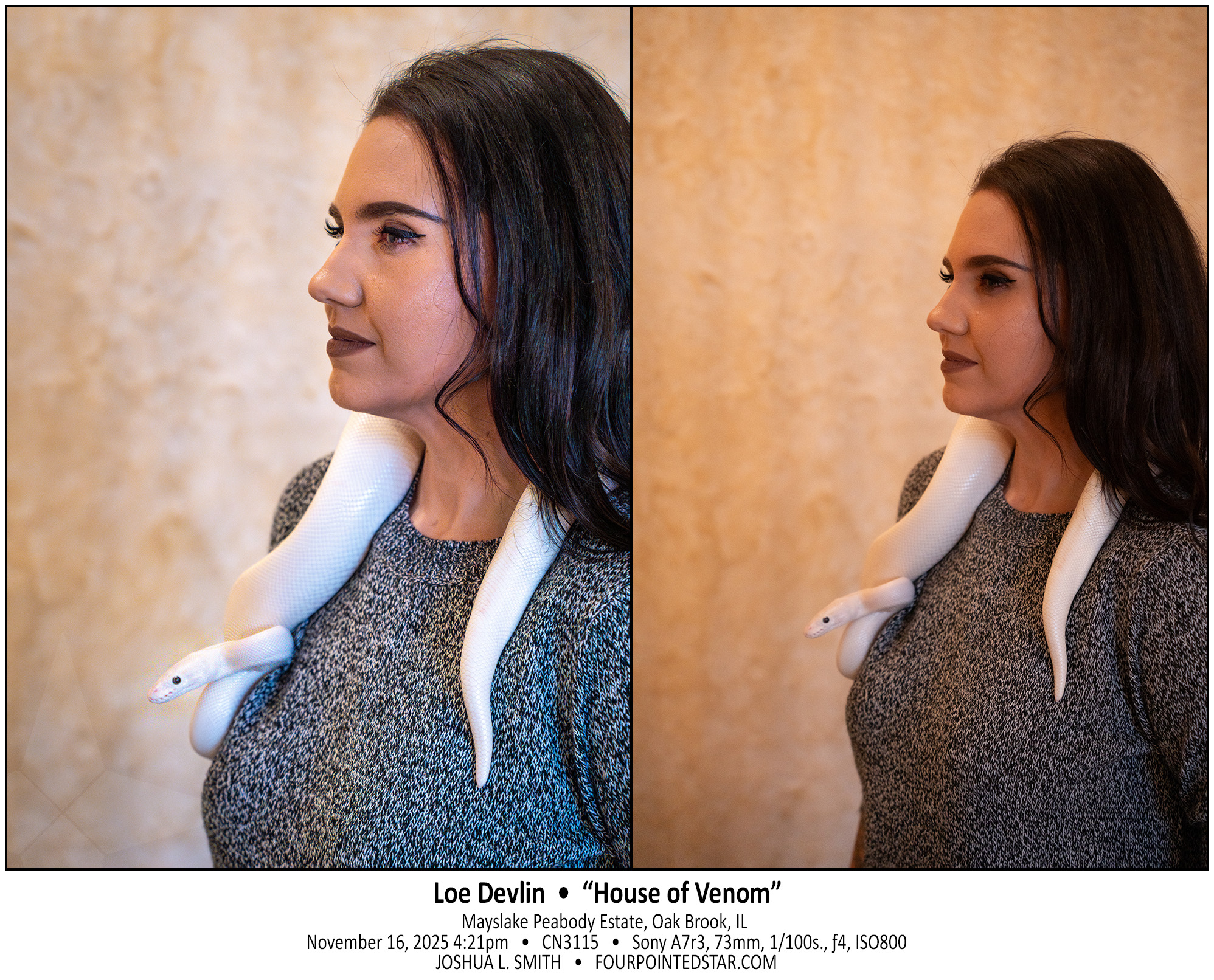
But I learned the most from this image of Loe, one of the organizers for the event. I would edit the image, export, then go back and edit it some more – something I almost never do. You can see the before and after – fixing the color, brightness, adding layers for focus, removing hair on her face, and so much more. I almost never spend more than 10 minutes fixing an image; it’s either right or it’s not. For this image I was weak technically; her pleasant expression made it worth the effort.


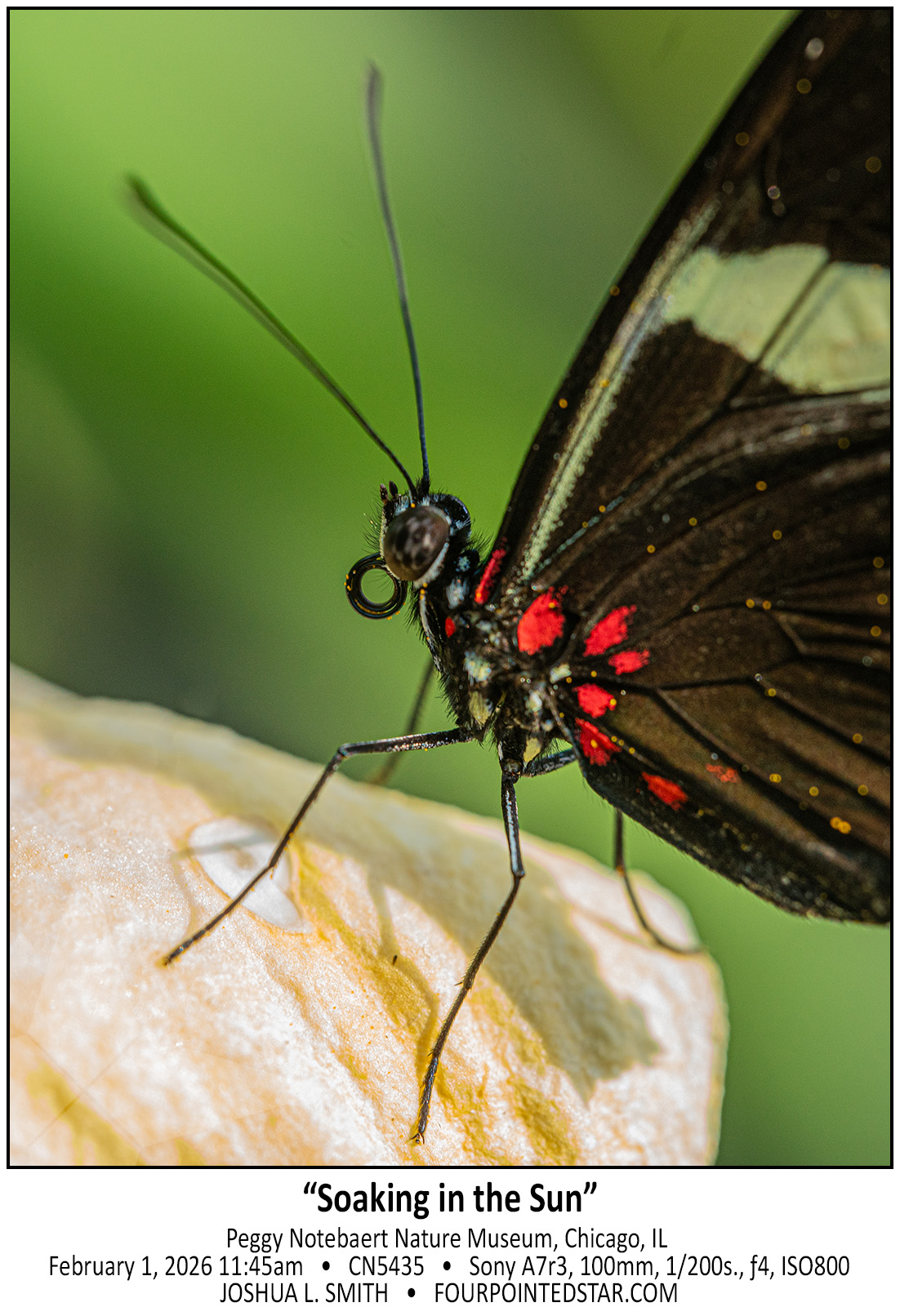
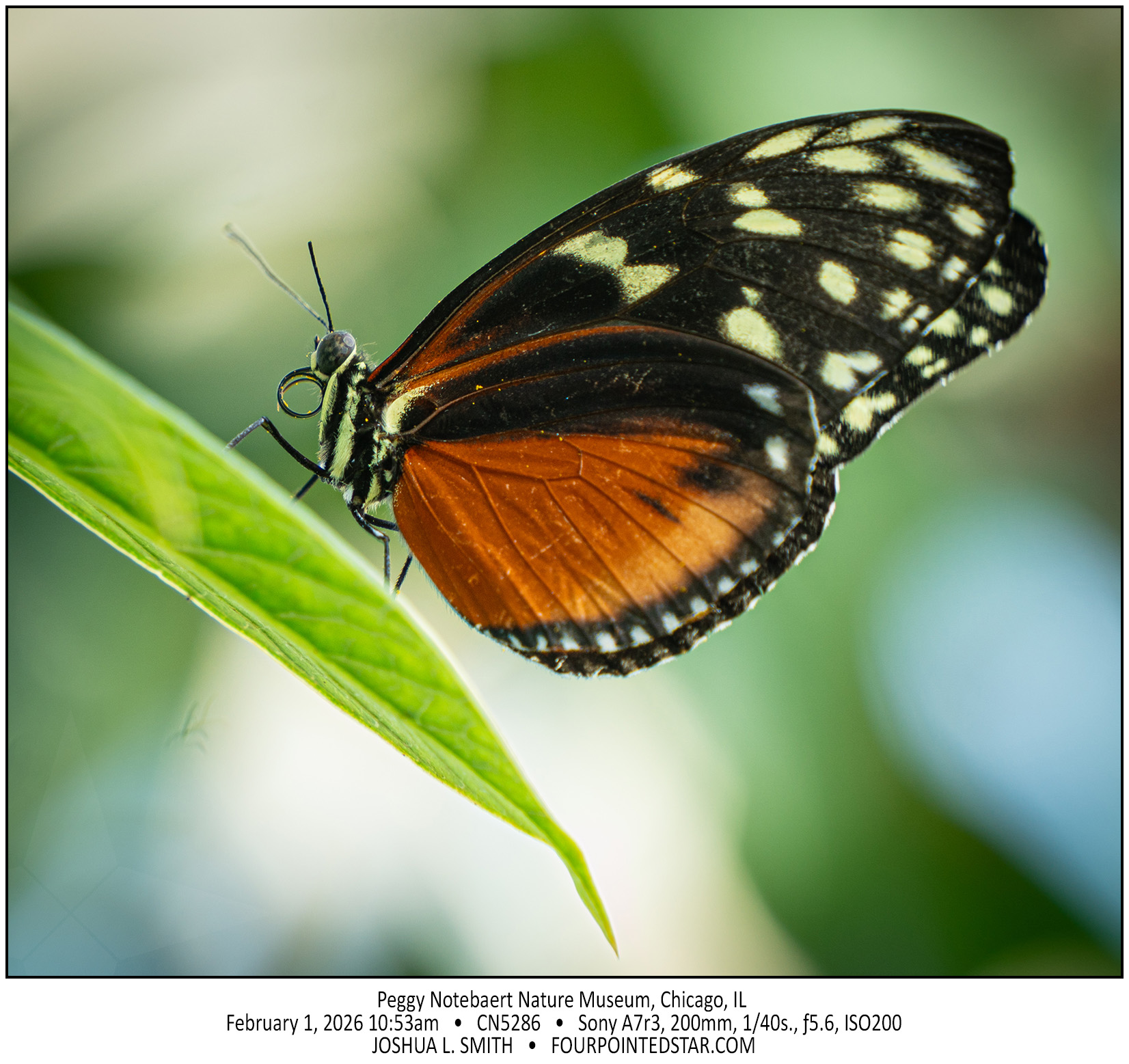
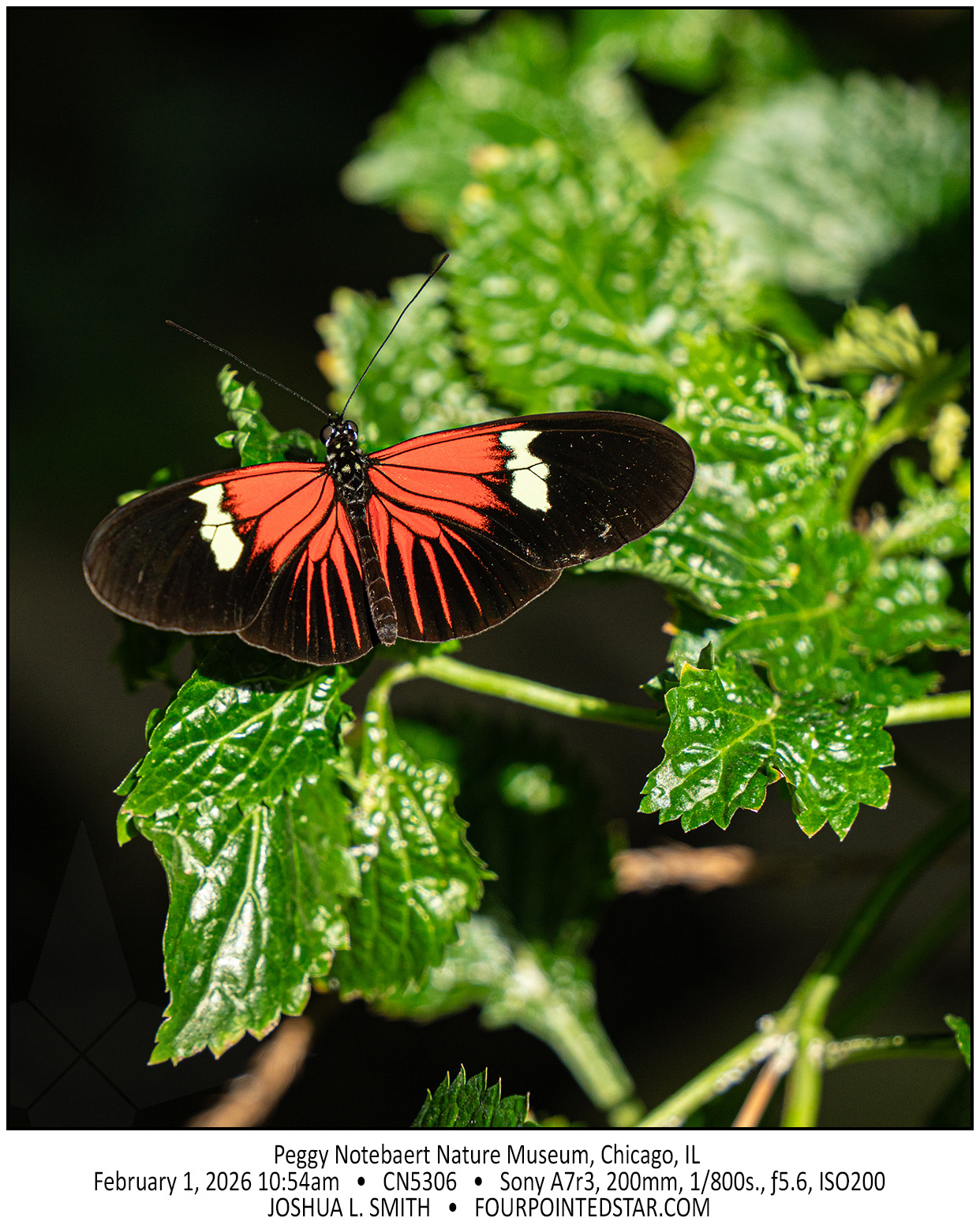
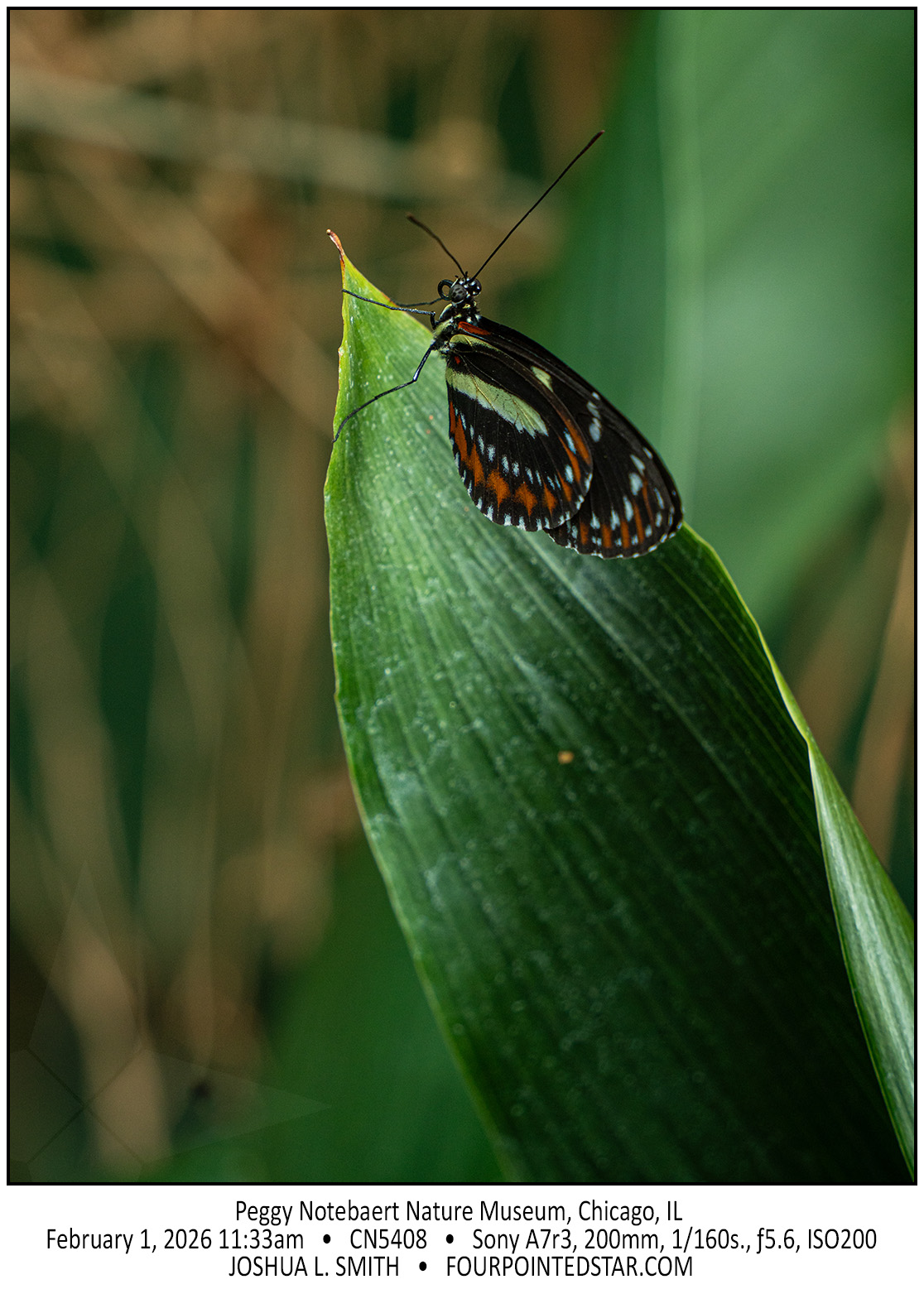
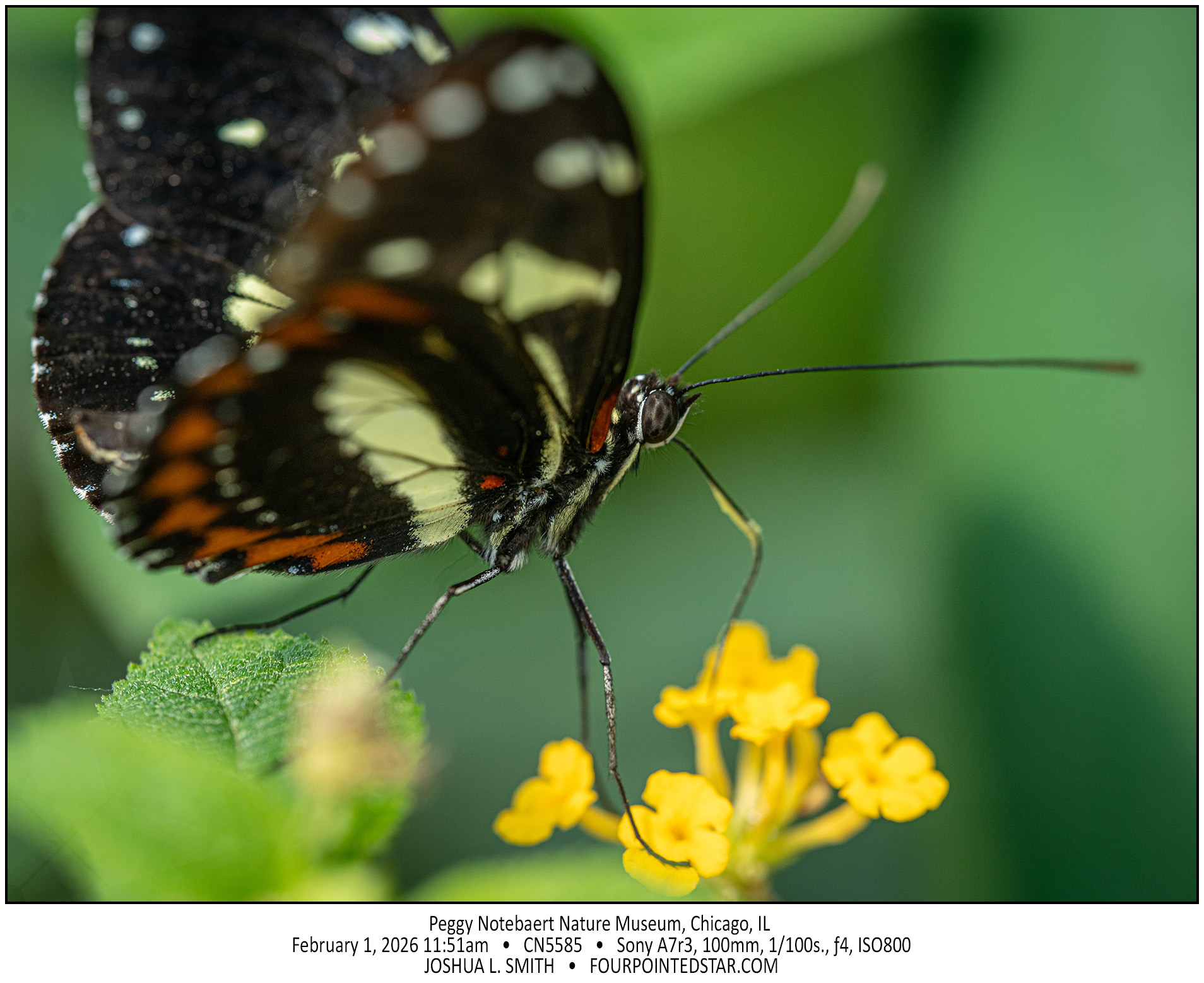
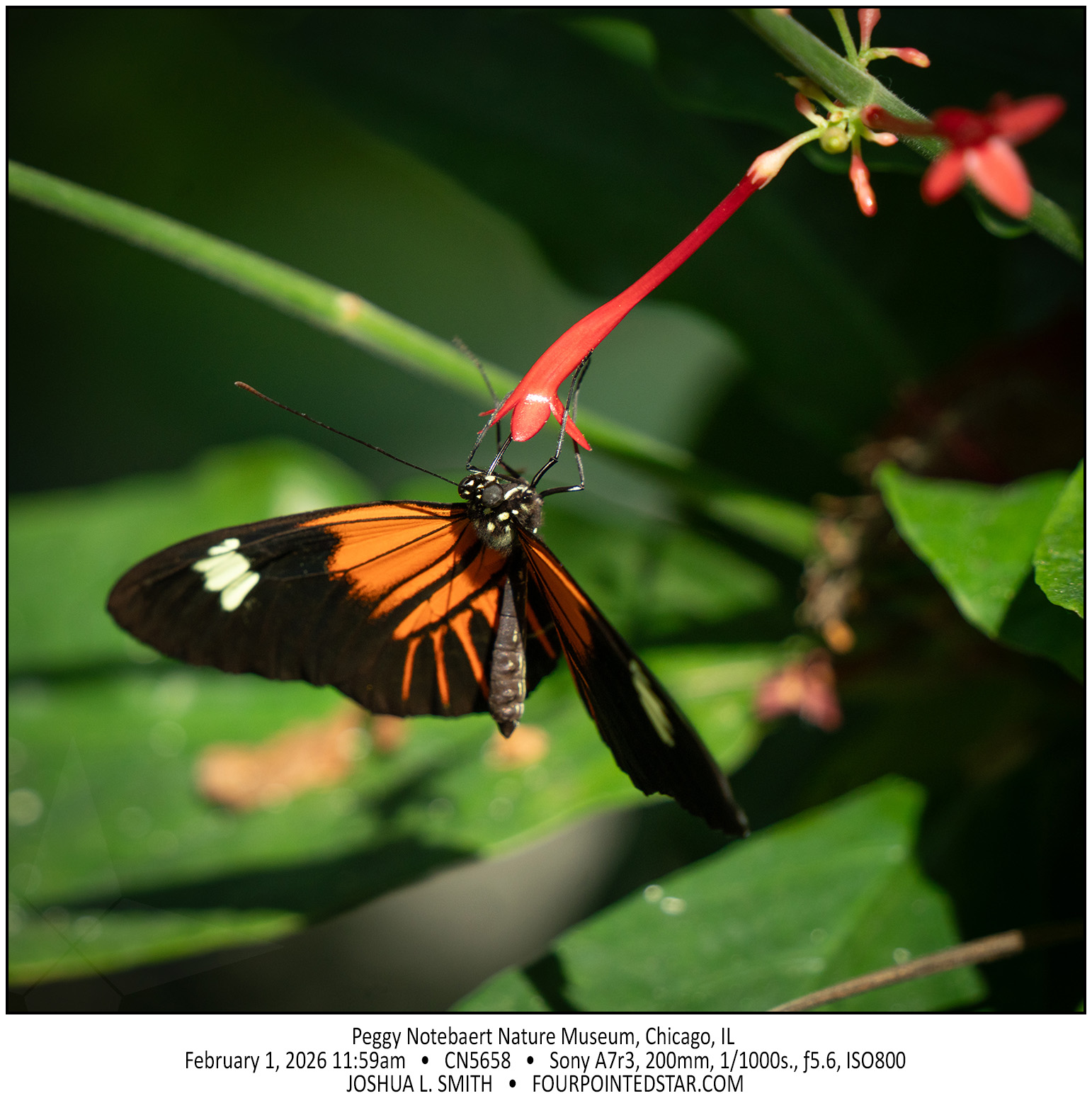
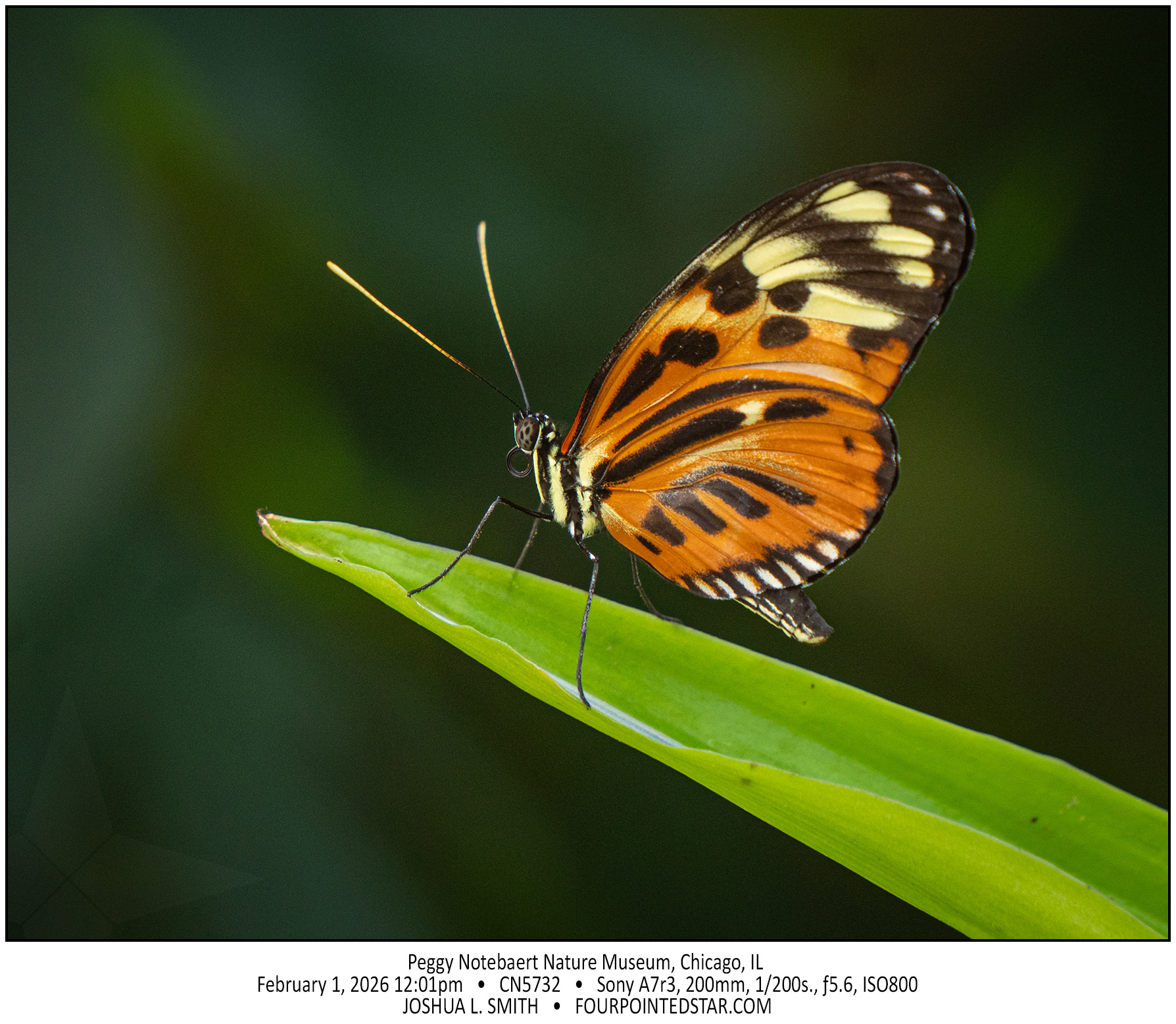
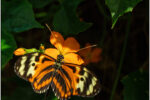
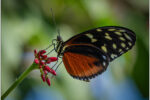
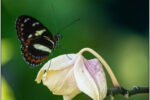
You might think that after 10 years of photographing butterflies in the same exhibit that it would be easier or boring or predictable, but during each visit, I have to search for the butterflies in a good setting within the reach of my lens, adjust for the proper lighting, and then capture the image while the butterfly is stationary.

The sunlight filters in and out, the butterflies often land far away or in an “ugly” location, or they take off right when you press the shutter button; so each year there is a challenge and a smile when I’m editing and see that I’ve captured a good image. Really, each one of those challenges is present in most photographic creation…


.

>other images<
.

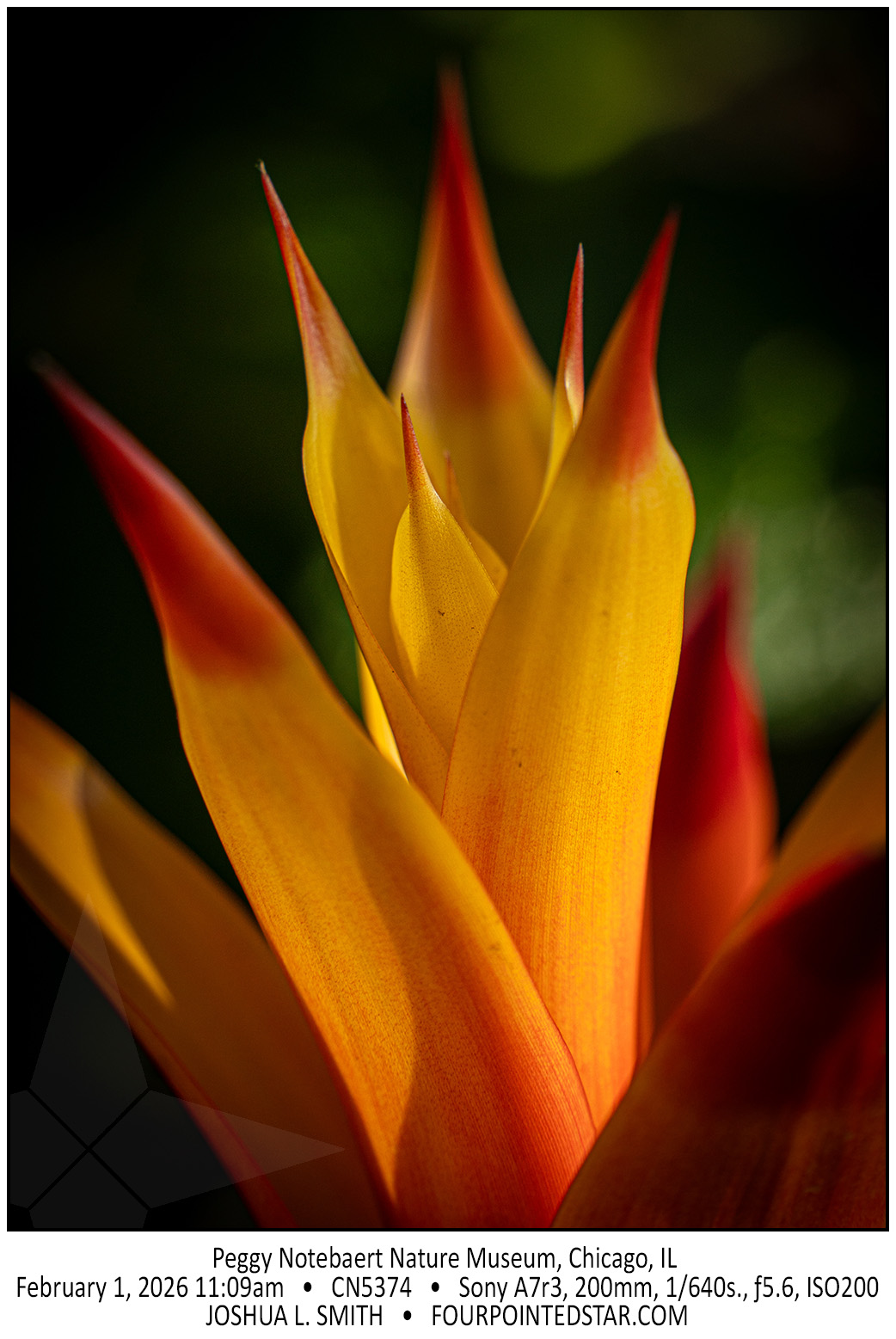
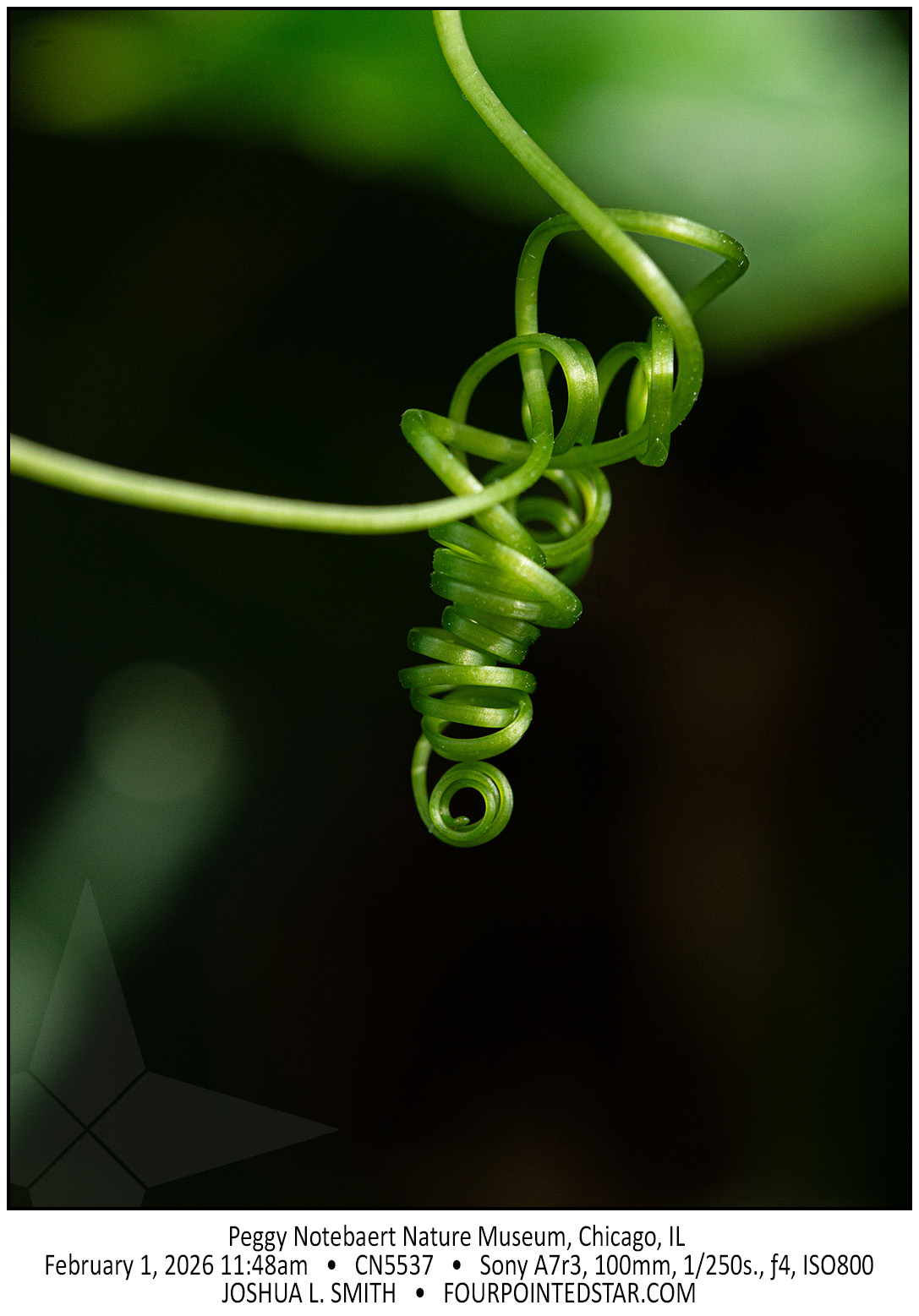
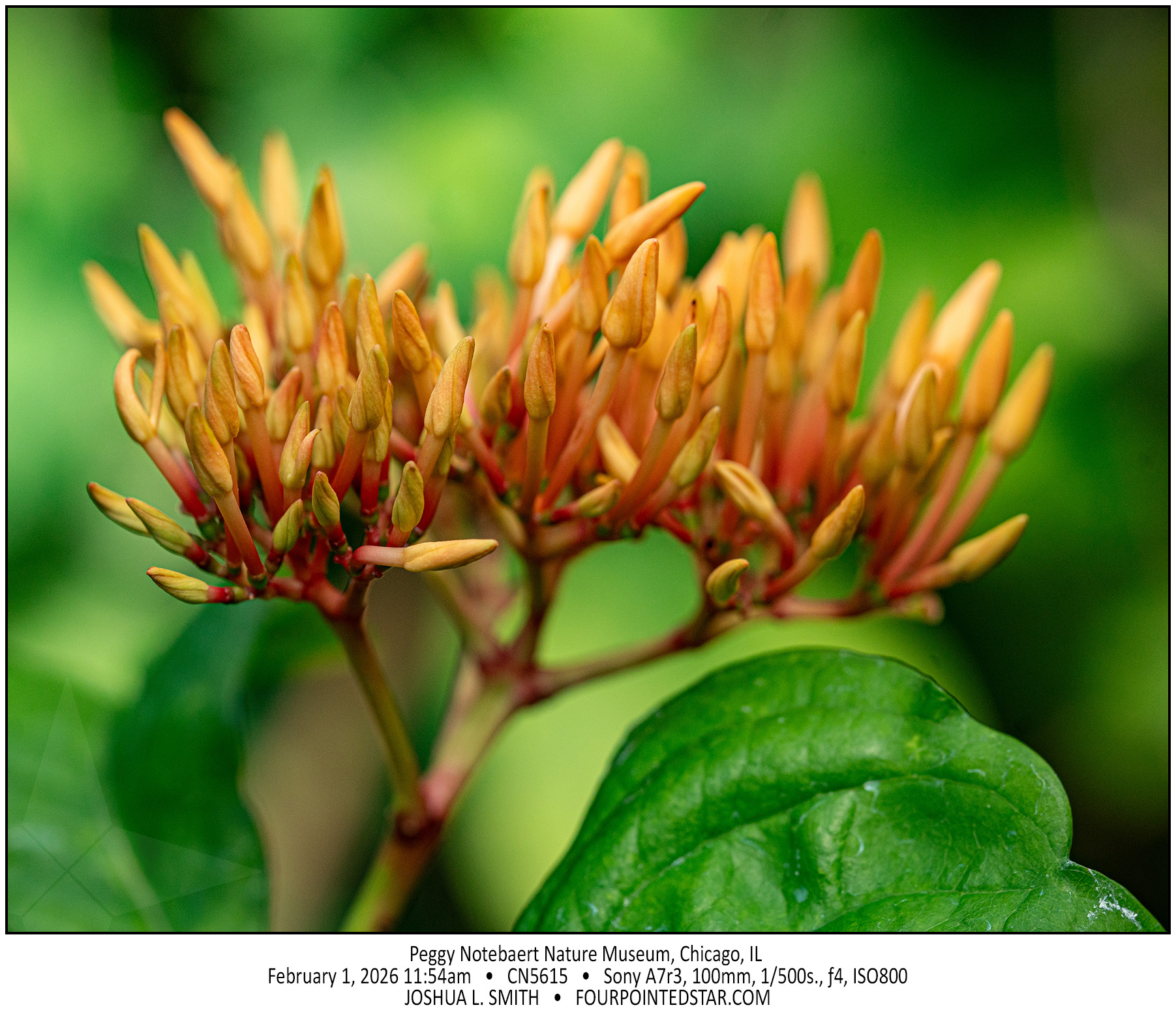
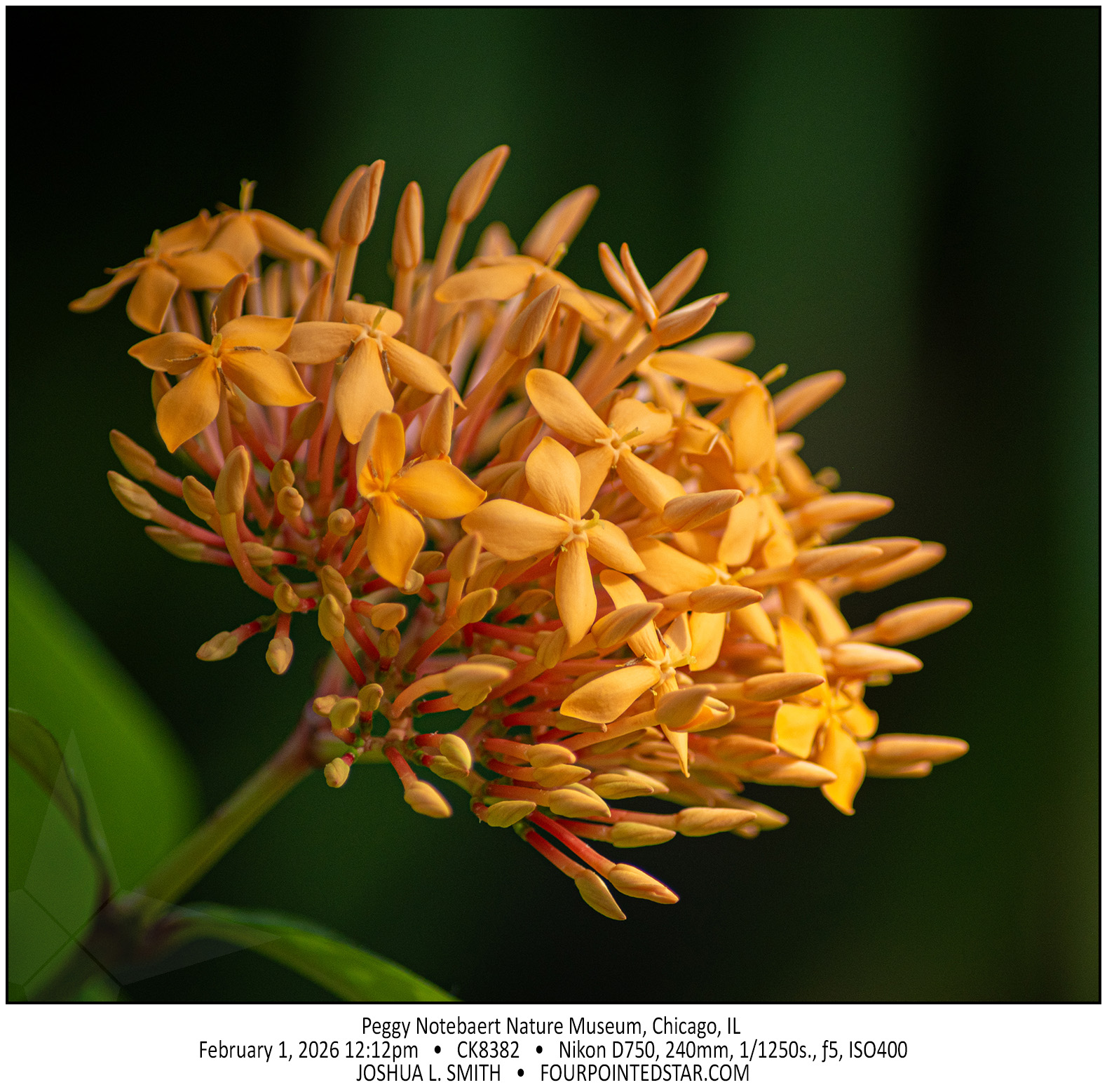
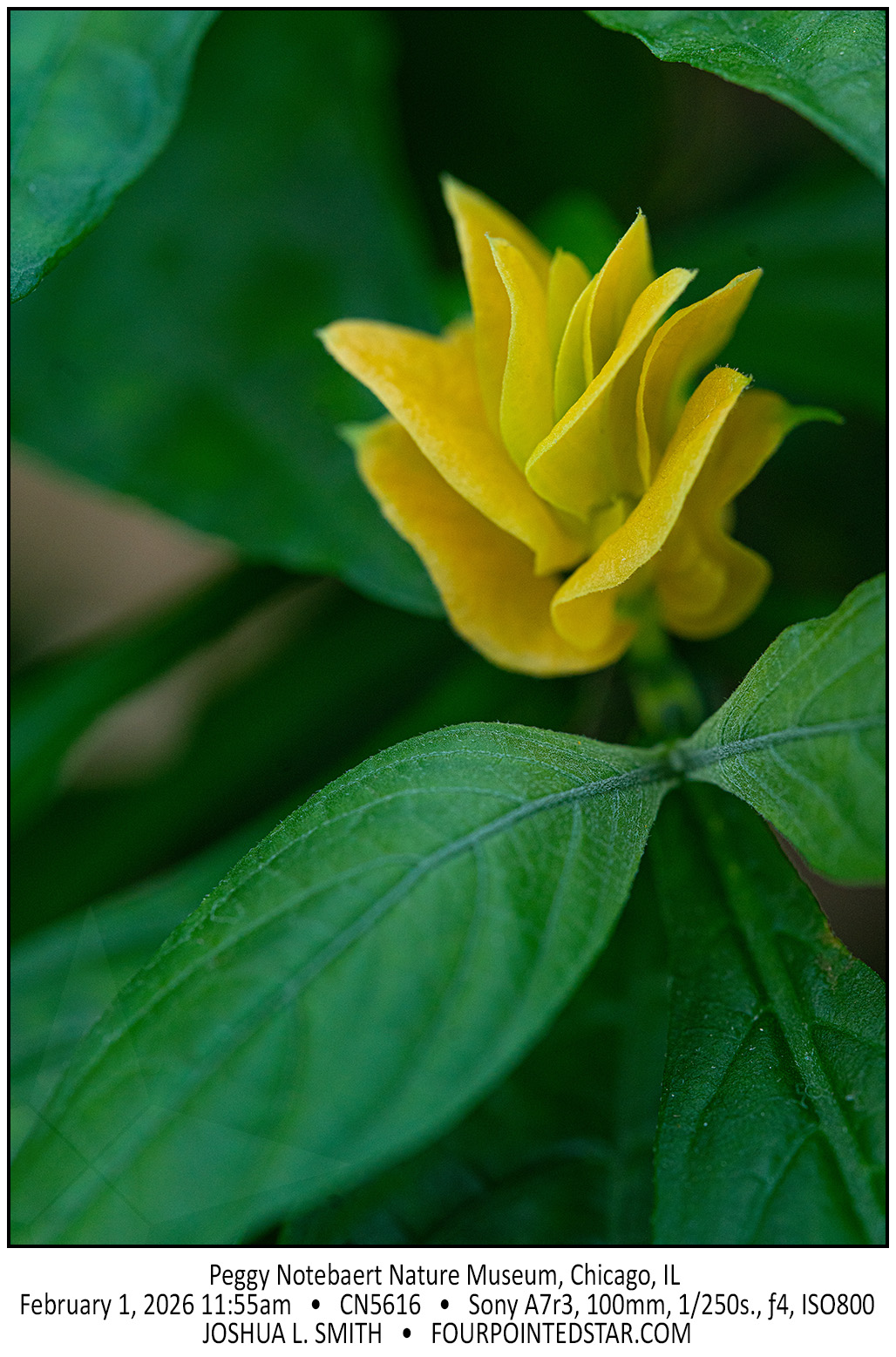
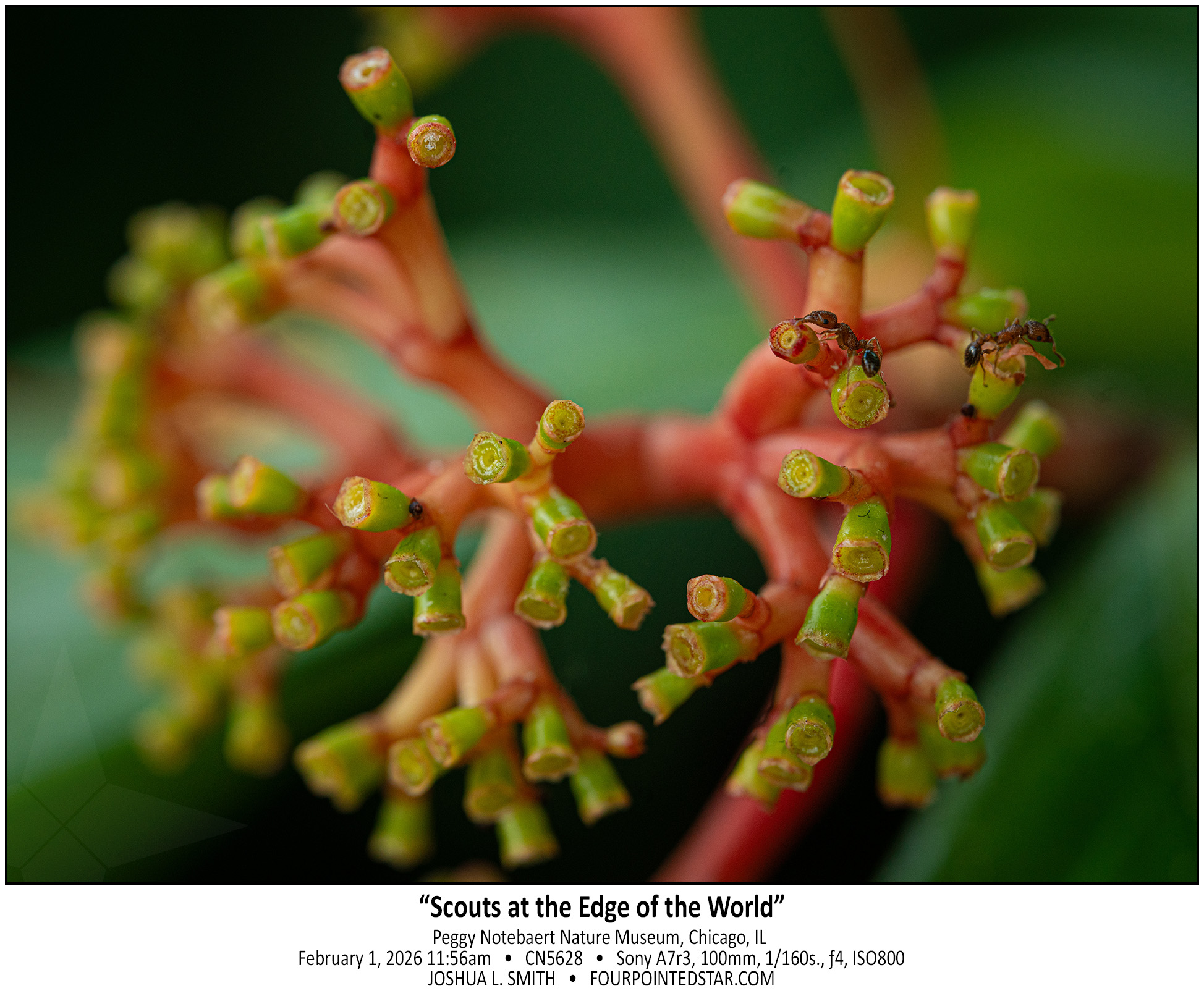
Each winter, I make a sacred trek to Peggy Notebaert Nature Museum in Chicago. They have a wonderful year-round butterfly exhibit, and those colors are the perfect break from the dull nature colors. Even when the Illinois winter blesses us with snow instead of 43 shades of brown and grey, more of nature is still monochromatic.

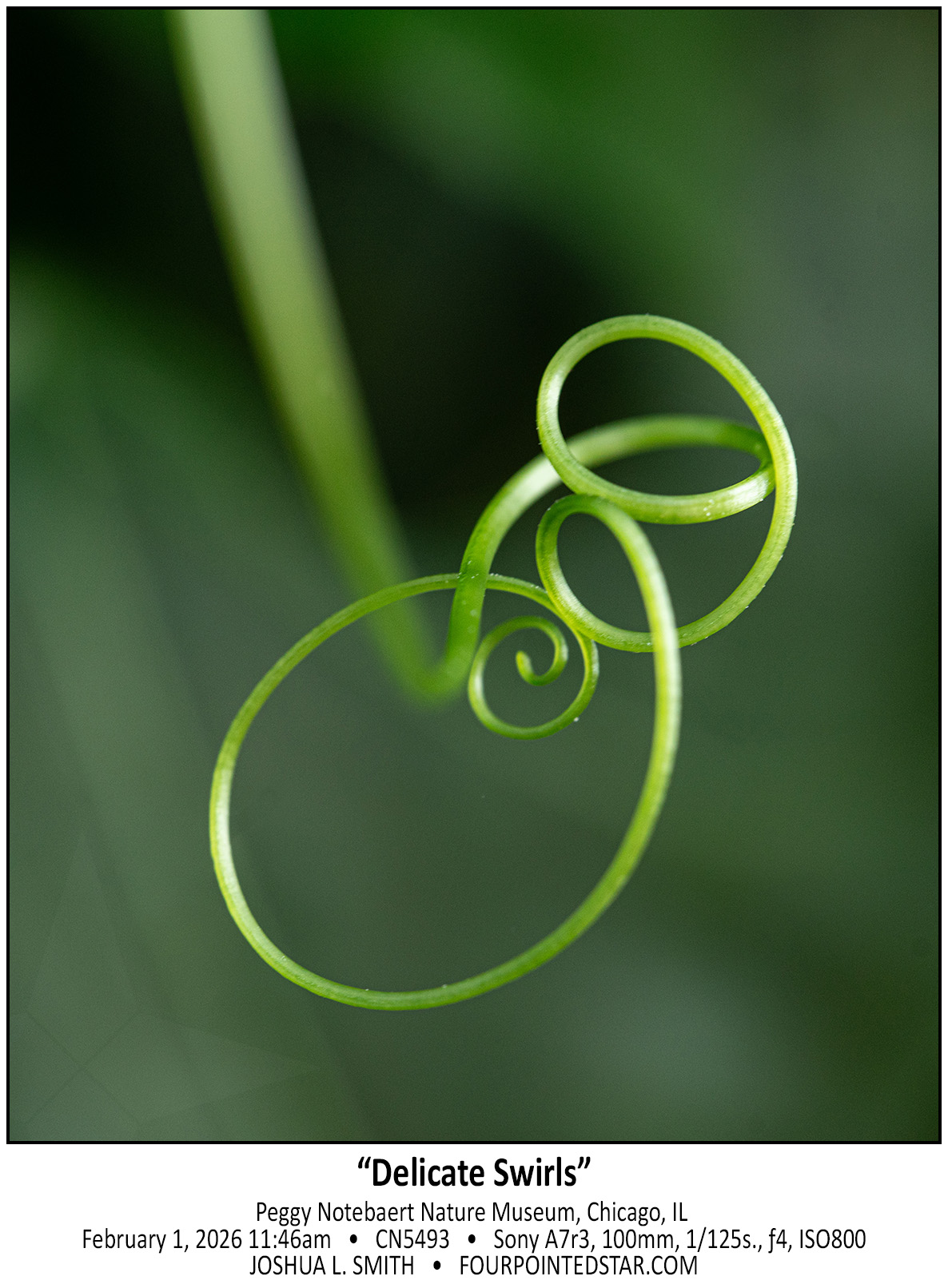
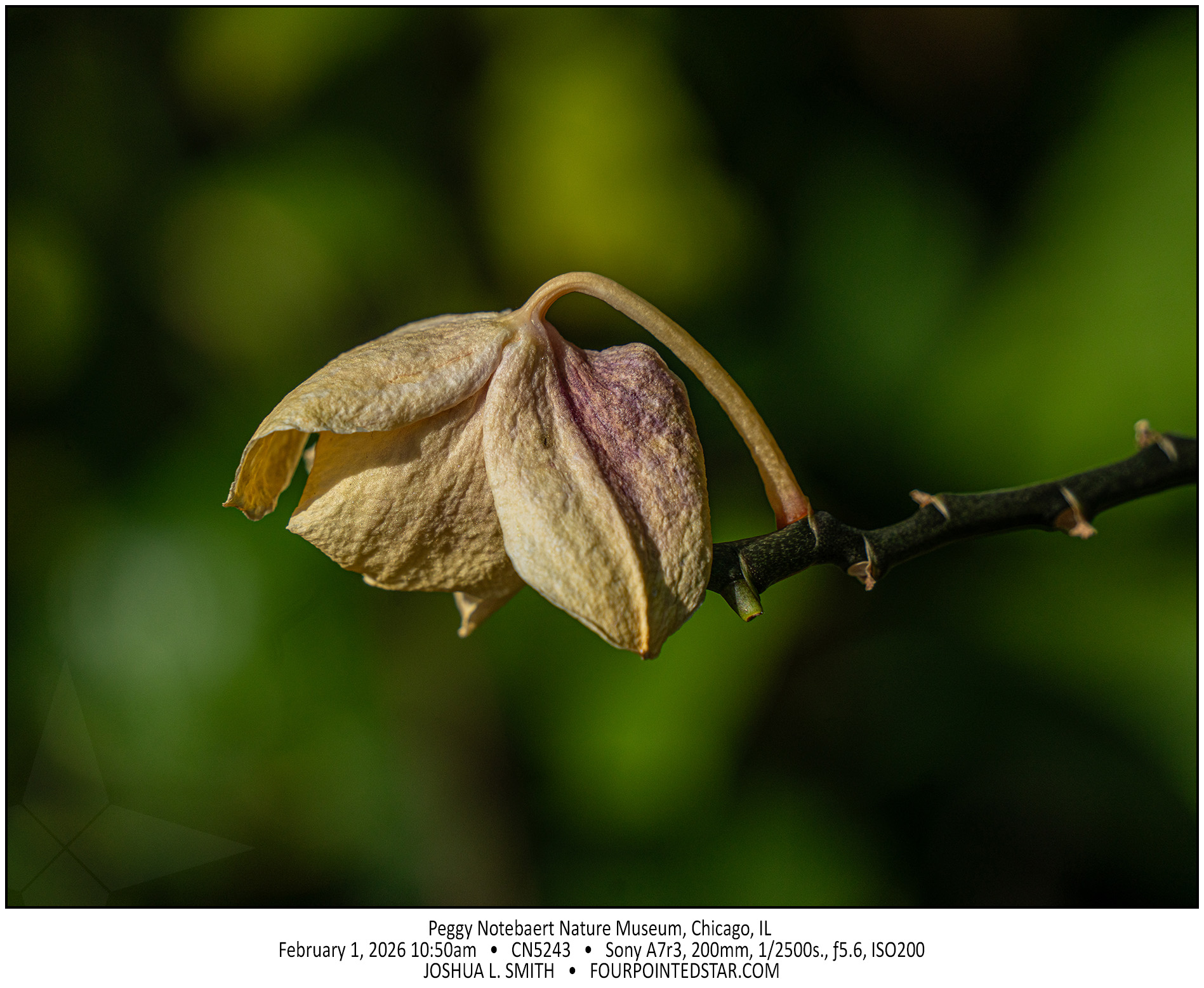
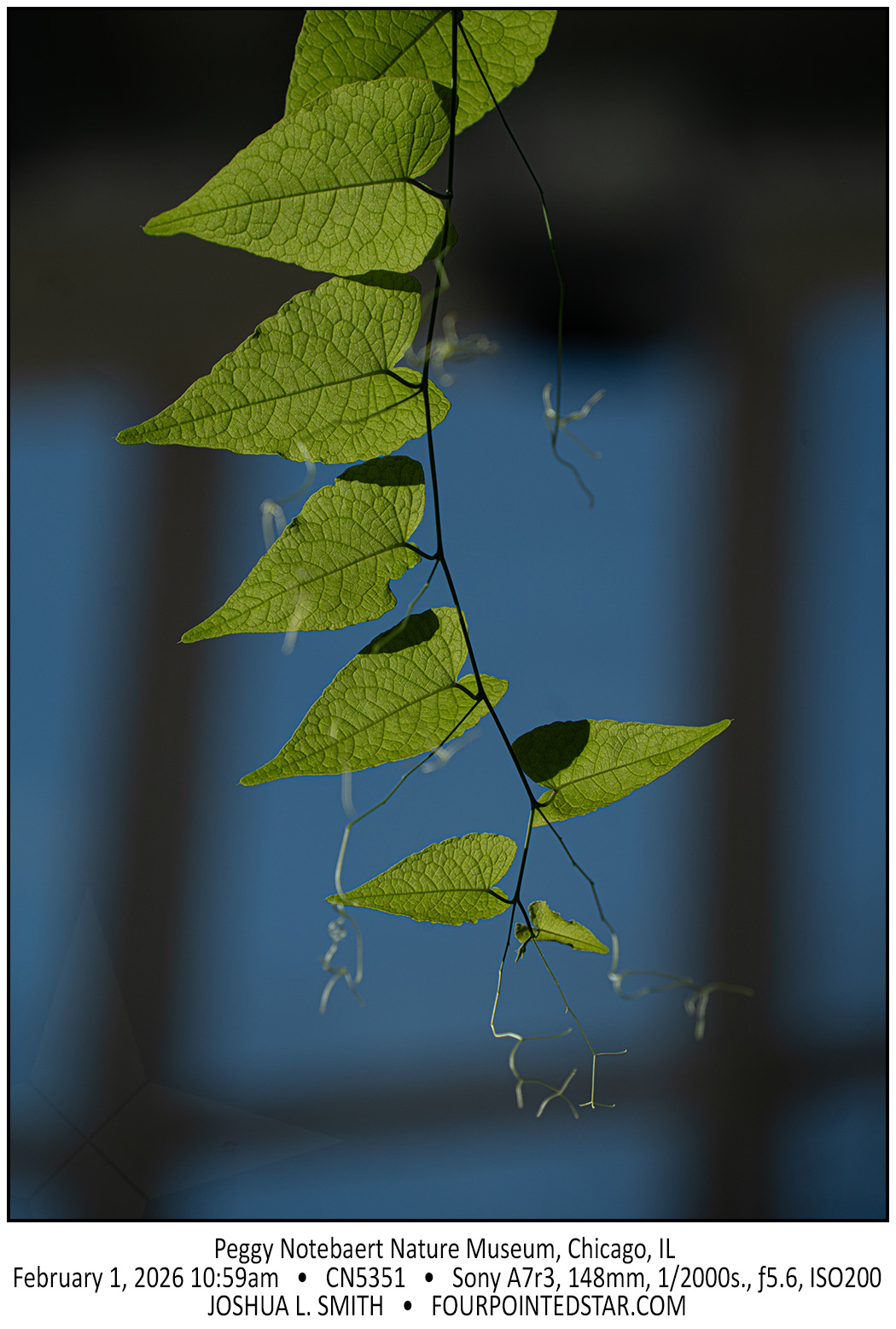
Typically I focus on the butterflies; small pops of color whose unpredictable nature and flight paths make them a challenge to photograph, but this visit, I was inspired by a photo that Sarah took years ago – a simple image of the end of one of the vines. What images could I create in the butterfly house that weren’t of butterflies?

I do like these photos, but … (see previous post)

I don’t click the shutter button nearly as often as I used to; it’s not that I don’t take my camera out as much, it’s that I take fewer photos overall but have a higher percentage of photos that I like. Most often, I know before I click if the photo will be worthwhile, and I’m much more willing to wait for the right shot, scene, or composition. In short, I’m much less “spray and pray” with the shutter button that I used to be.

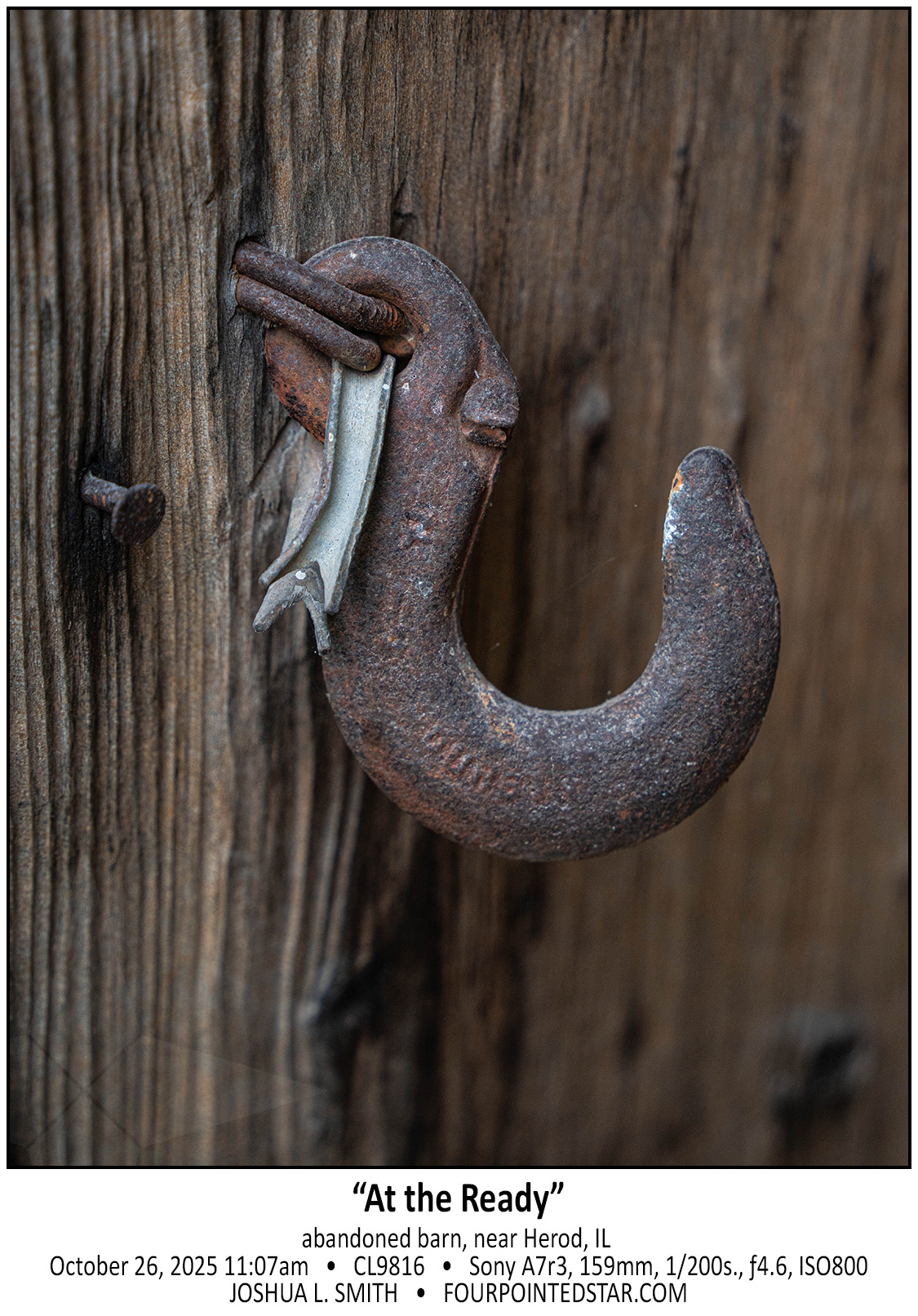
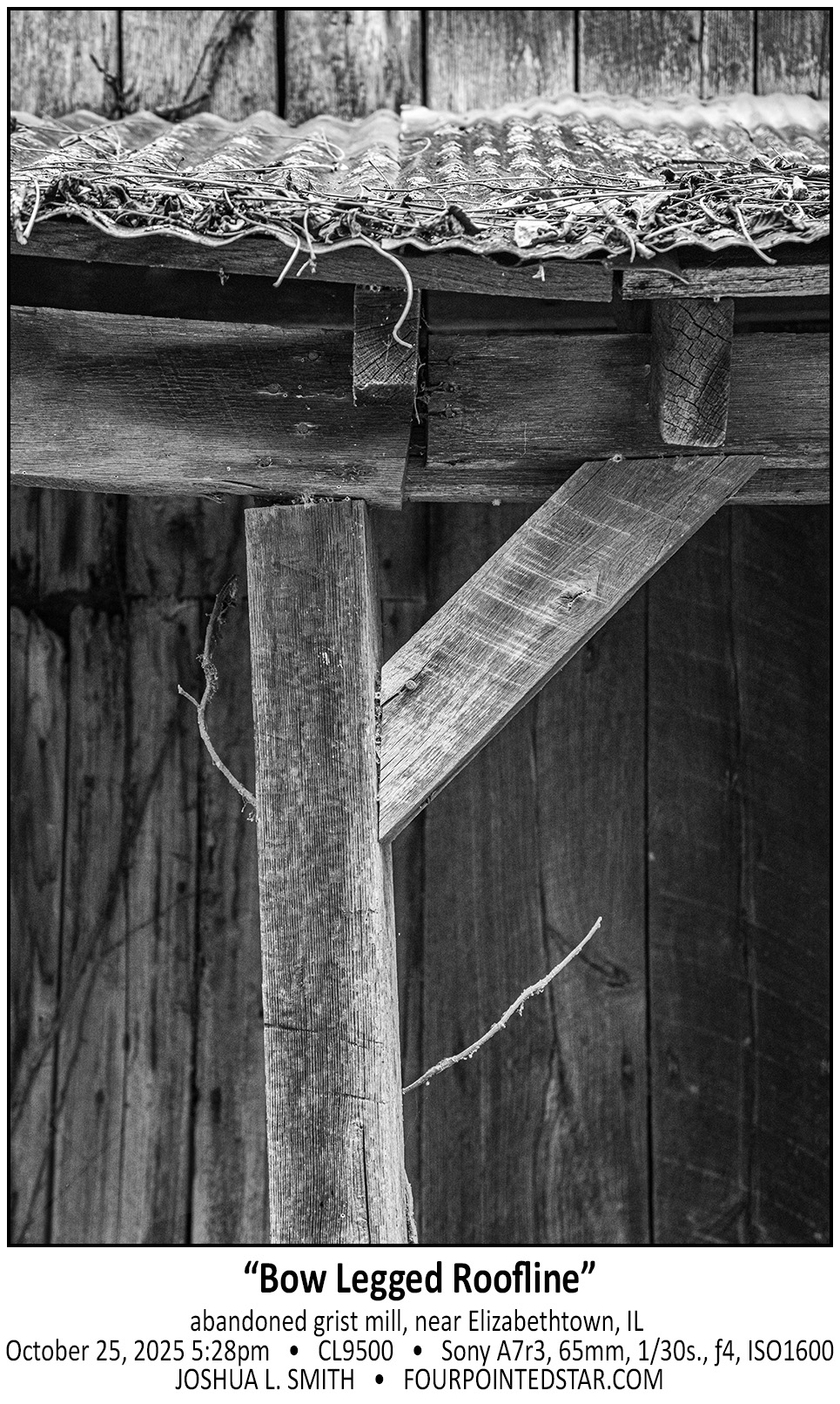
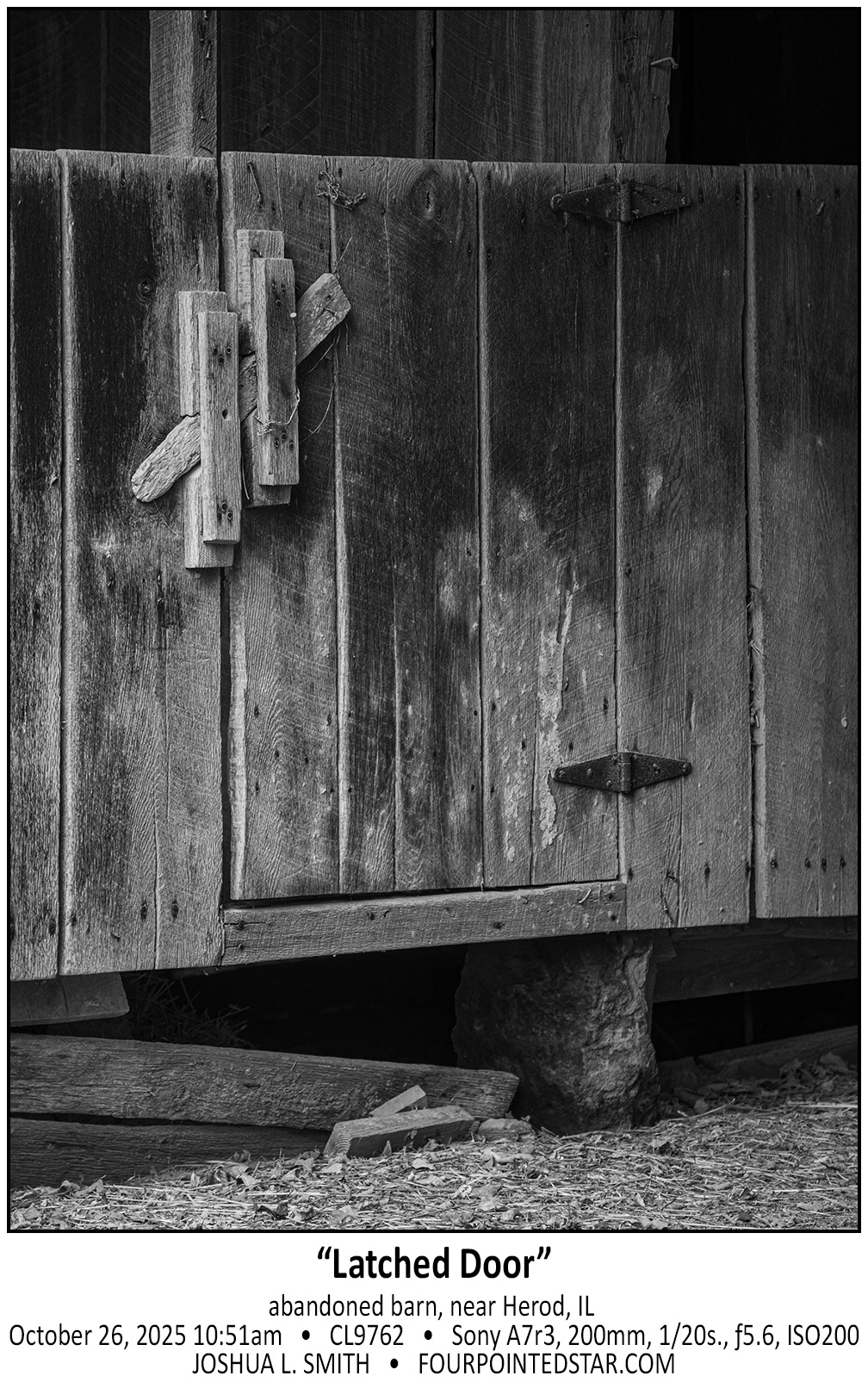
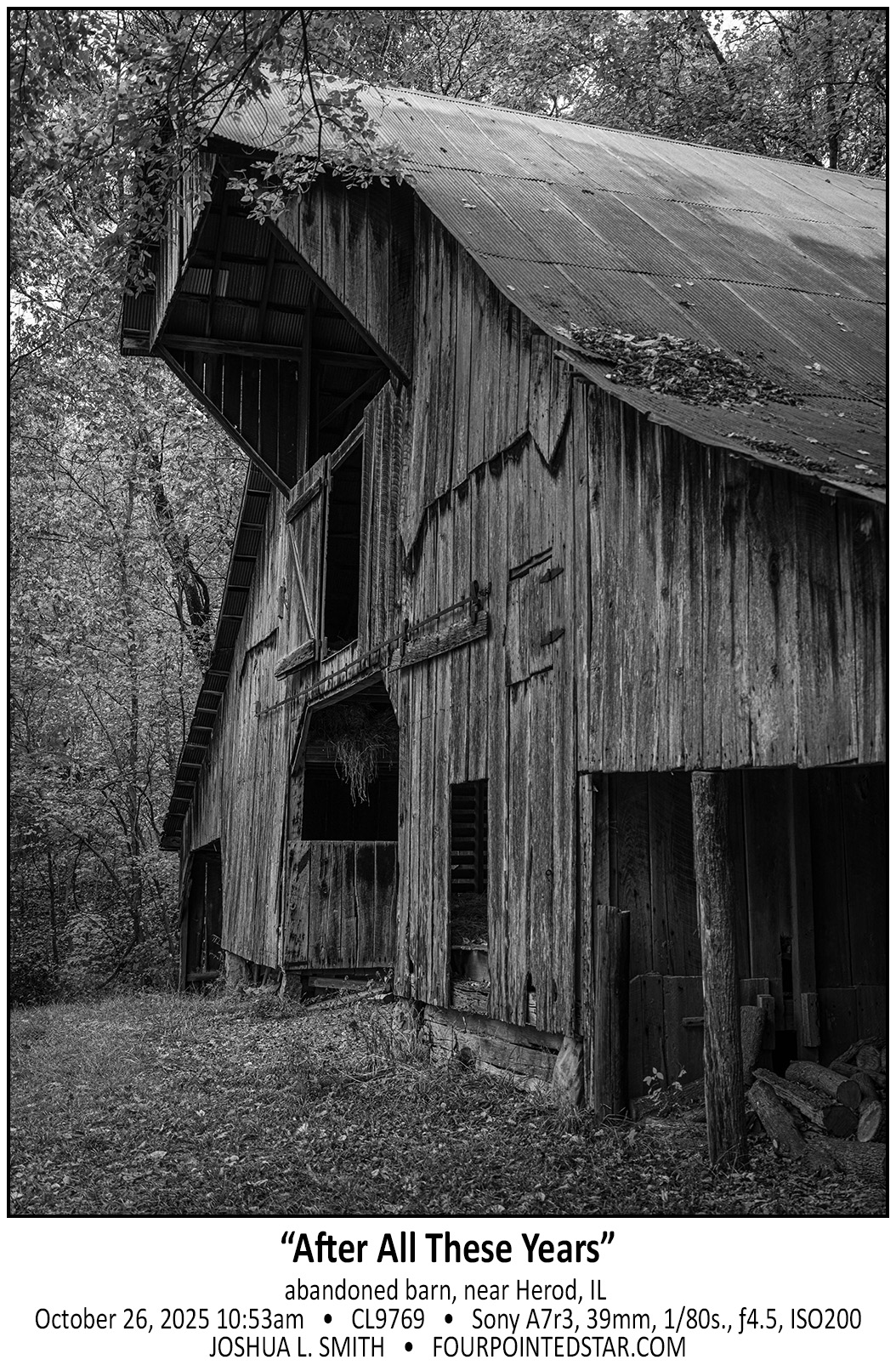
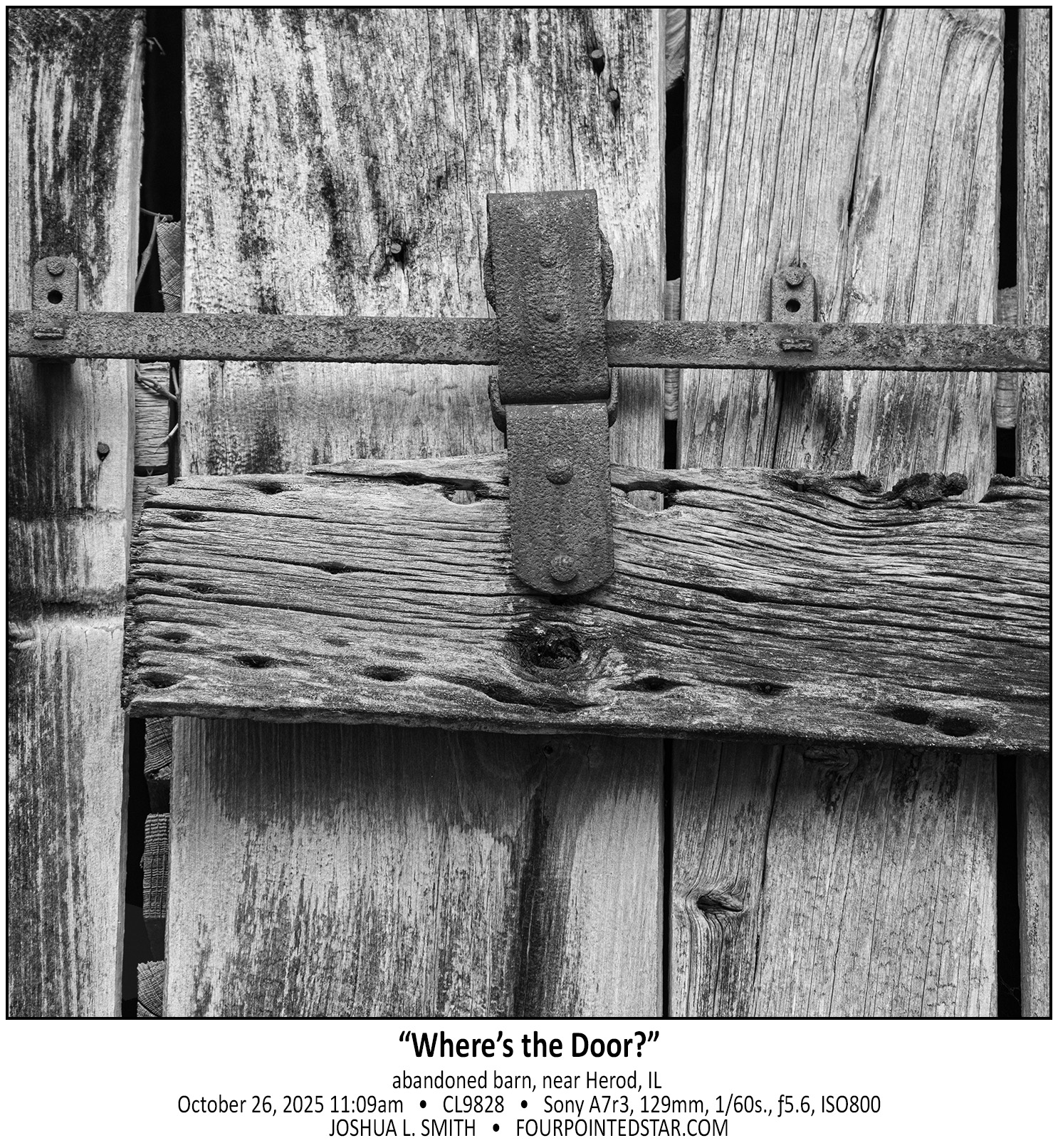
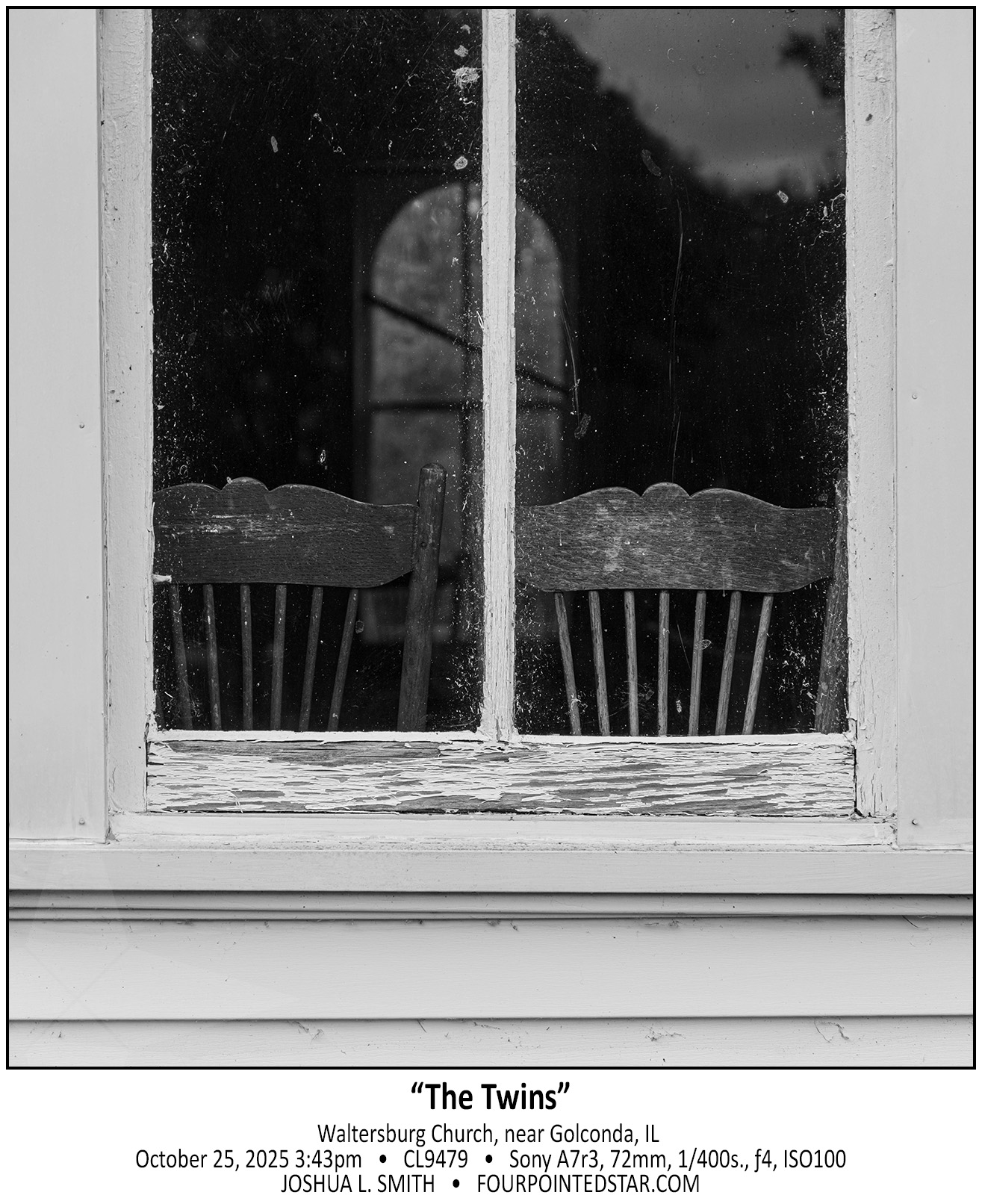
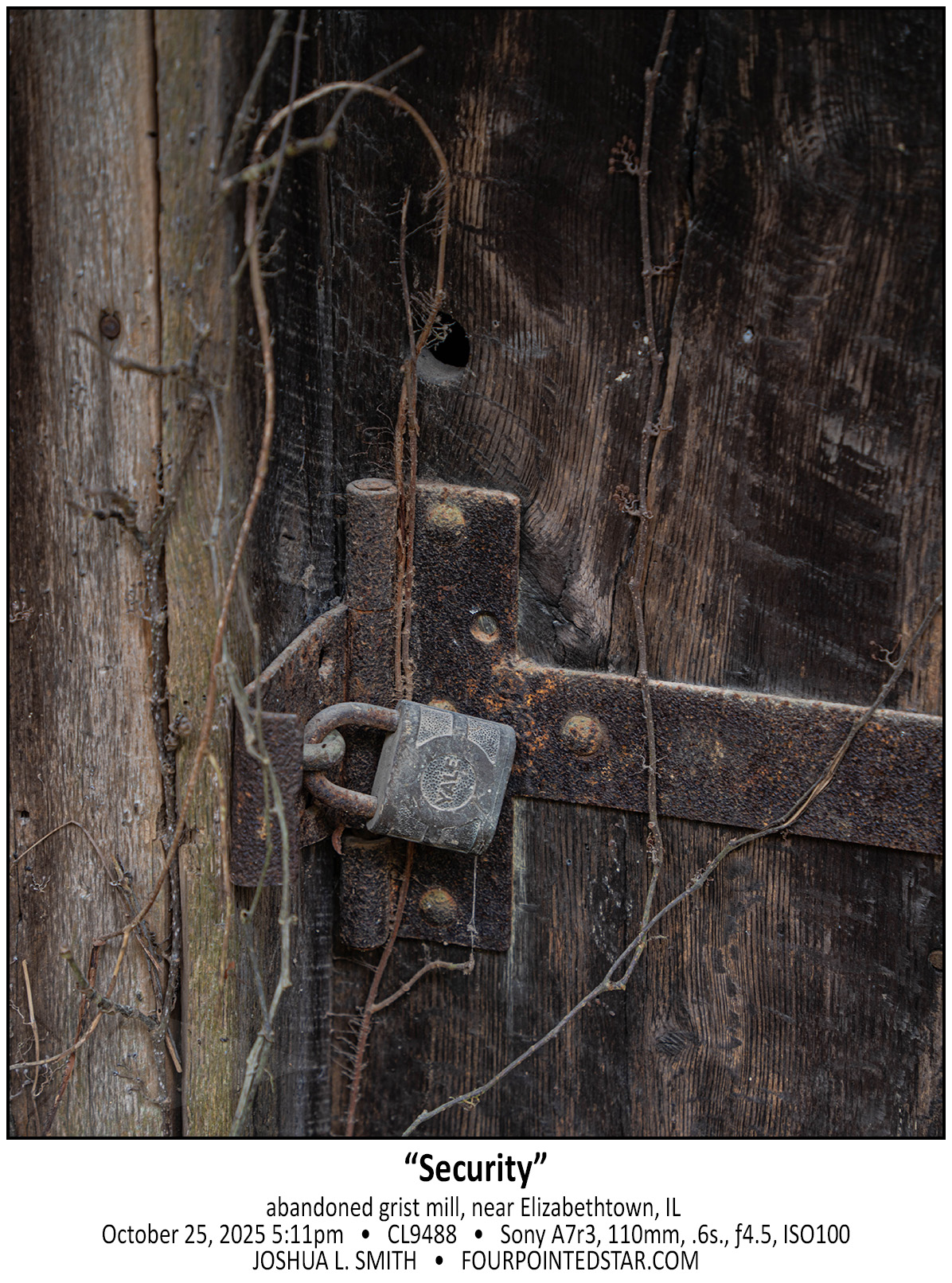
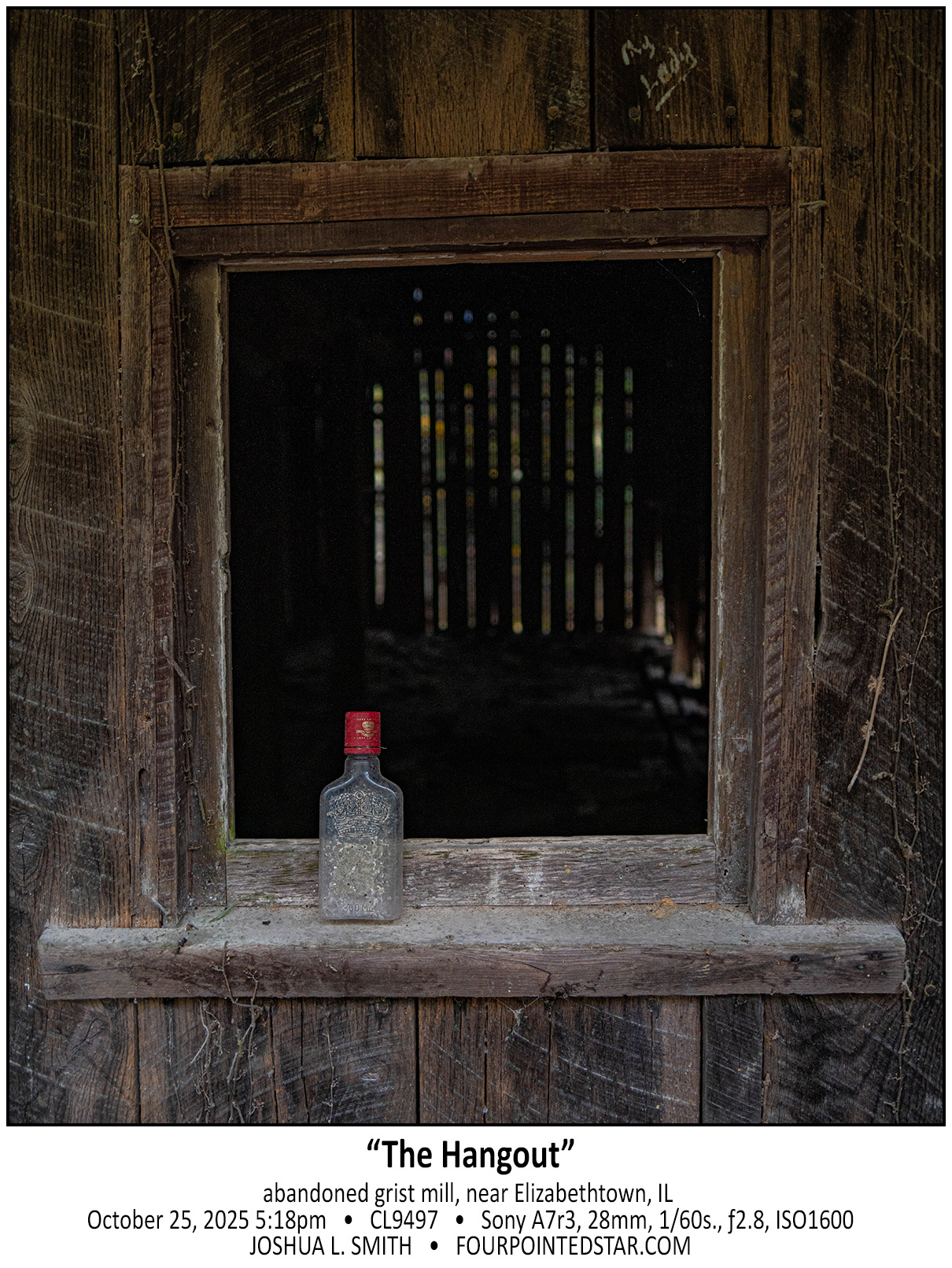
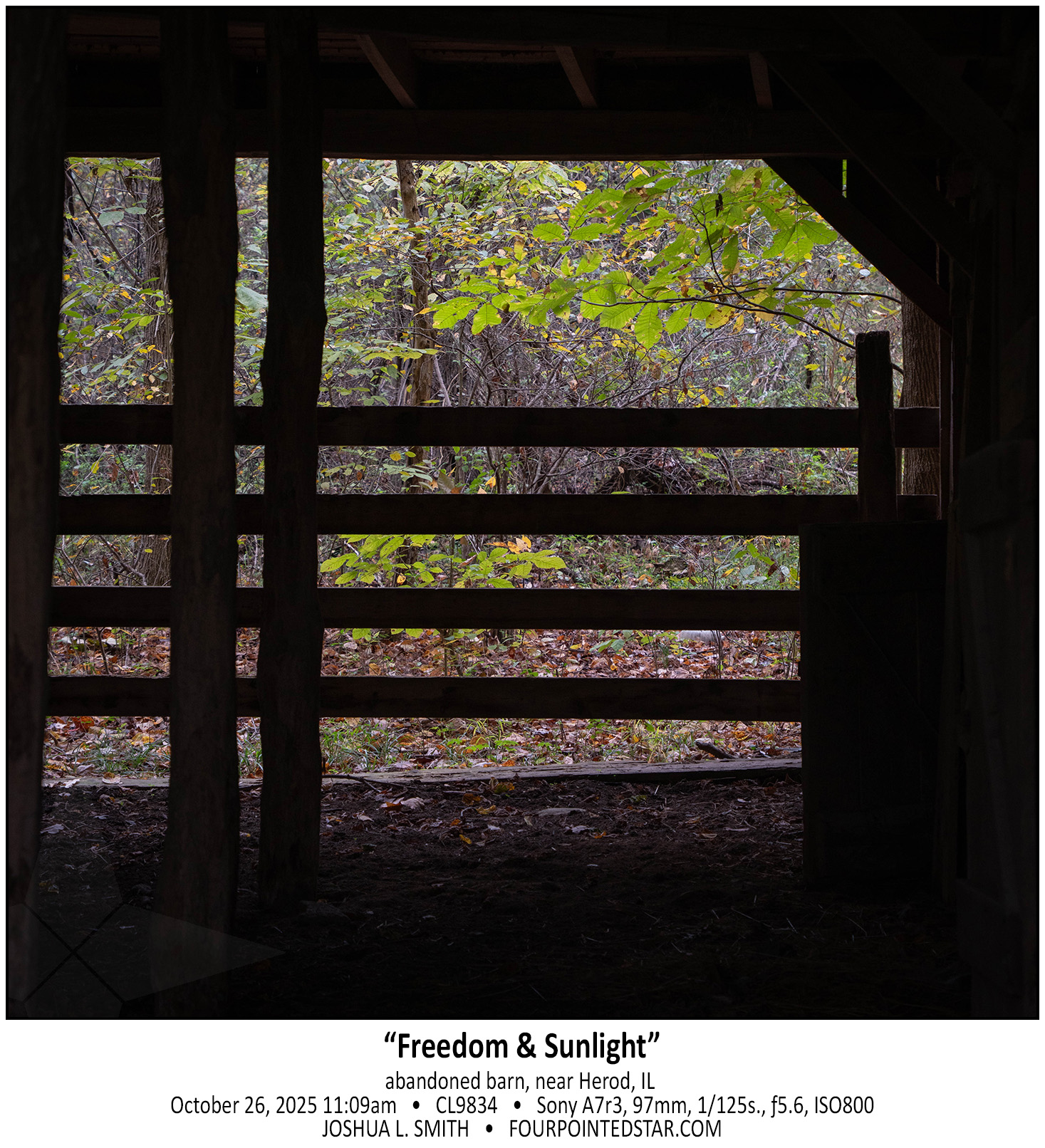
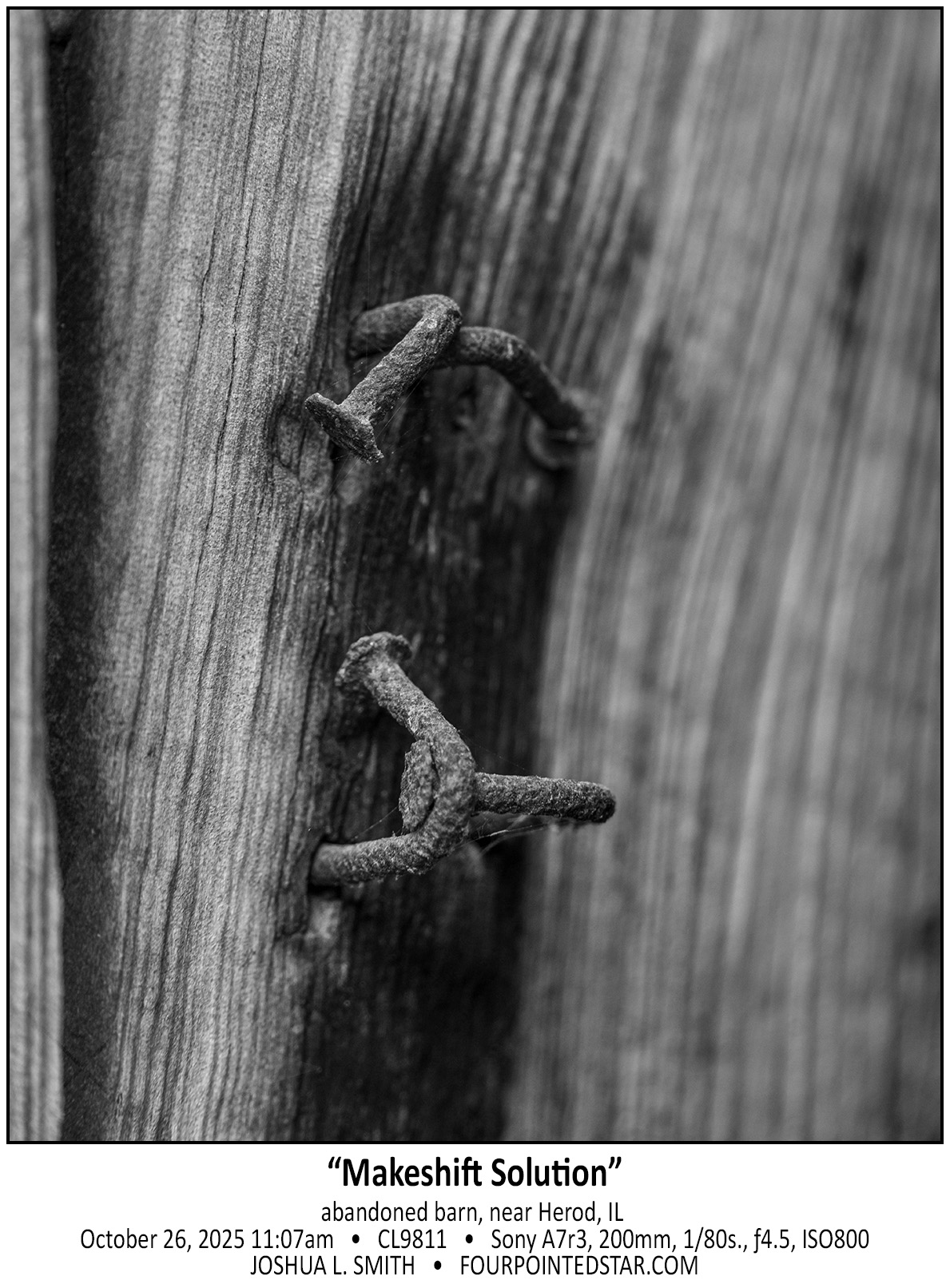
But barns? I found it very difficult to find inspiration and compositions with the barns and other abandoned structures on our trip. It’s not that the buildings weren’t interesting; it’s that I haven’t developed the mind’s eye for it. Once I brought the images into Lightroom, I couldn’t “see” why I took the photo to begin with – or worse – I could see and now I thought it was weak or absent.

Perhaps I need more practice (I do), but as I mentioned before; there’s only so much time to take pictures, and maybe I’d rather spend it with the subjects and scenes that I already love.


At some point in life, most of us realize that we don’t have time for everything that we’re interested in – we’re forced to drop a hobby because we don’t have time.

Photography reached that point for me a few years back; I used to photograph anything, but I discovered that I wouldn’t edit certain photoshoots or would be annoyed at editing certain shoots. I enjoy certain subject matter and certain photo topics and would like to spend more time with those.

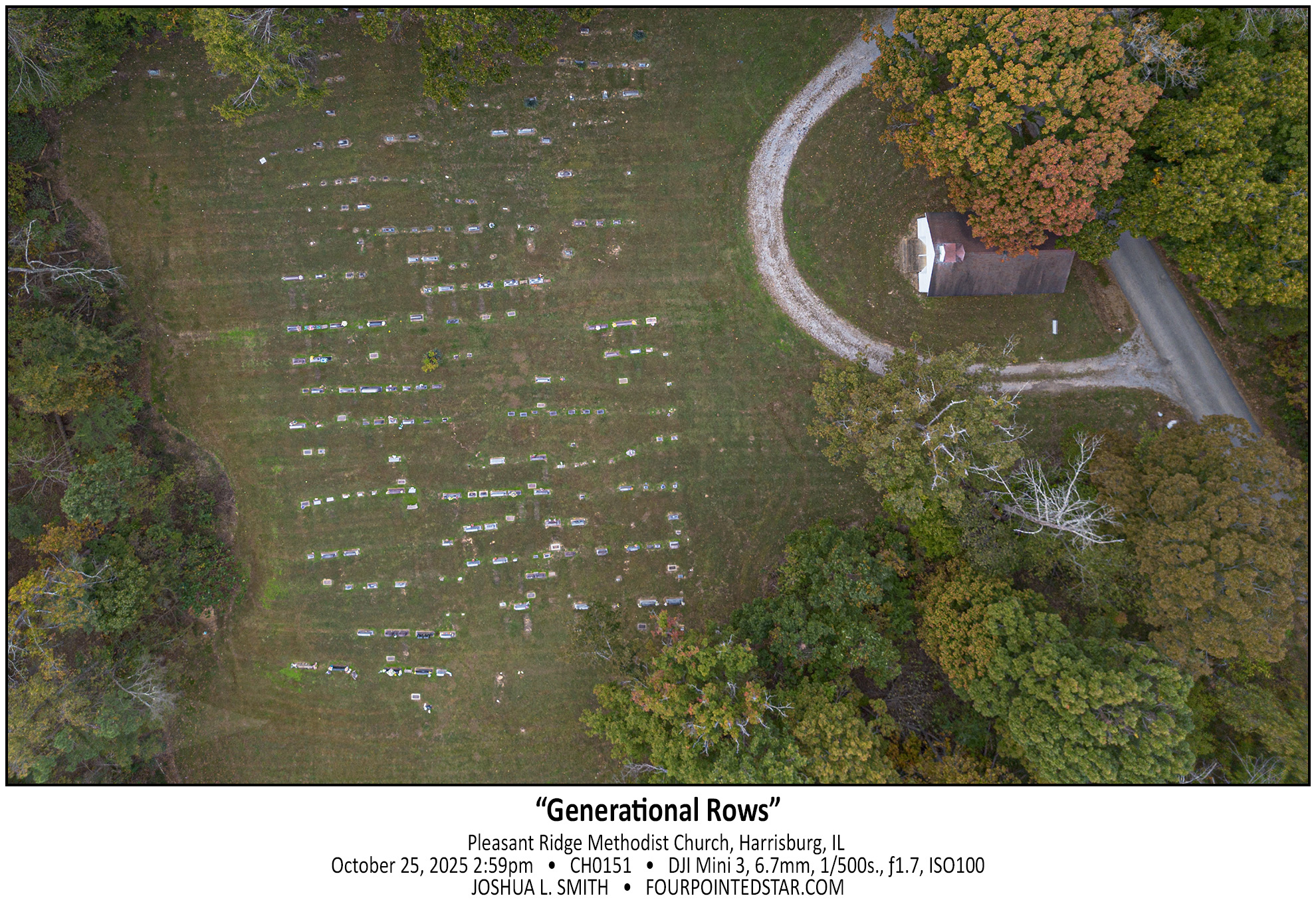
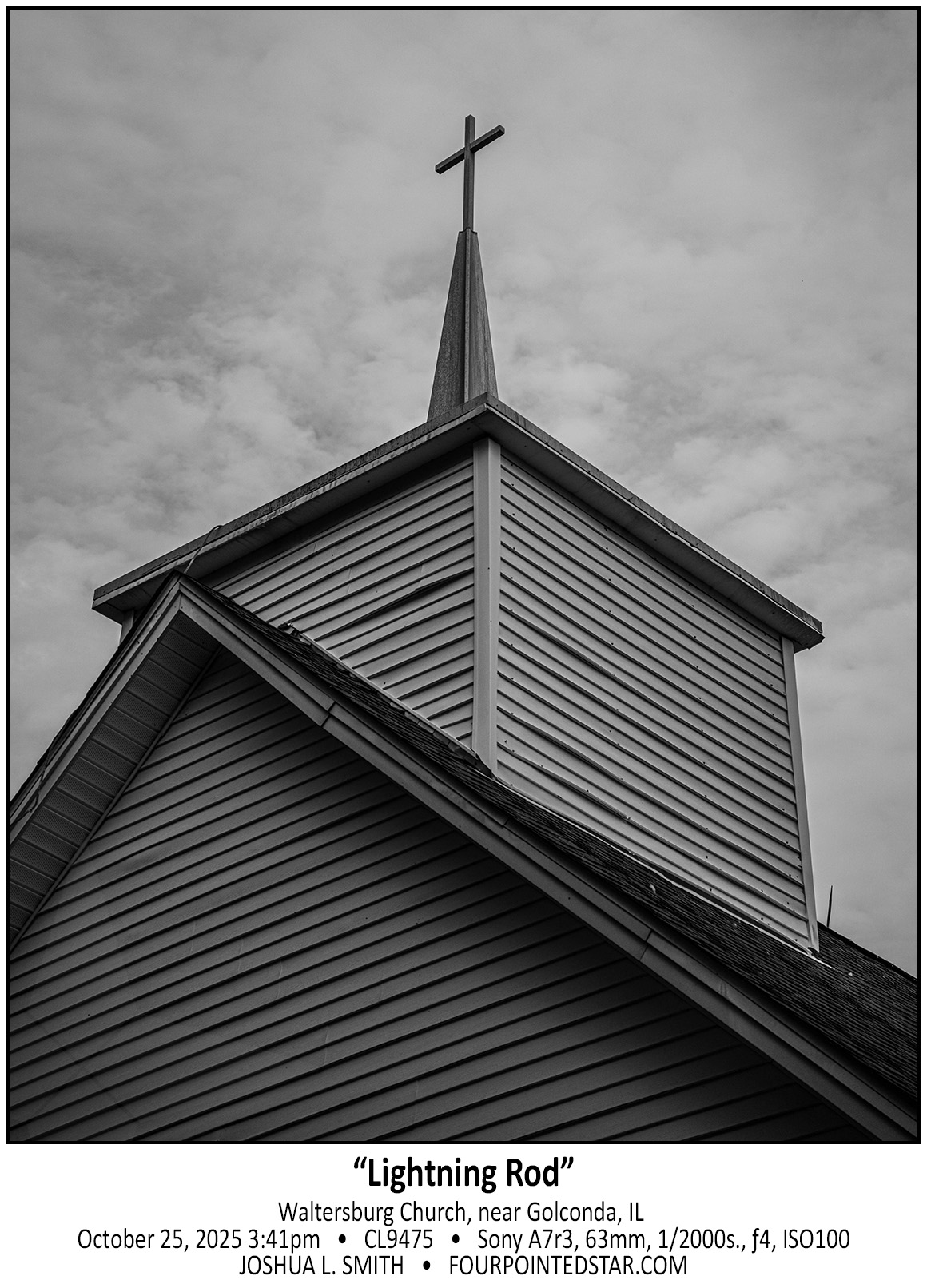
Old, abandoned buildings is one of those topics; it’s not that I don’t like the photos that I come up with, it’s that I’d rather be photographing something else. This was true on our trip to Southern Illinois with Keith French; on two days, we visited abandoned churches and barns, and I found myself wanting to wander through the woods instead.

I do like these photos, but …


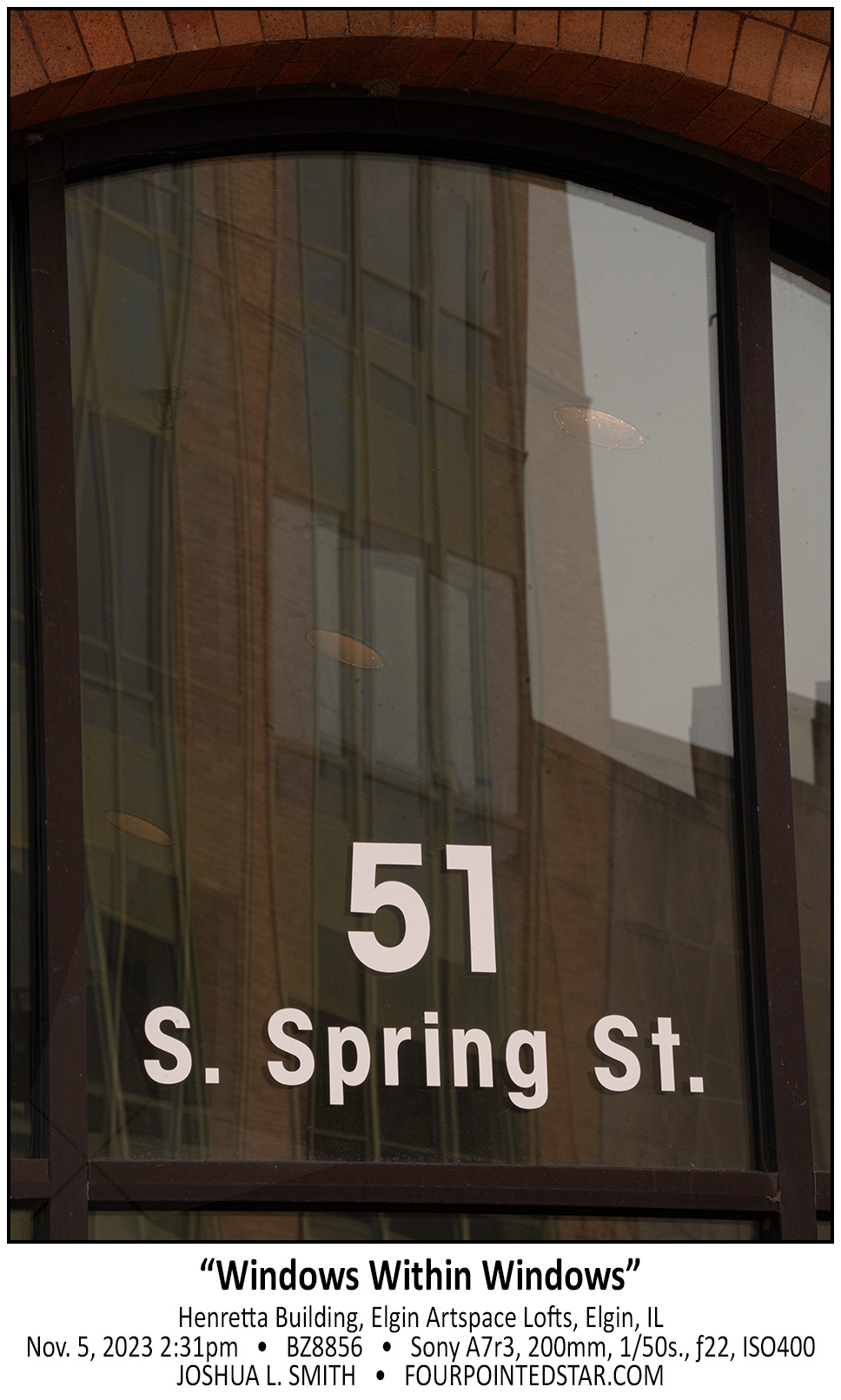
Back in November 2023, Side Street Studio Arts hosted a photo walk; each participant was supposed to pick a “challenge” for the day, so I took every photo at 200mm. I’ve already posted several of my photos, so make sure to check those photos out too.

.

>other images<
.

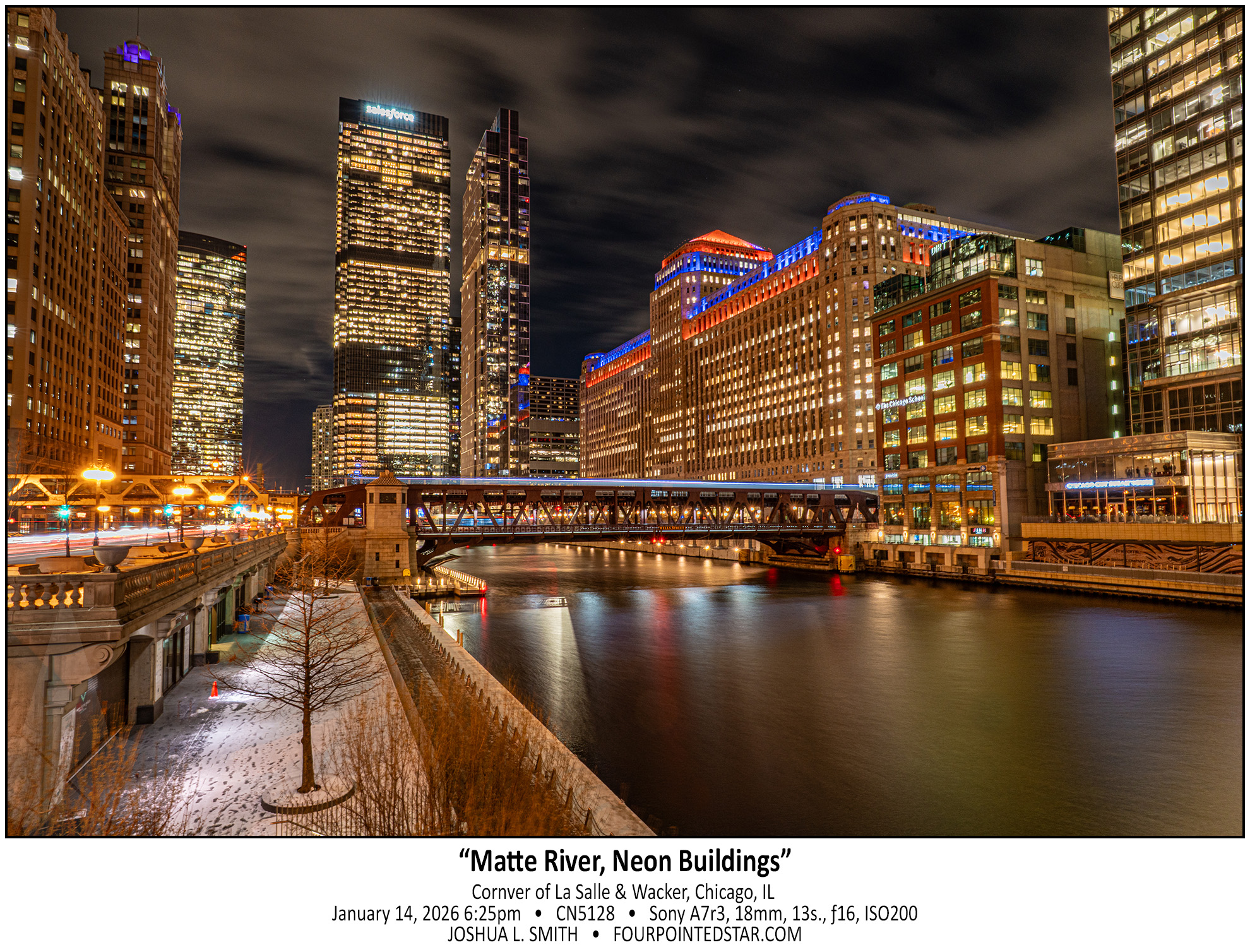
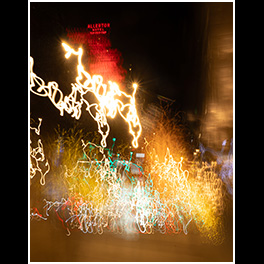
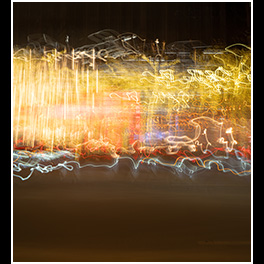
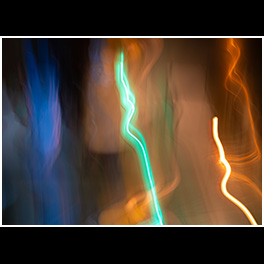
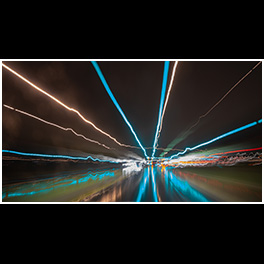
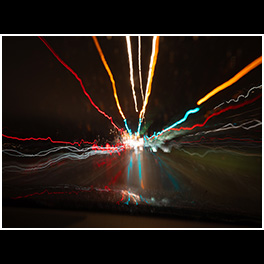
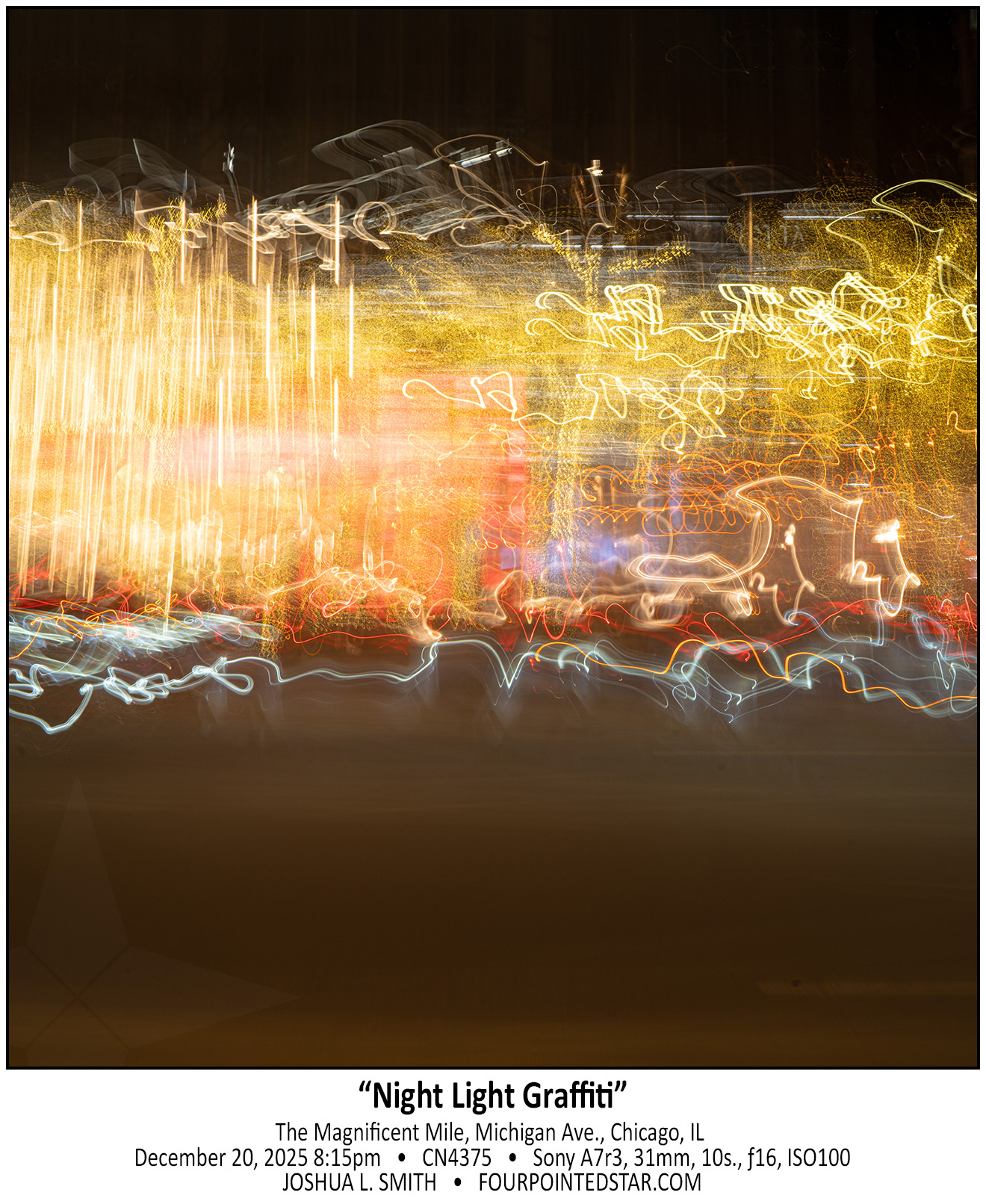
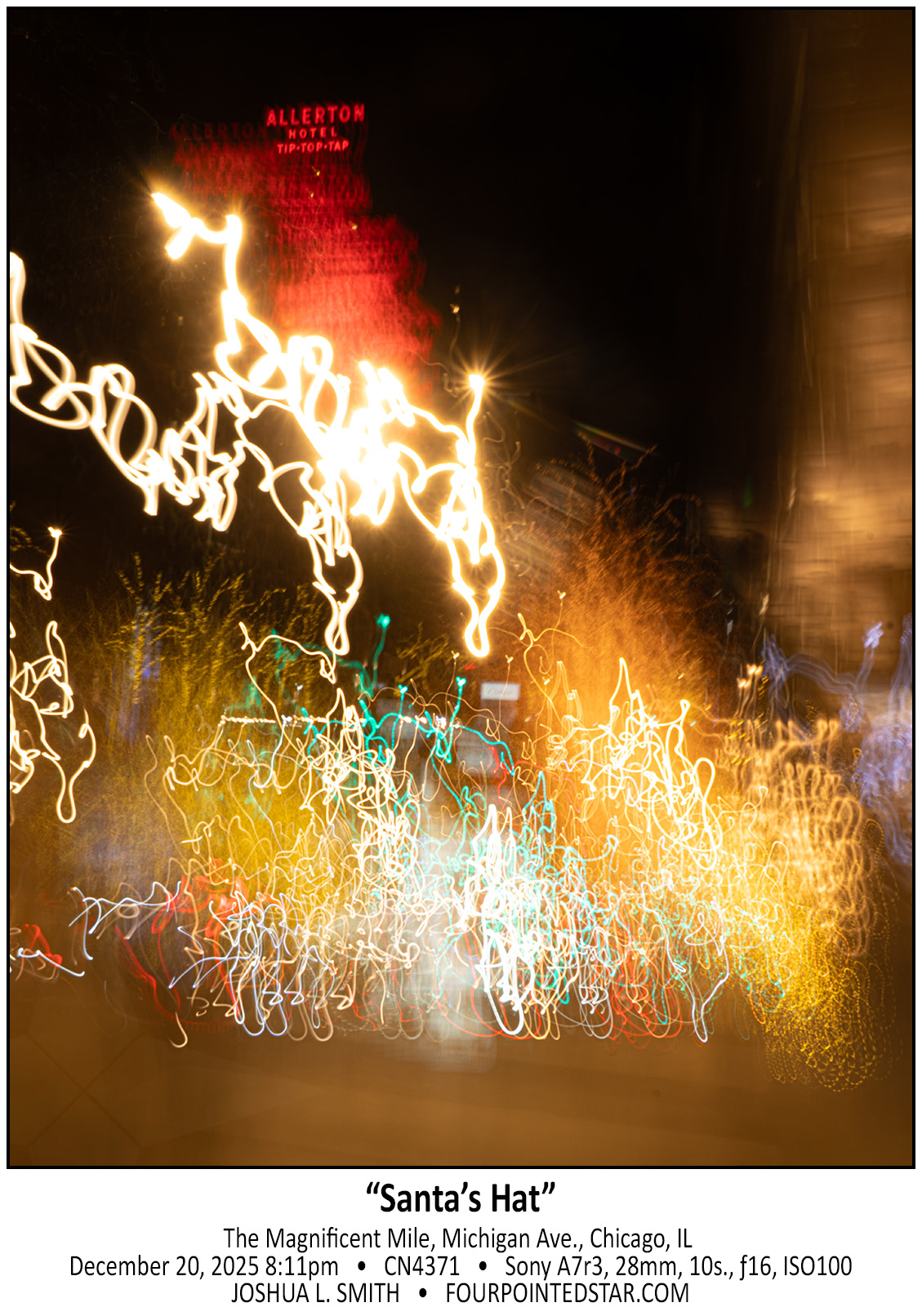
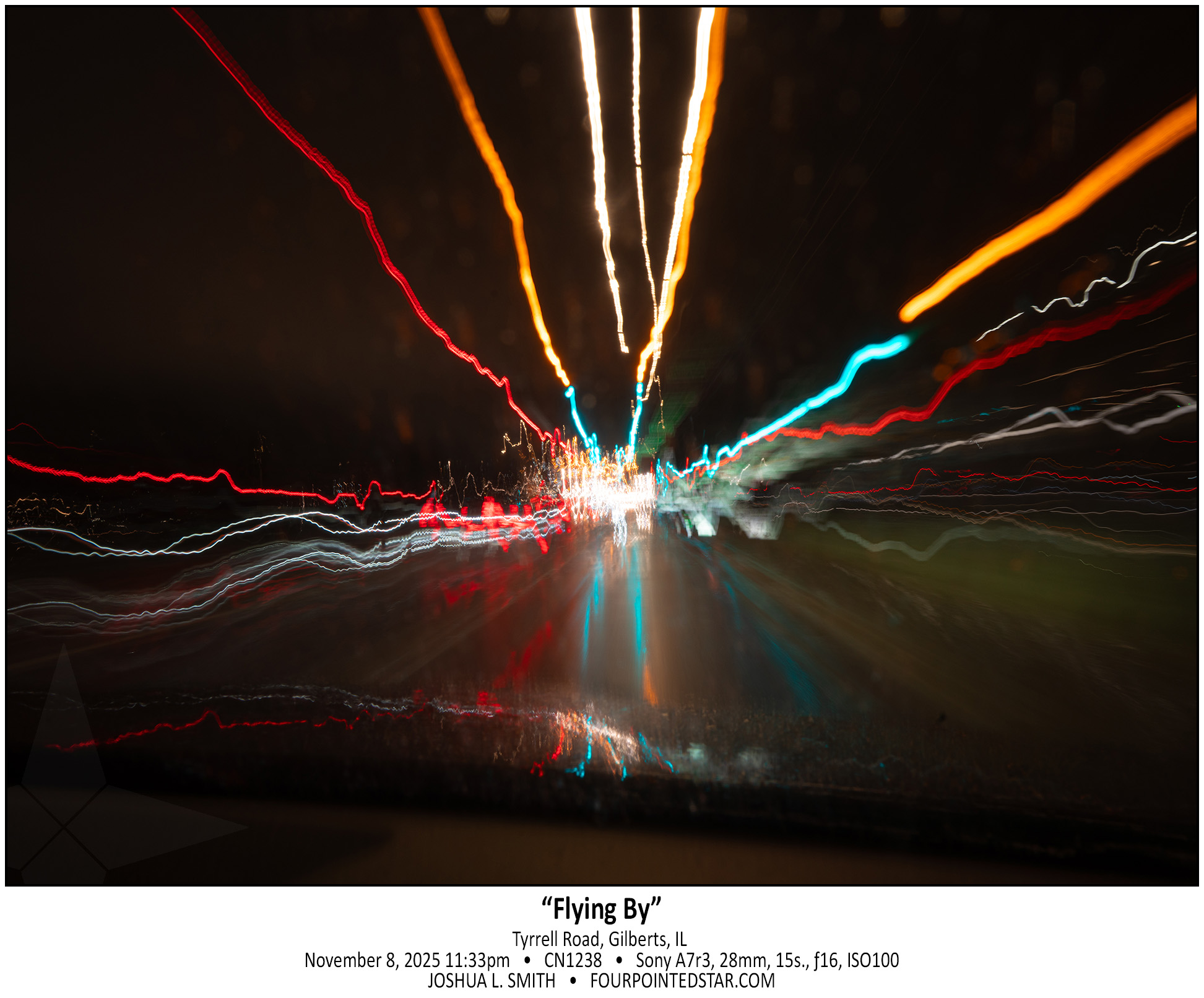
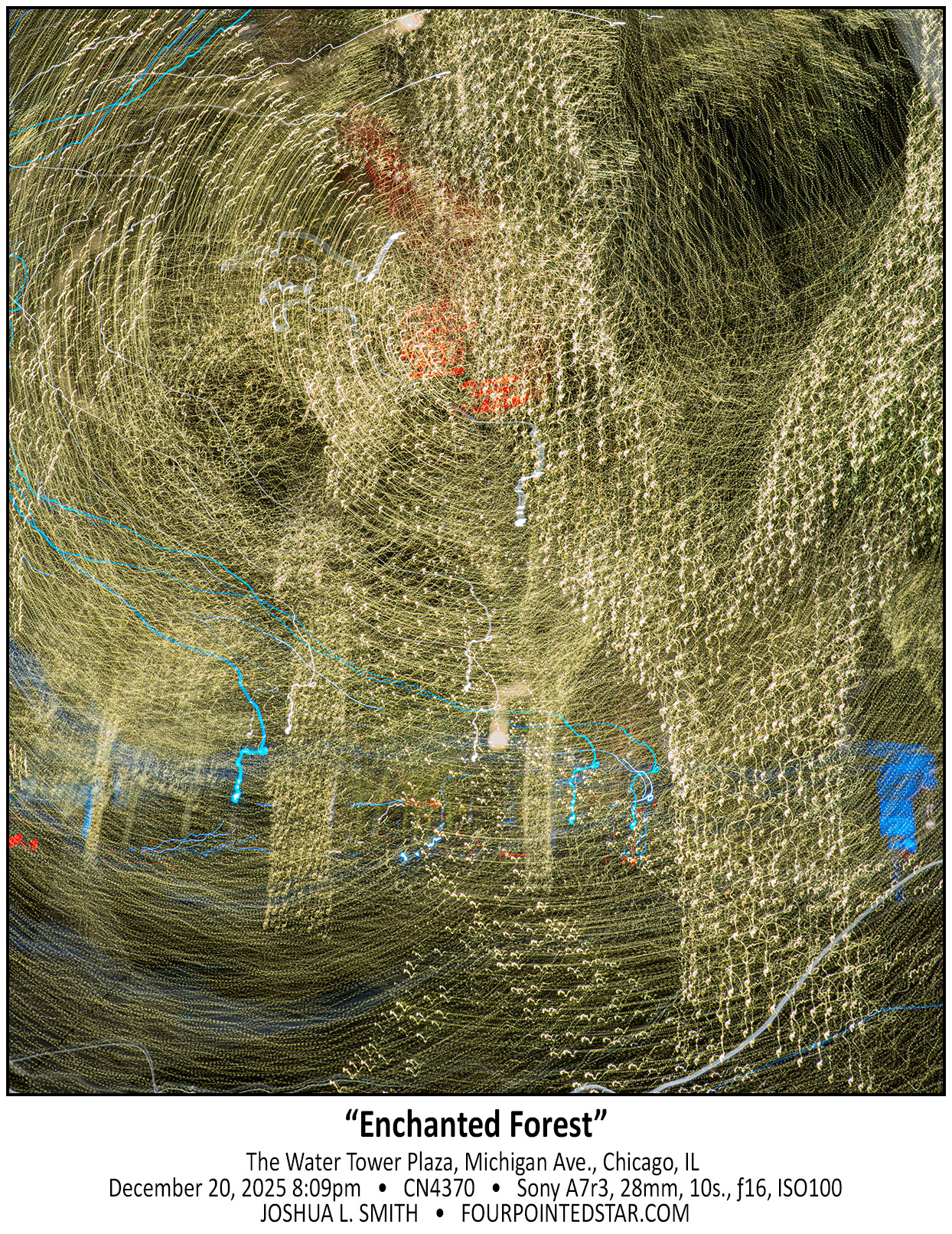
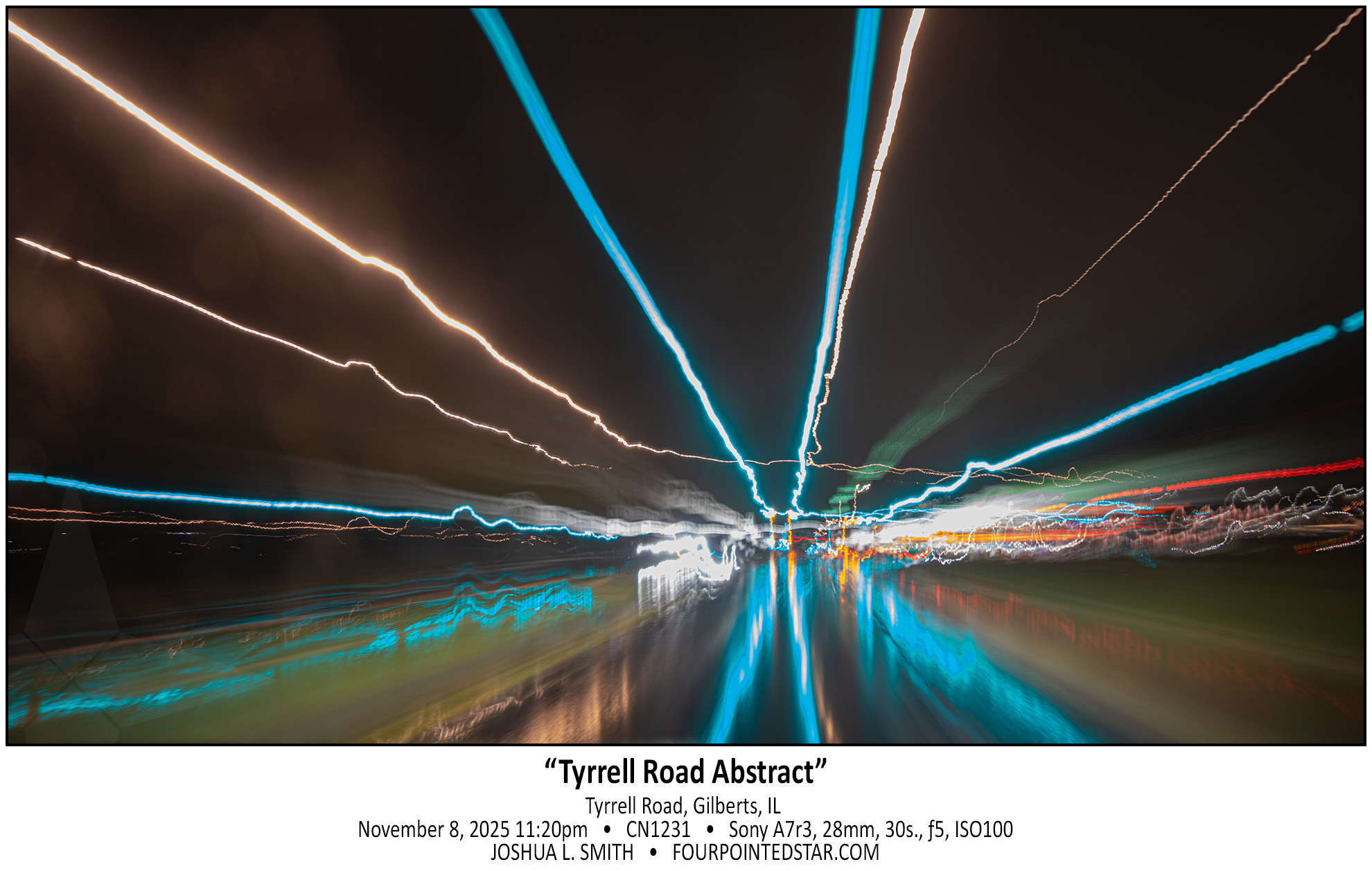
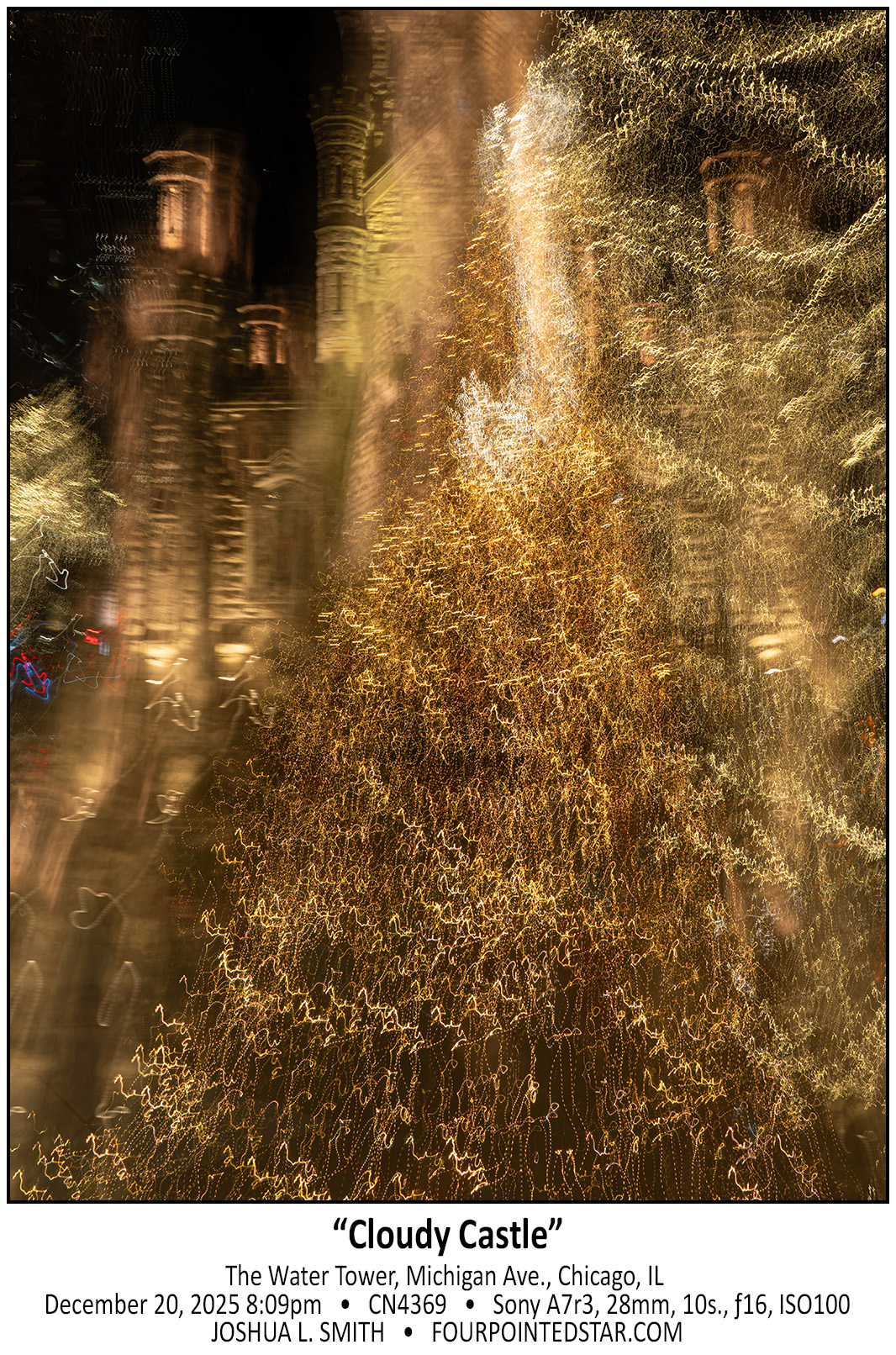
It’s no secret that I LOVE photographing light trails. I will visit the same spot OVER (January 2022) and OVER (January 2022) and OVER (April 2022) and OVER (November 2023) to see if I can get a NEW (November 2020), FRESH (January 2023), or INTERESTING (November 2023) photo.

But consistently I wonder, how can I create an image that challenges me this time – that presents a new challenge. At its core, capturing a light trail is just understanding how the light is moving and the exposure that’s need to not under or over-expose your image. So, how can I create an interesting composition with each visit?

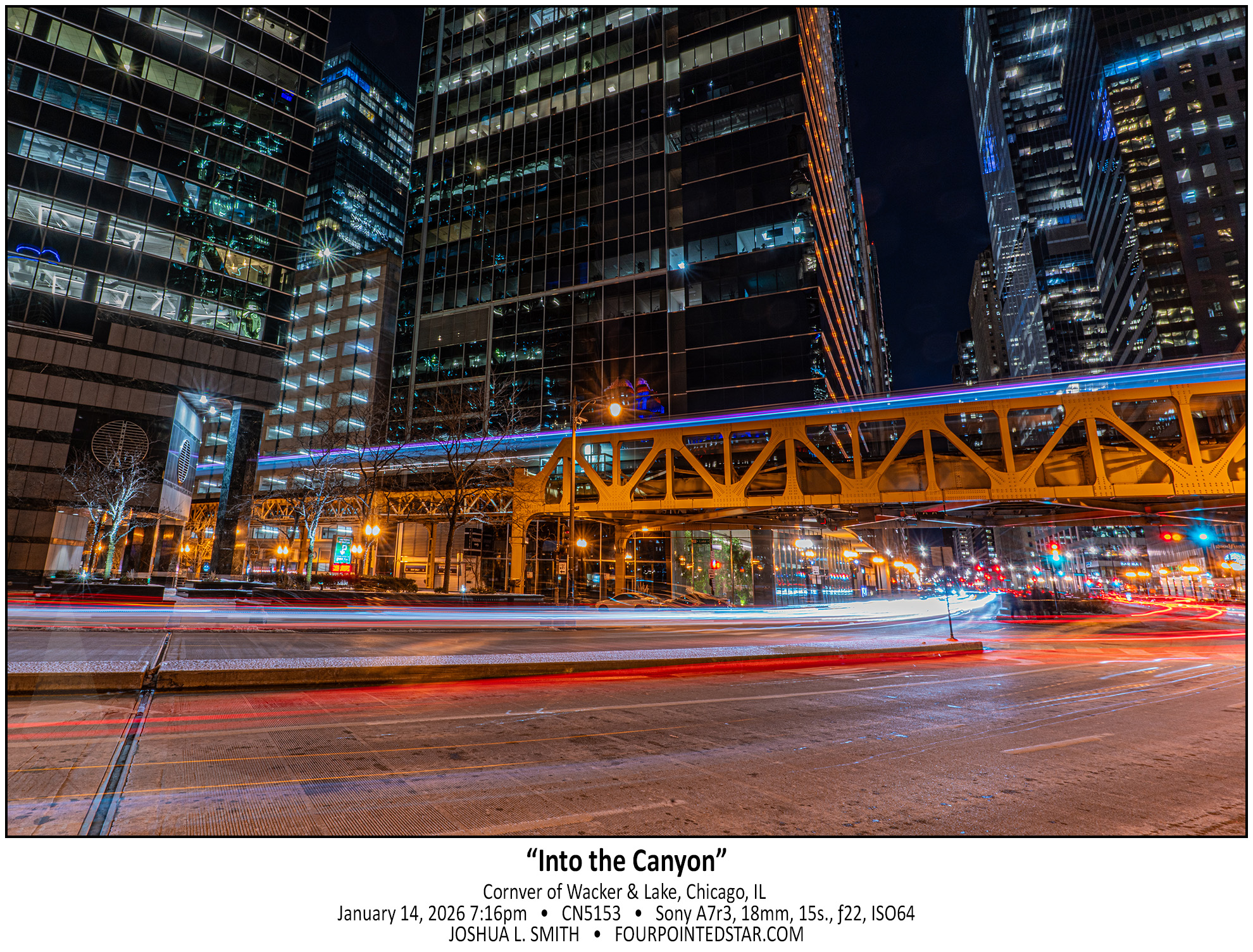
What do you do when the light trails are from trains, when the pattern will only repeat over and over? The backdrop, scenery, and angle can change as seen in the two contrasting images: January 2021 & November 2023

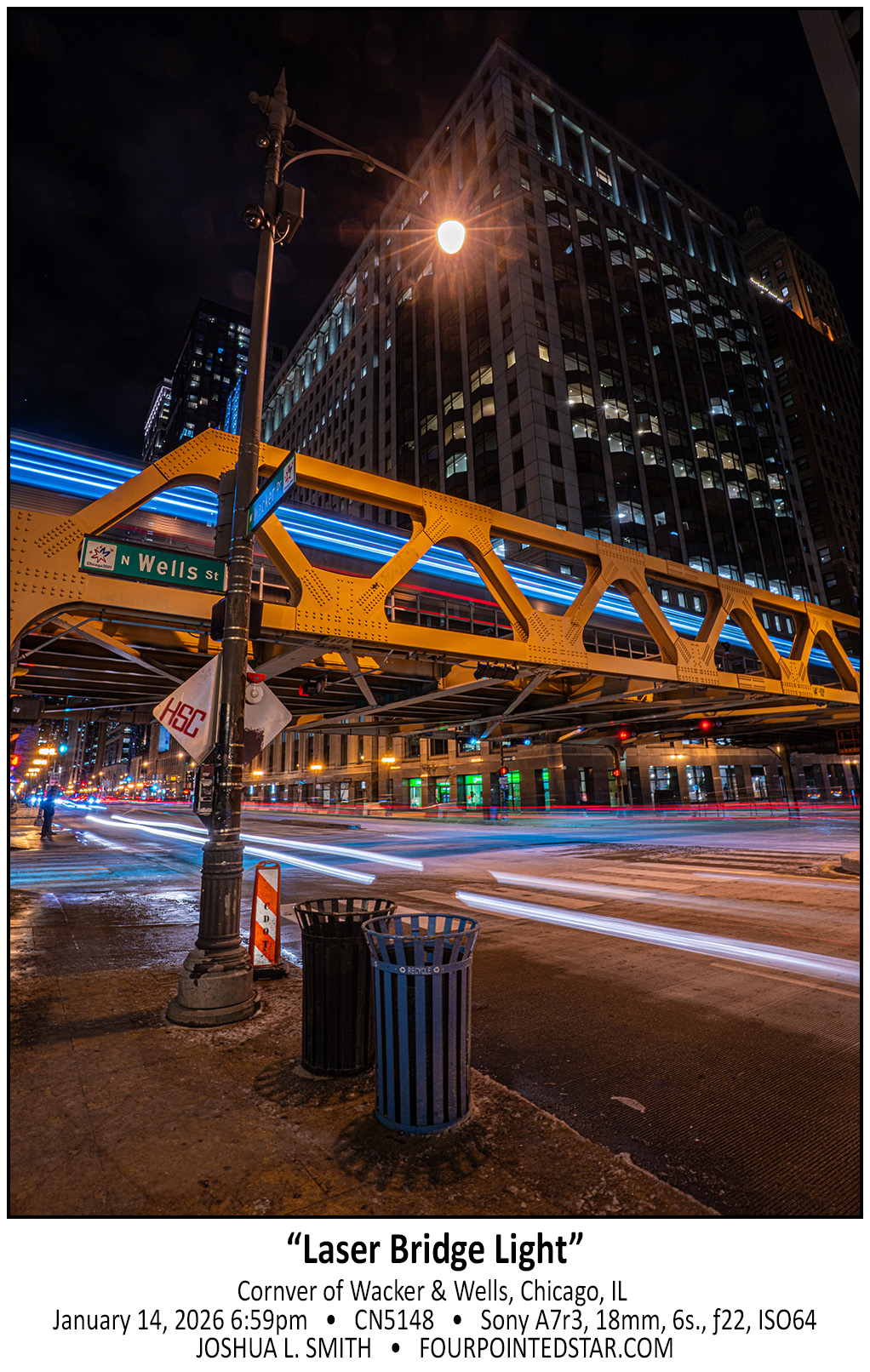
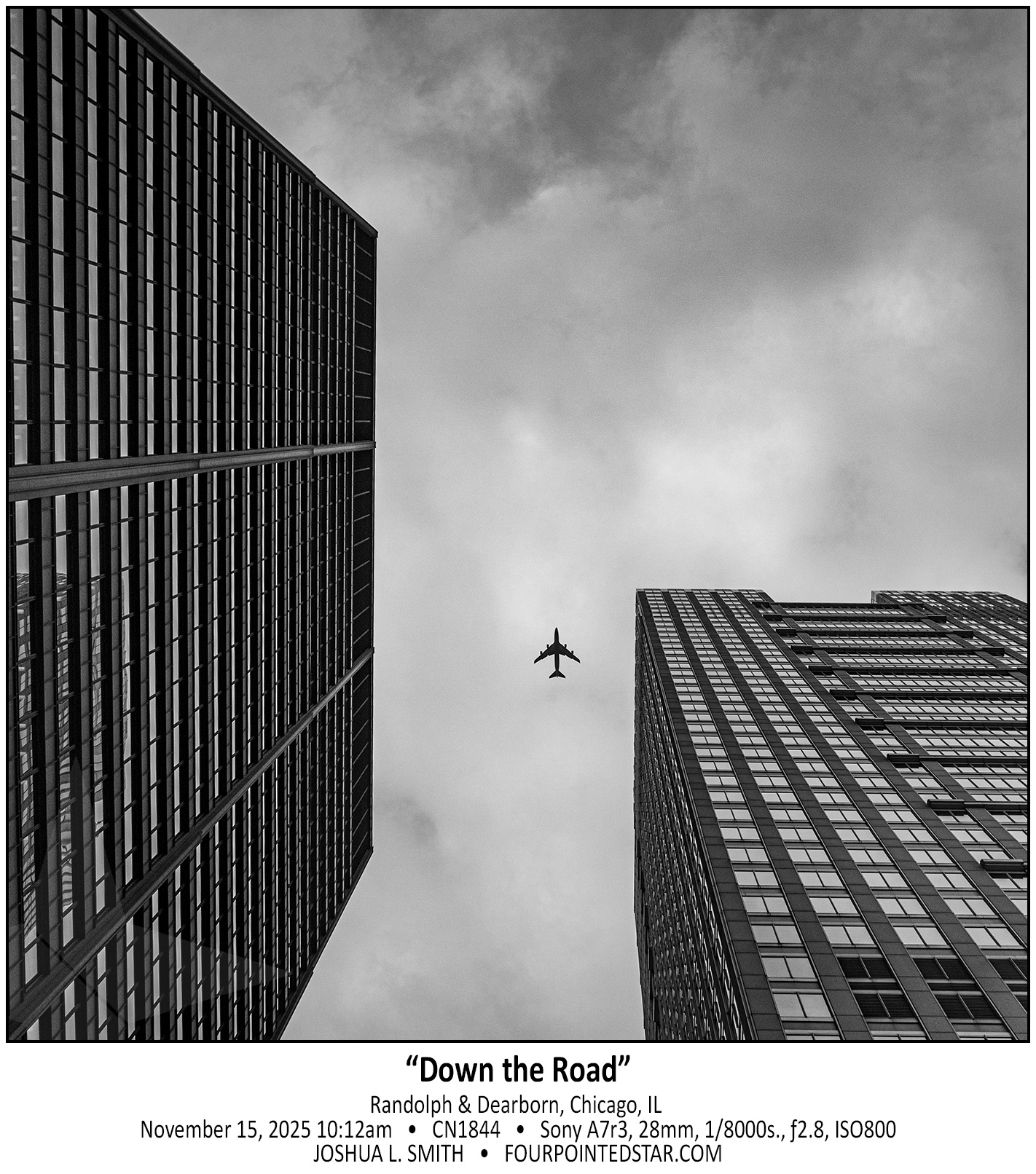
How about if the space is tight and you’re below the action? Maybe you can lean on the really strong angles (November 2023) or depend on the architectural elements and allow the light trails to be an accent instead of the star of the show (also November 2023)? As it turns out, “Laser Bridge Light” (above) is one of my favorite compositions not just from that recent trip downtown, but also of light trails along the river.

And lastly, there are the images that challenge us compositionally and technically; here the balance of a very wide flat scene combined with the oncoming lights from traffic is more than I can conquer right now. I like this image better than my last attempt (November 2020); and I’ll be honest, previously, I have would have just not attempted to capture the image; but there is a much better image in that scene – I just have to find it.

.

>alternate images<
.

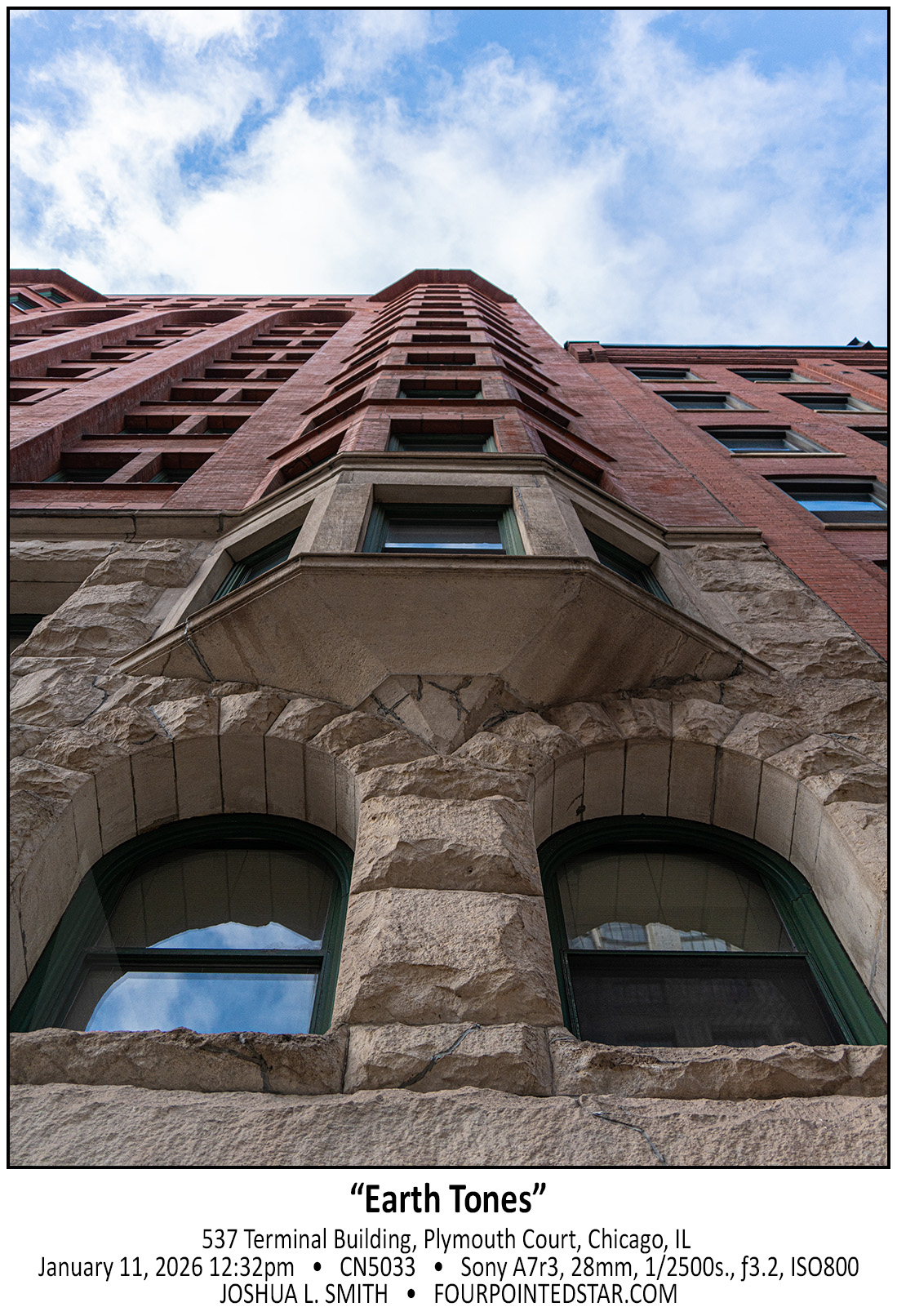
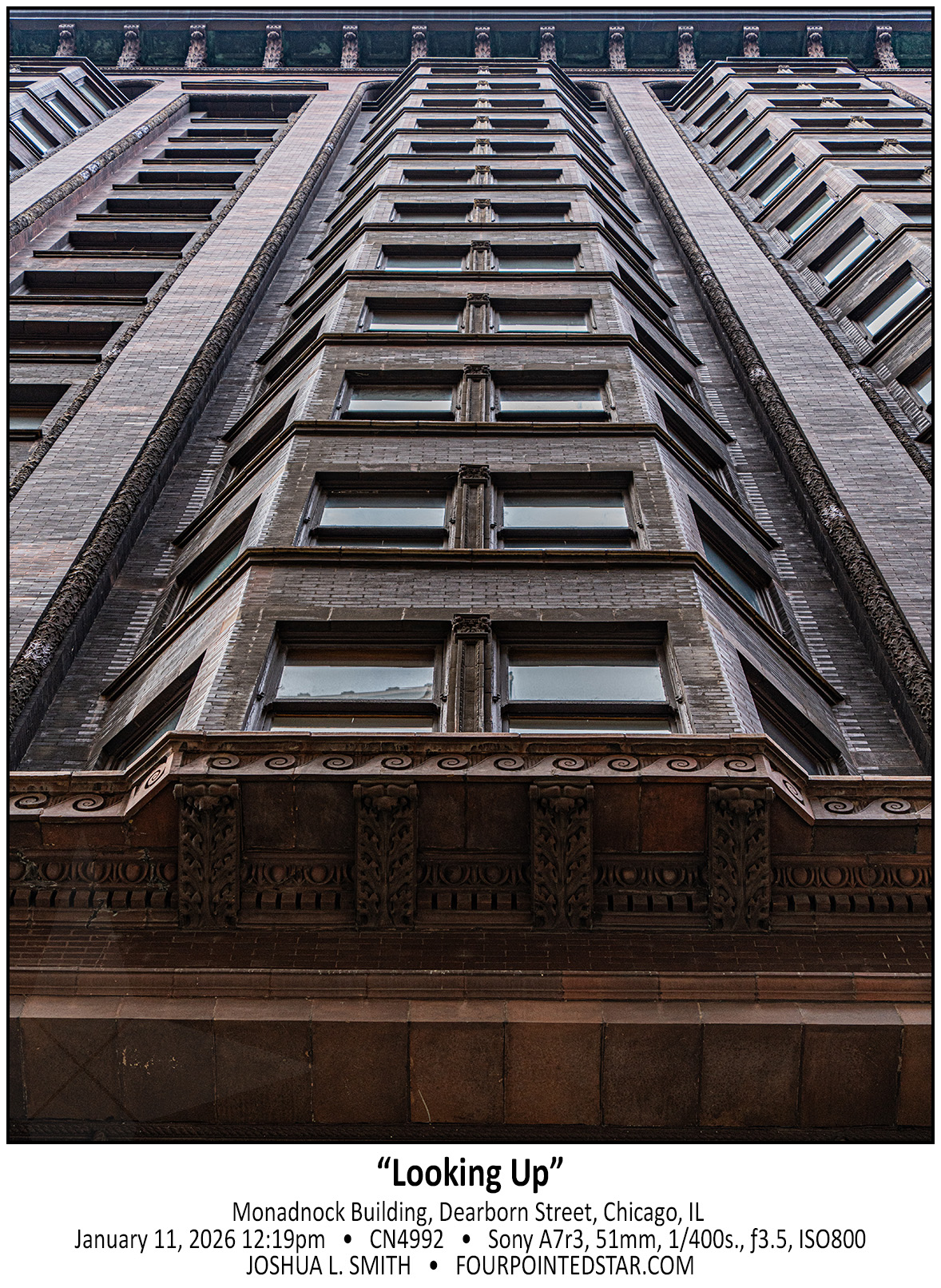
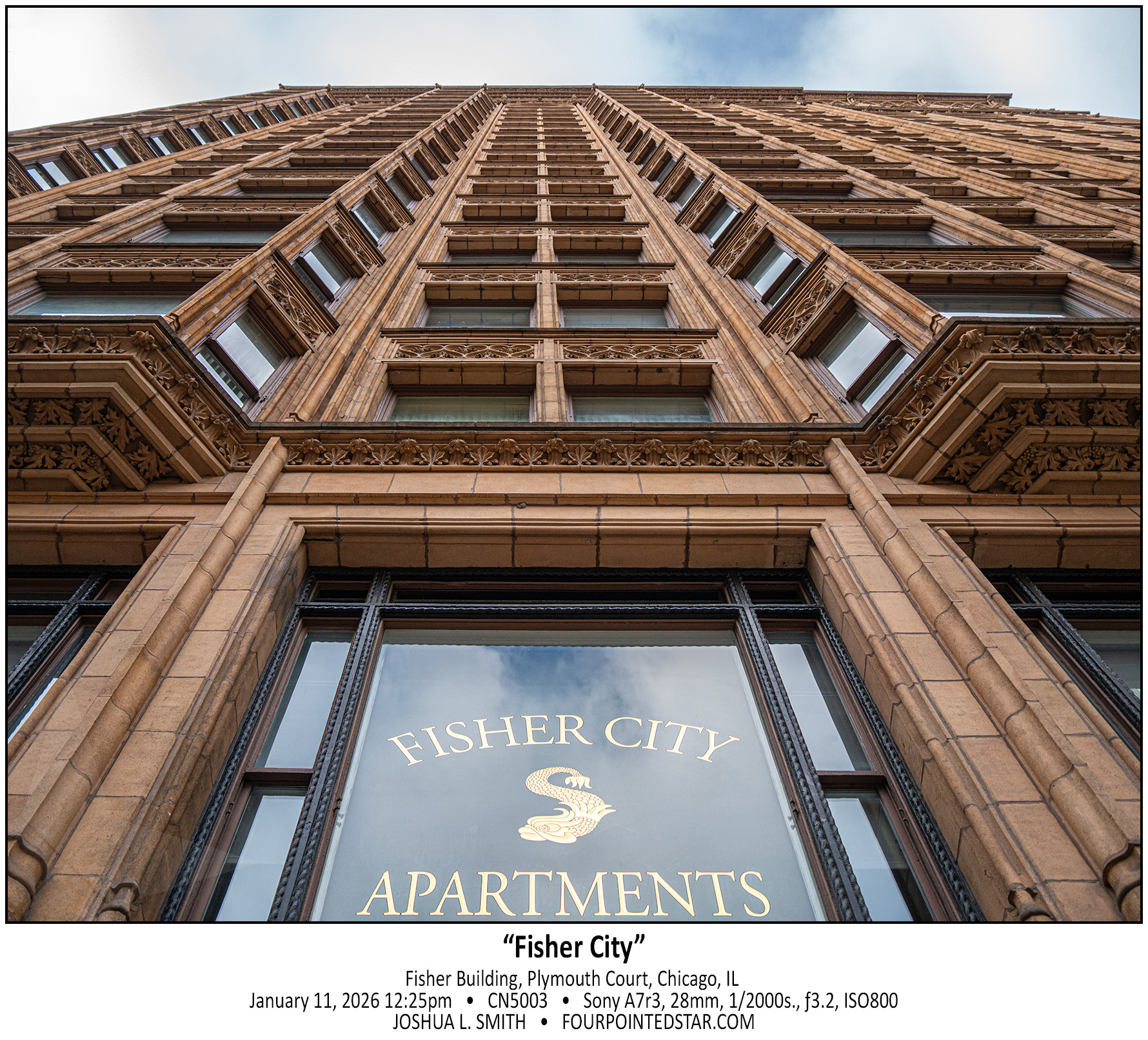
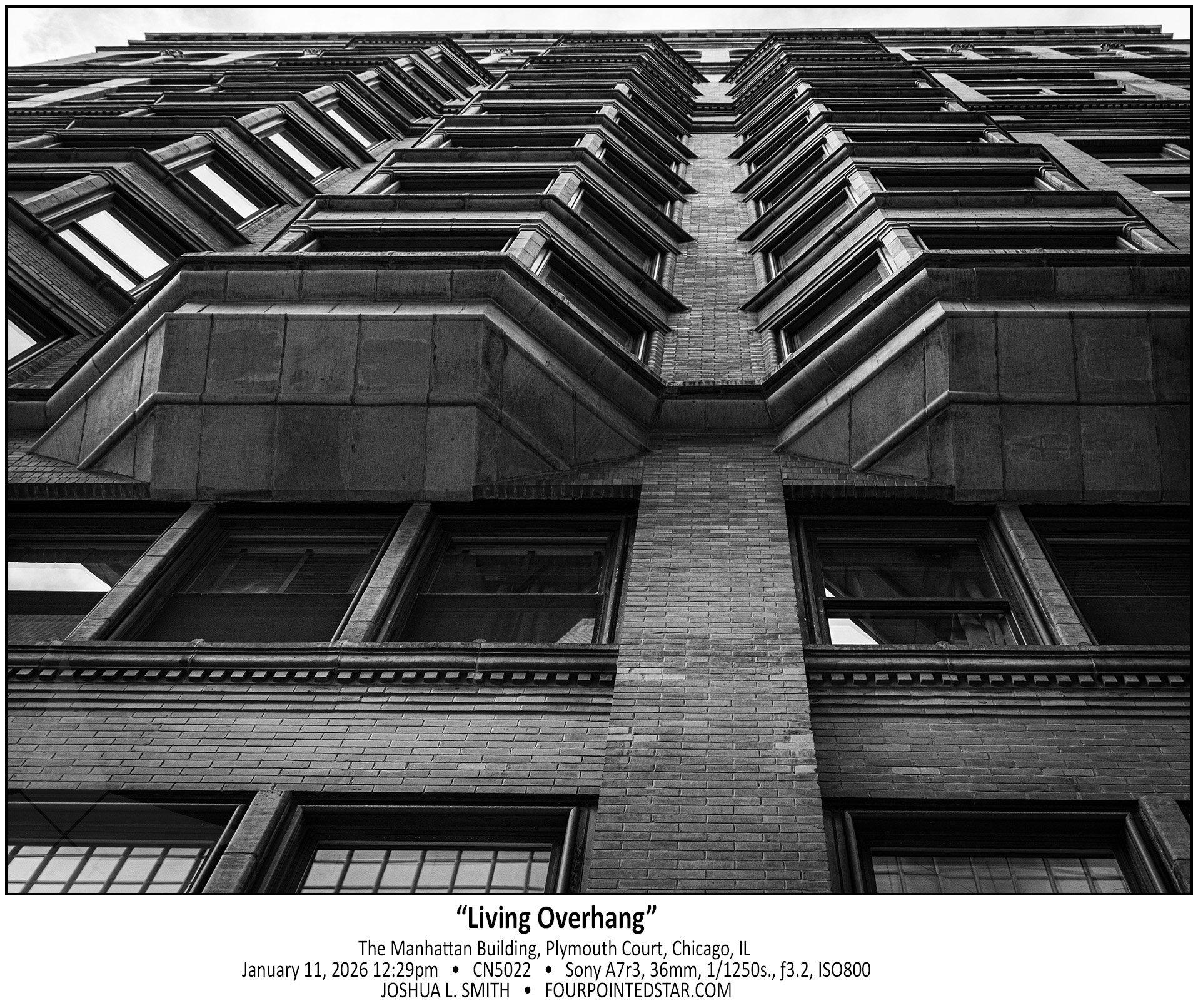
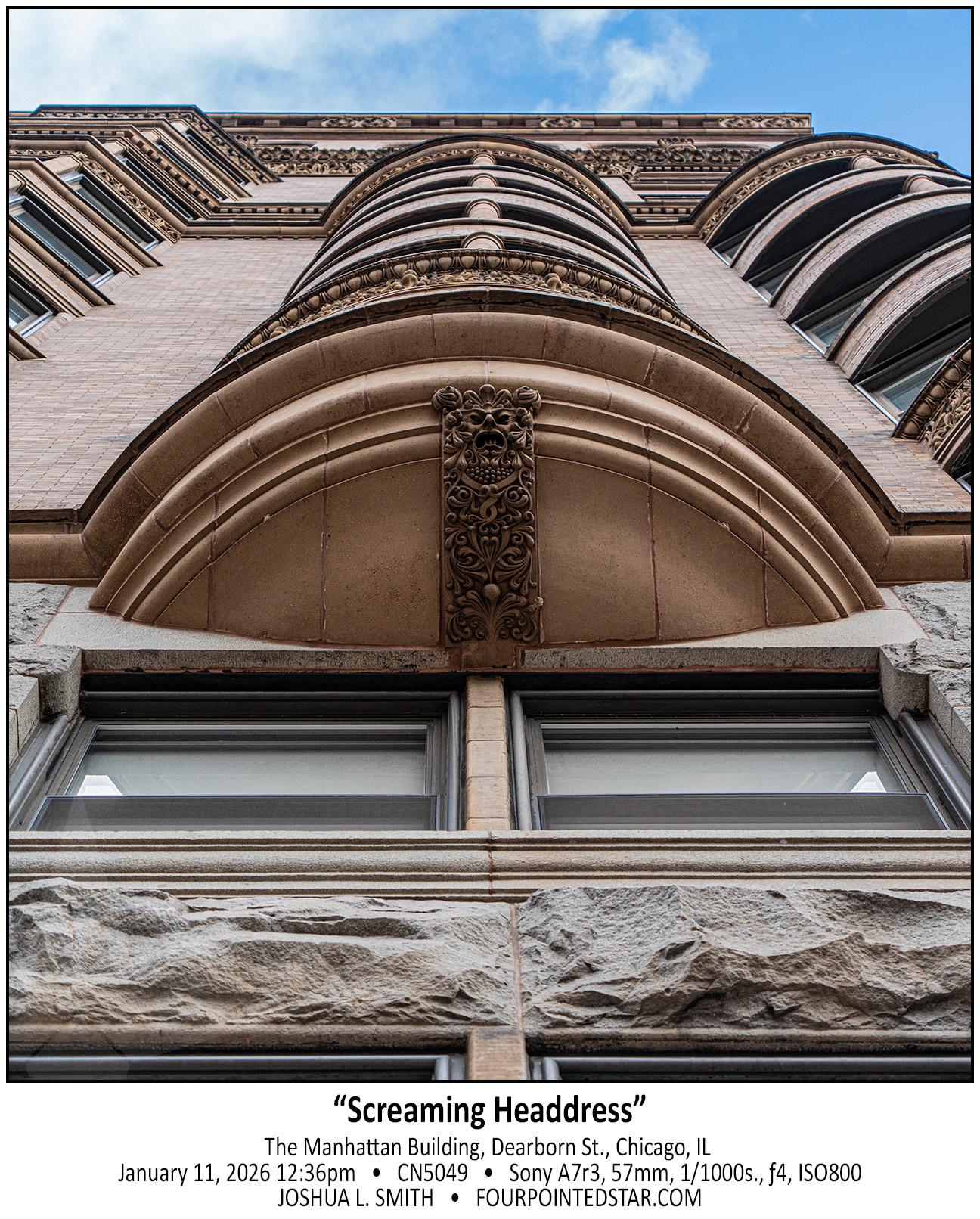
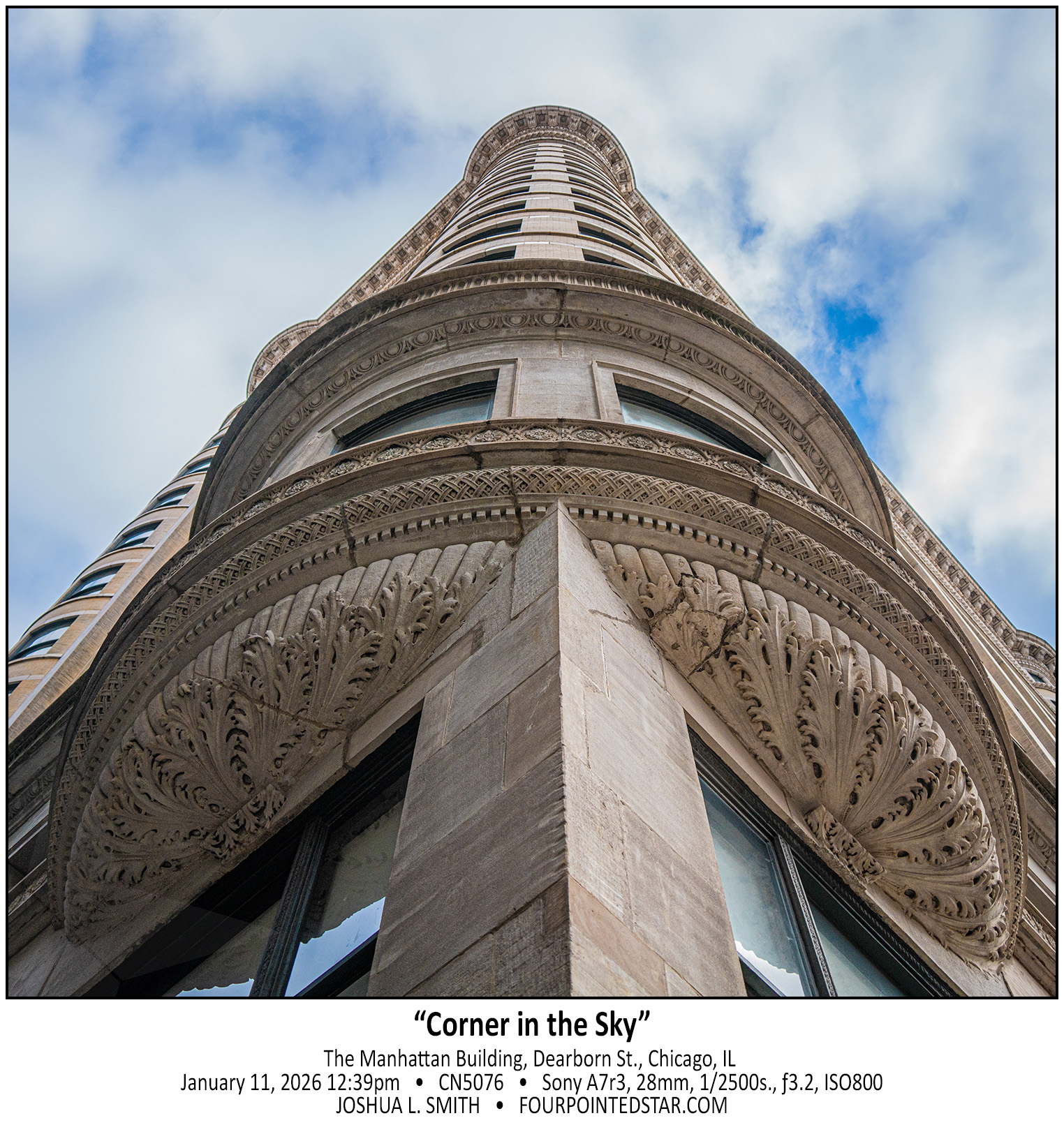
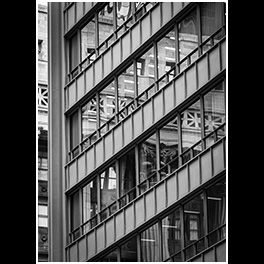
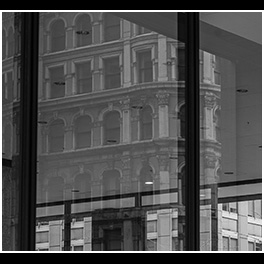
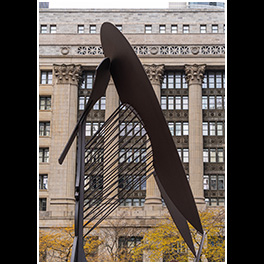
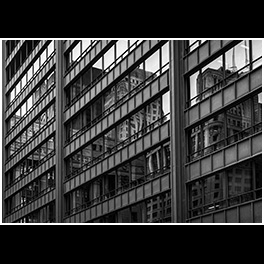
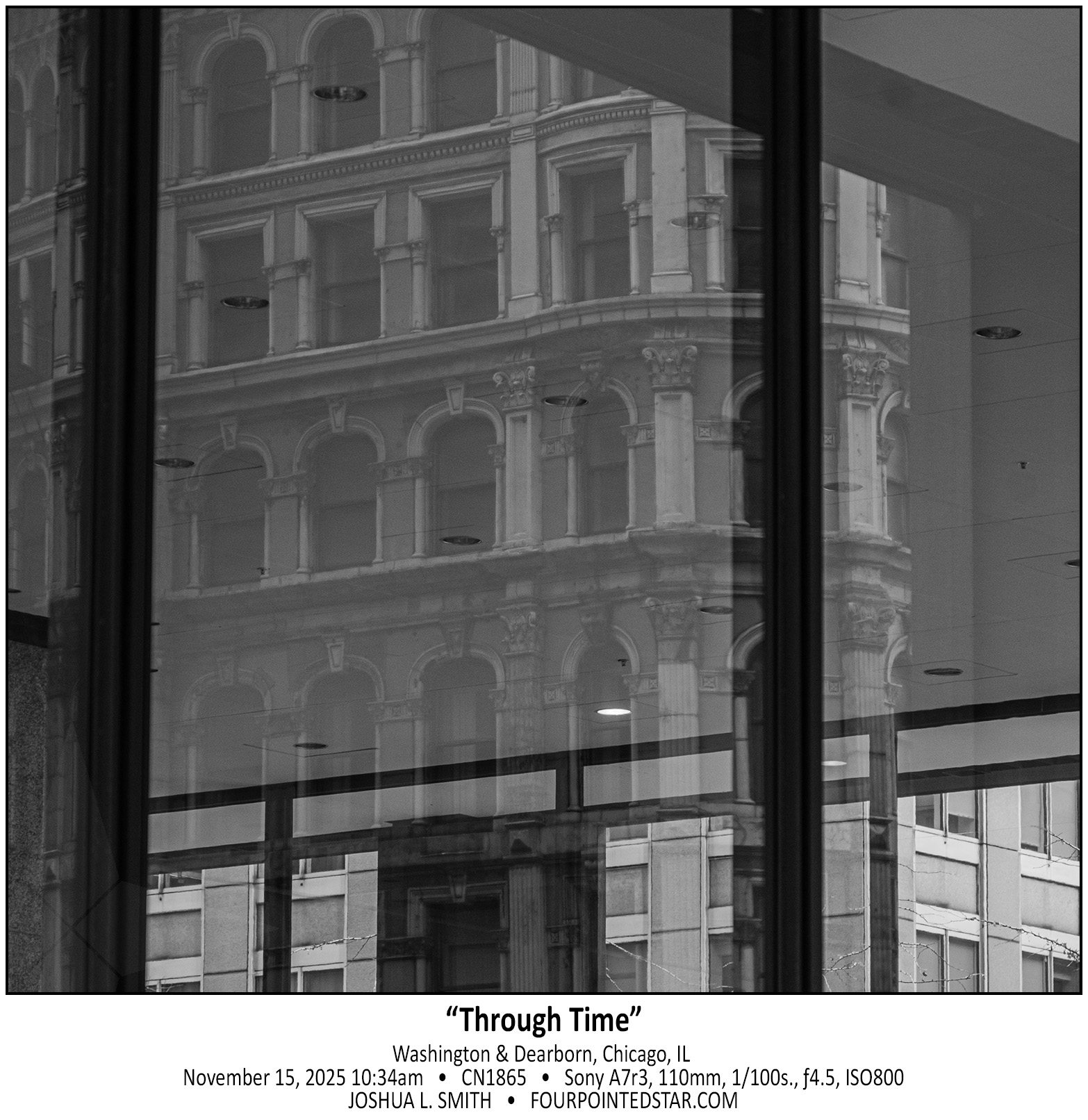
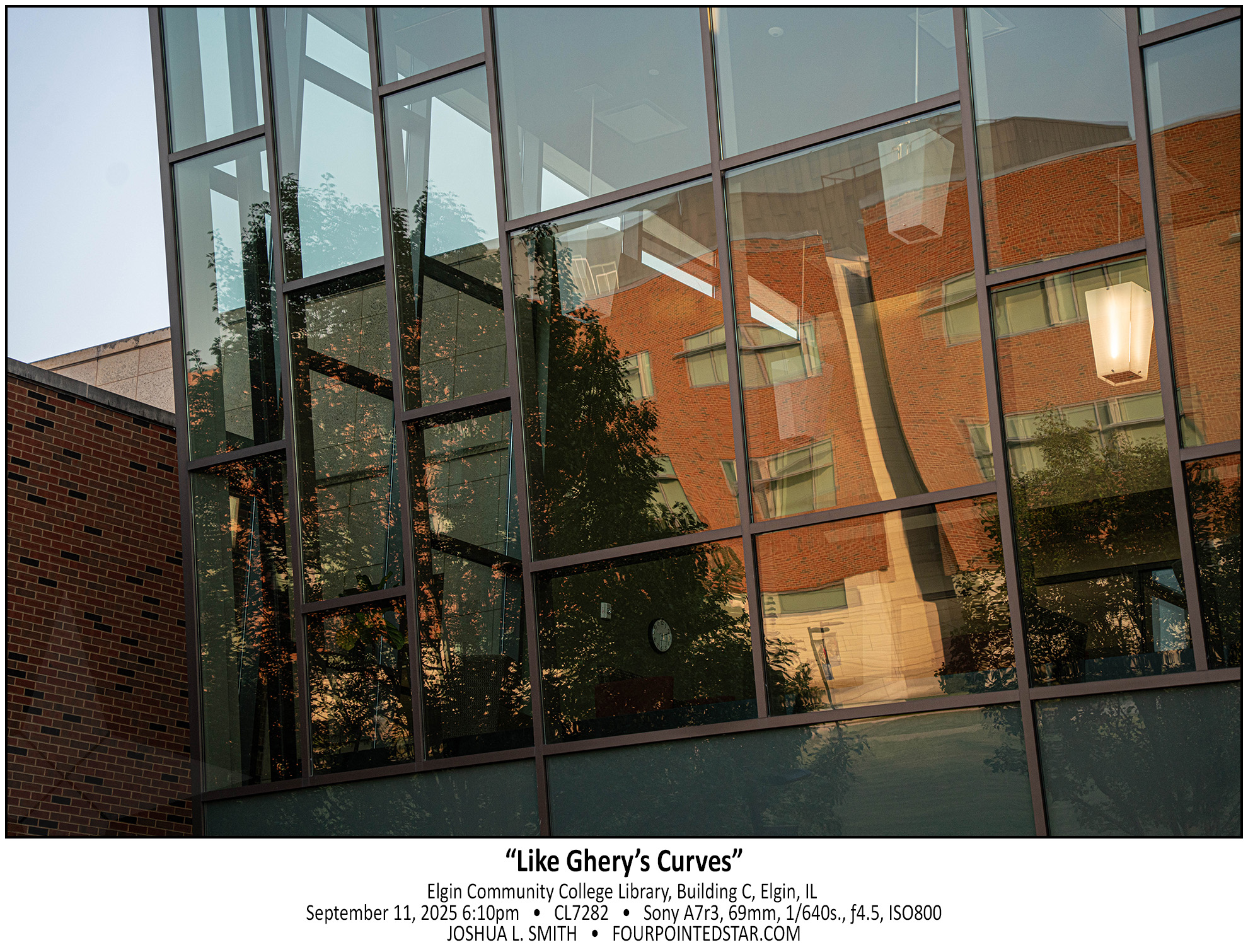
Each time that I explore a new area of Chicago, new details come to life. I’ve noticed that many of the historic buildings around Chicago have these bay windows often similar in style to the “Chicago Window” on them; but as I walked between the Fisher and Monadnock Buildings and then looked down the street, I noticed that this small area had many different examples of these historic bay windows on tall, early skyscrapers.

.

.

.

.

.

.

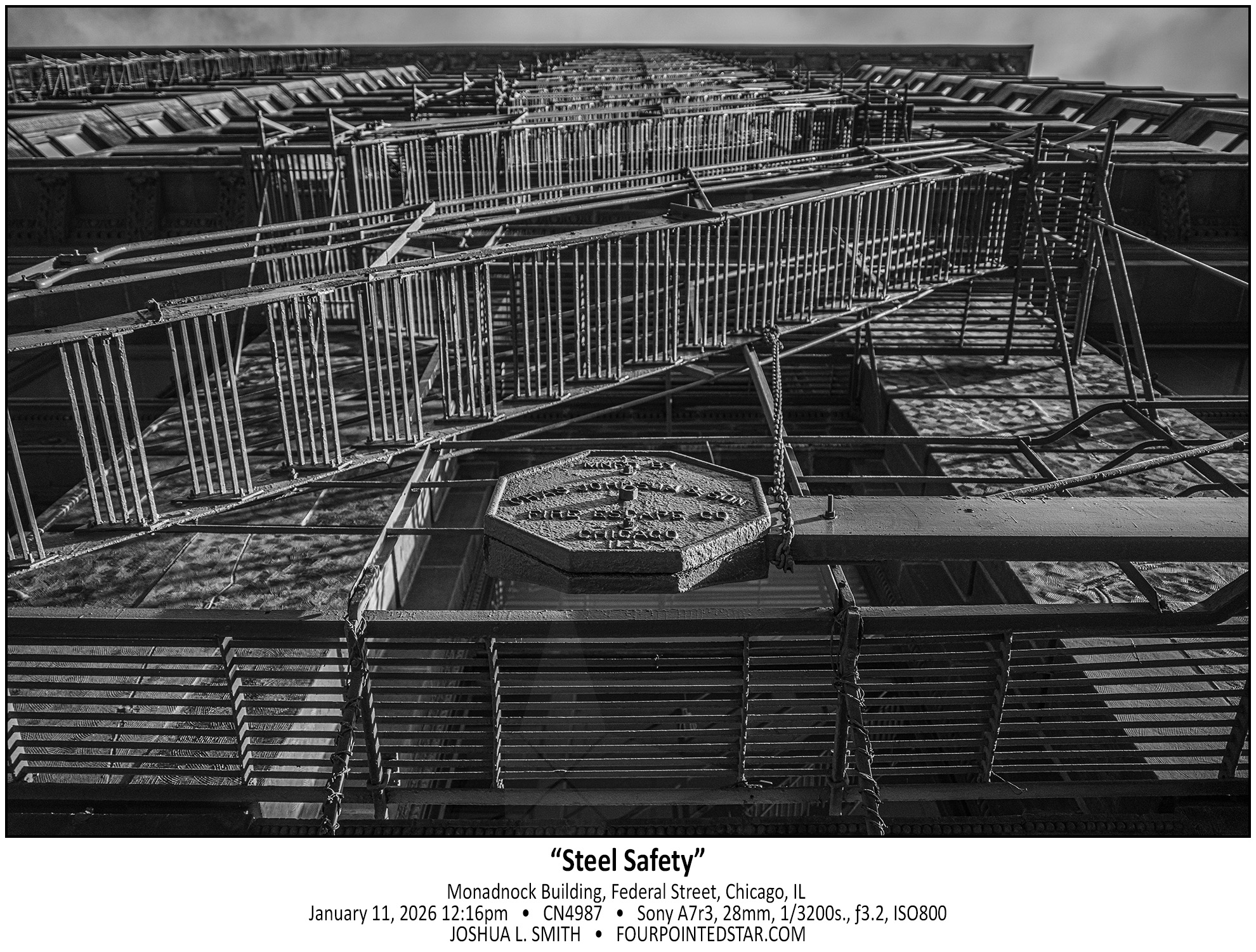
Equally interesting are the exterior fire escapes on many of the older buildings. I know that there fire escapes will lend themselves to great photos, but I’m still searching for those images.

.
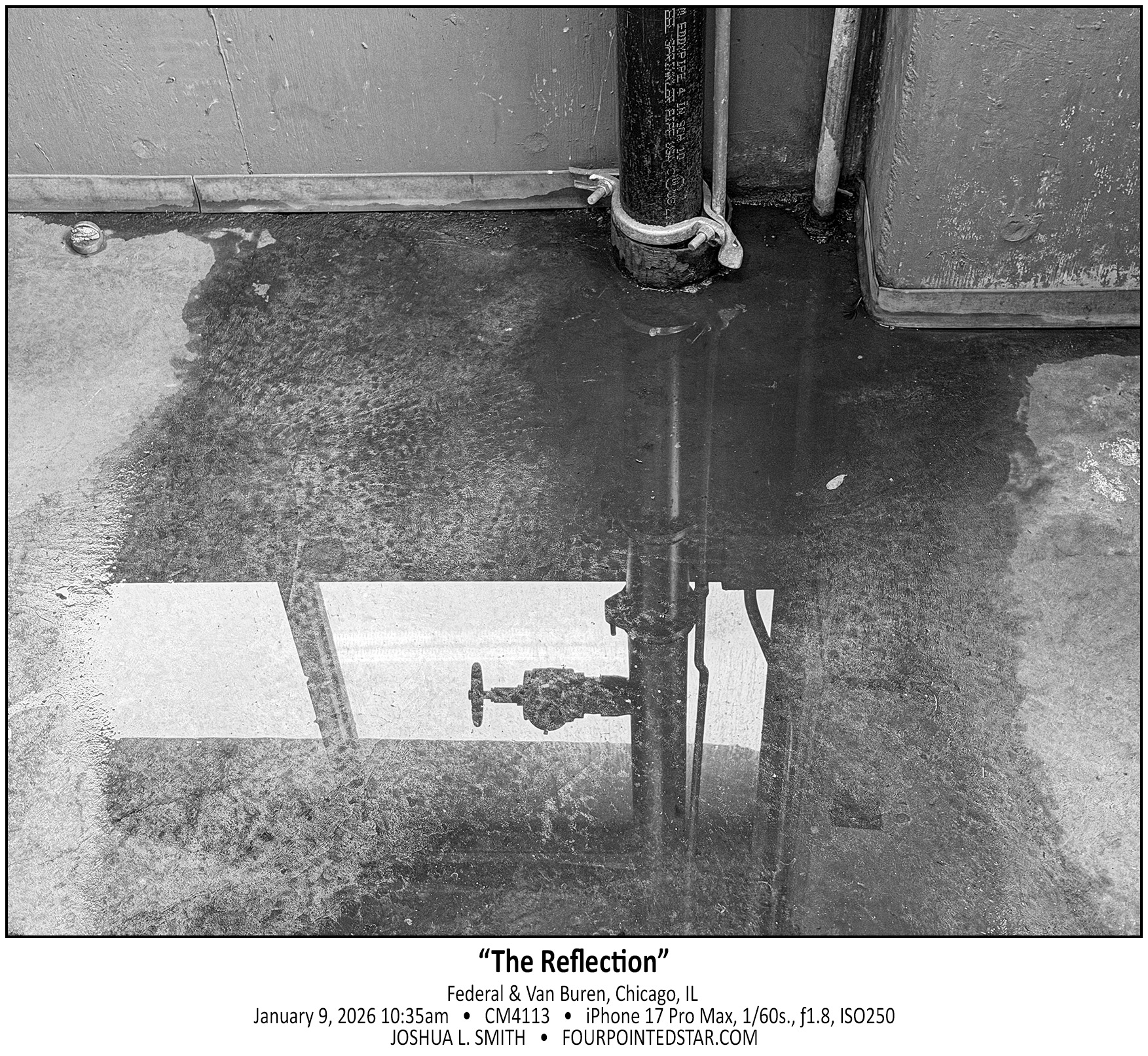
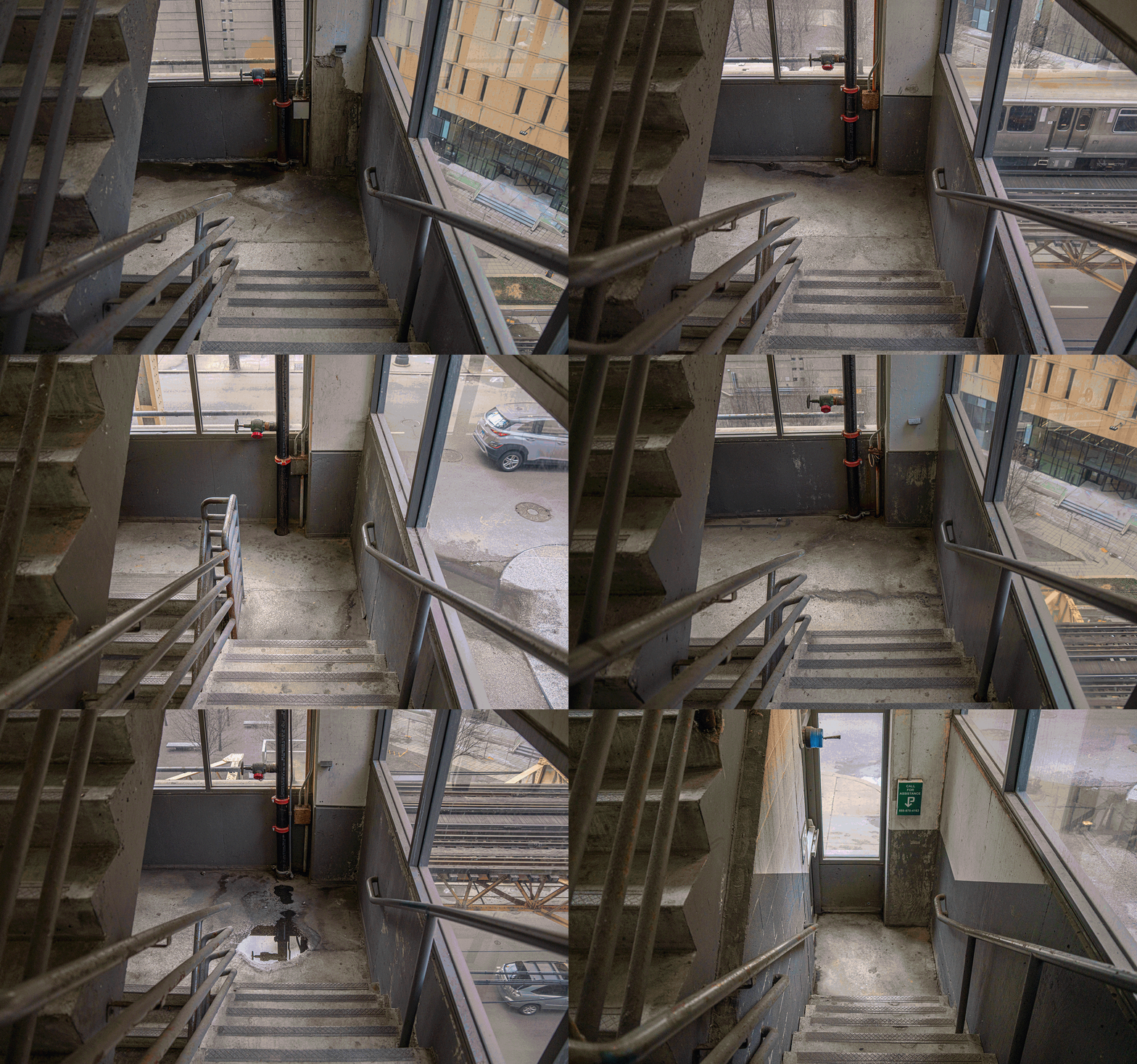
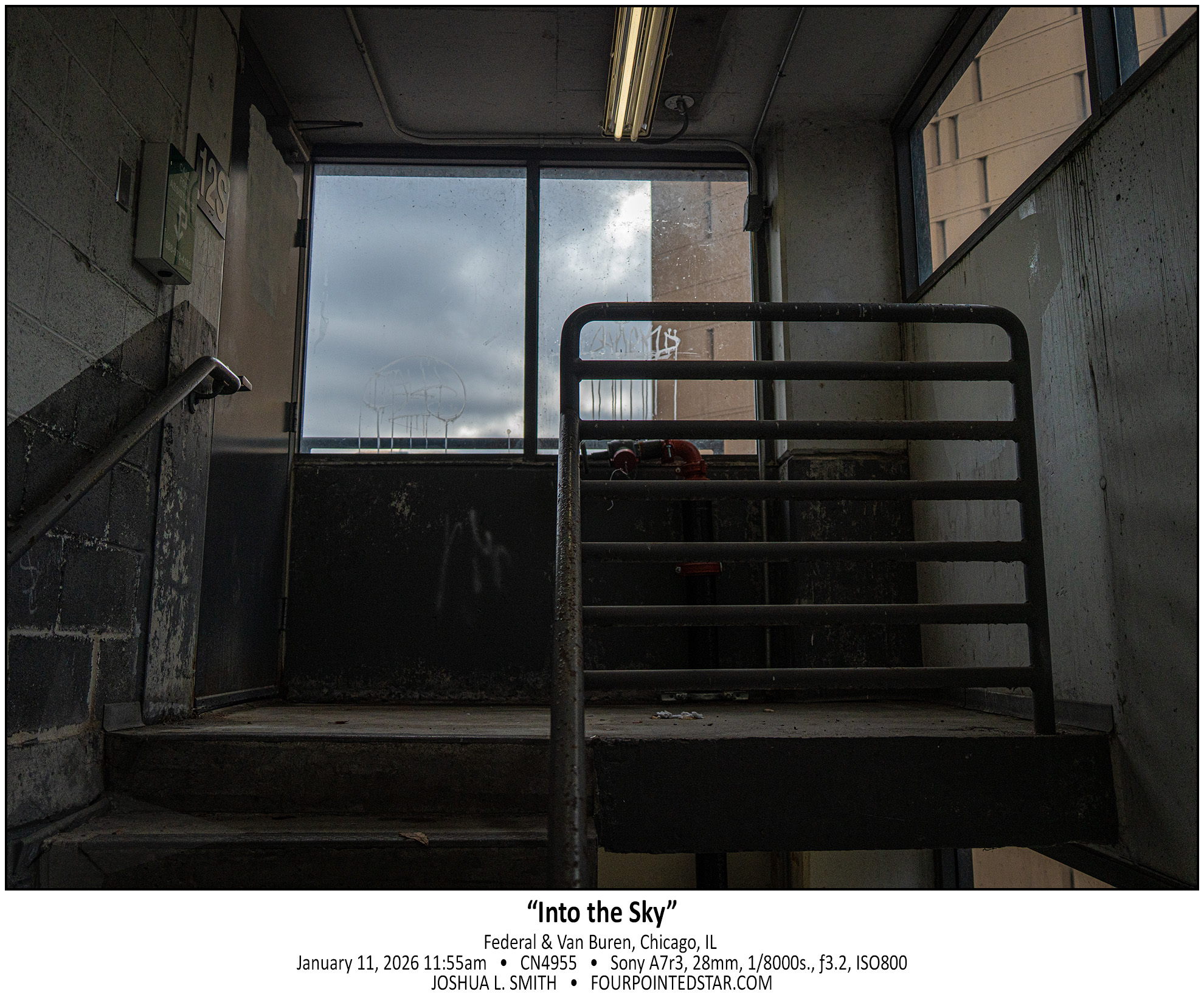
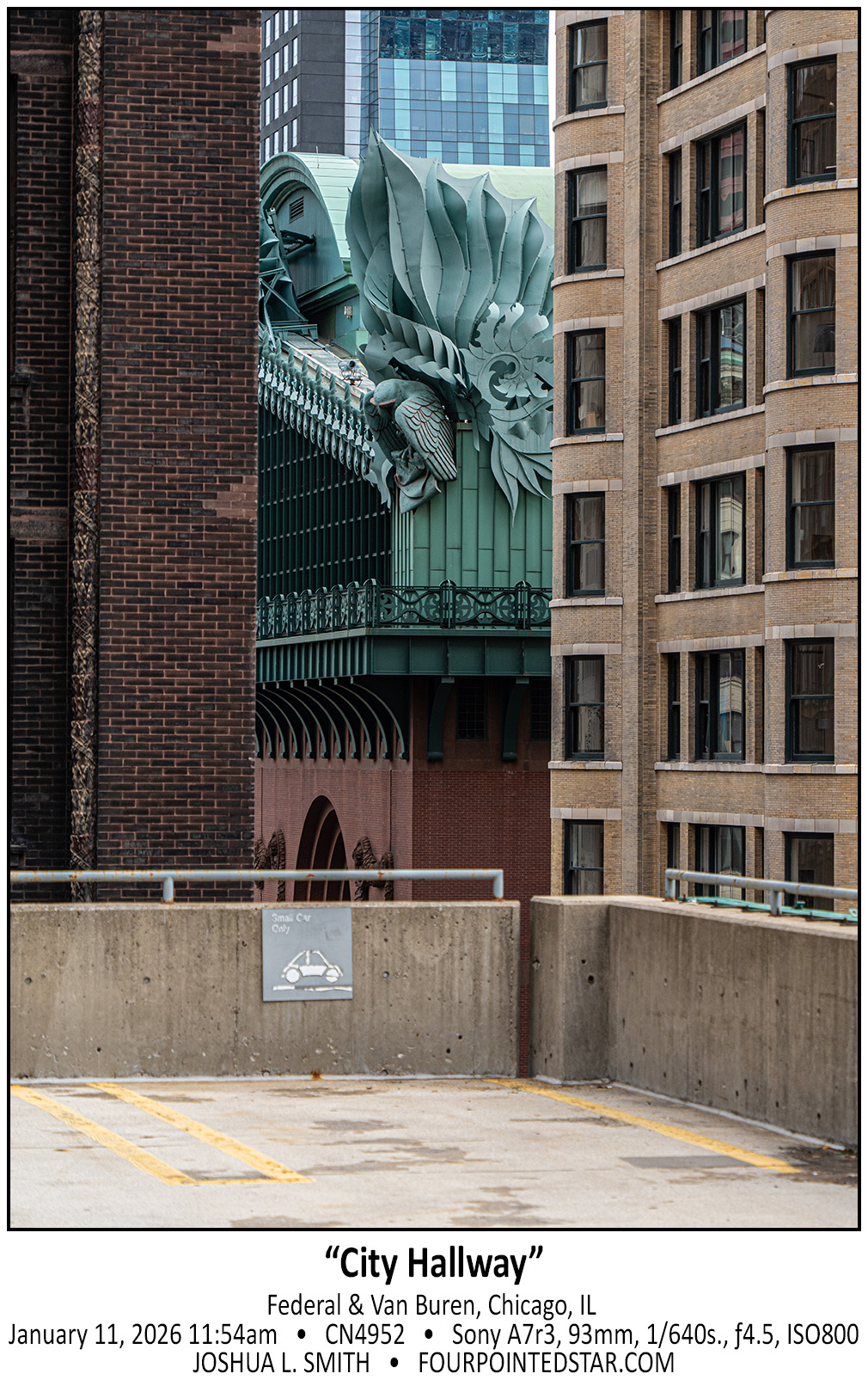
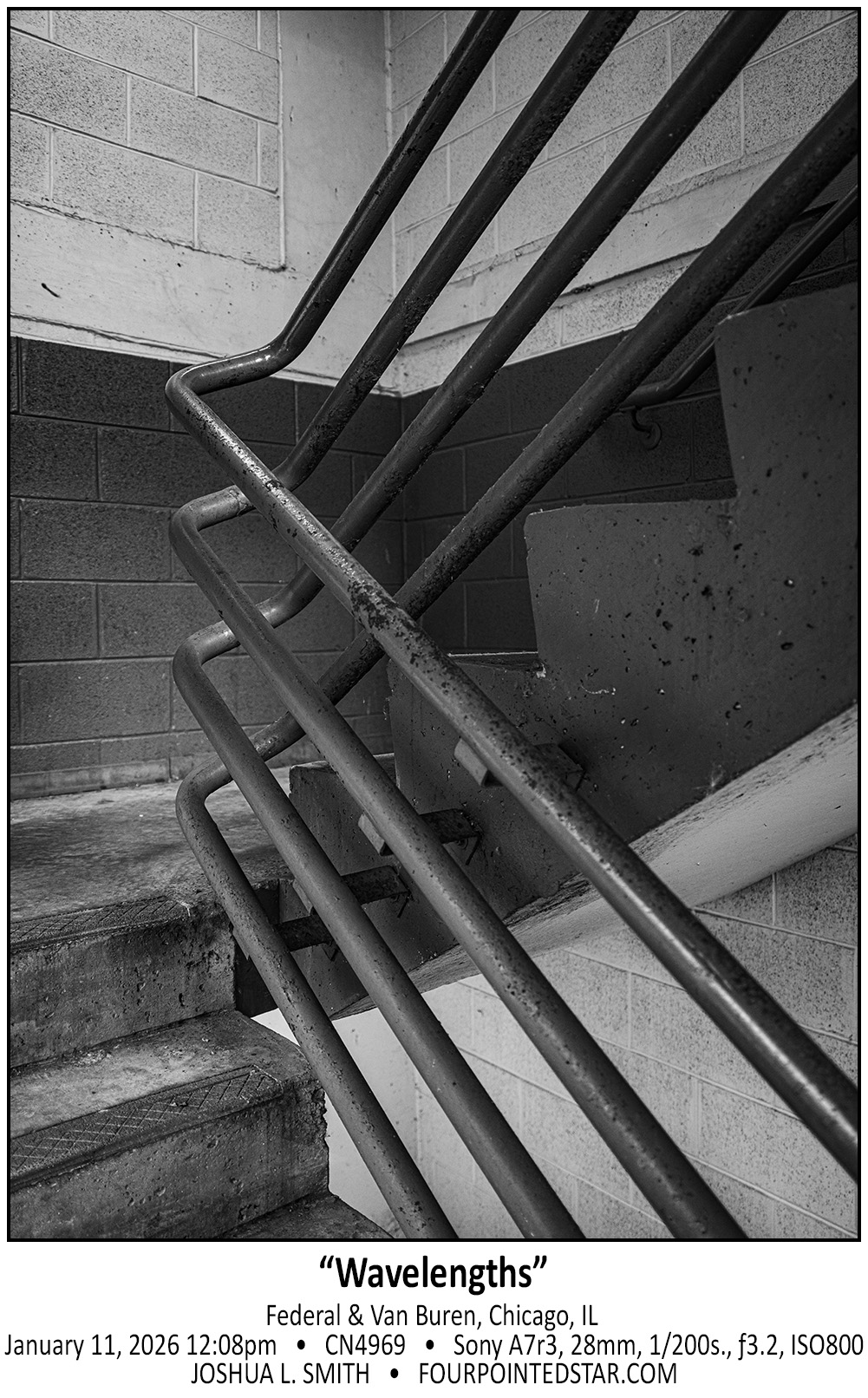
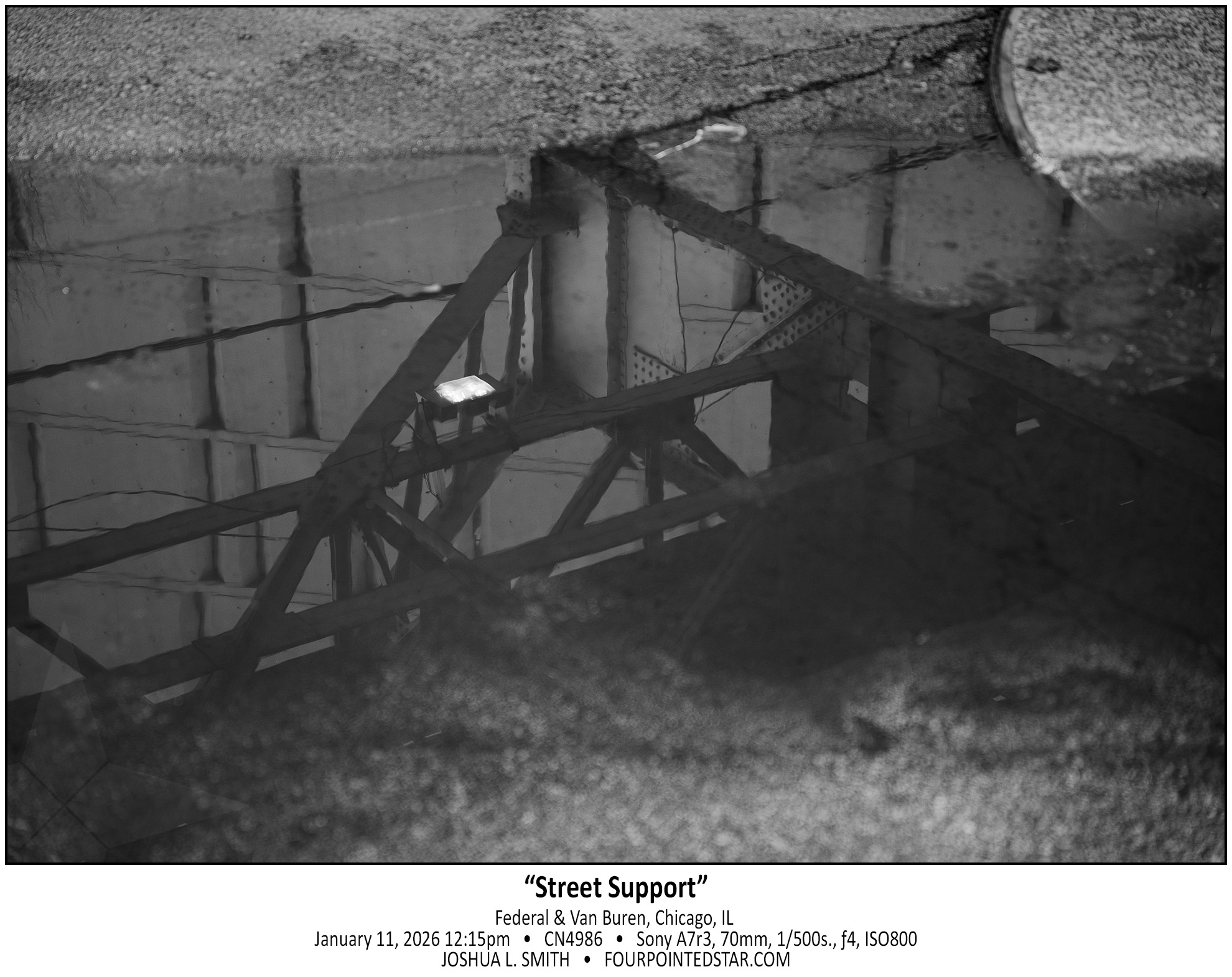
Parking garages offer unique views of Chicago, so anytime that I park in a garage, I walk down the staircase. On my way to visit a client, I saw spotted this puddle’s reflection and in my mind, I wandered off to what I could create with just a boring staircase.
.


.

.

.

.

.

.

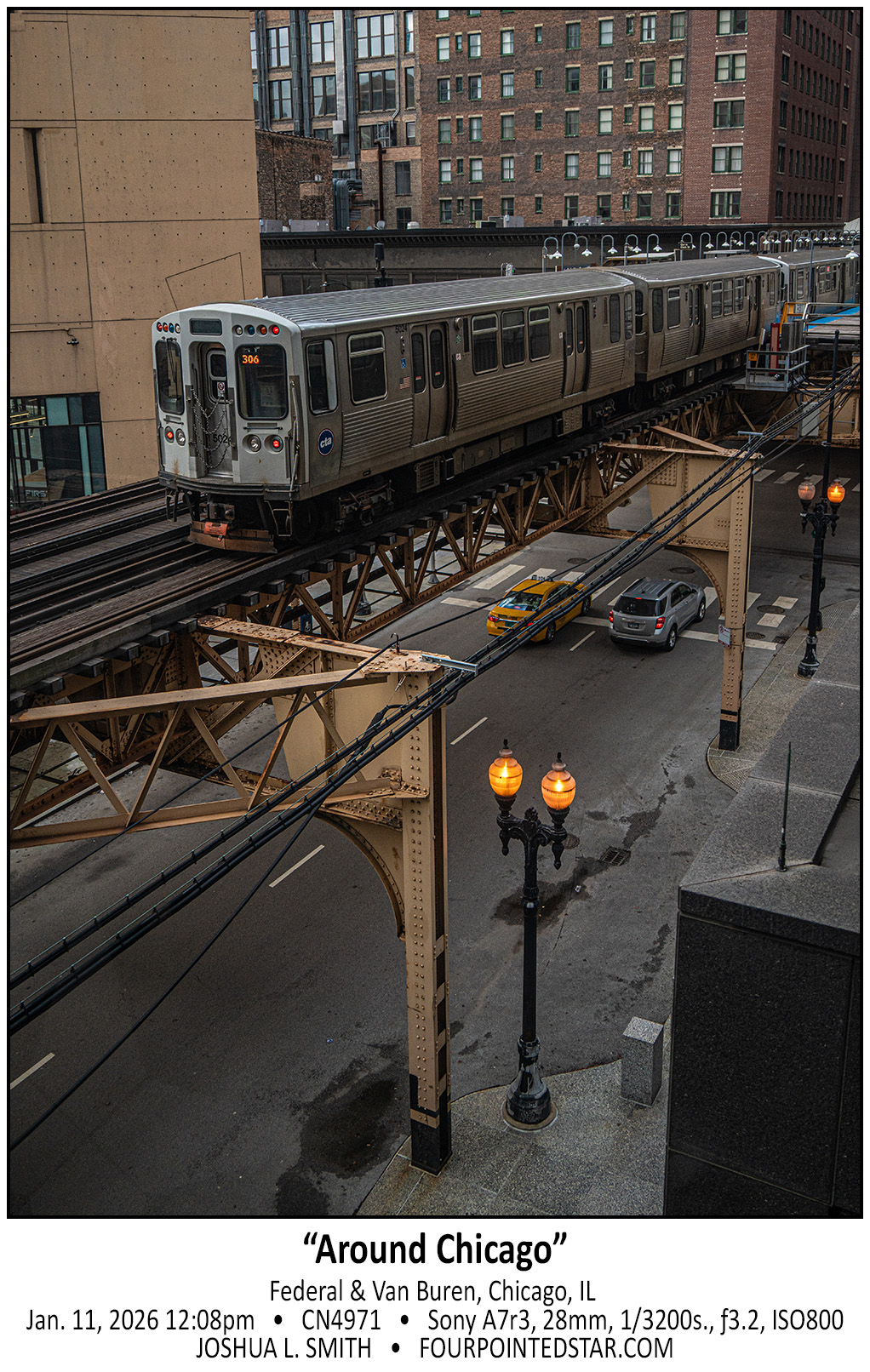
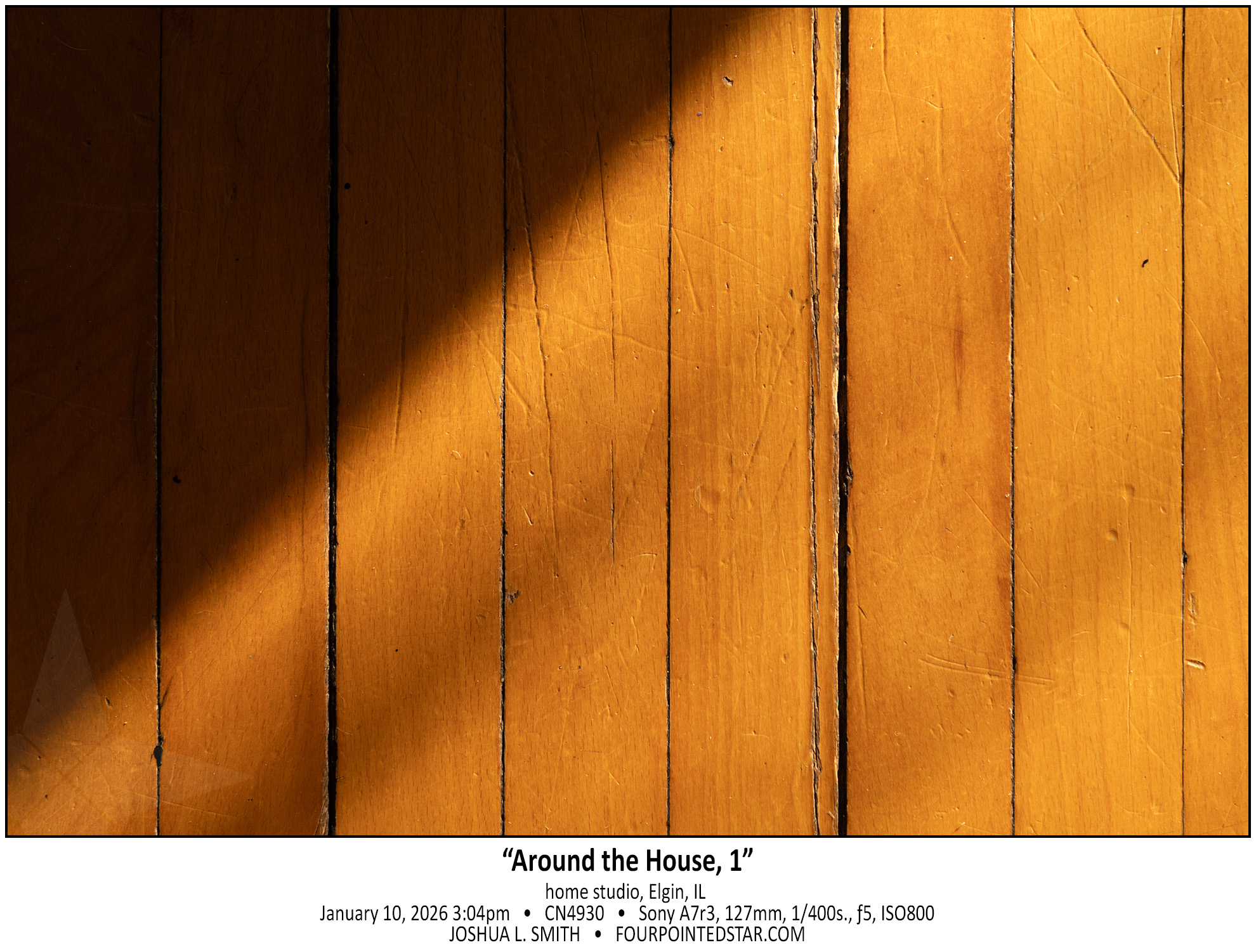
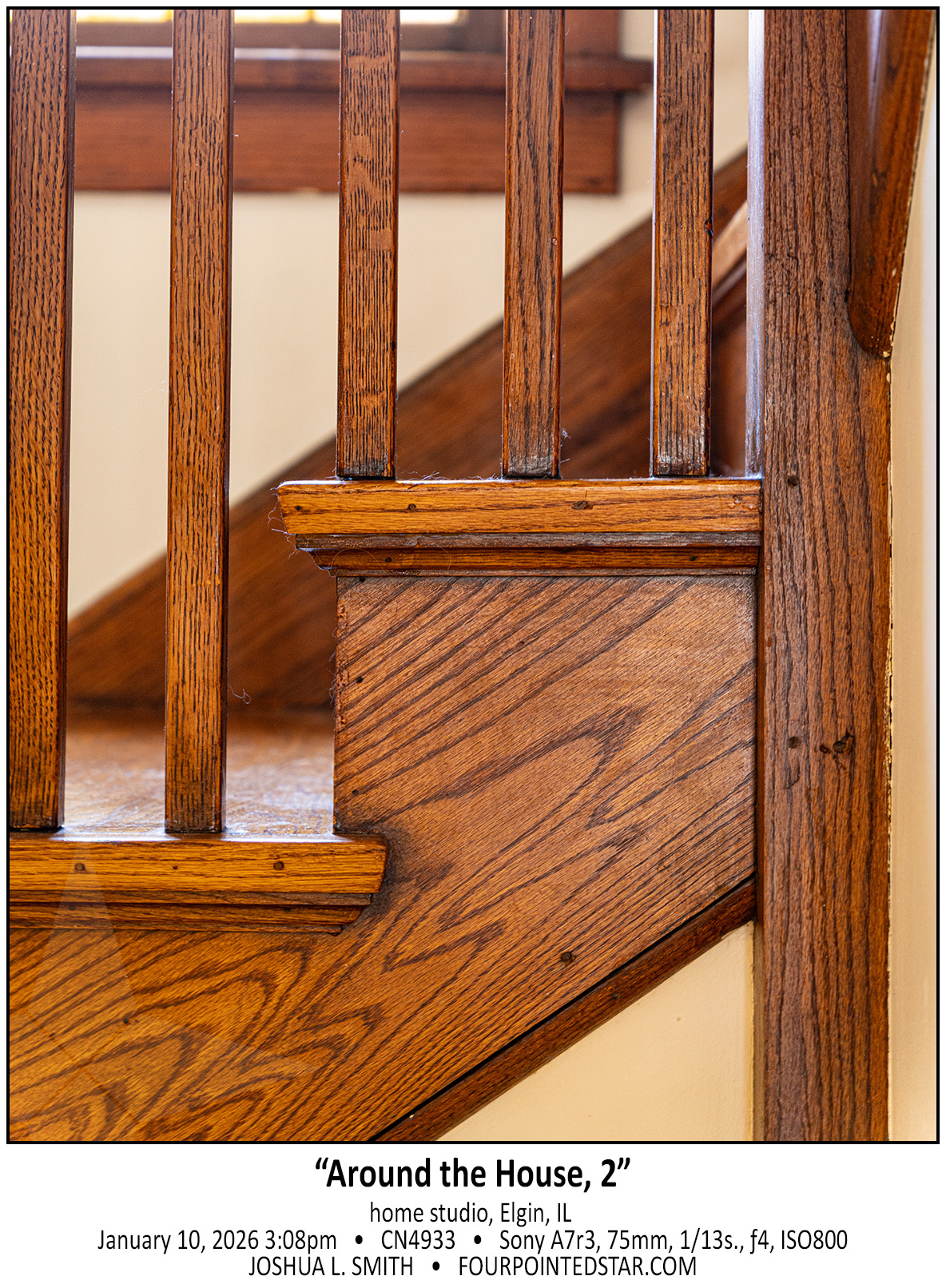
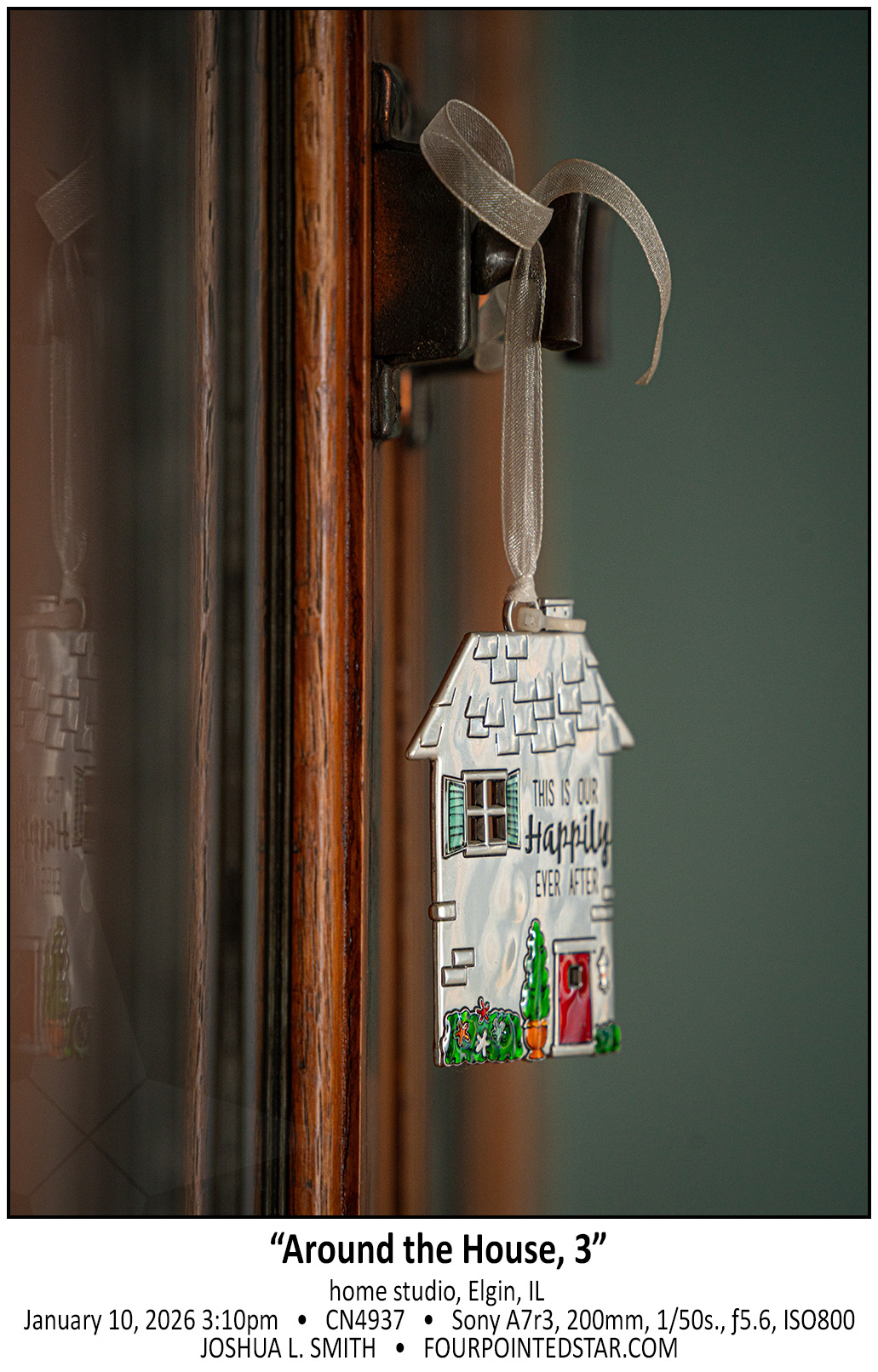
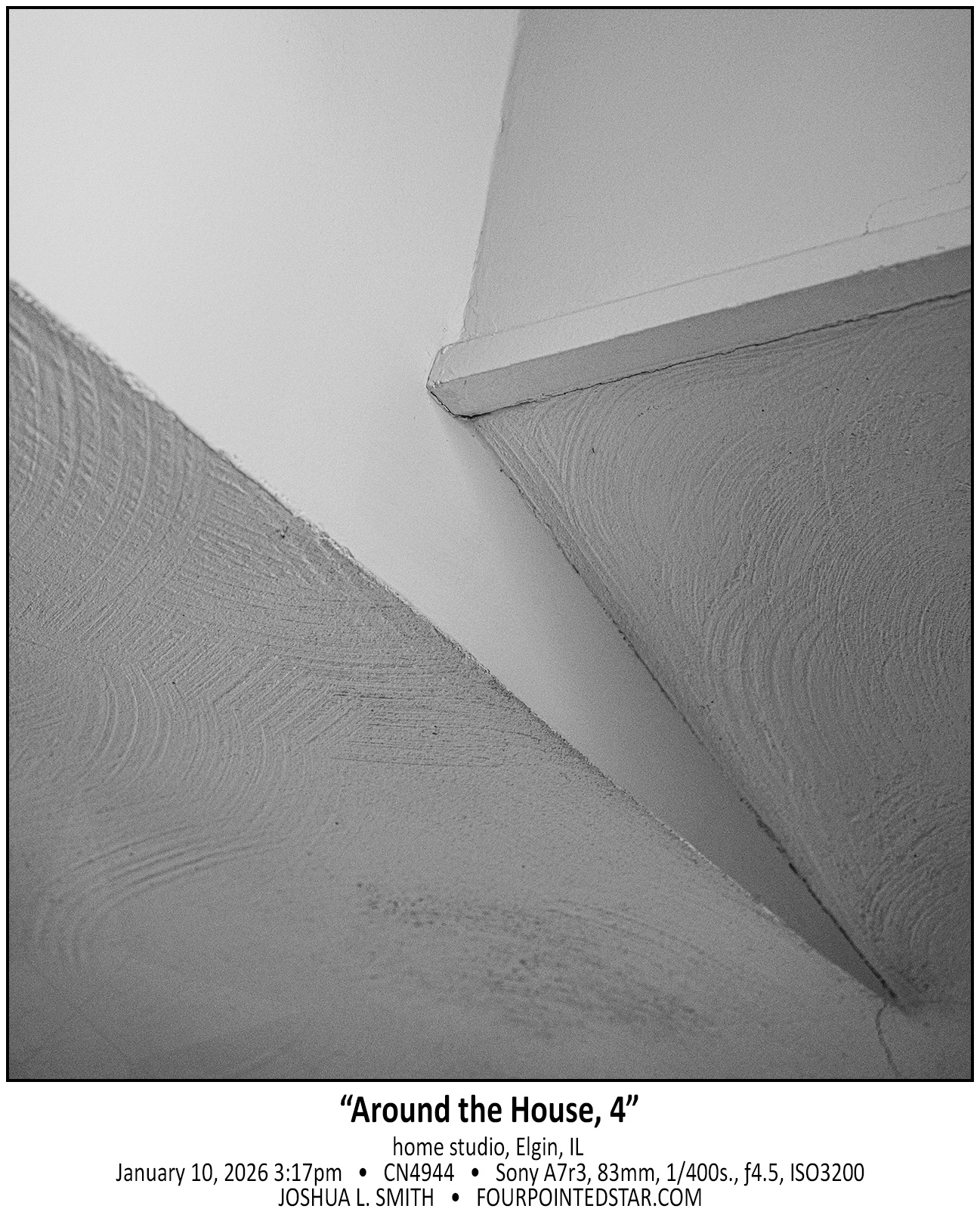
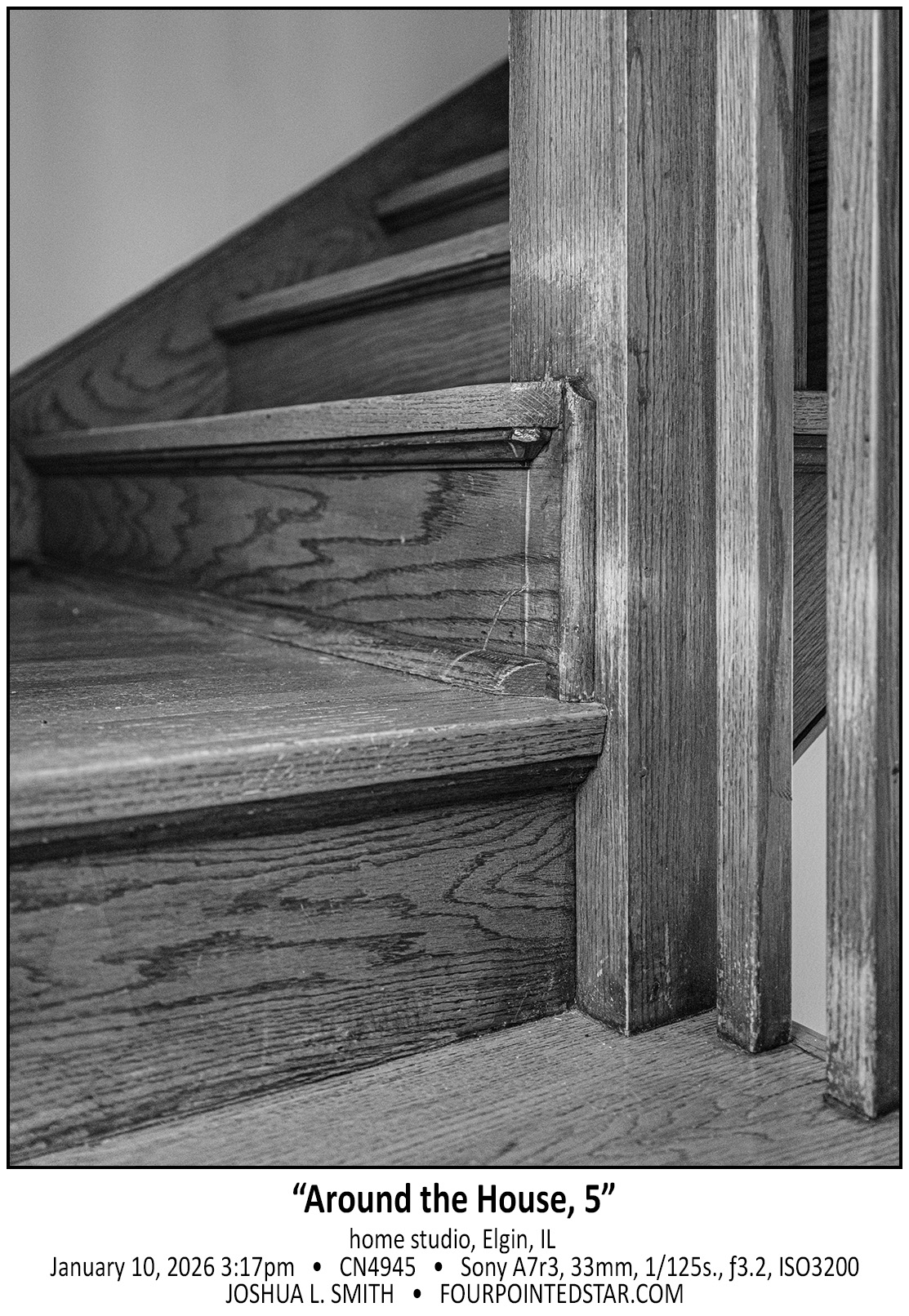
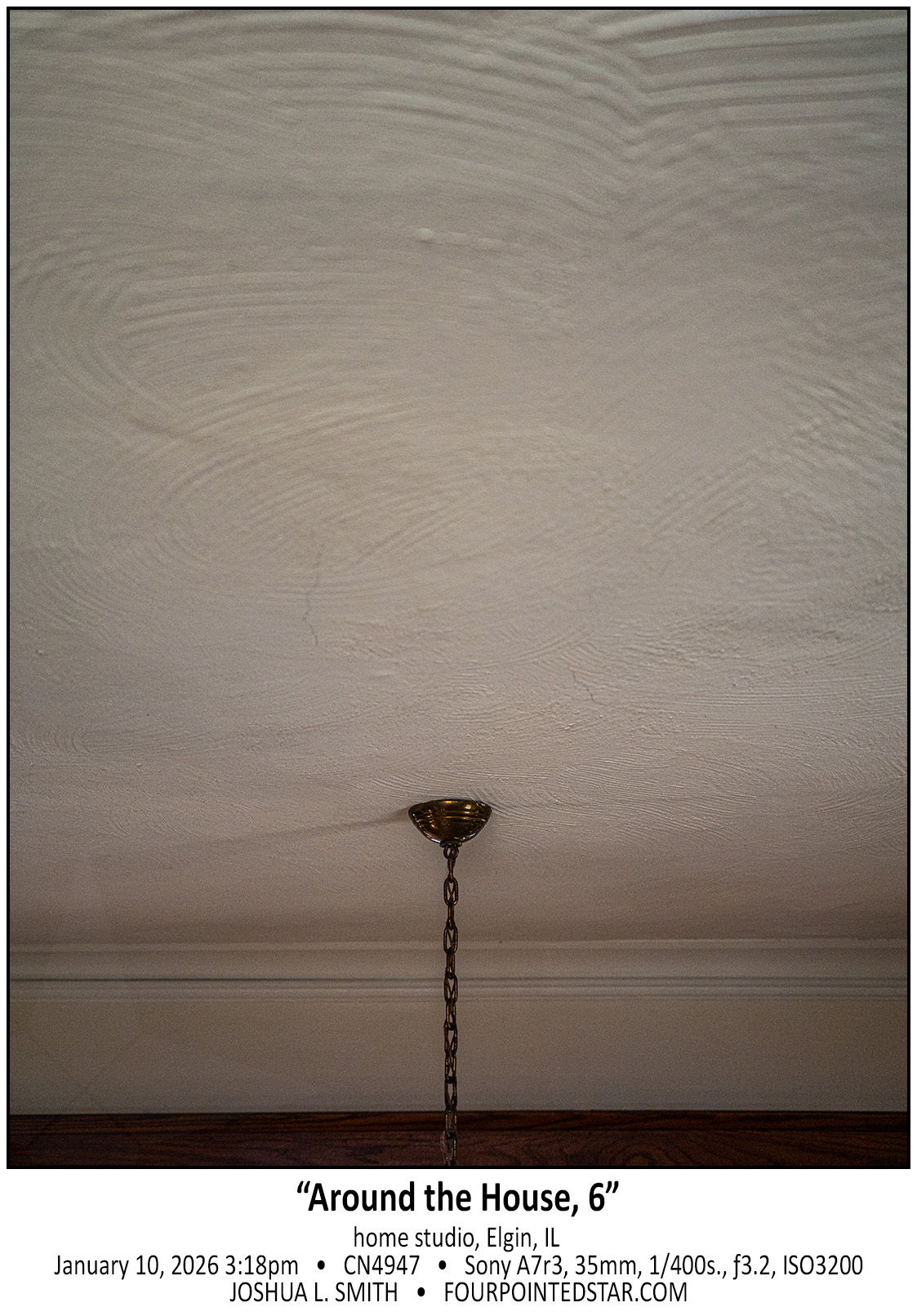
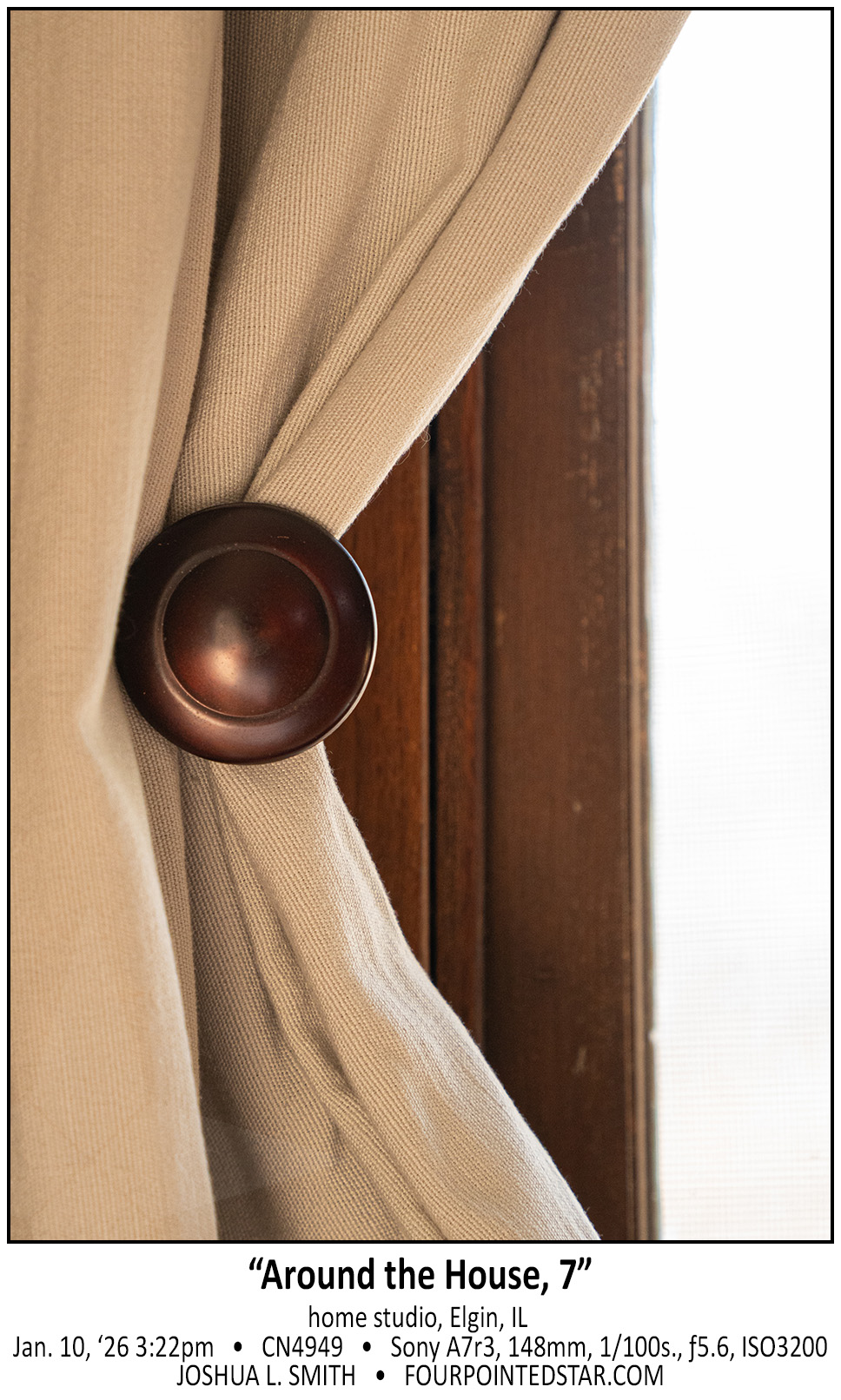
What do you SEE as you walk around your daily life? A photographer friend of mine recently asked about taking photos of another artist’s work; but in reality, aren’t photographers normally taking photos of other artist’s work? Even nature photographers are taking photos of mother nature’s work, right?

A craftsman who creates an object out of paint, clay, wood, stone, or metal can claim originality, but most of us are taking photos of something we didn’t create; instead we are creating art by adding or interpreting the existing environment or material.

With that in mind, go around your home and create art by adding or interpreting your own personal environment.


.

.

.

.

.

.

>other images<
.


.

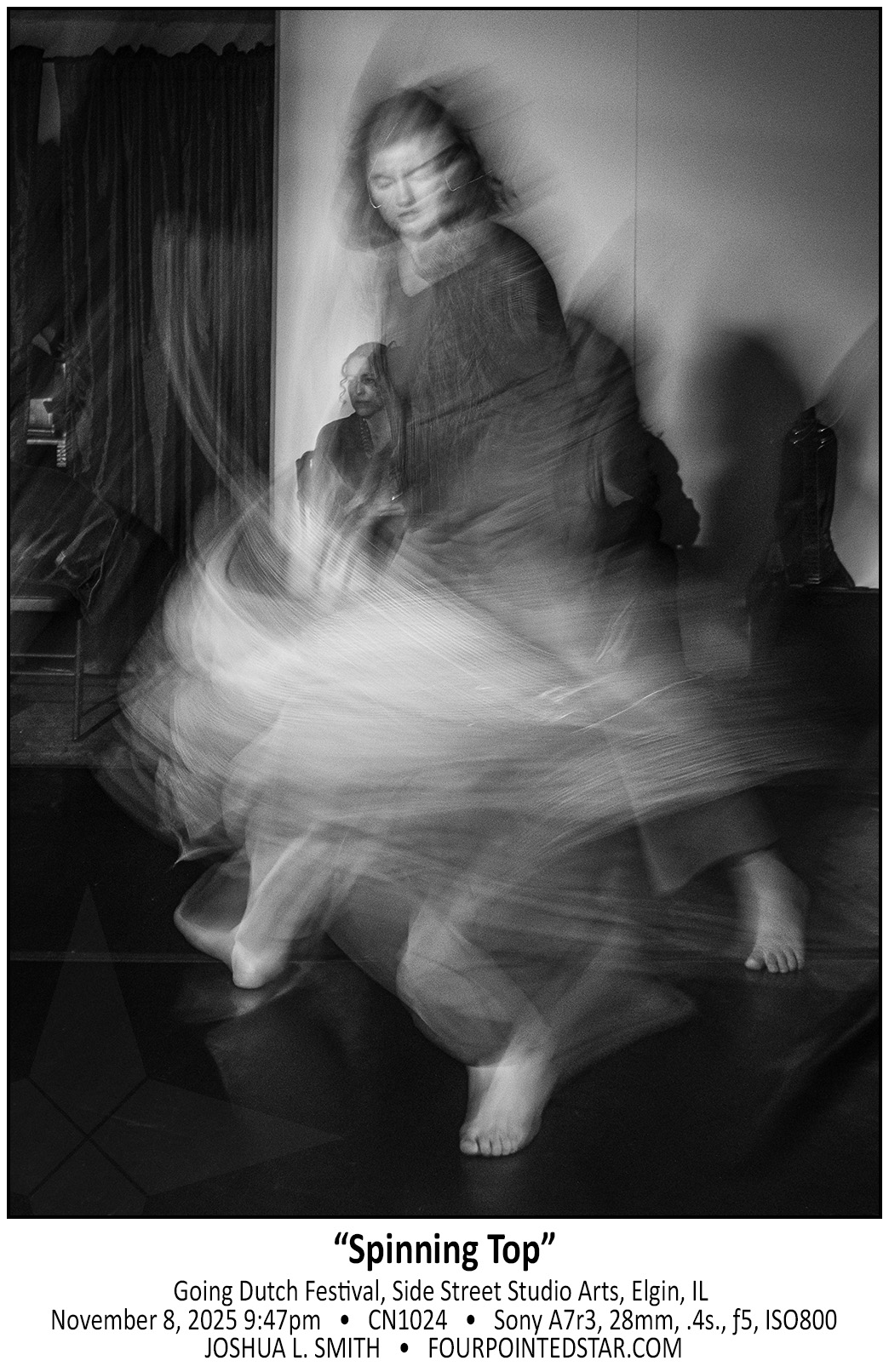
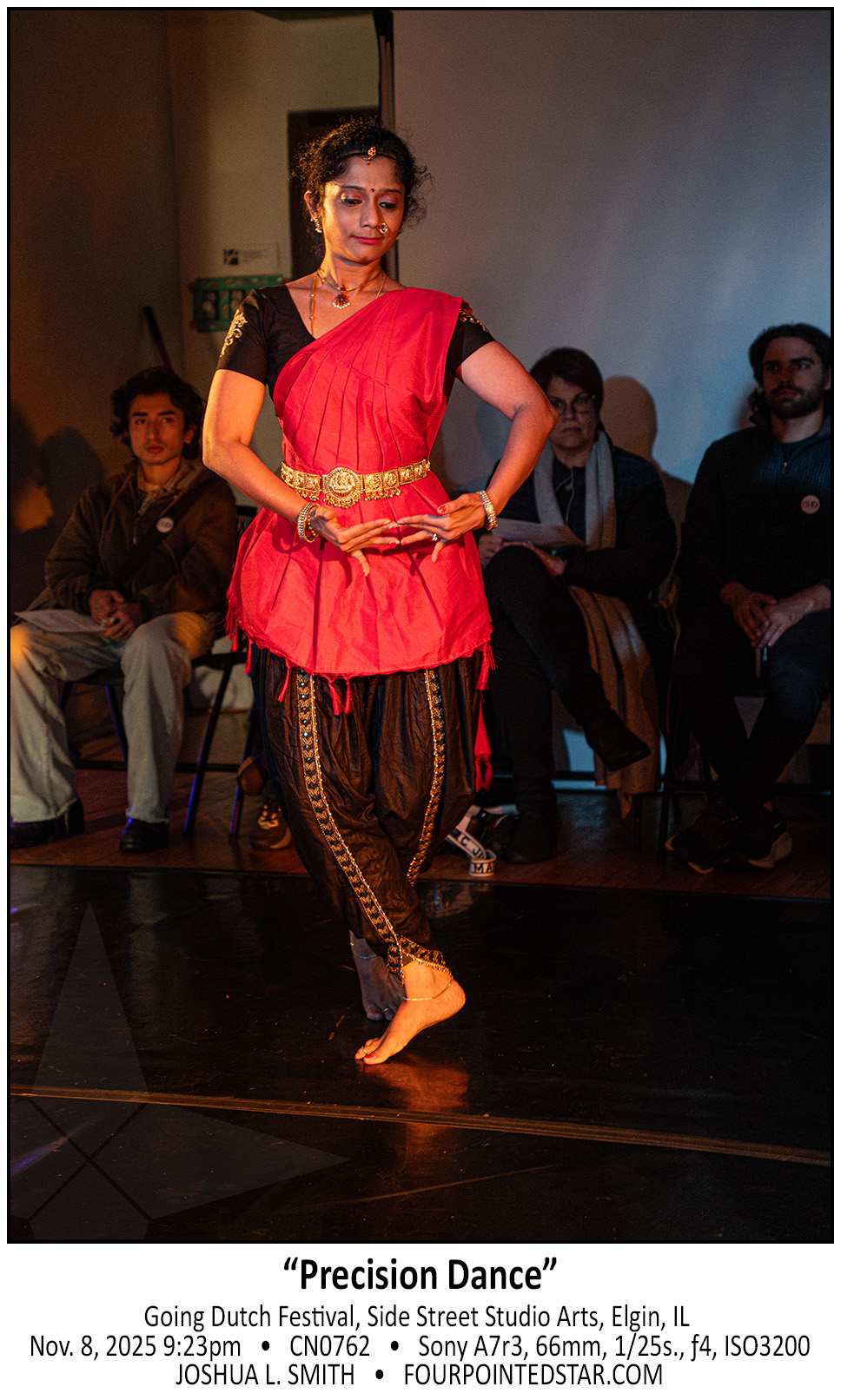
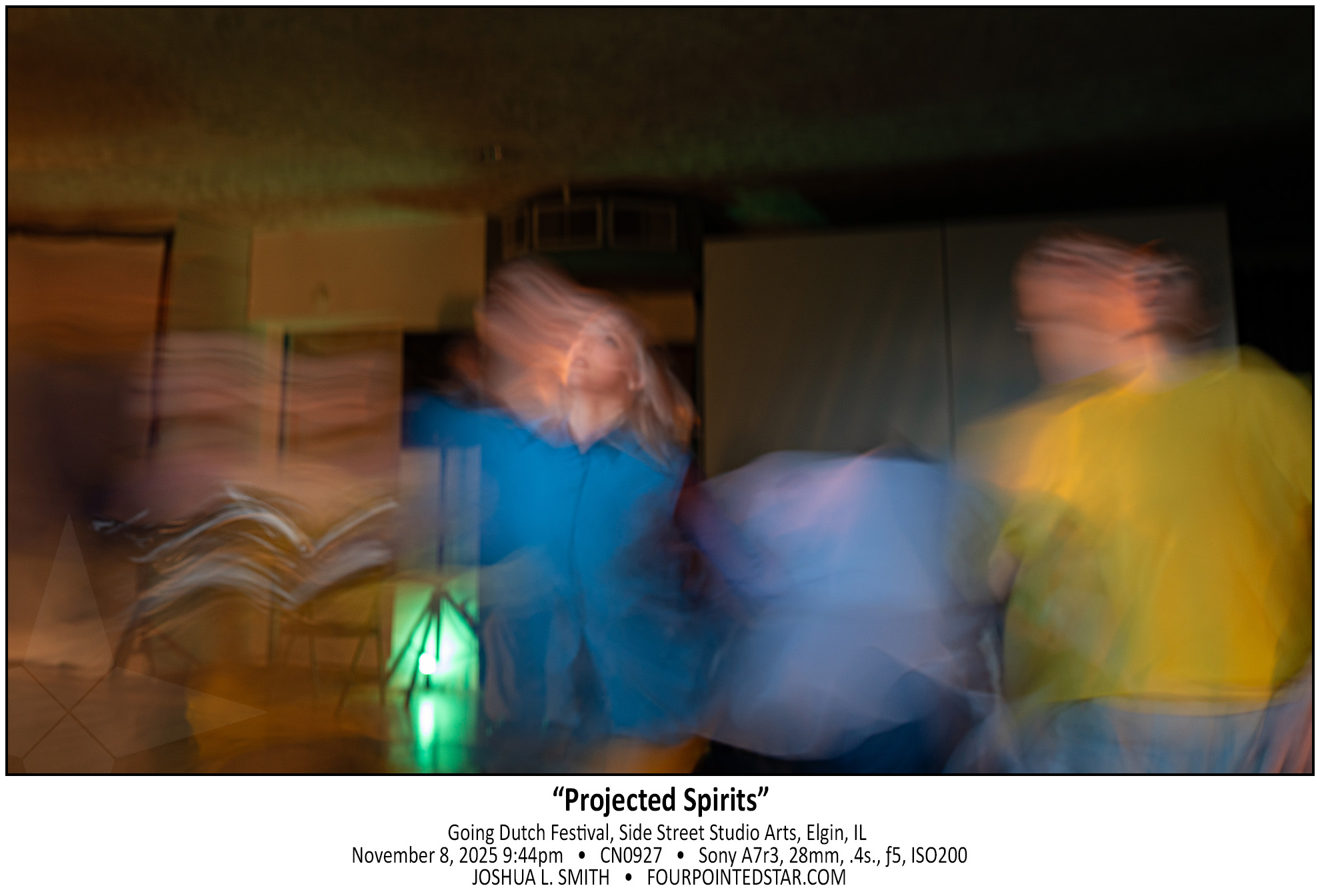
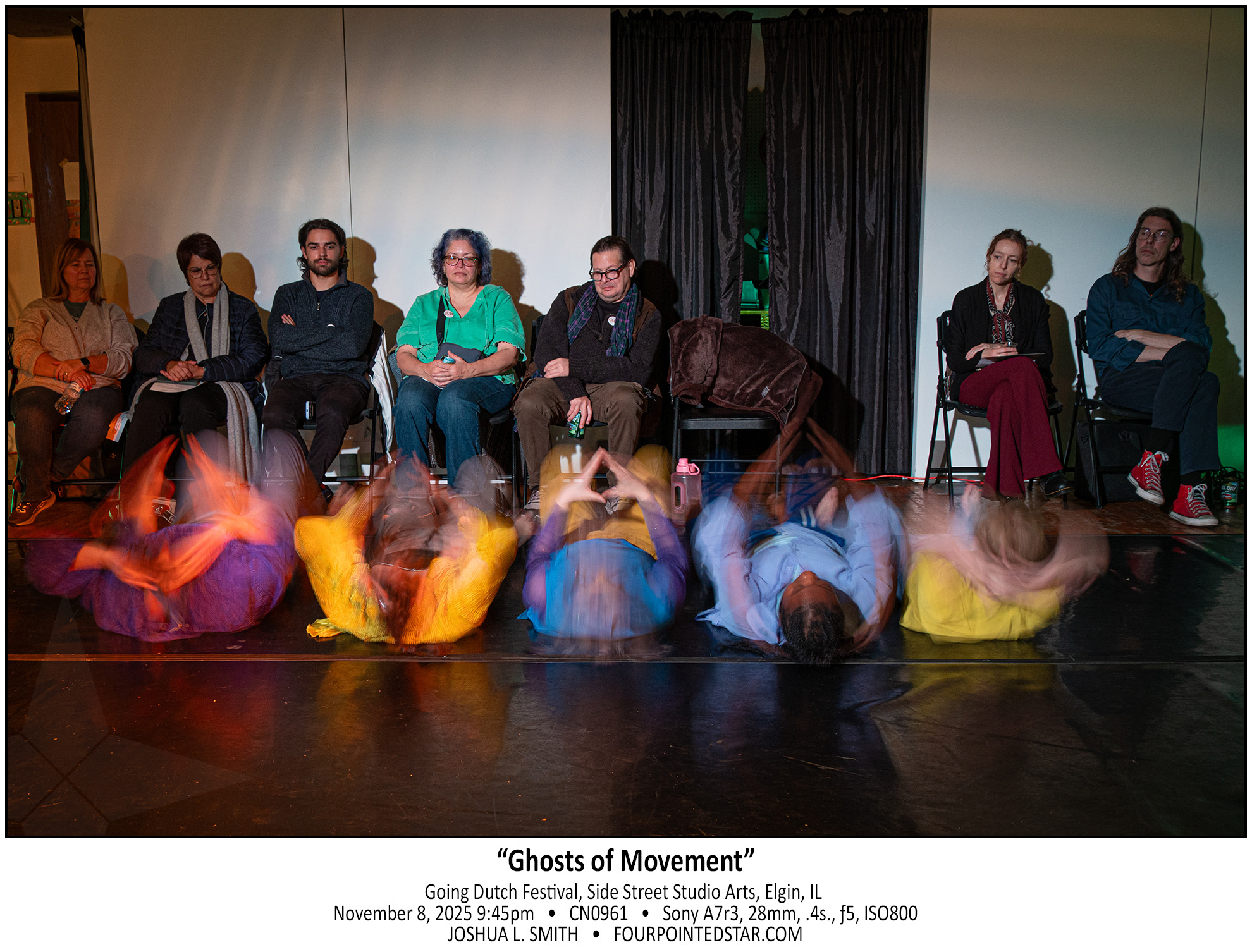
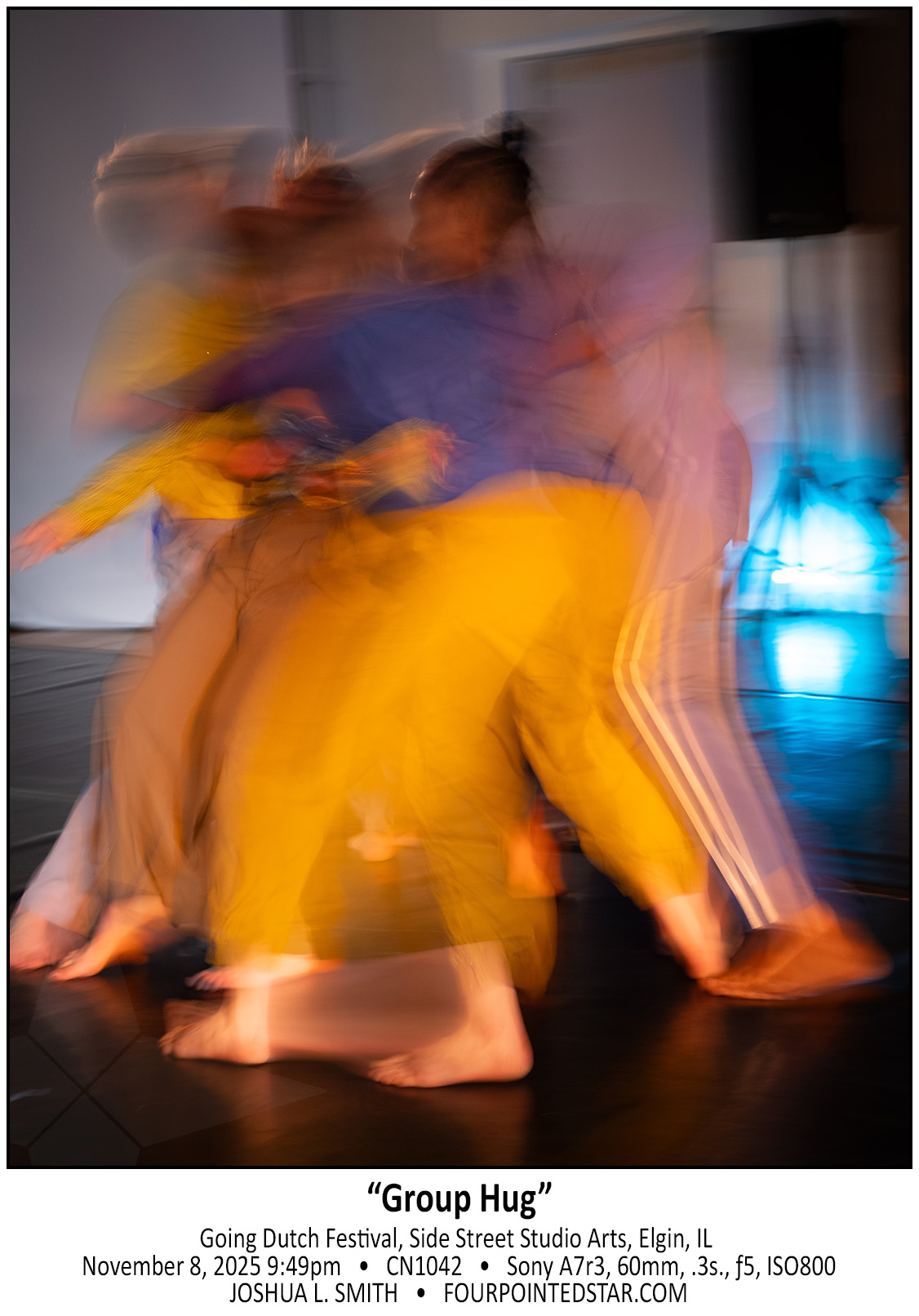
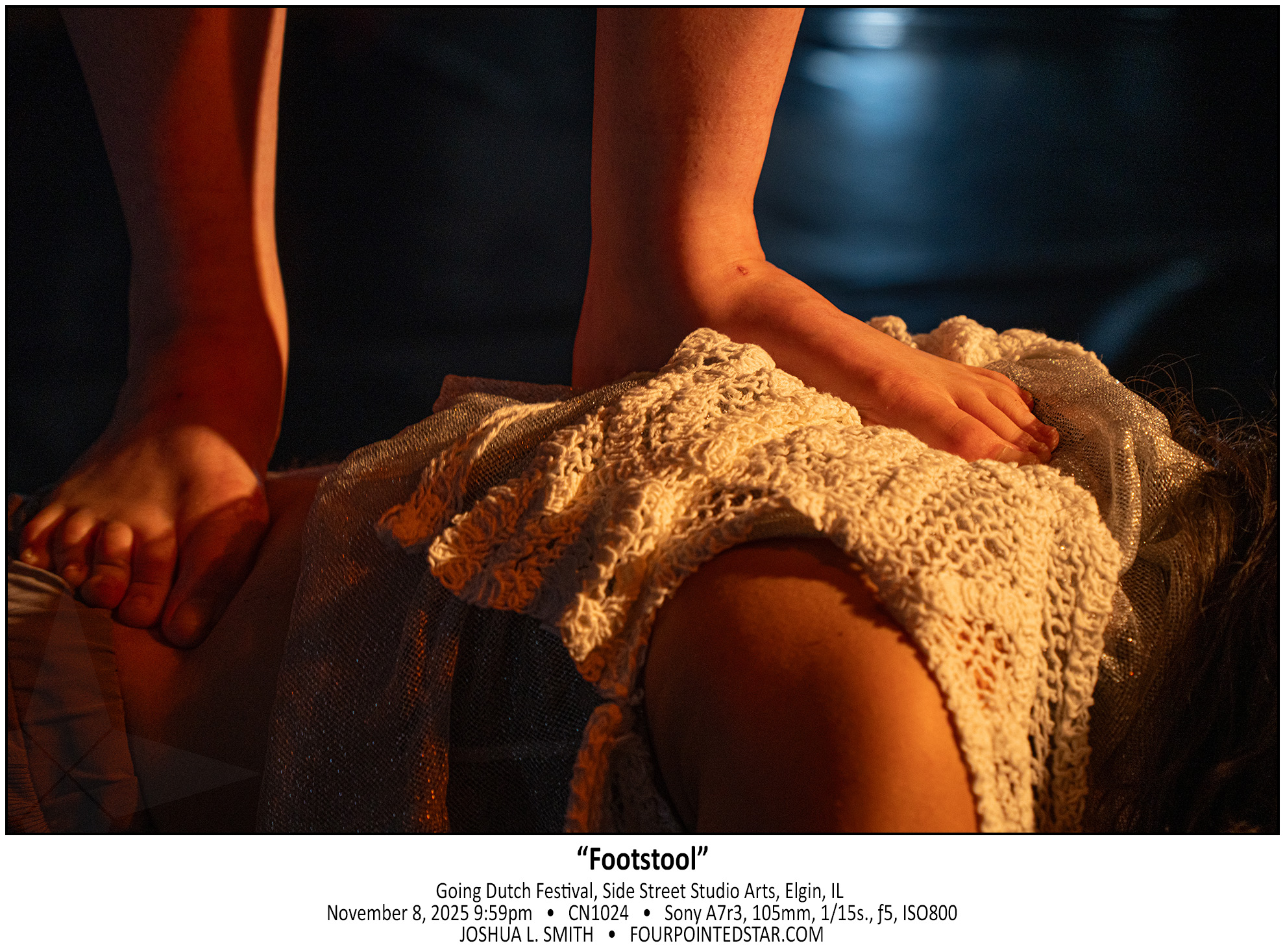
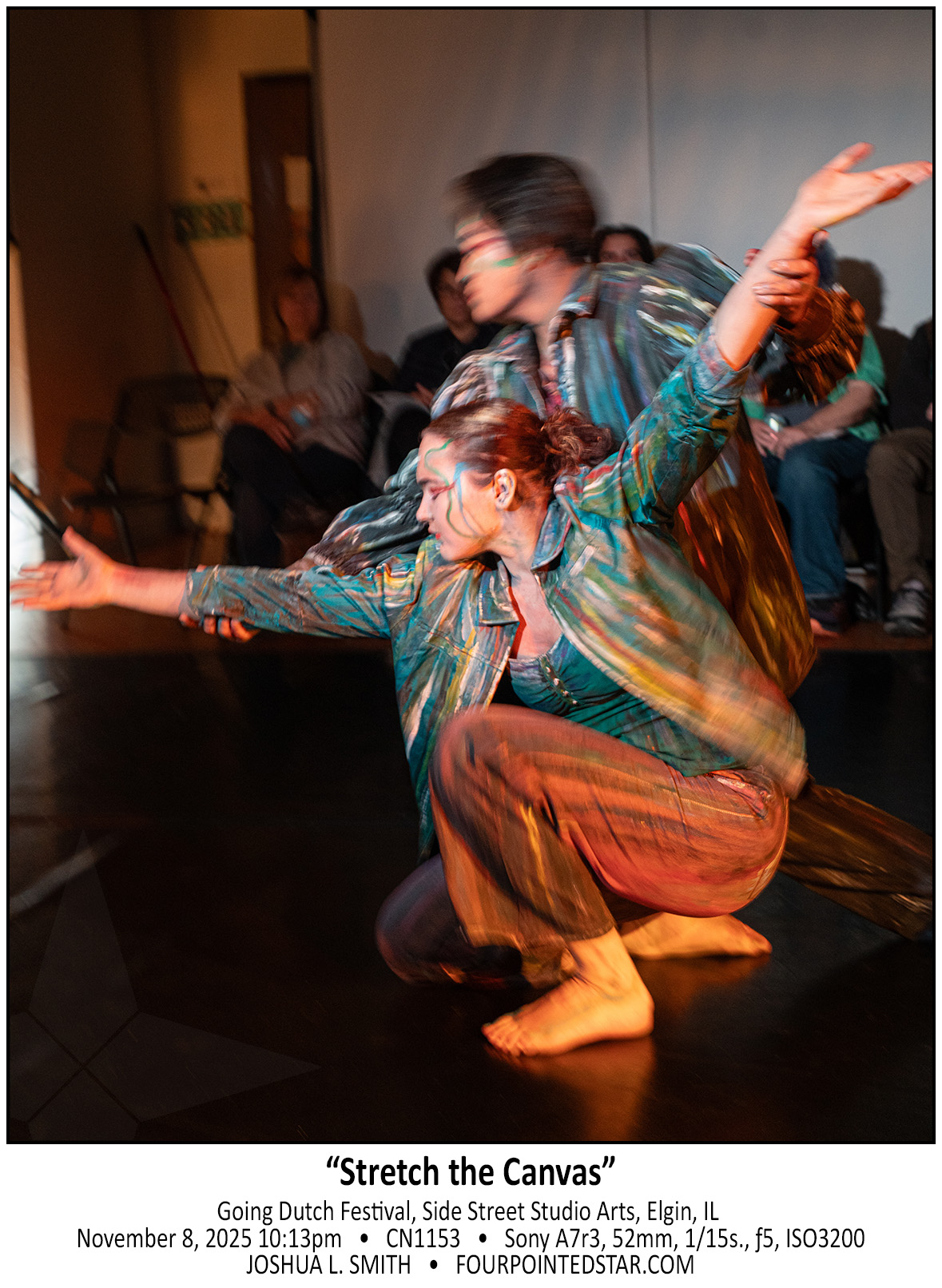
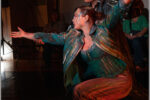
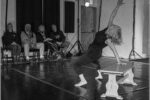
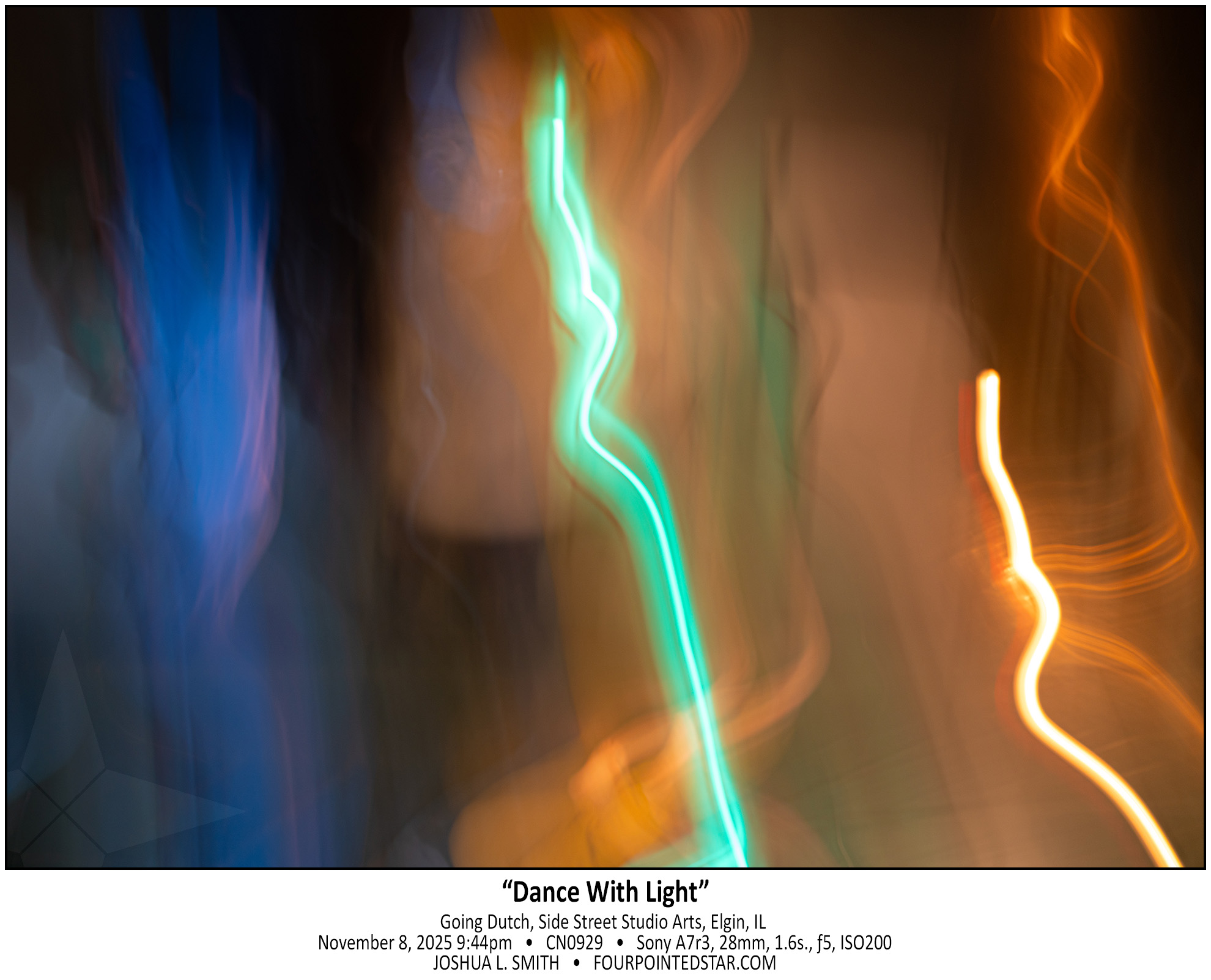
In the last ten years, I have had the opportunity to photograph several dance festivals. Over those events, I have discovered a difficulty with photographing modern dance – modern dancers are less likely to perform a particular jump at a particular time in the musical score; their movement is often more like a twisting stream than a waterfall. As I watched the various performances at Side Street’s Going Dutch Festival this past November, I realized that a long exposure could reflect the beauty of the performer’s dance and expression; as short as a tenth of a second up to a full second of exposure.

And while some movement still seems to require the “moment in time” capture, I really like how these images reflect the movement and passion of these artists.

.
.

.

.

.

.

.

.

>other images<
.

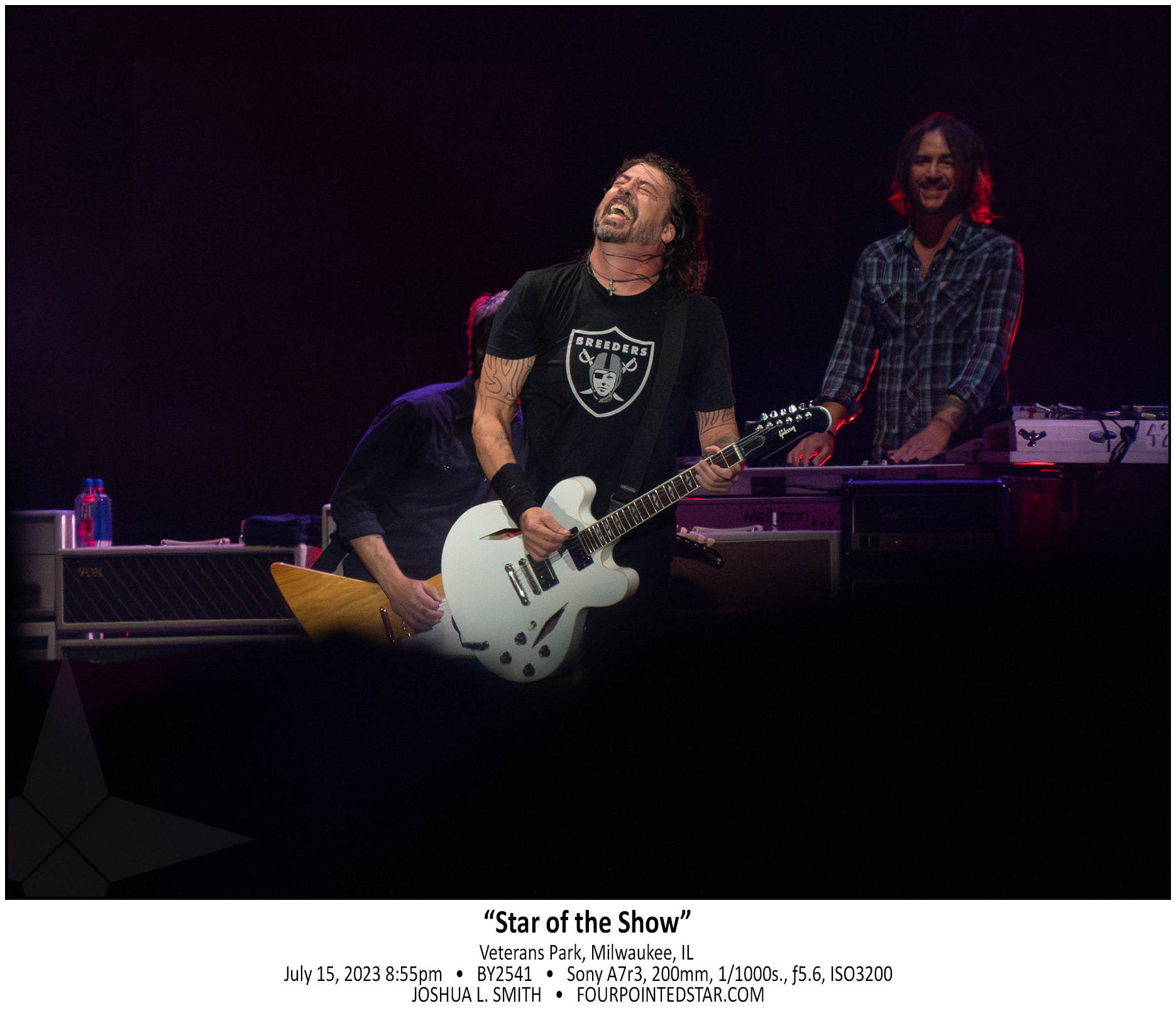
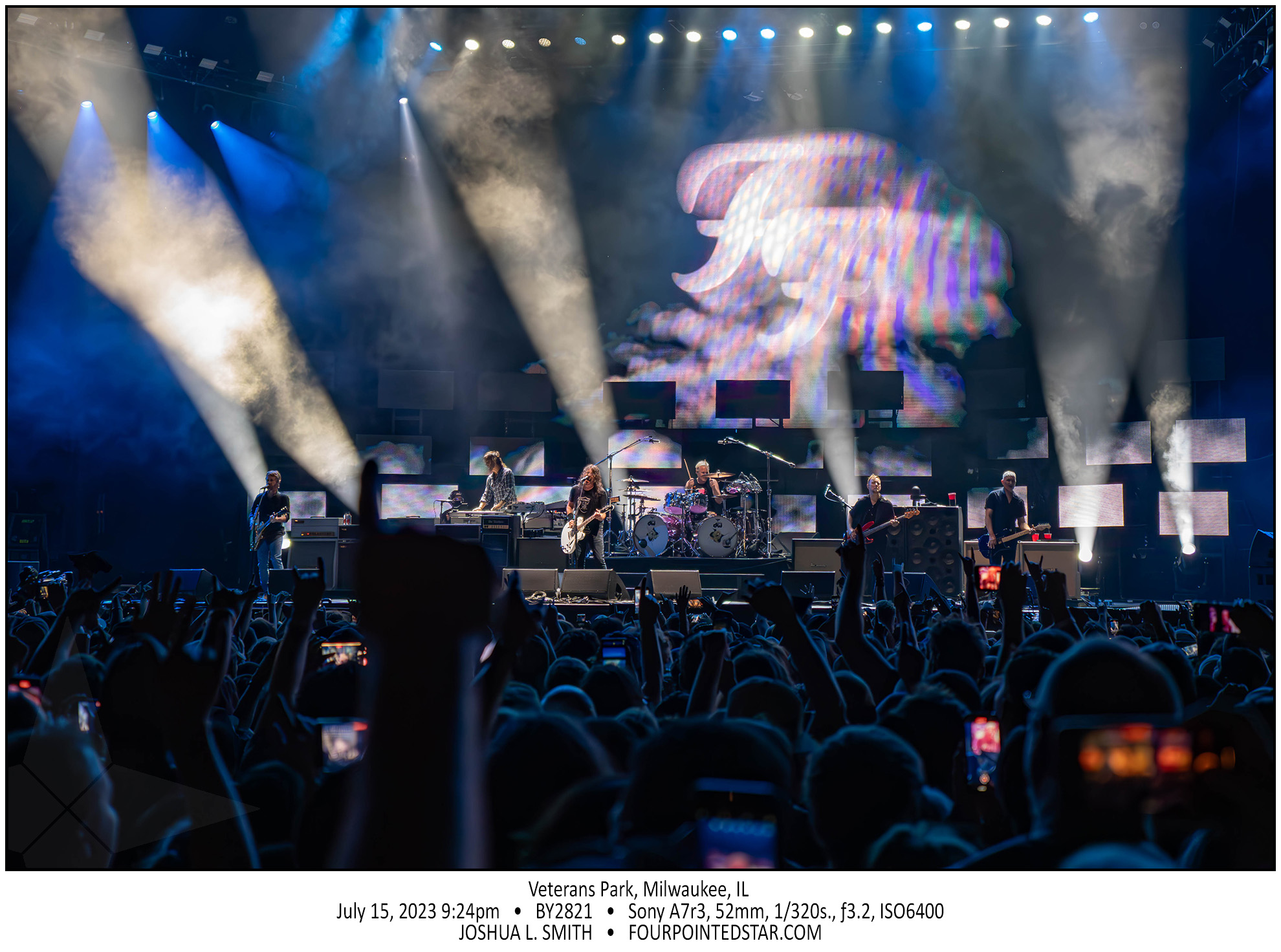
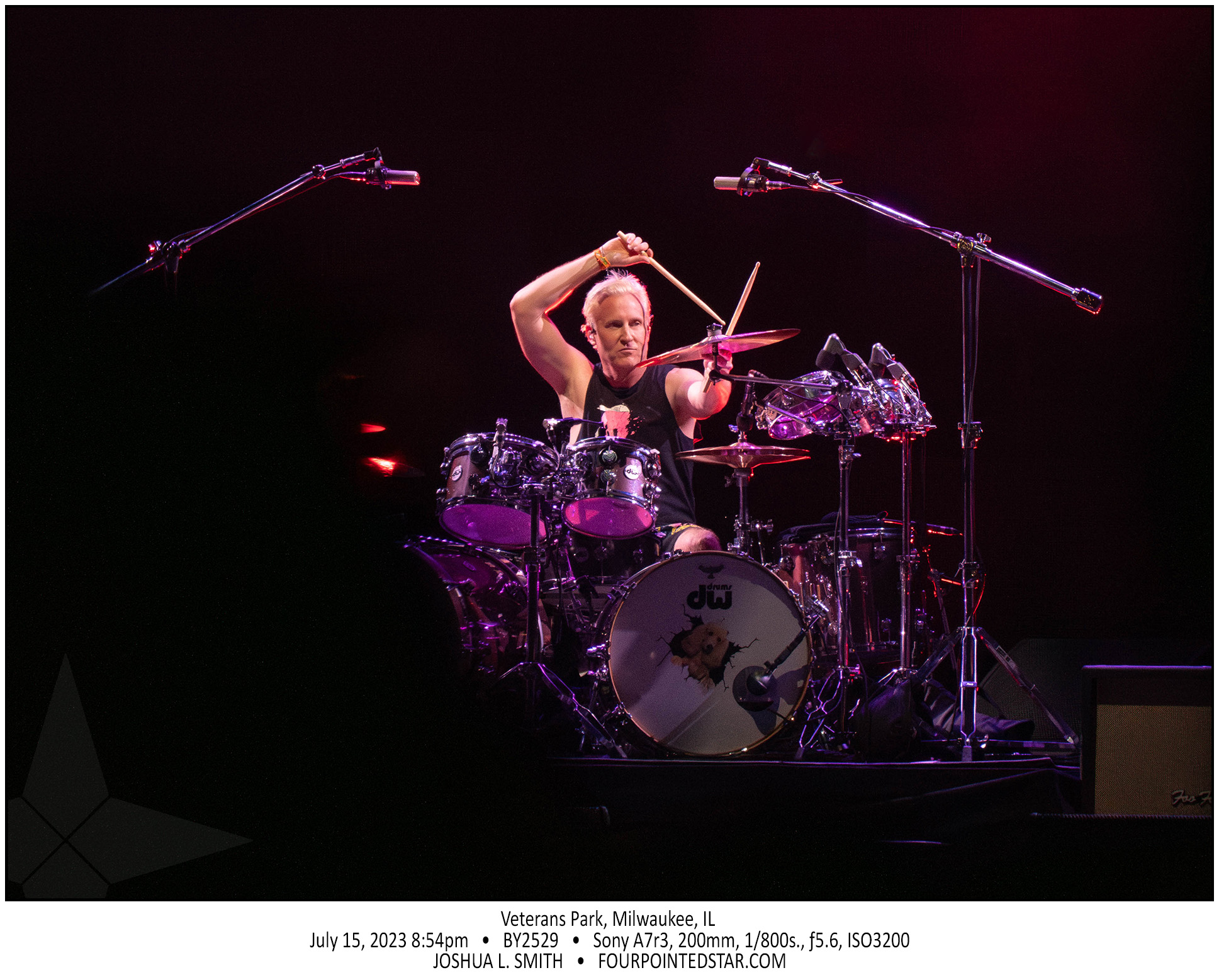
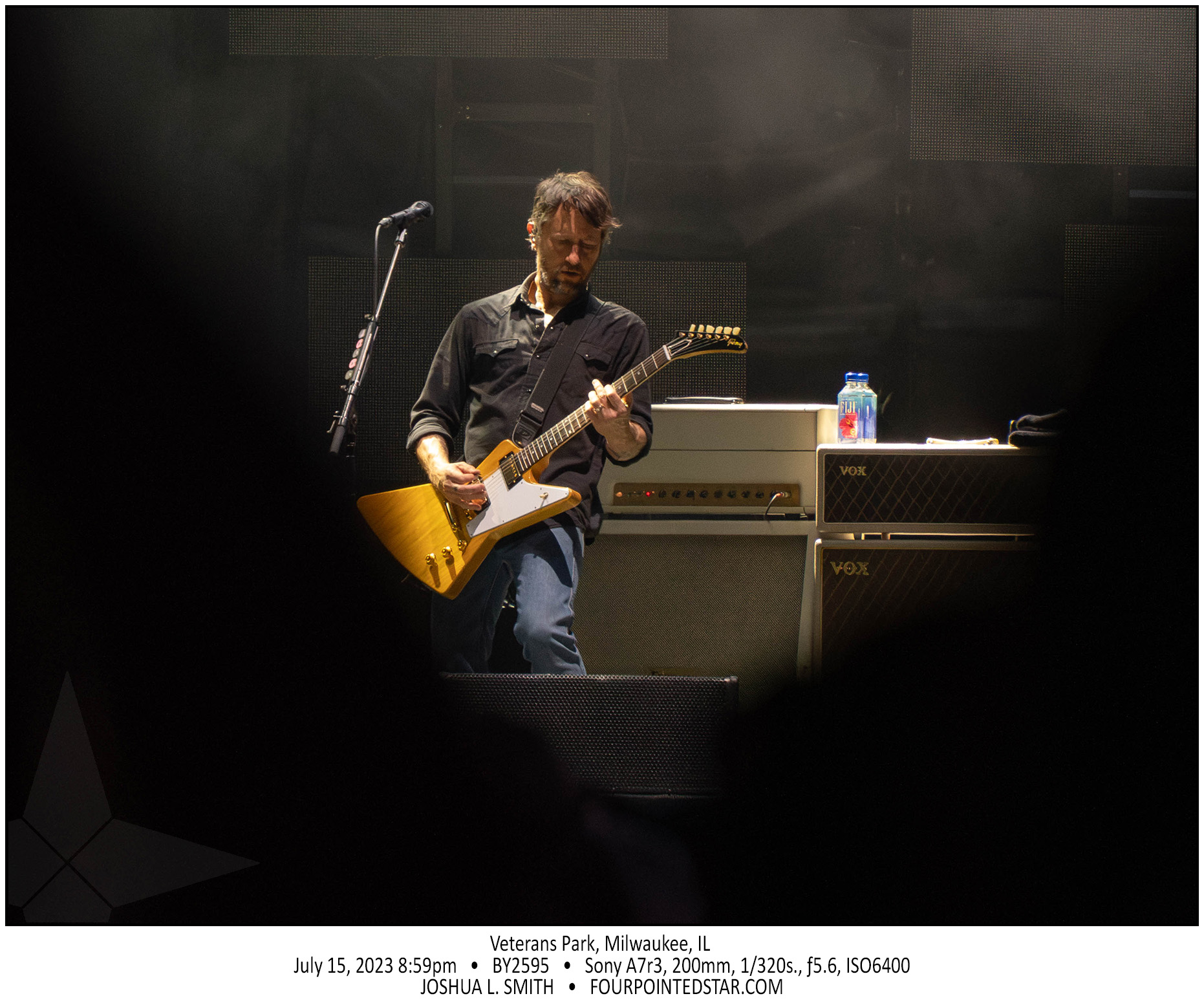
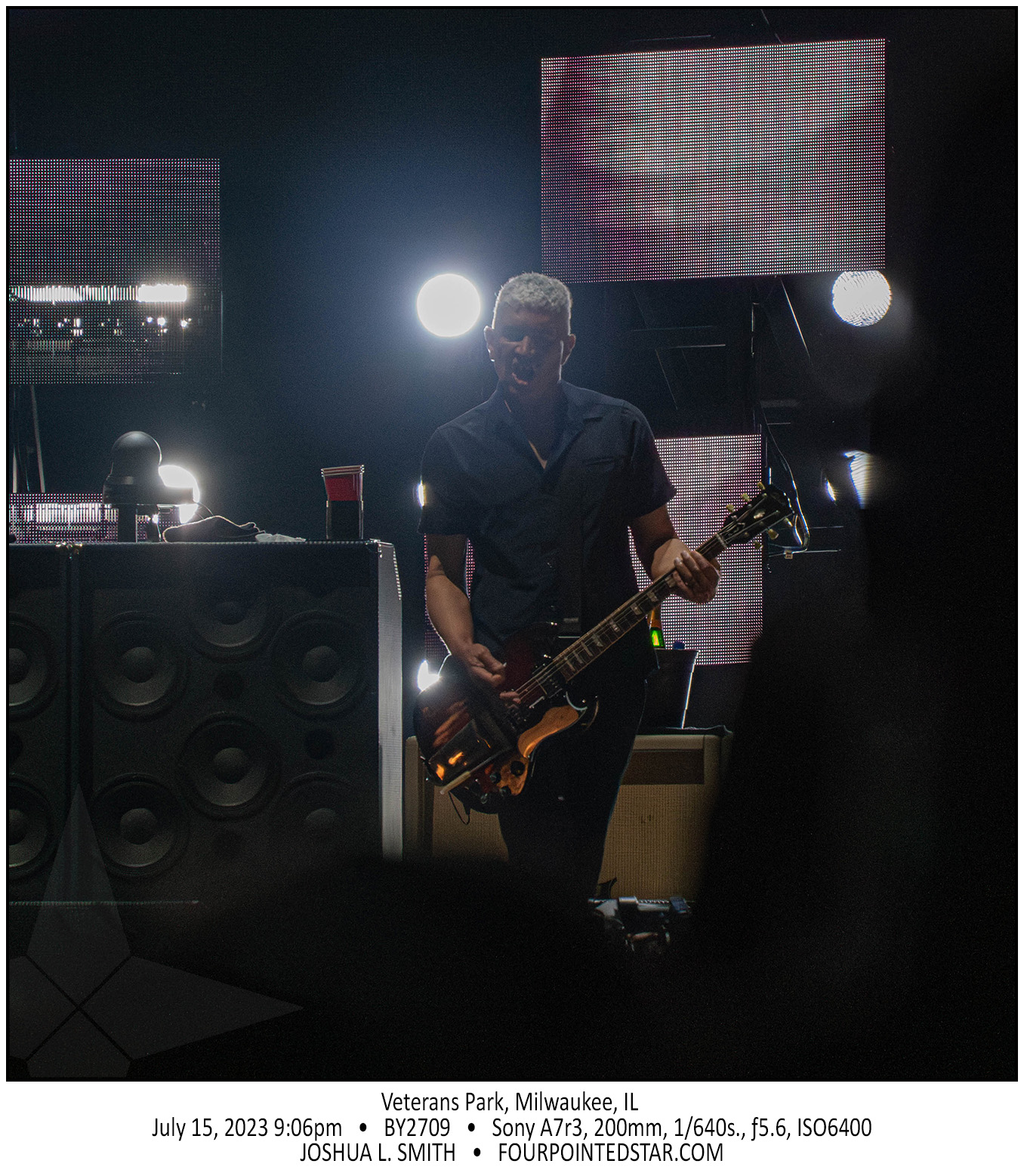
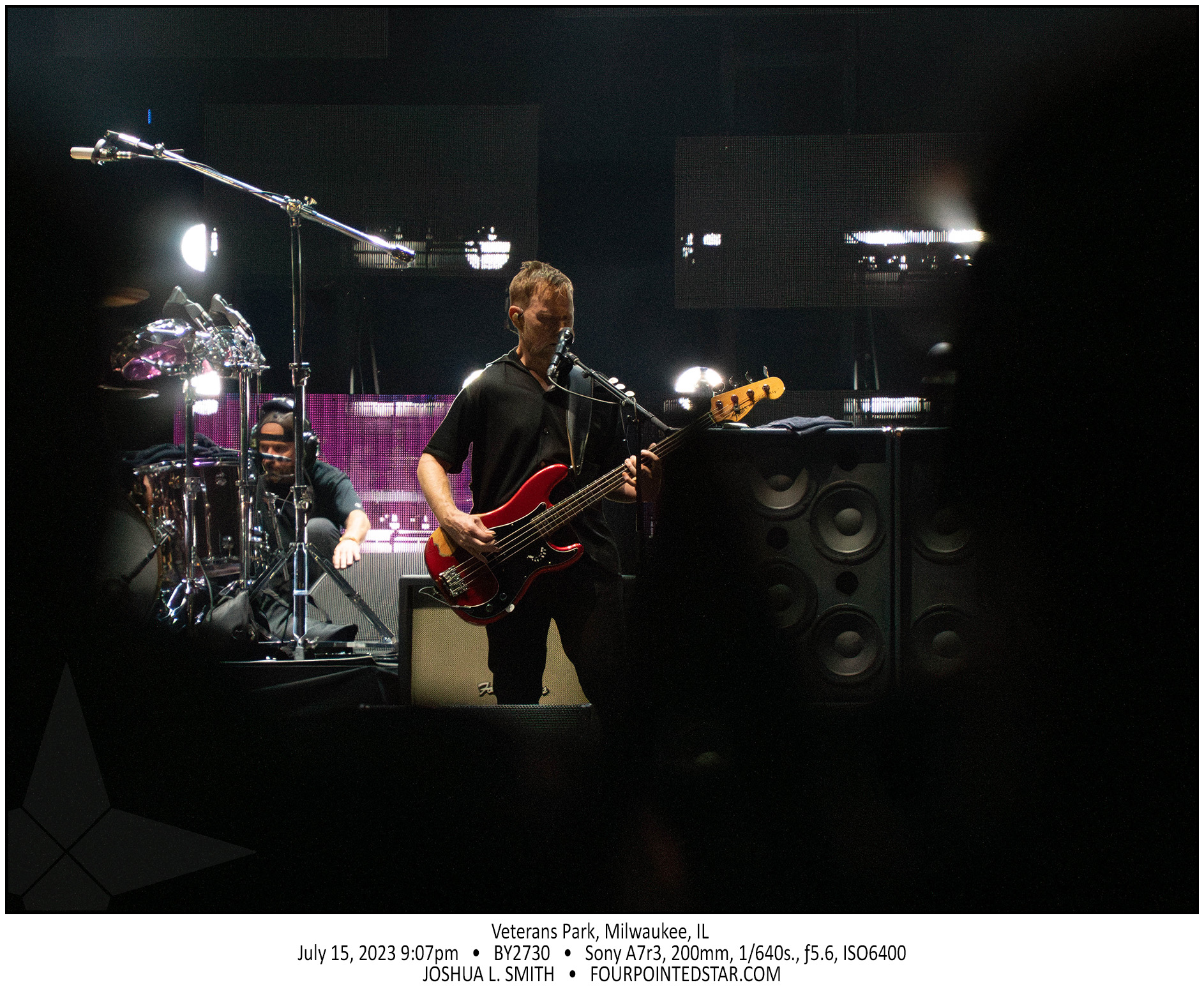
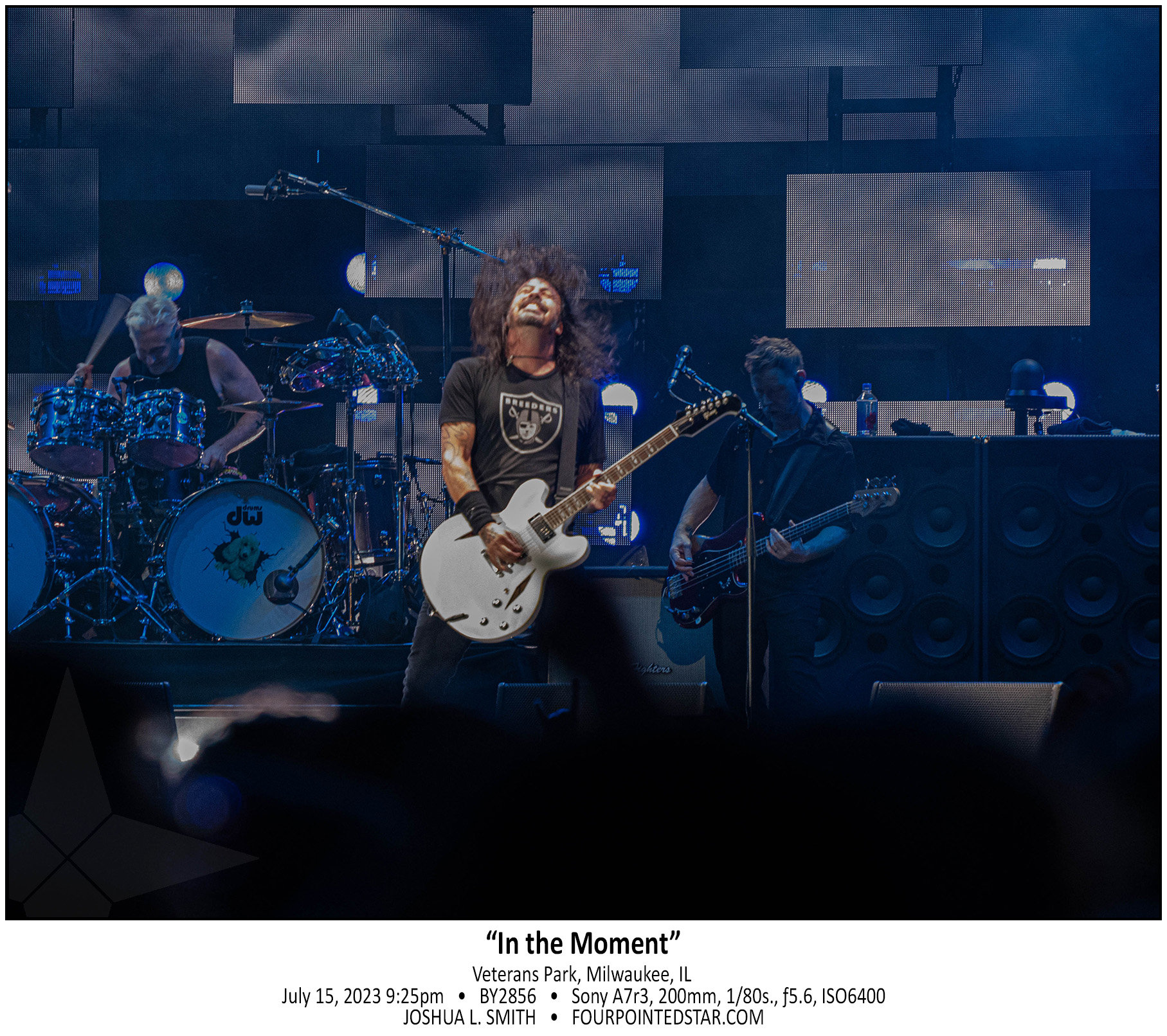
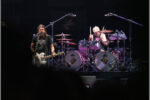
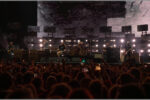
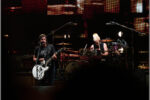
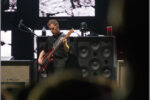
Sarah and I have traveled to see the Foo Fighters multiple times, so this trip was easy; just a quick trip up to Milwaukee for the weekend (we saw Green Day on the second night of the festival!). What stands out about this concert is that Josh Freese was on the drums; he was later let go, but we saw him again because he also tours with Nine Inch Nails.
This festival seemed to be more relaxed on security, so I brought my Sony in to capture a few photos of our favorite band!


.

>other images<
.

Grandpa Smith’s basement was the coolest place when I was young mostly because Grandpa Smith was so cool. When he came over, we would get a Stephen Beisty book and spend hours reading it together. I learned to ride a bike at his house, played Chutes and Ladders, and read National Geographics on the back porch.

.
.

But Grandpa’s basement? Their house was a typical farmhouse in a small town along the Mississippi in Iowa, so the basement was small and oddly shaped, but filled with adventures. The door to the outside was small, the floor was uneven, there was a dartboard, and there were pictures or trains and planes hanging up.

.
.

In the farthest corner sat Grandpa’s toolbench. I couldn’t reach the light switch, so when Grandpa came down, his presence illuminated the area; filled with so many old tools, gadgets, and things that he’d saved just in case. Grandpa was born in 1914, became an adult through the Great Depression, and established his career during World War II. His life was formed by the philosophy of “nothing goes to waste” and “everything is useful”.  His toolbench reflected that philosophy.

.
.

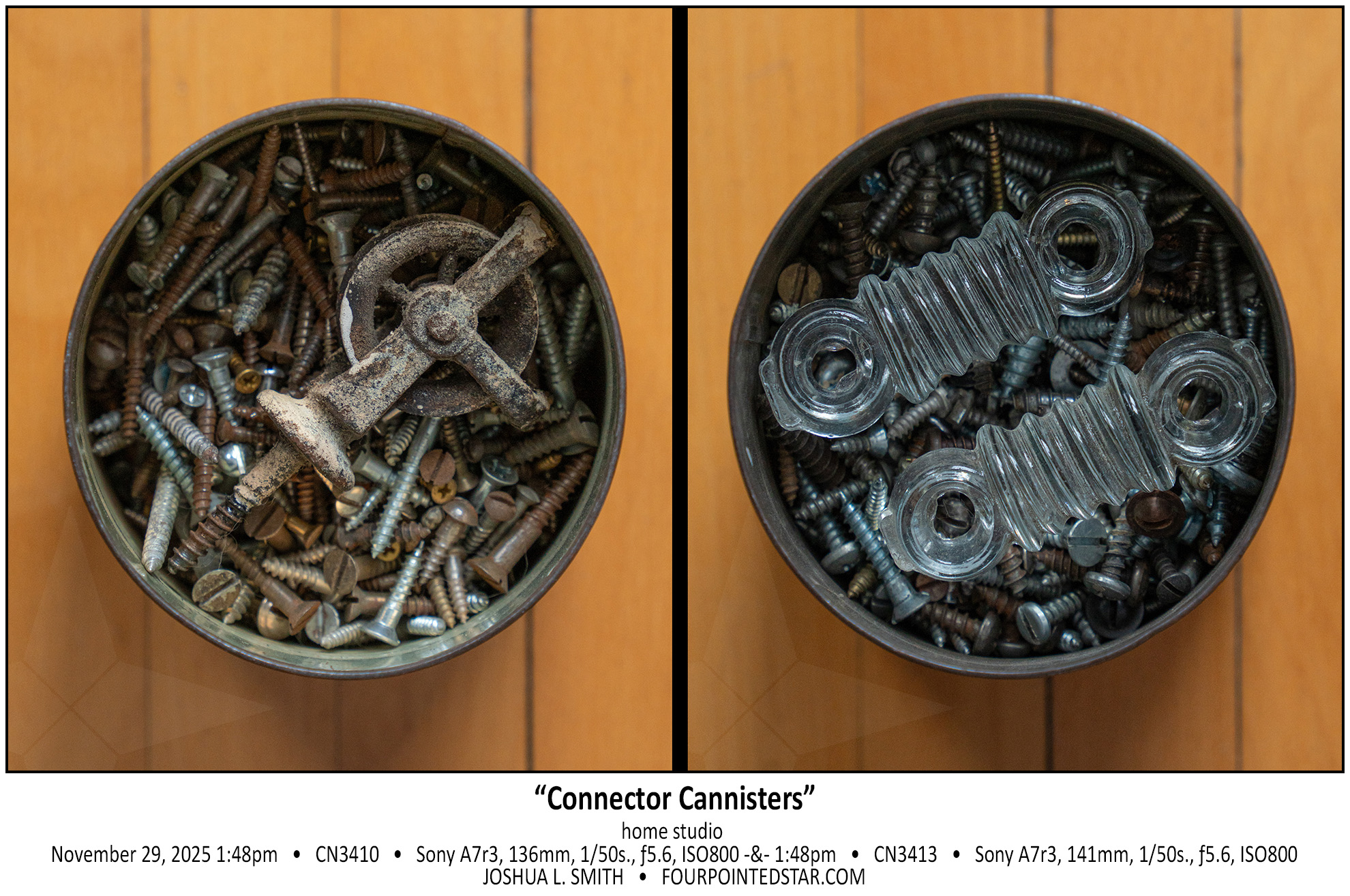
When he passed, Grandma left his area untouched; my Dad and Uncles mostly worked through his tools and collections over the next few years. Over the years, I received a few of those tools and collections; they’re precious memories that I won’t discard, but a tin can of screws is difficult to put in the china cabinet.

.
.

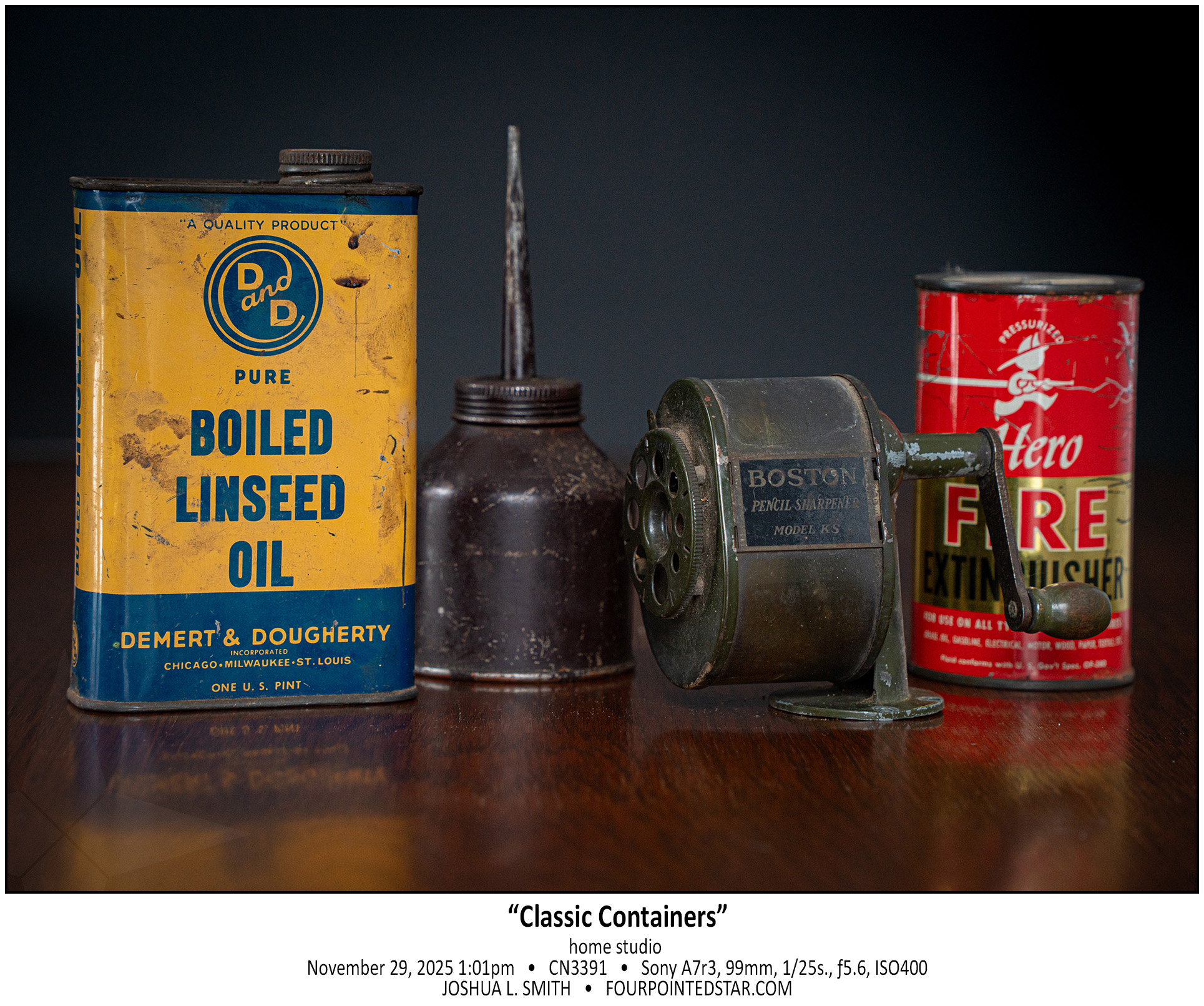
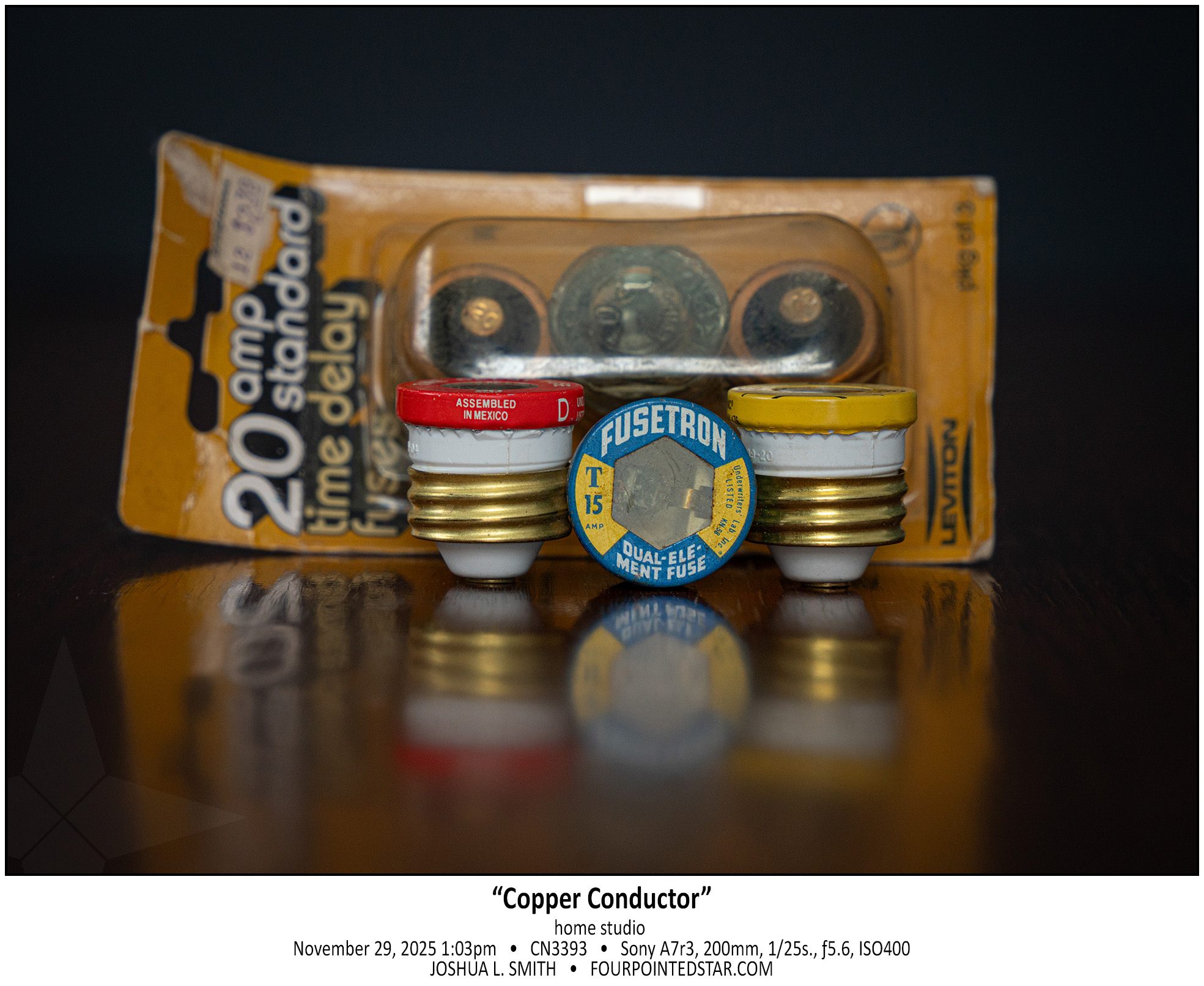
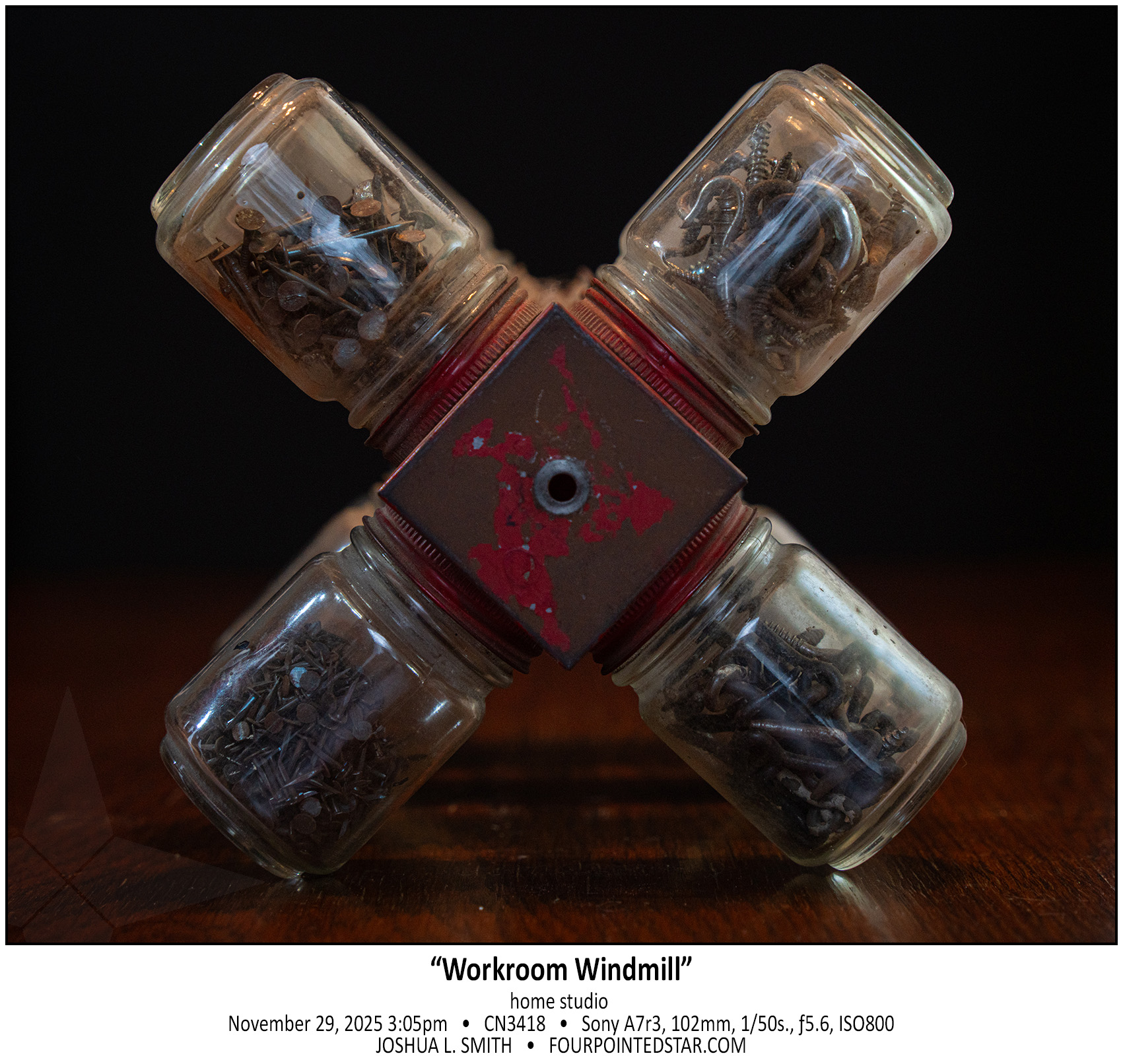
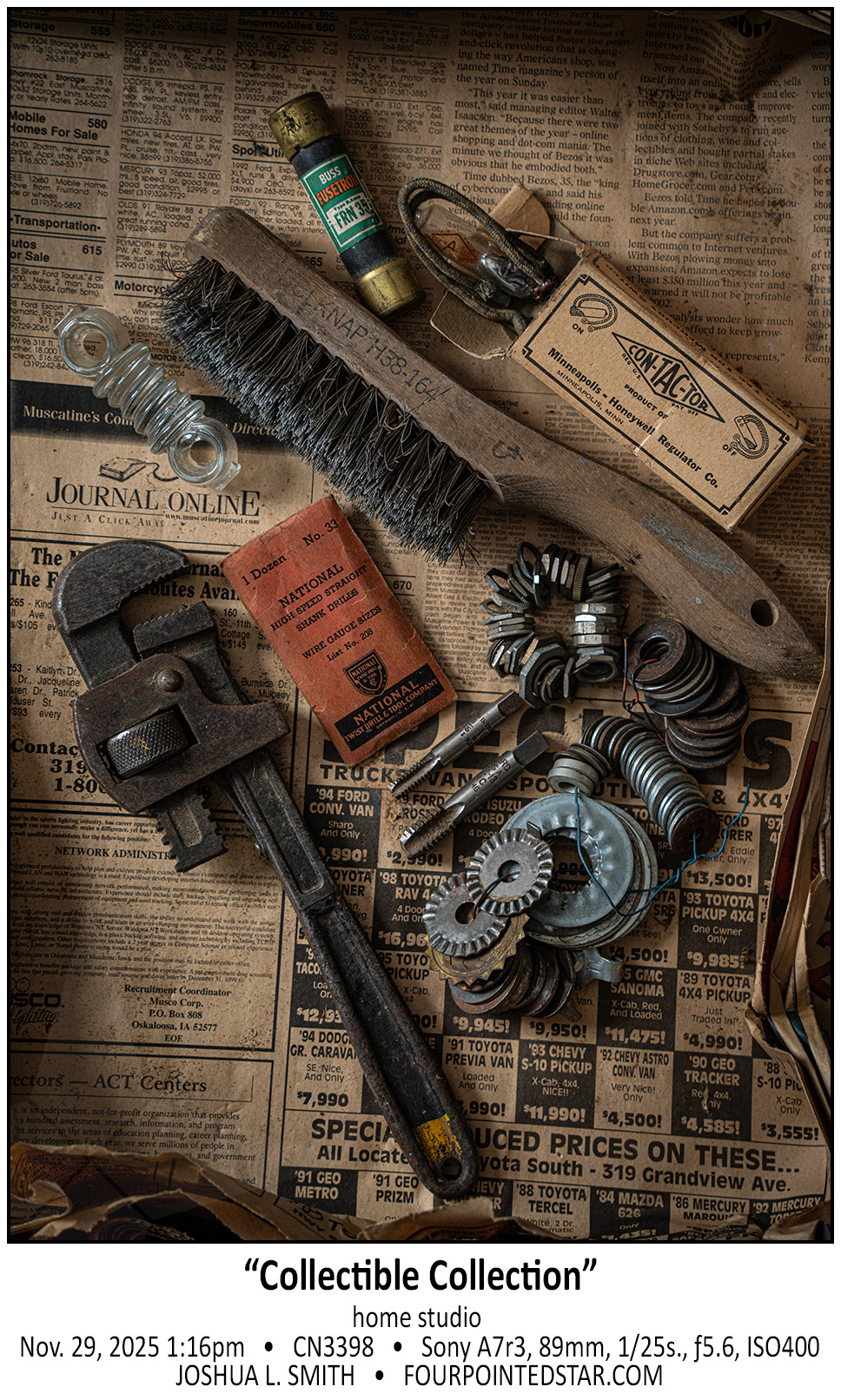
After my Dad passed, I gathered a few more of Grandpa’s items and thought “when I’m better at still life photography, I’ll take some photos.” I still don’t feel that I’m great at still life, but here’s a feeble attempt to honor my Grandpa’s legacy as an electrician, handyman, lifelong learner, and as someone who passed his love of learning onto his grandson.

.
.

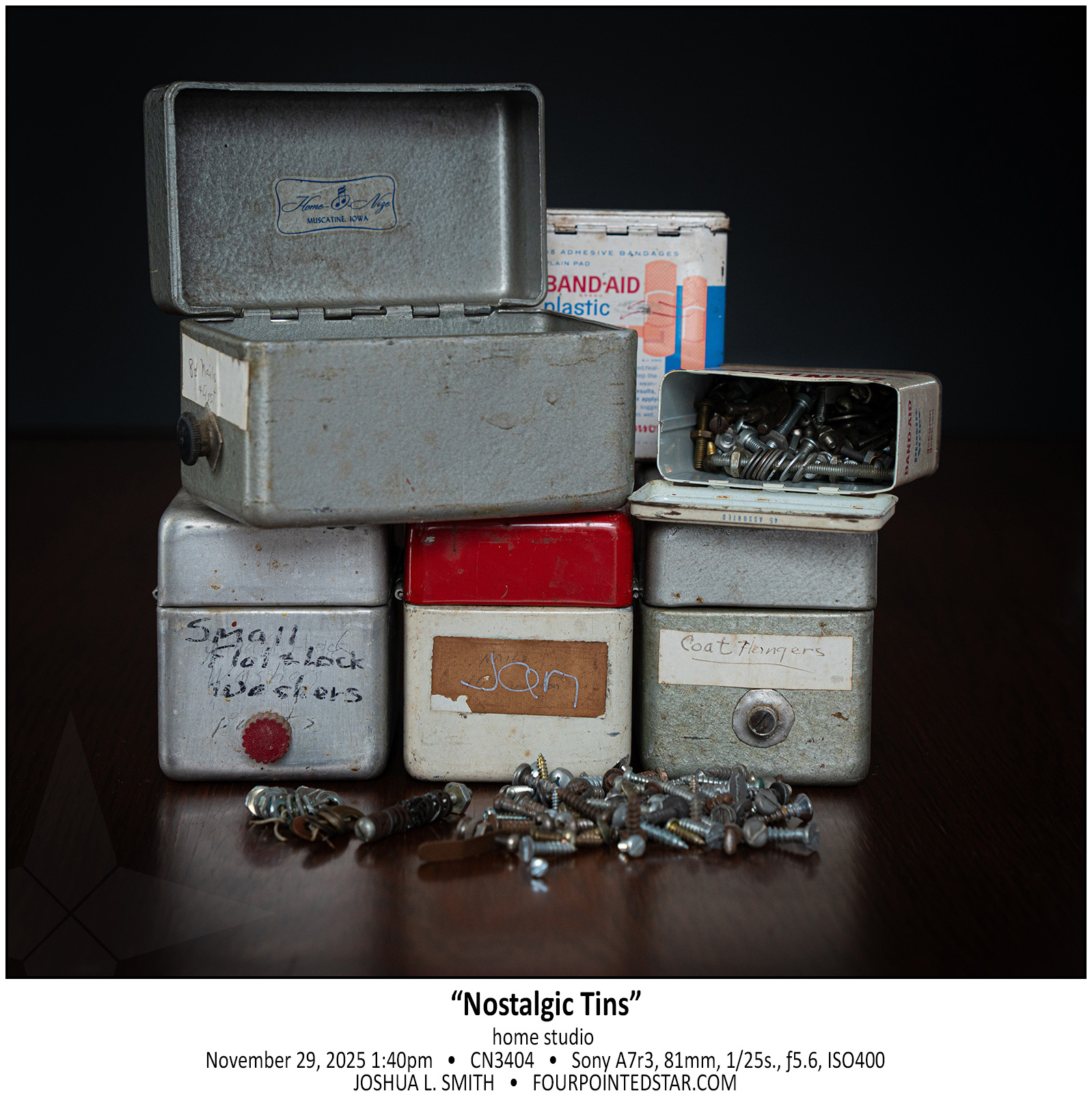
Grandpa stored washers, screws, bolts, nuts, and so much else in these small containers (including metal bandaid containers!). The tin at the top left has a sticker that reads “Muscatine, Iowa”, and the bottom right container has “coat hangers” in Grandpa Smith’s handwriting. And just as fun little family note – “Jan” is my older sister who wrote that when she was 5 or 6?

.
.

Grandma & Grandpa Smith lived in Muscatine their entire adult lives; when the holidays rolled around, our family would pack up the car and head to Iowa after school on Friday. We’d get there at 7 or 8pm, and we 5 kids were starving!

Grandma had the perfect solution: warm Grandma sandwiches.

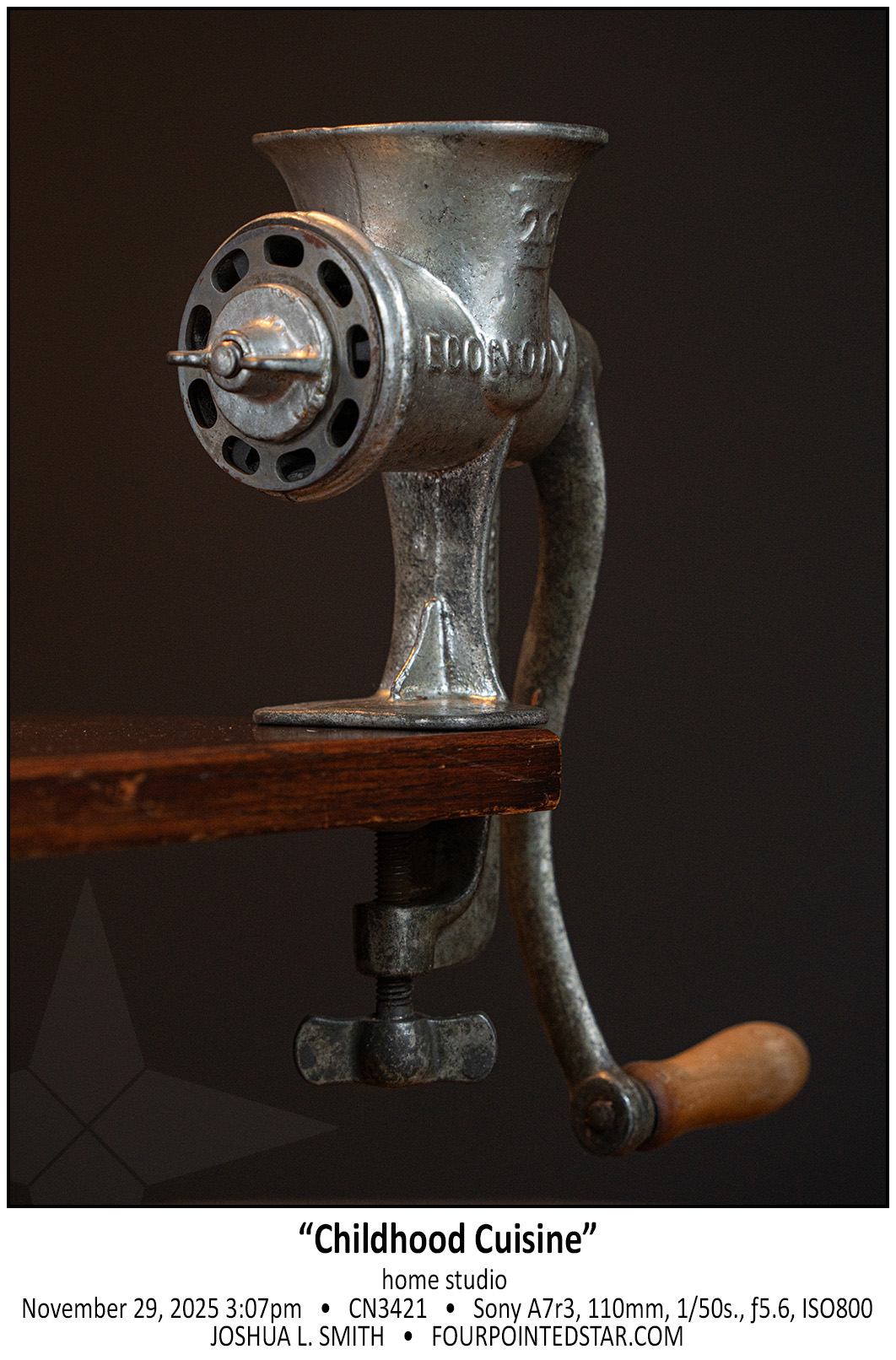
They weren’t fancy; just bologna, cheese and mayo baked on an open faced burger or hot dog bun. If we were lucky and got to Grandma’s house early enough, we got to turn the crank on the hand mixer.

When we got together this summer, we had Grandma sandwiches, not because of the ingredients, but because Grandma sandwiches remind all 5 of us J’s (and my Mom) of the holidays and the slower pace of Grandma & Grandpa’s house.


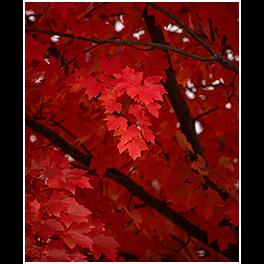
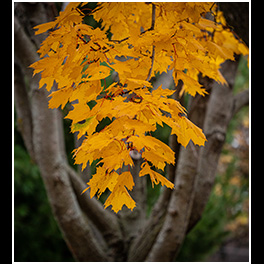
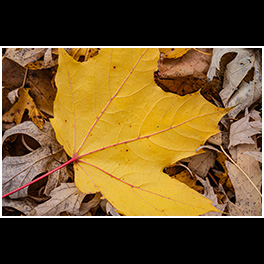
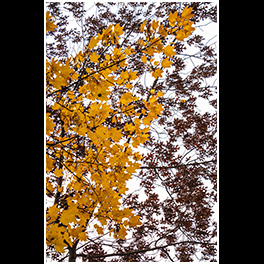
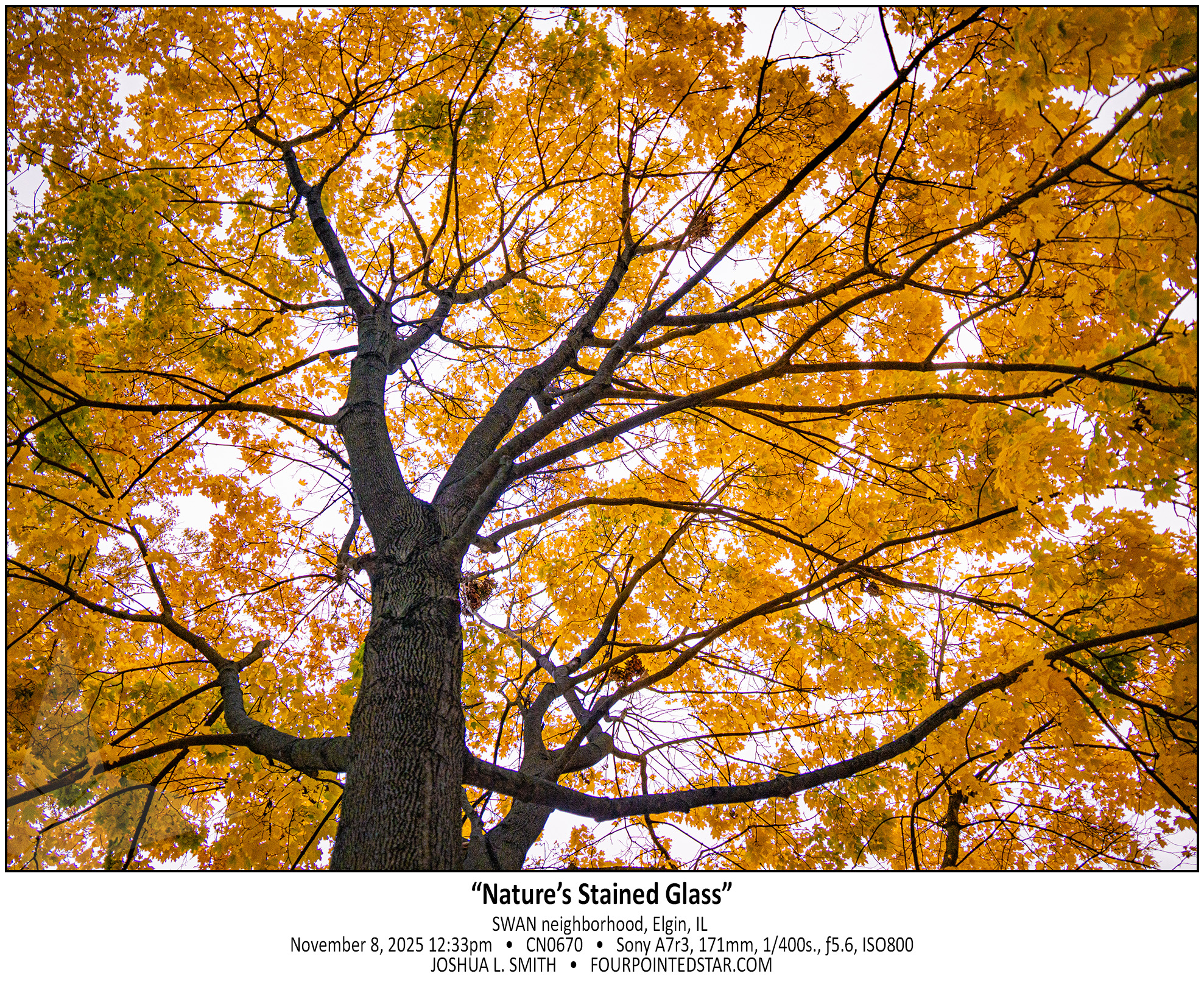
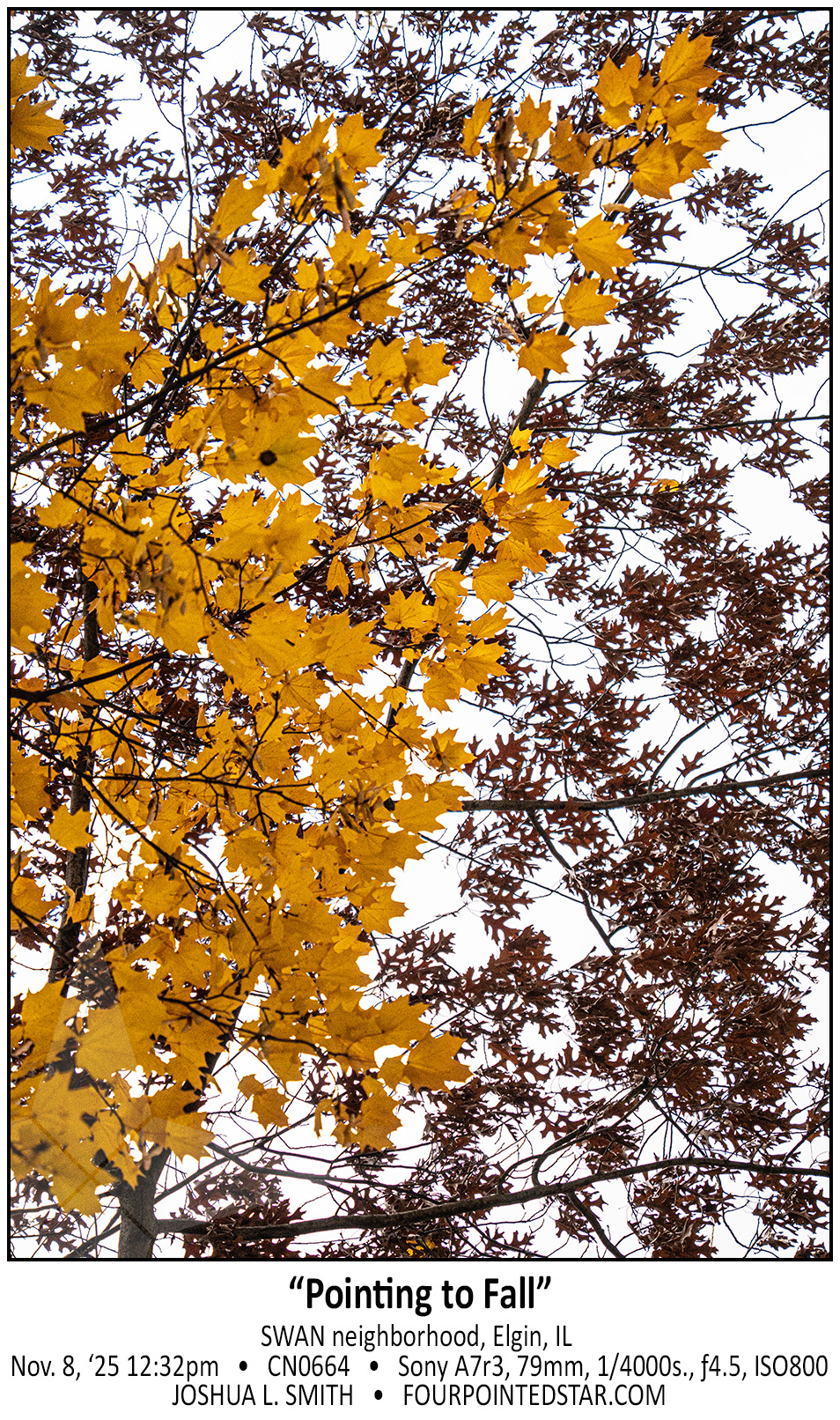
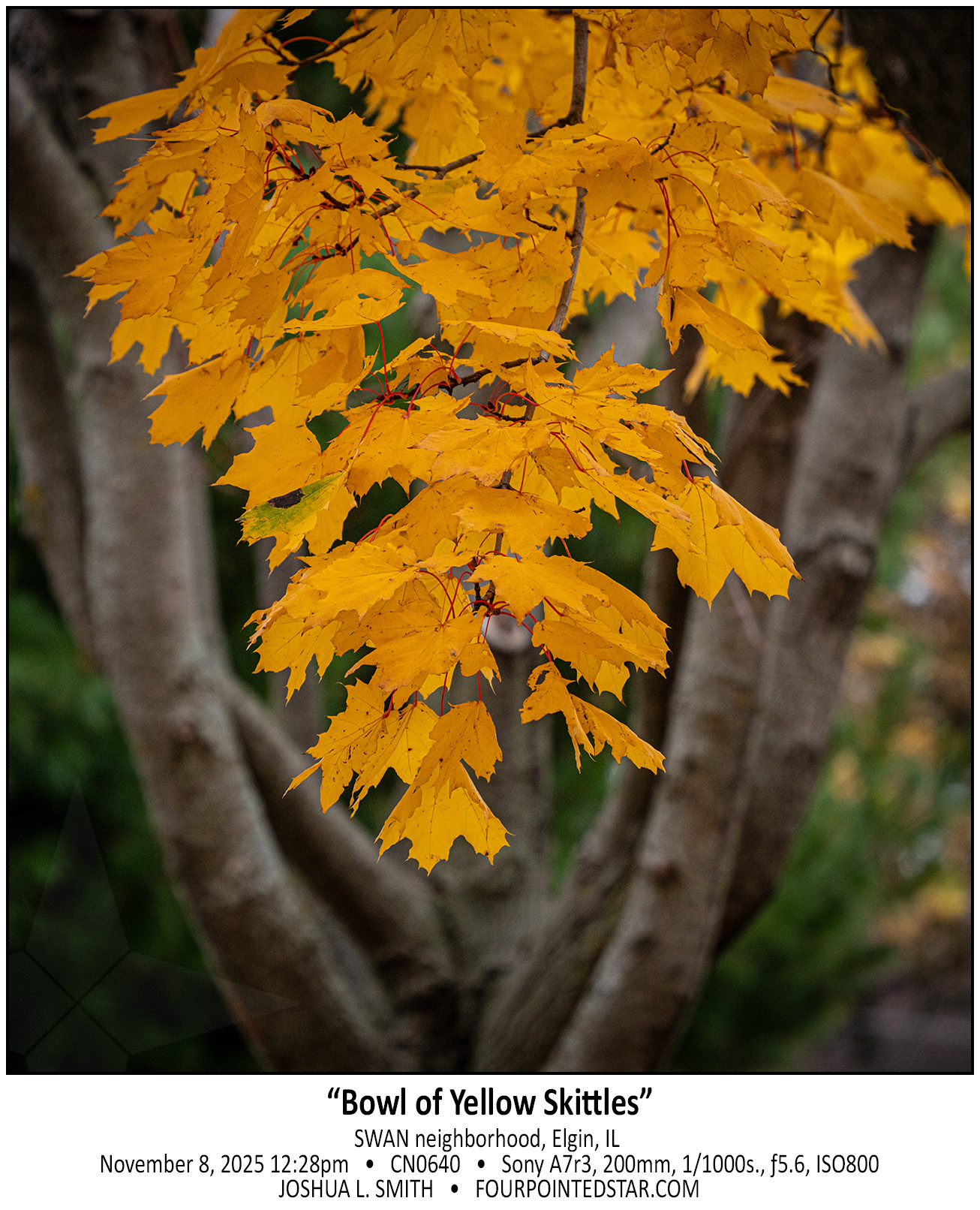
There were two trees that simply glowed yellow in the afternoon as I drove through my neighborhood. When I got home, I picked up my camera and walked around the block capturing the various autumn scenes, including this tree. I could have placed a lawn chair underneath it and stared into the majestic canopy for the rest of the afternoon, but I have a feeling the neighbor would have asked me to leave.


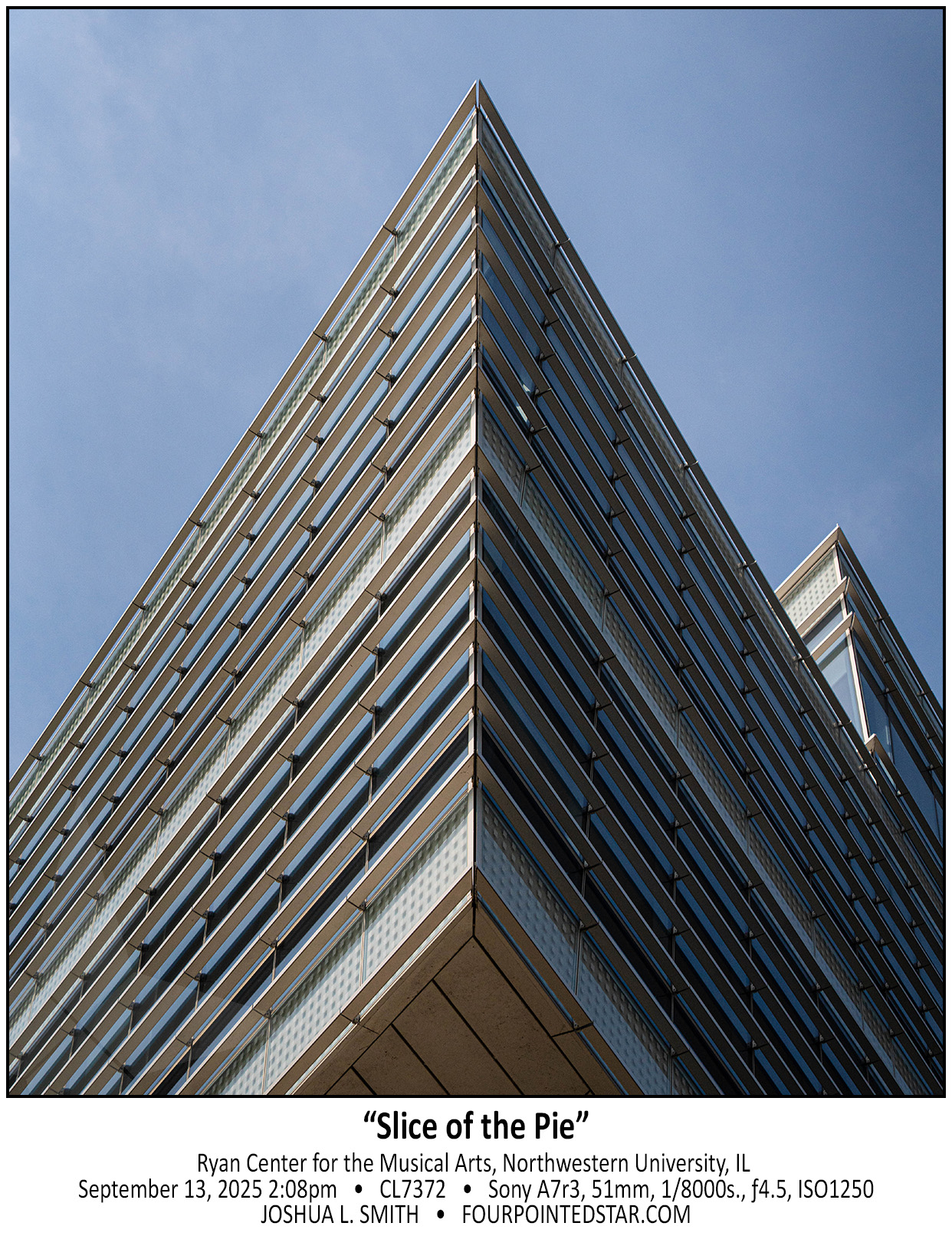
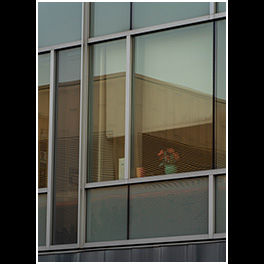
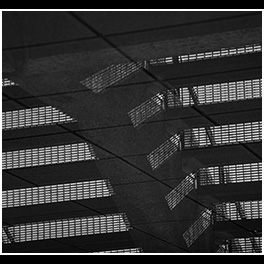
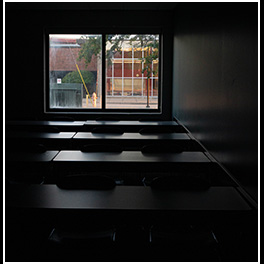
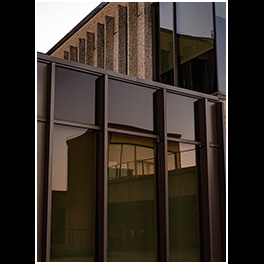
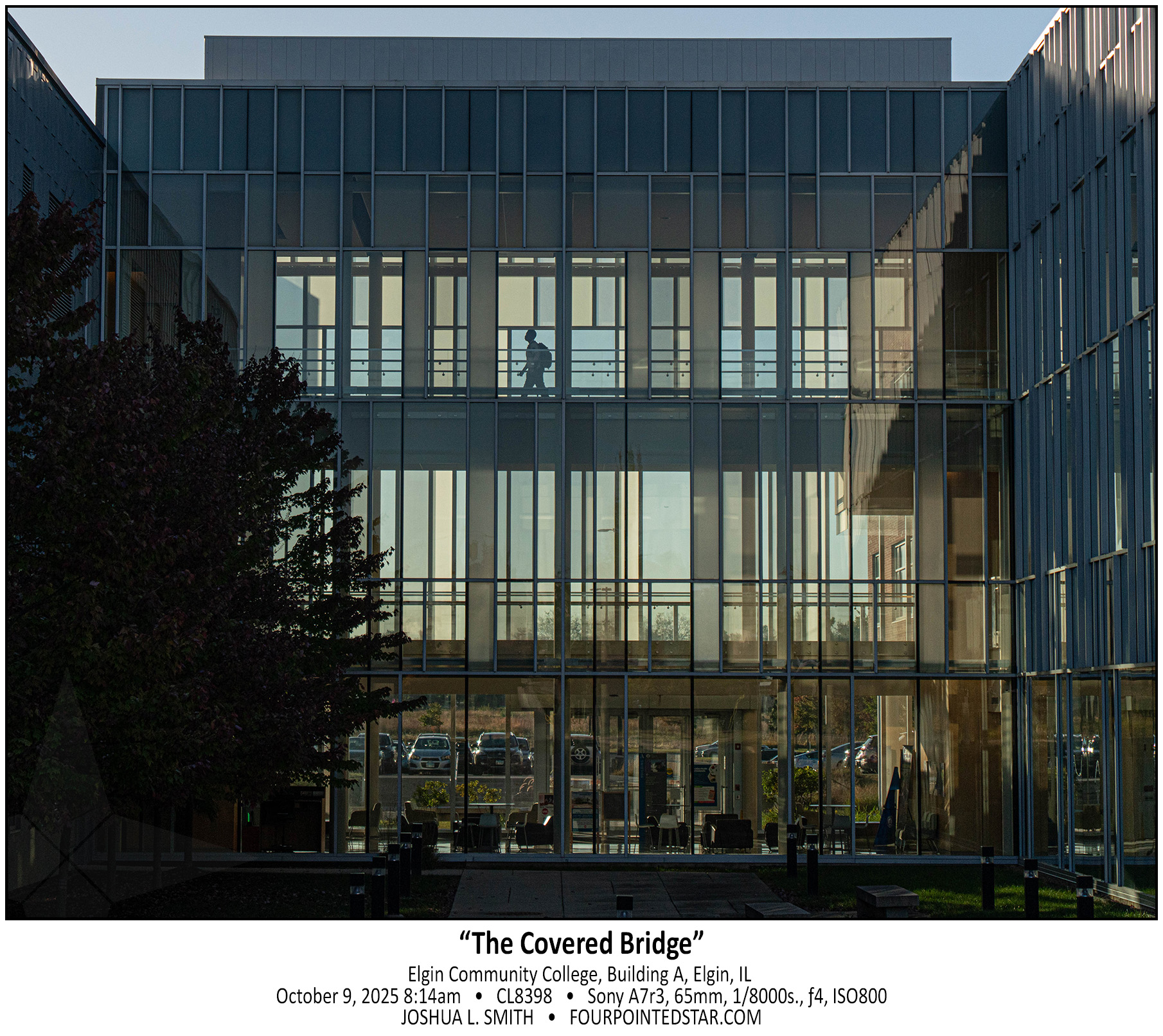
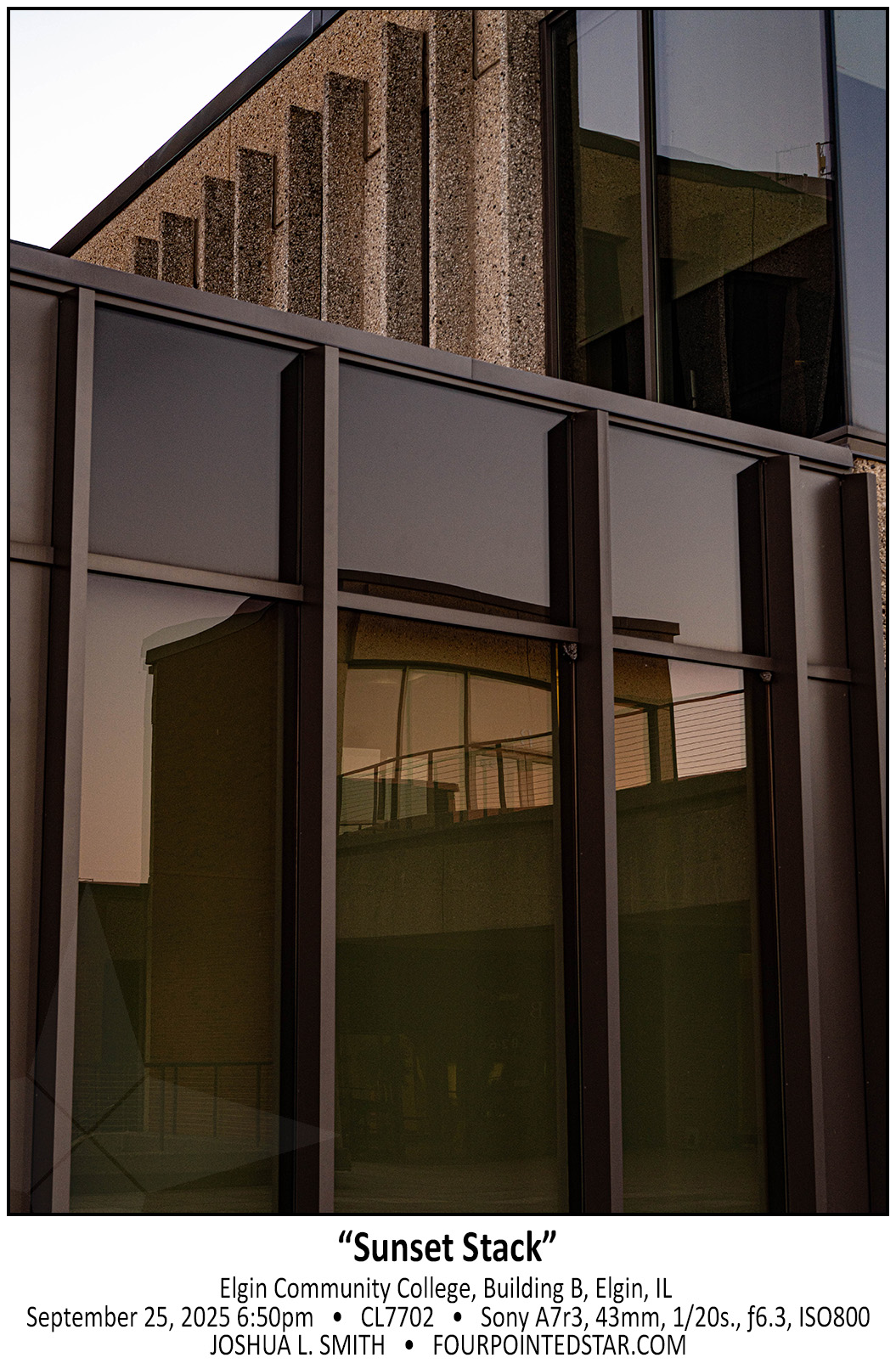
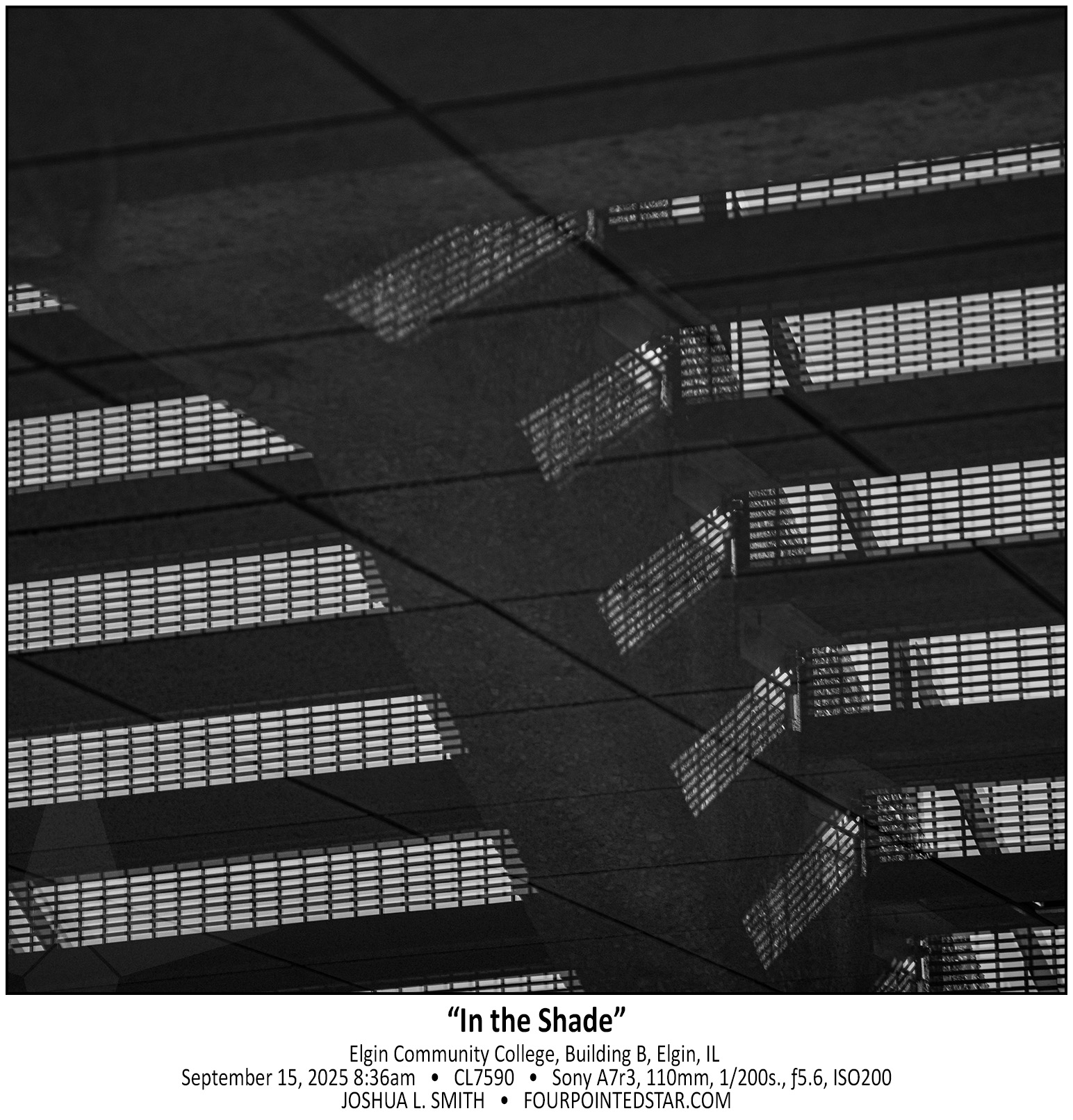
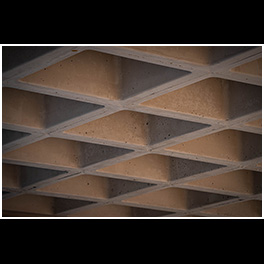
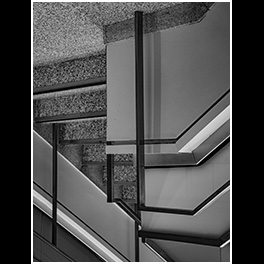
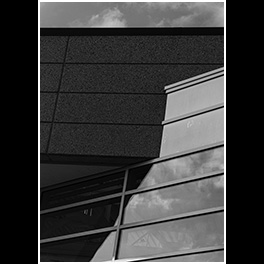
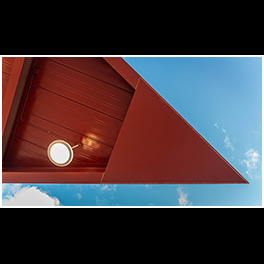
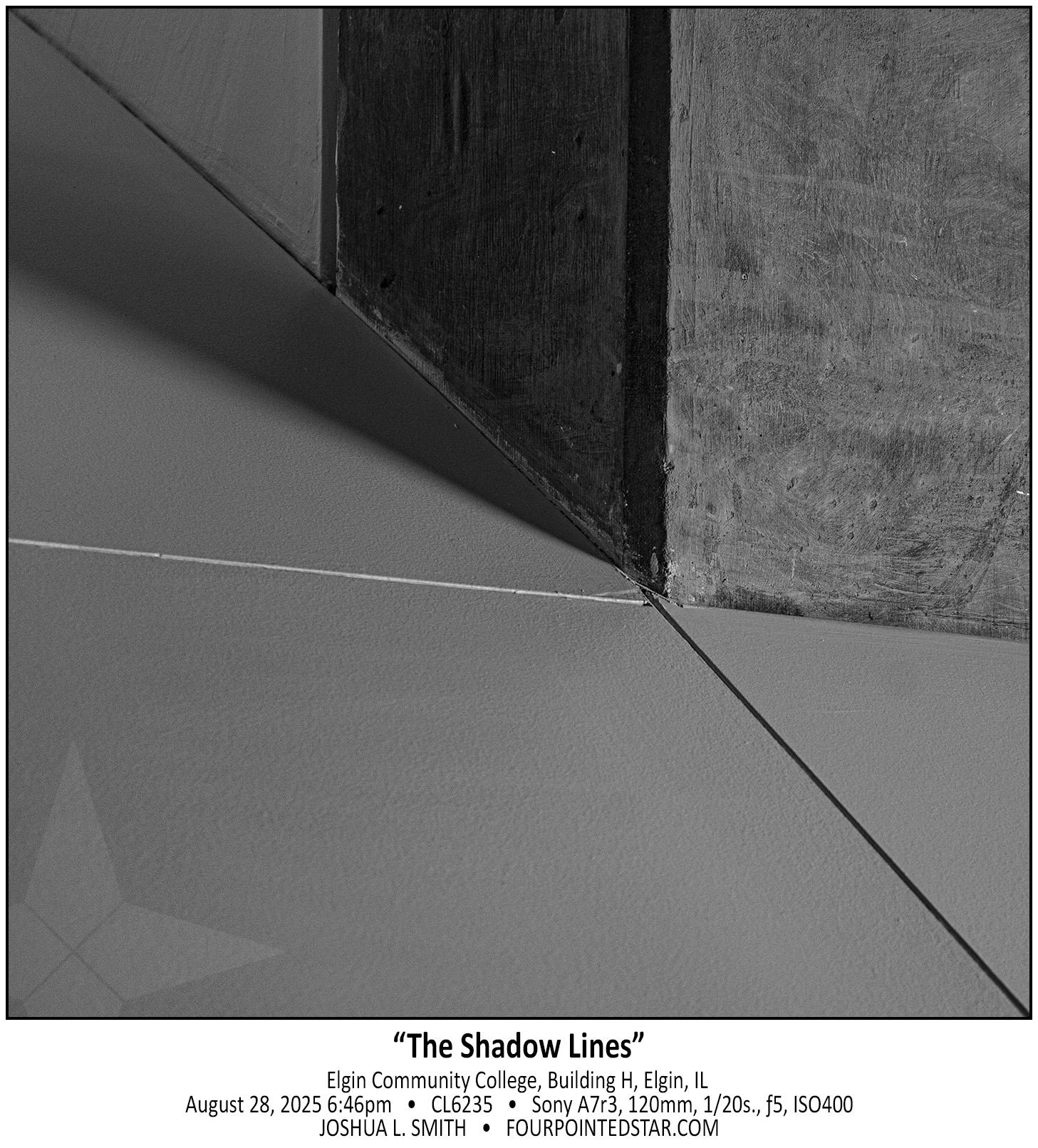
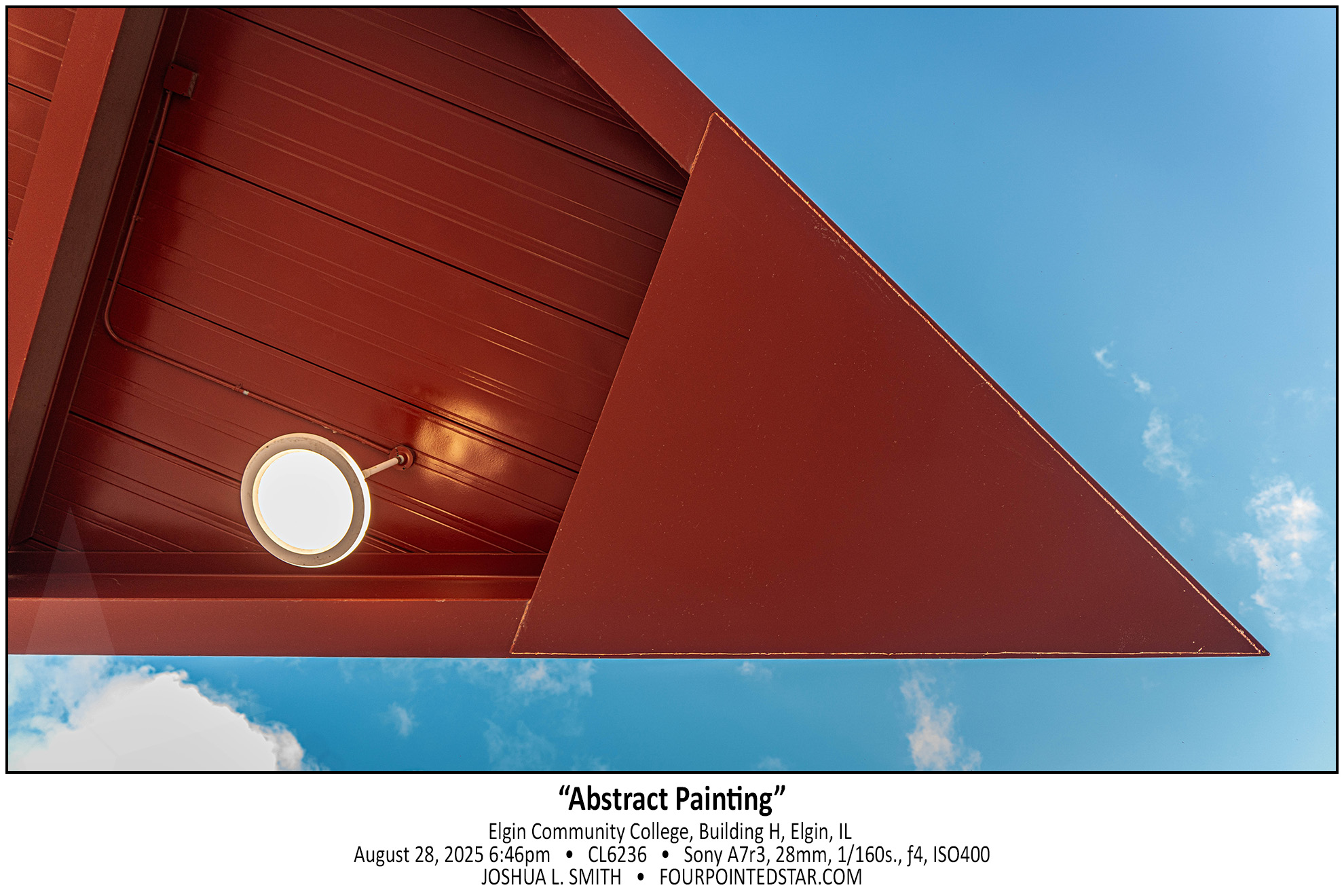
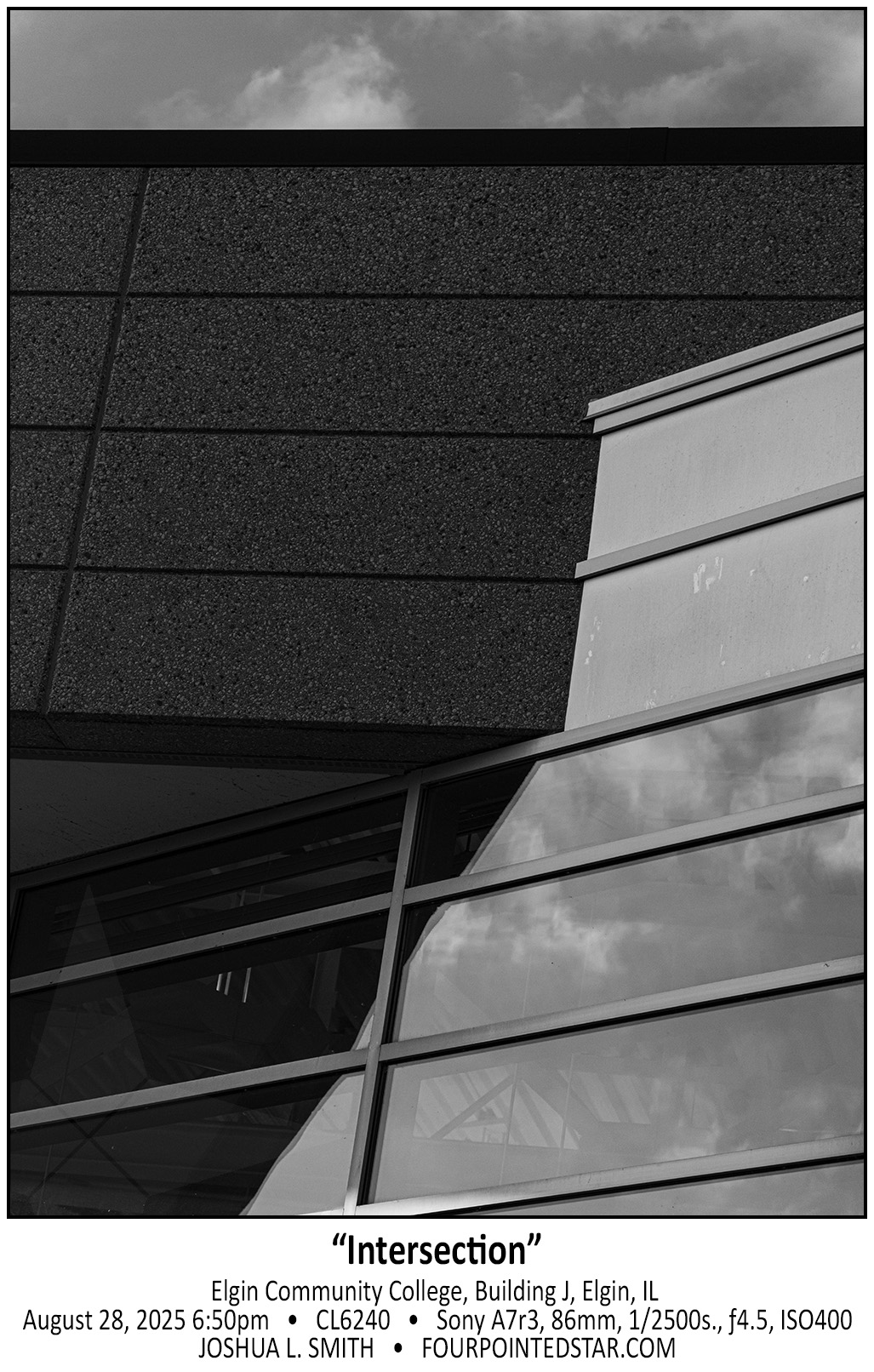
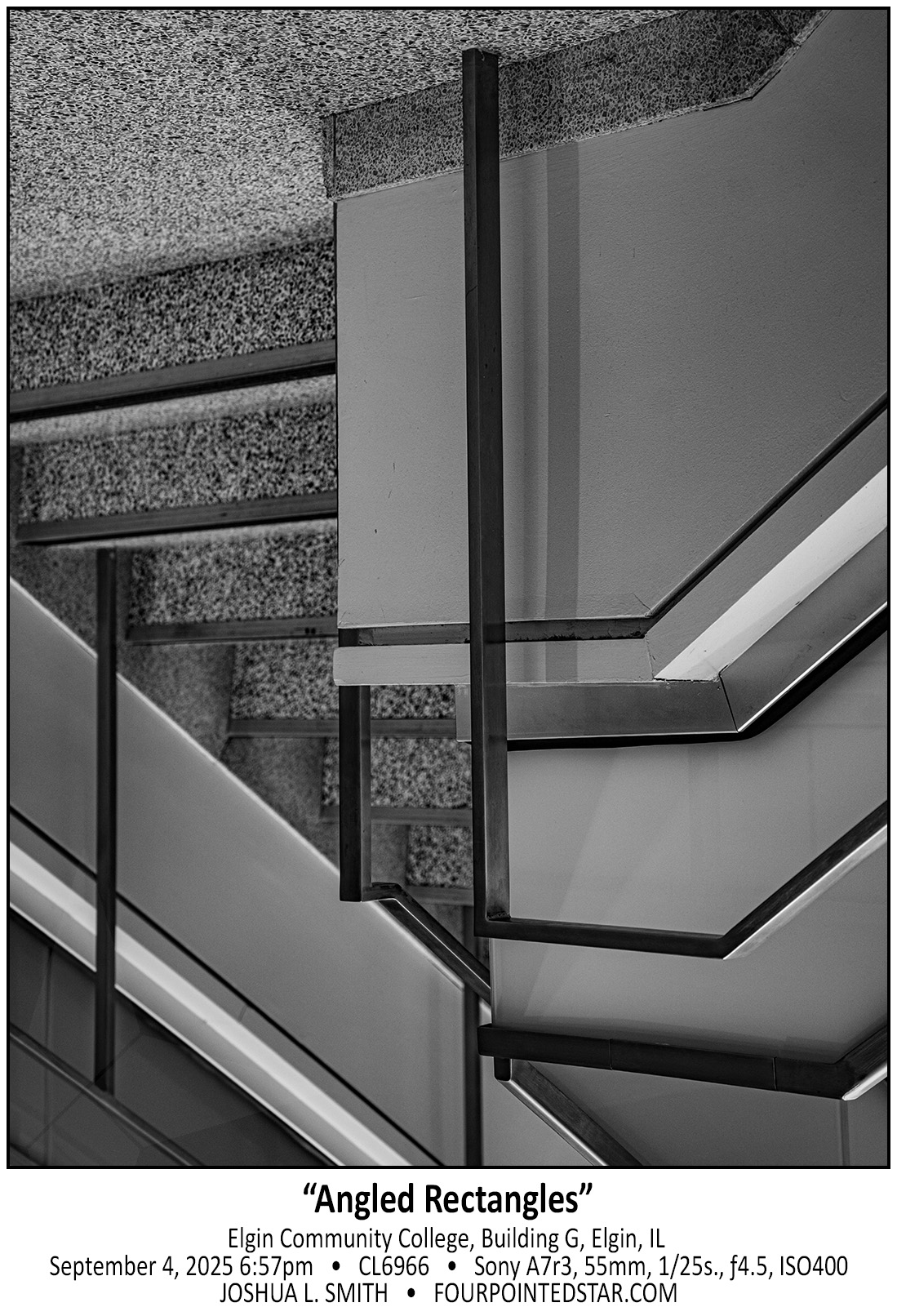
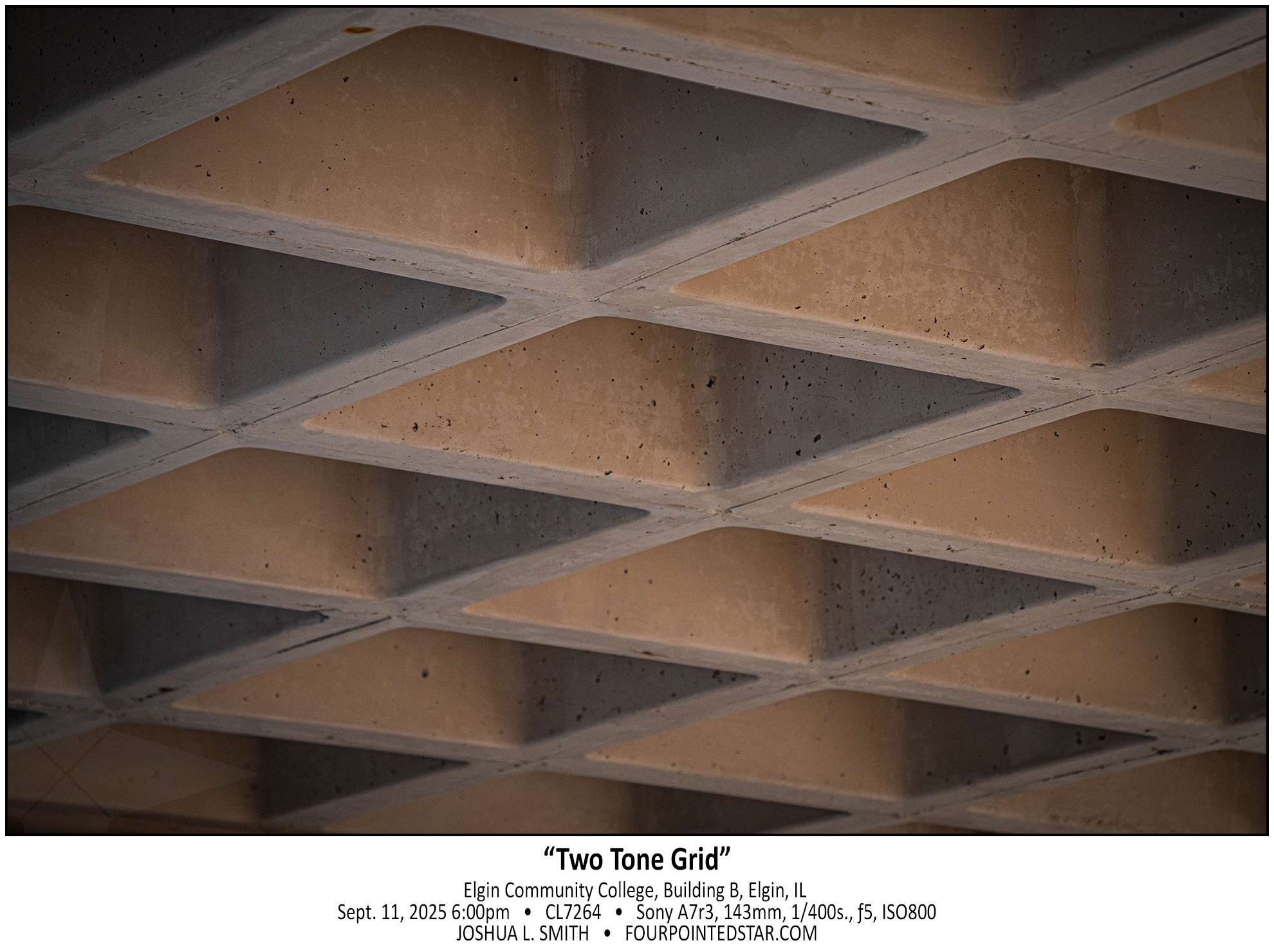
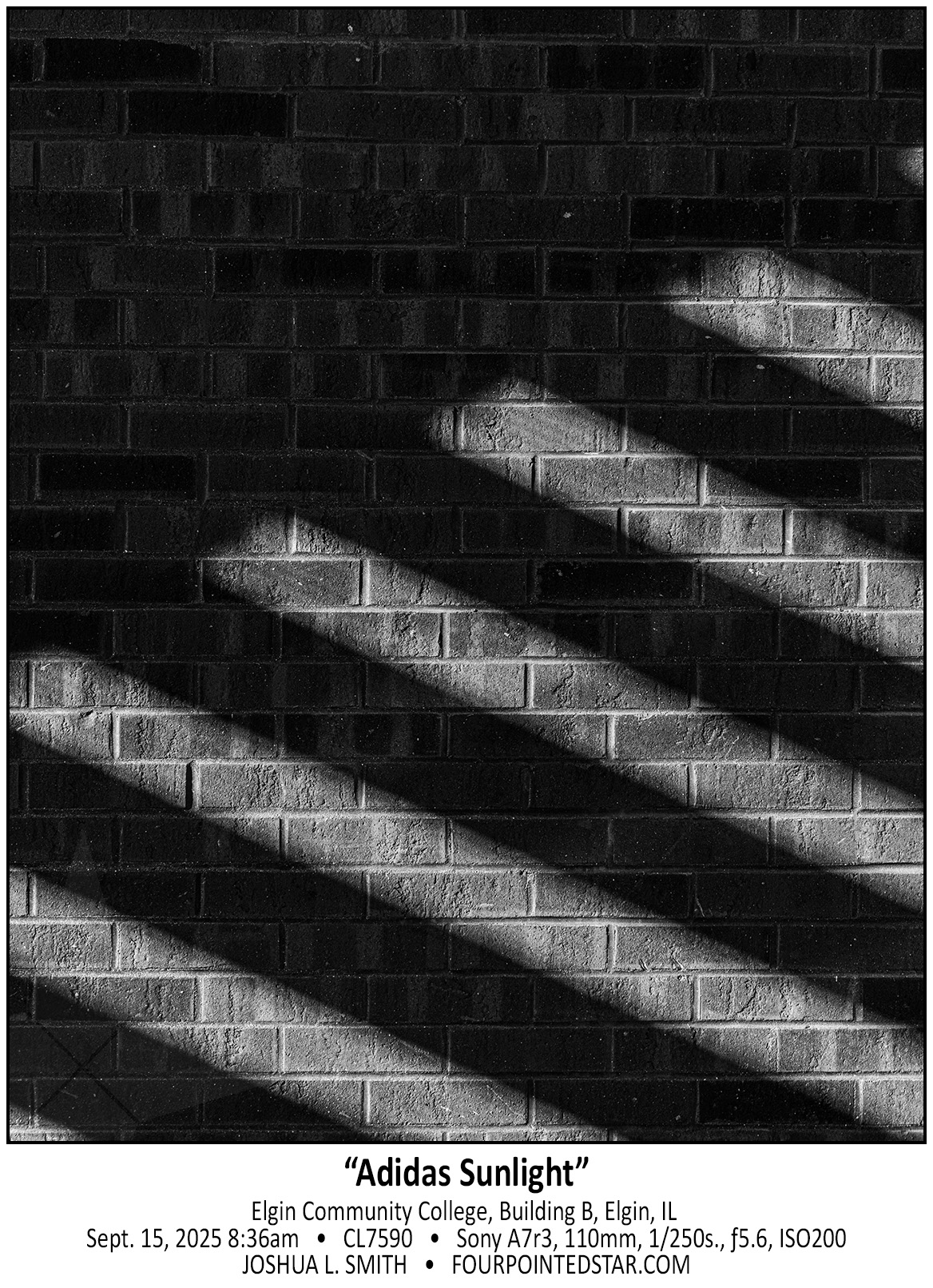
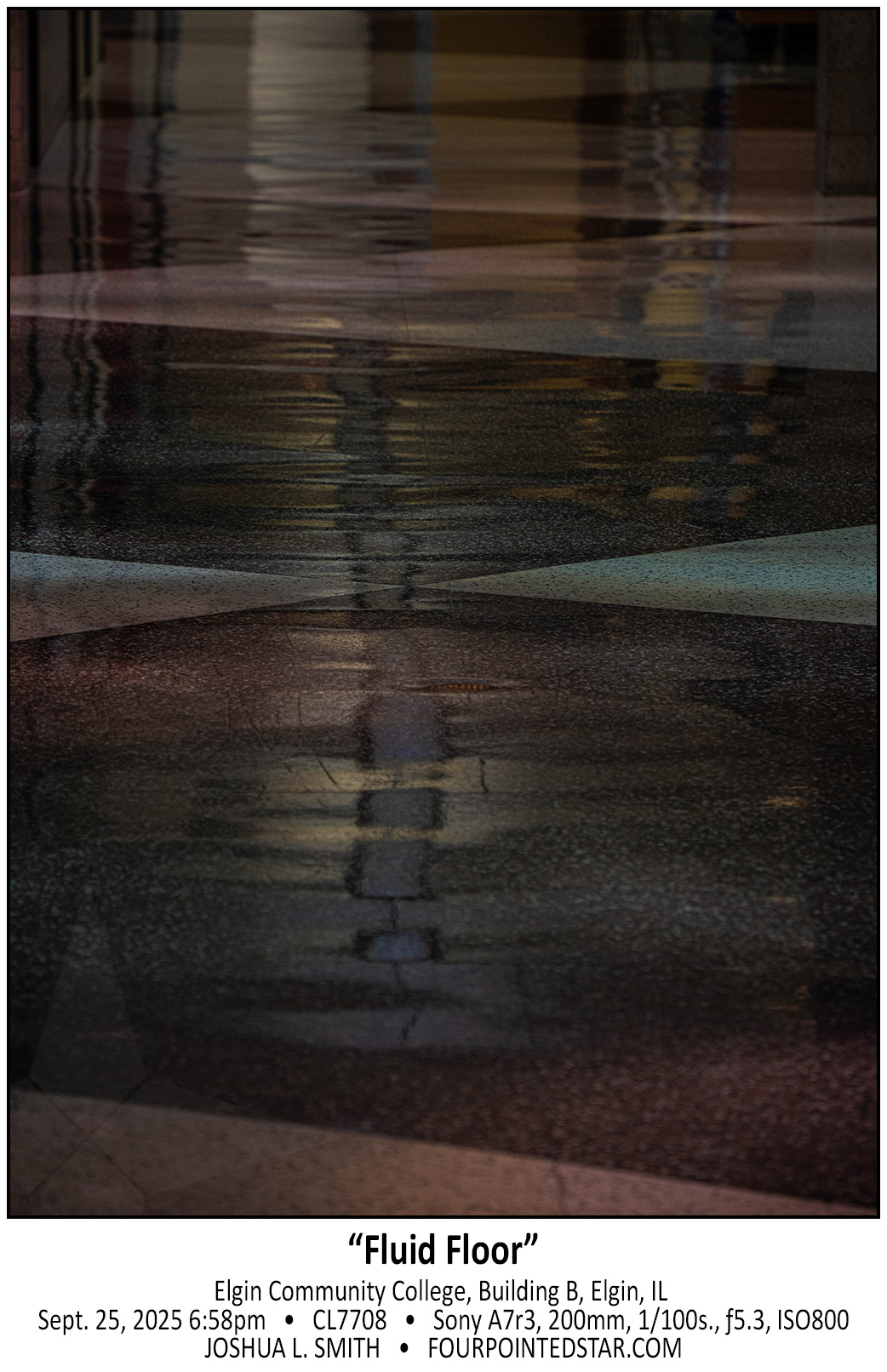
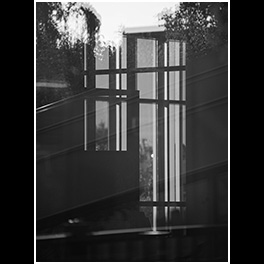
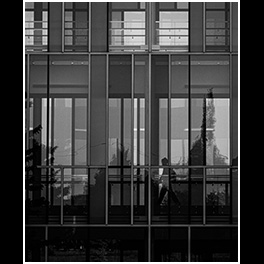
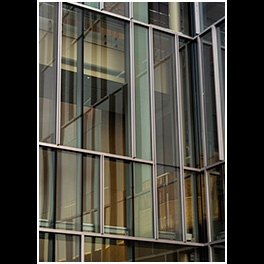
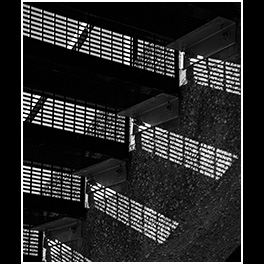
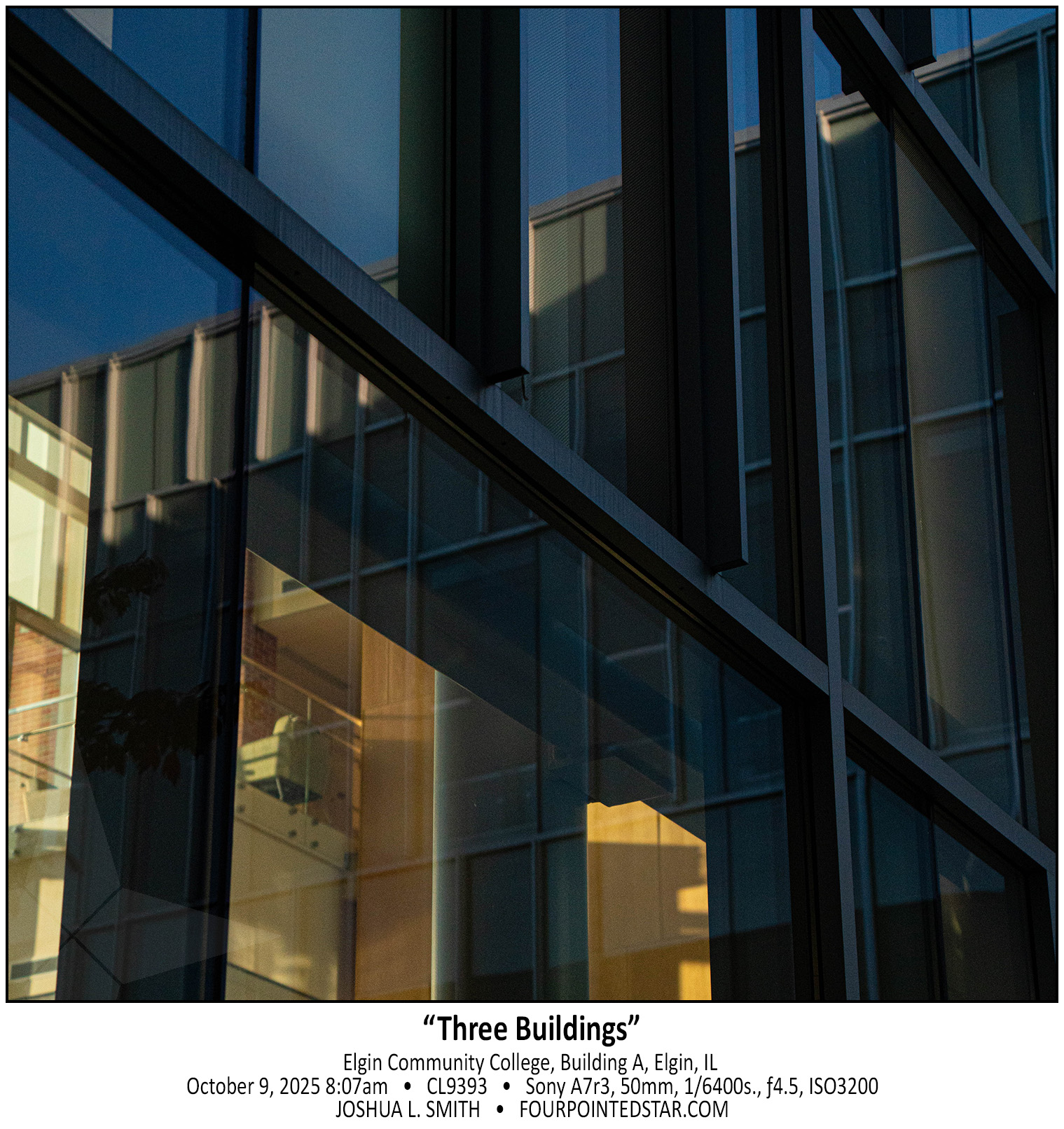
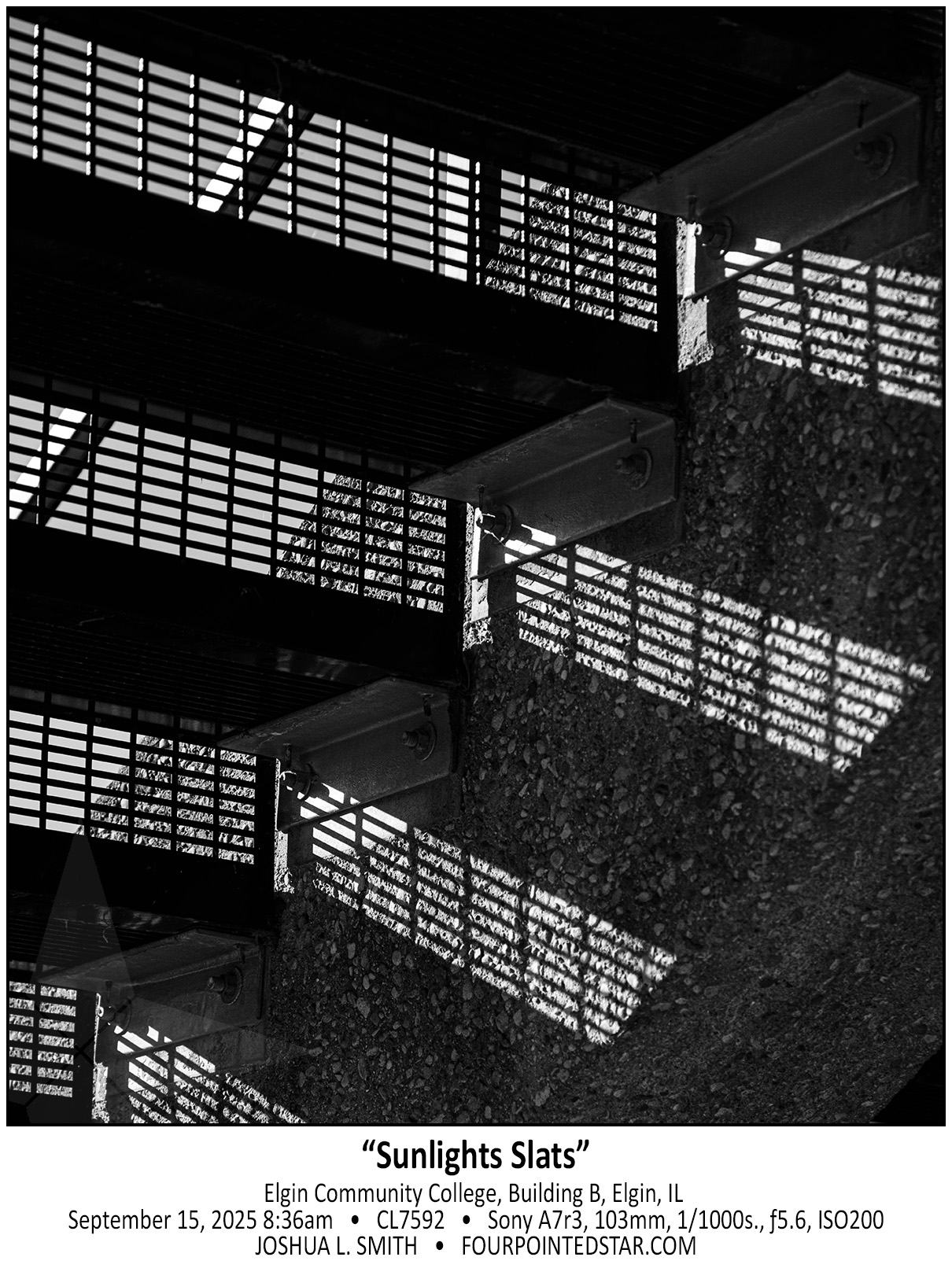
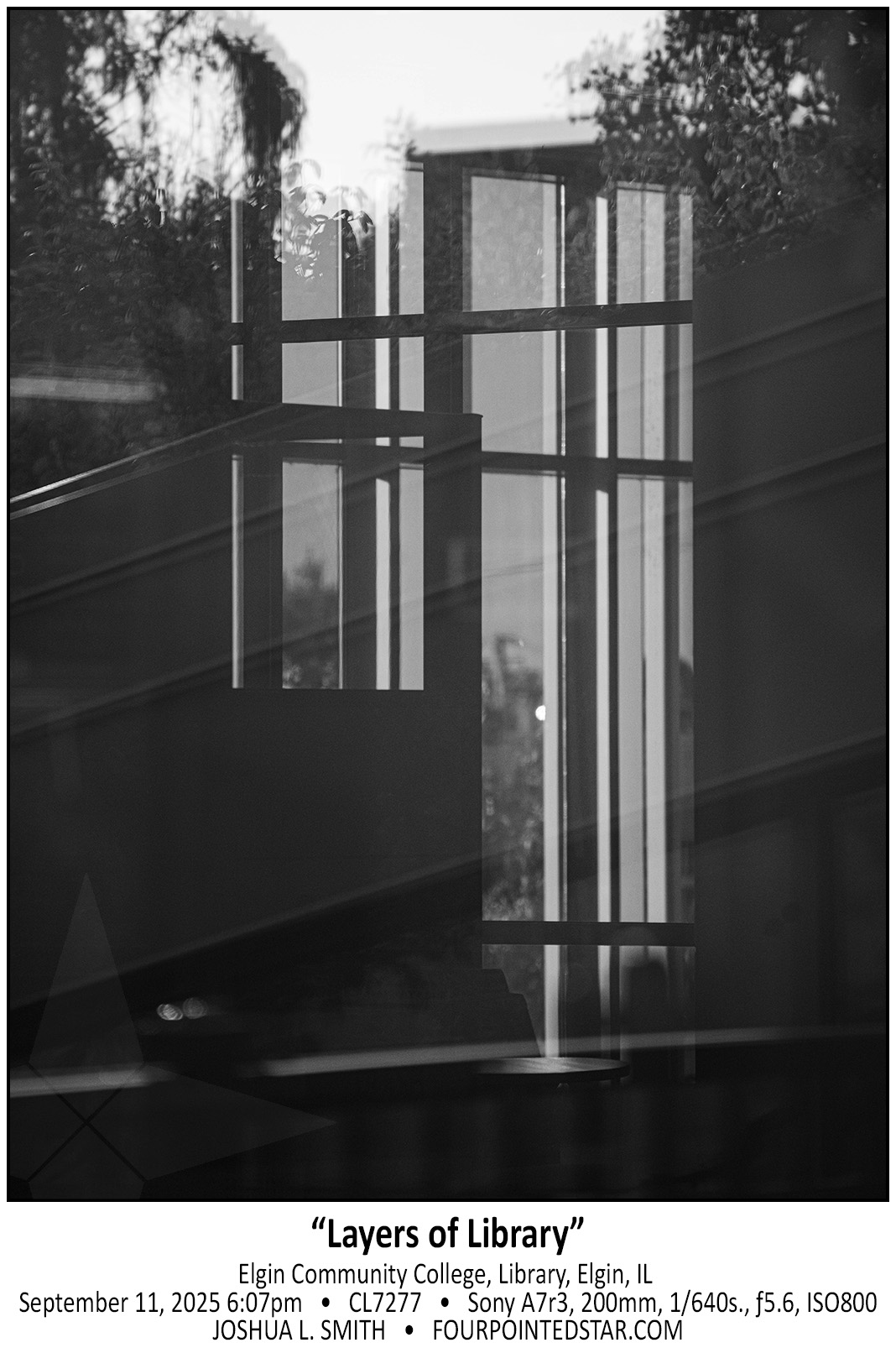
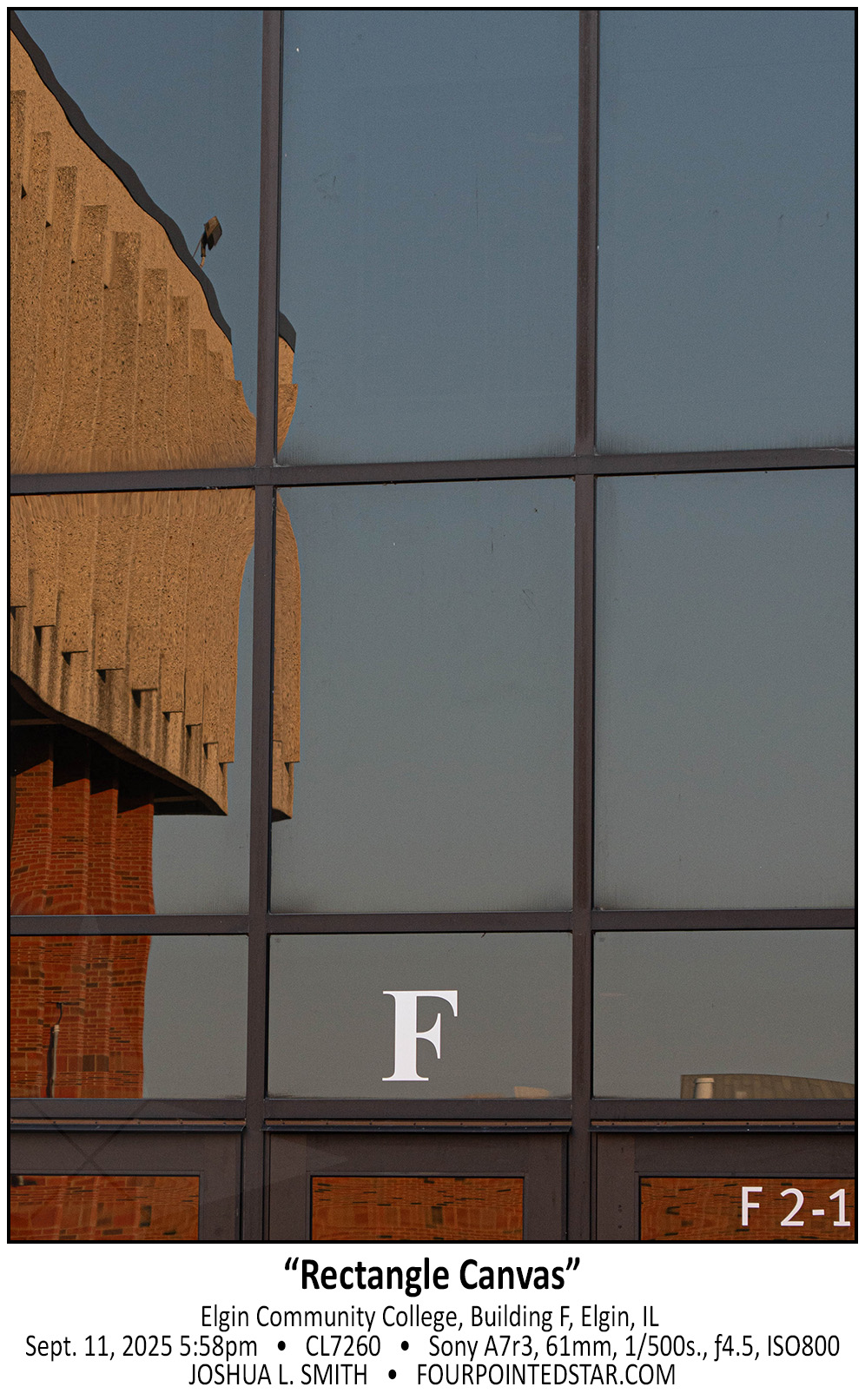
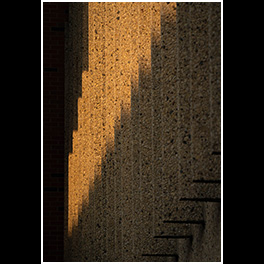
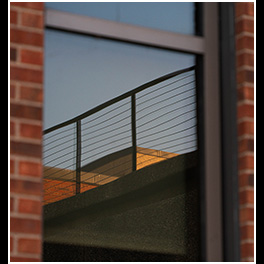
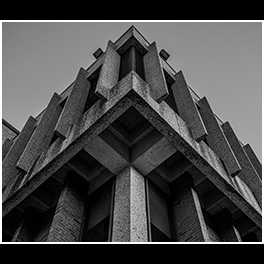
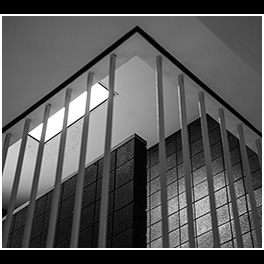
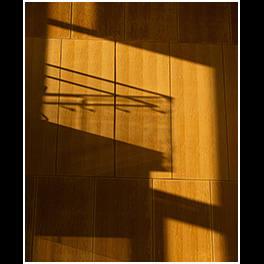
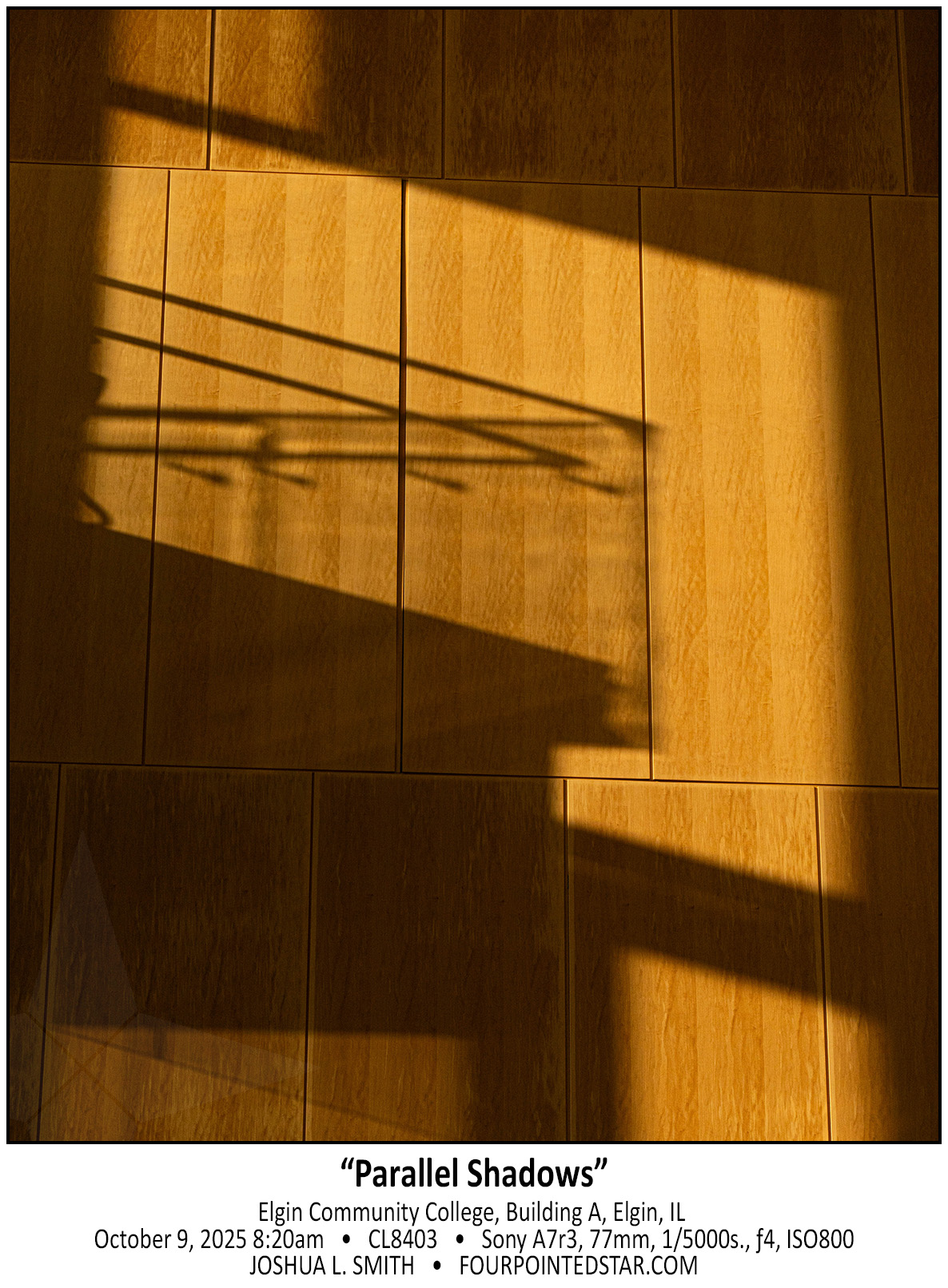
There are certain architectural elements that lend themselves to odd, abstract photographs, but in some instances, you must create the abstract image. As I walked around ECC some images just made sense – the concrete ceiling under the elevated walkway and the outdoor metal staircase. But the staircase’s metal railing and marbled look, I knew there was a photo; but as long as it was right side up, it just looked like stairs…


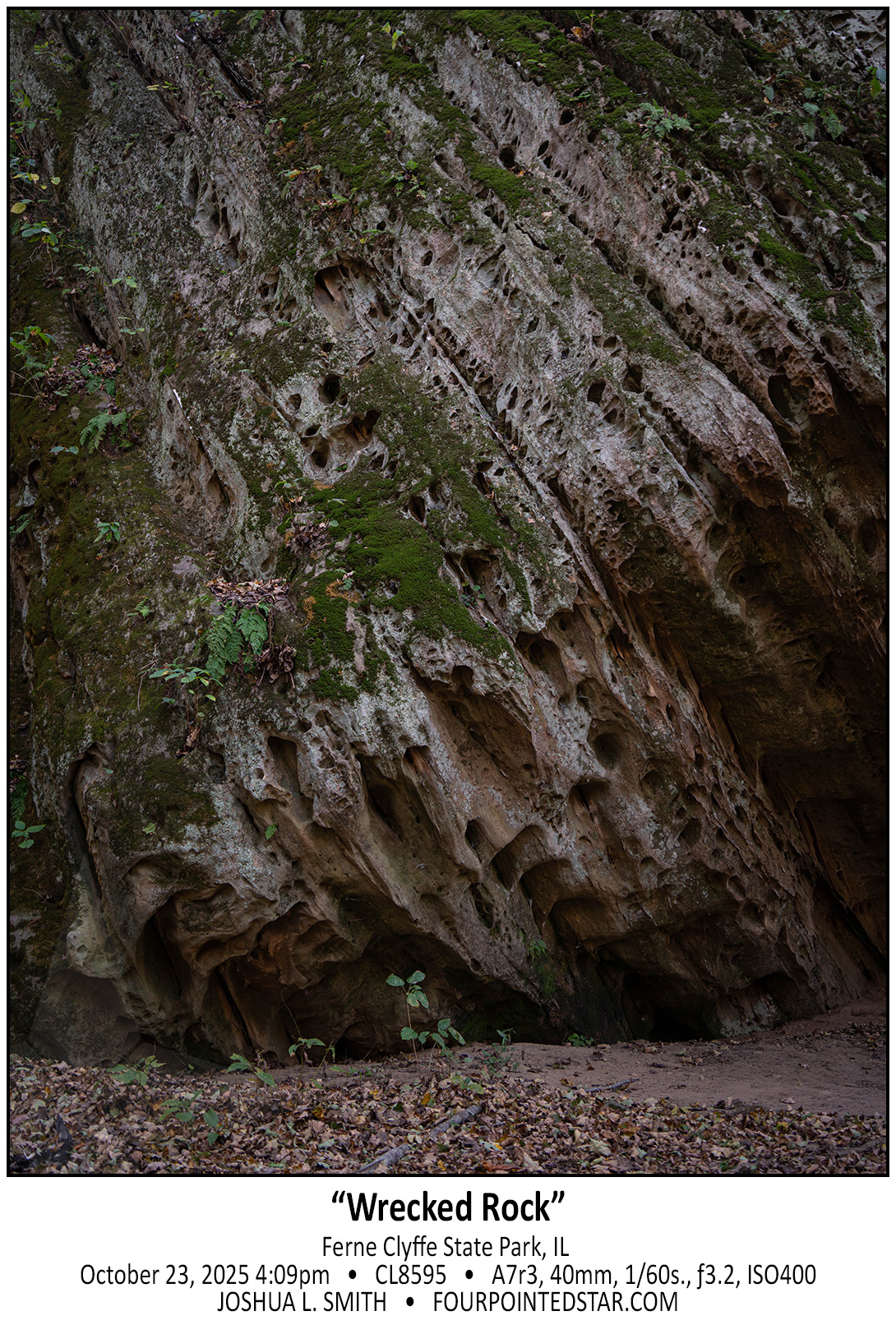
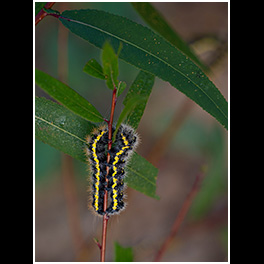
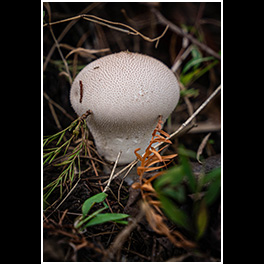
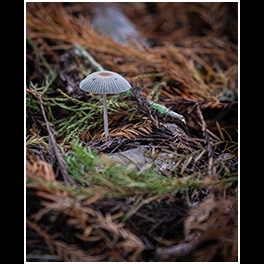
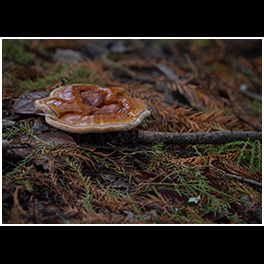
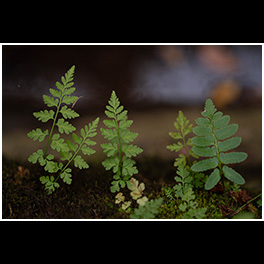
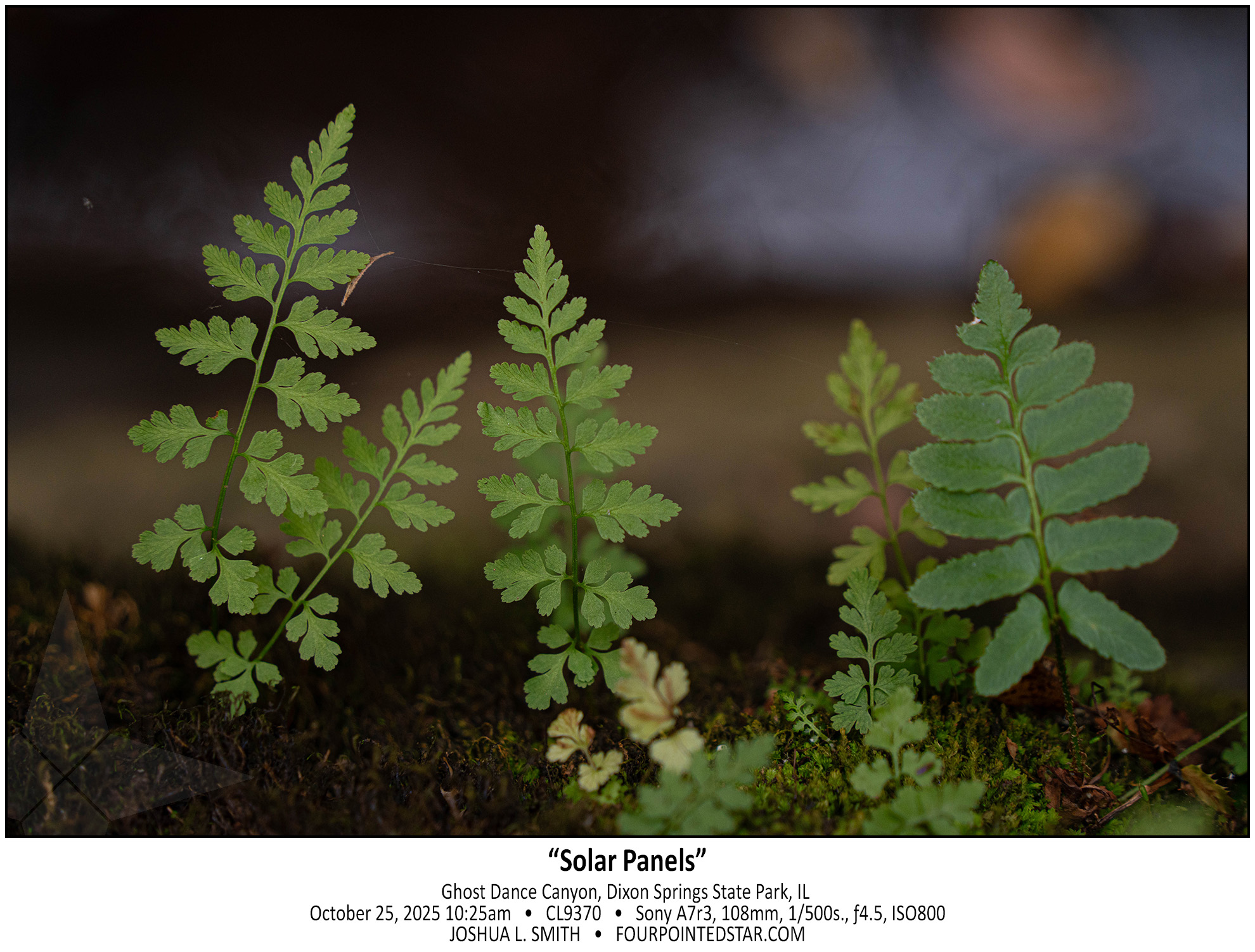
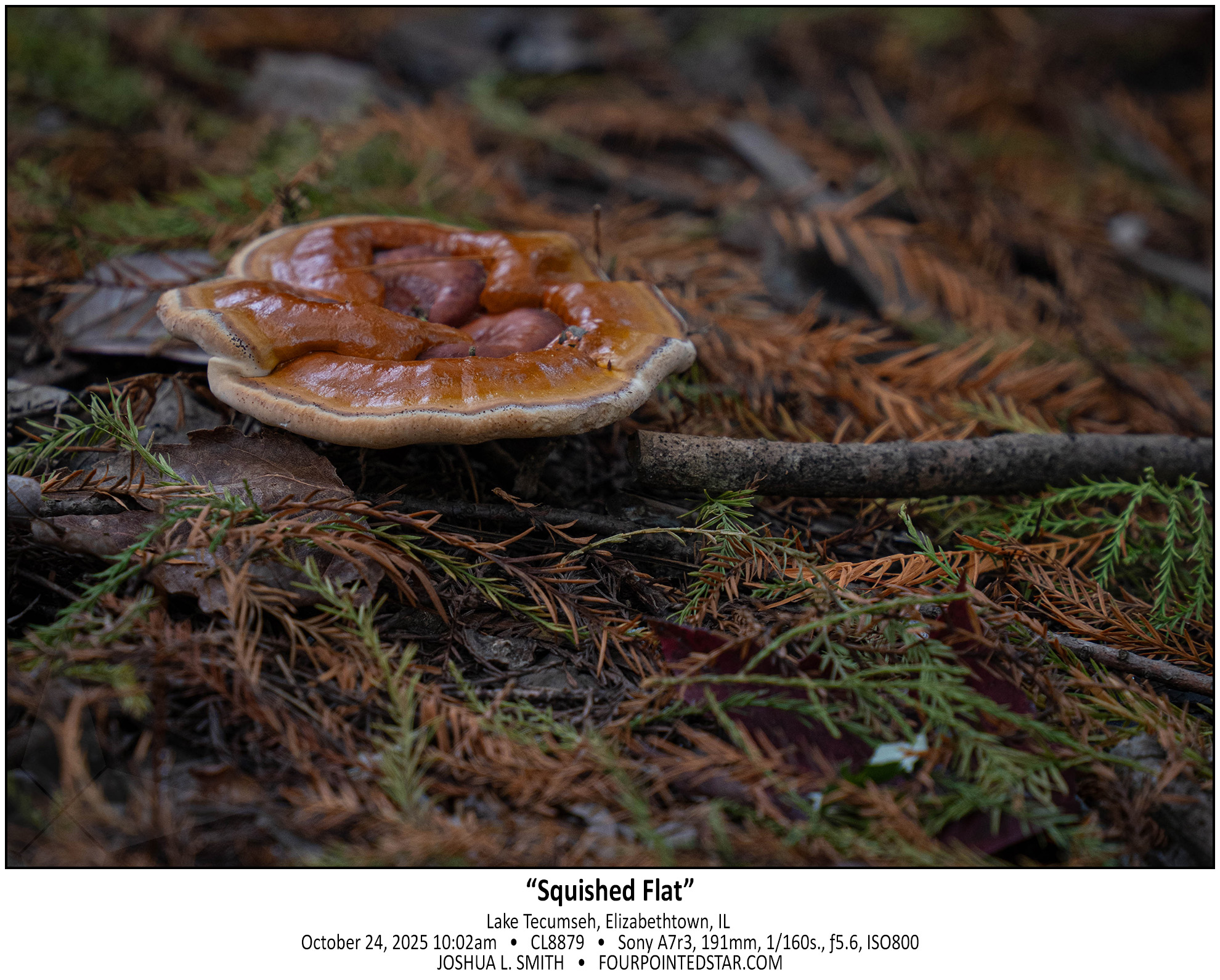
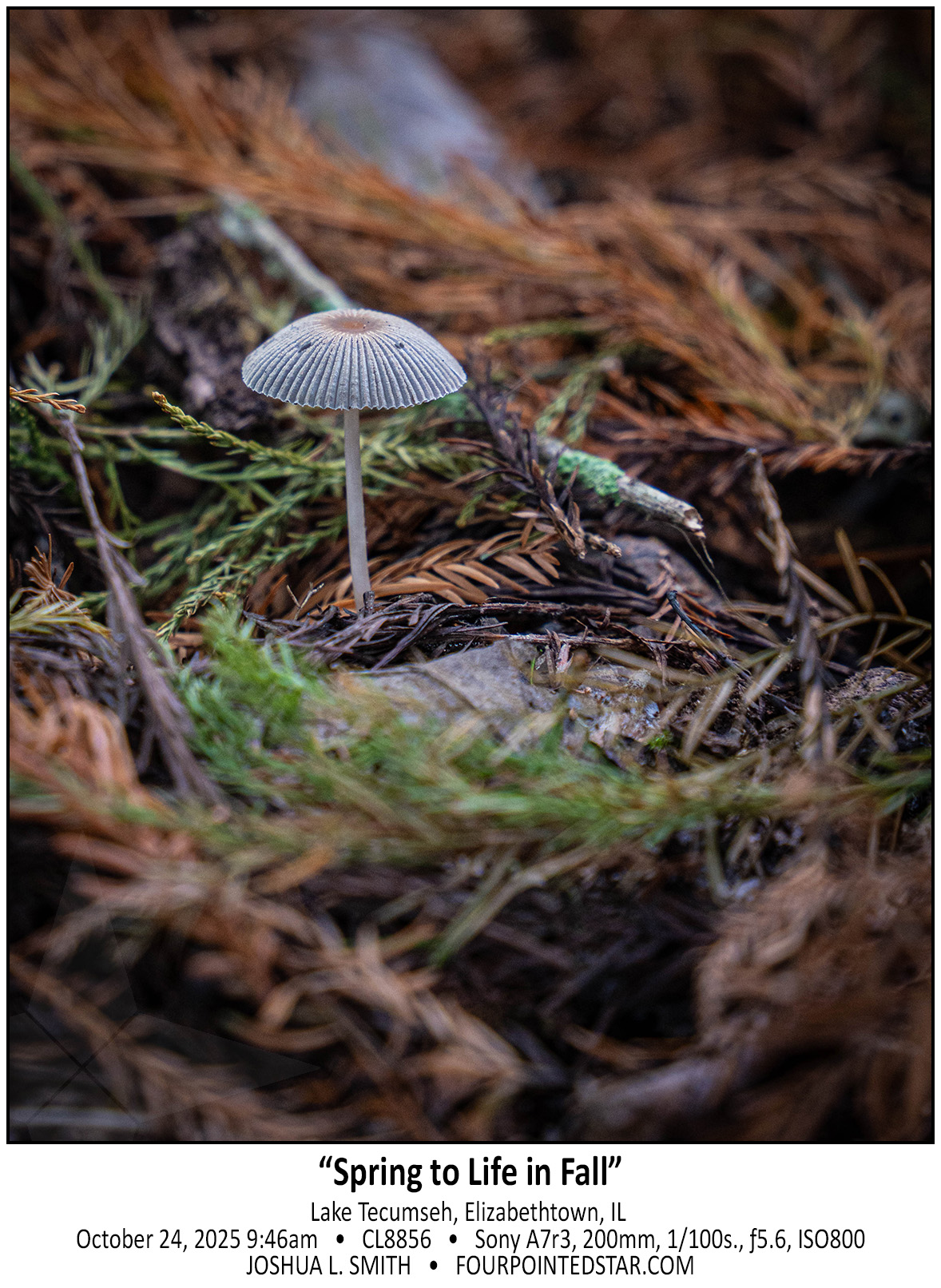
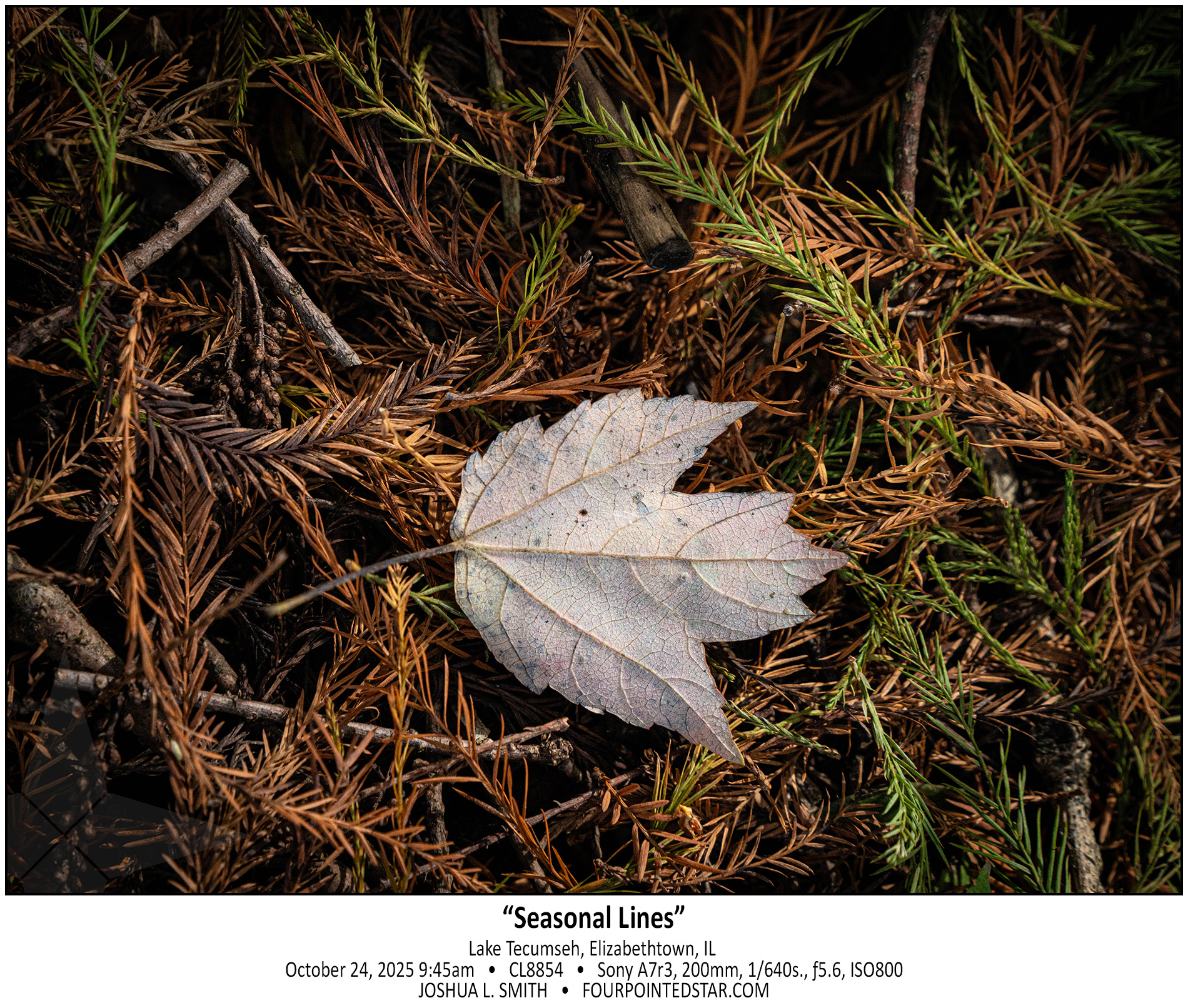
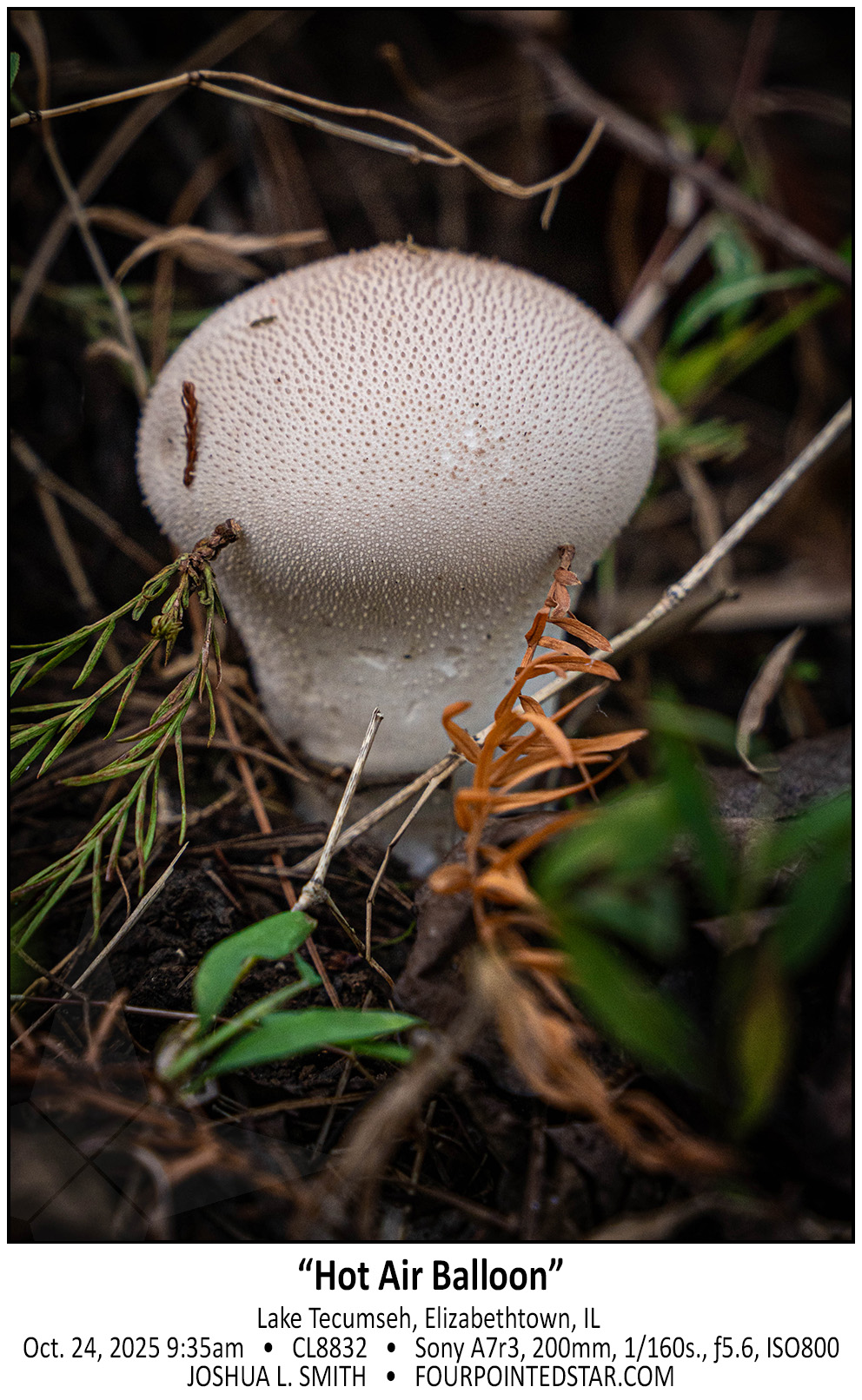
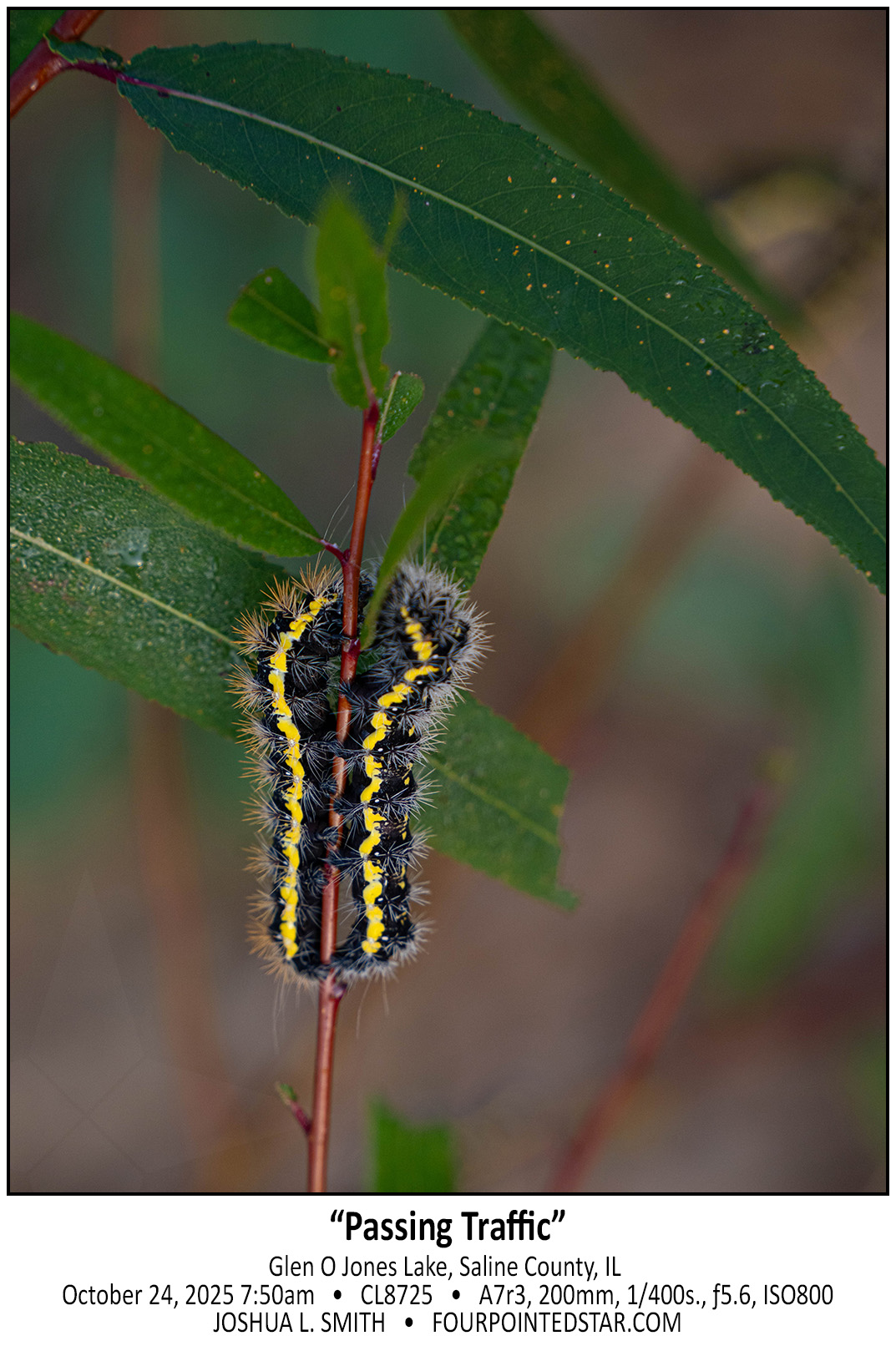
I love photographing mushrooms, and I was looking for mushrooms, but at our first stop I saw the small bush with so many caterpillars!  When I’m on a photo walk or trip, I often have to remind myself to stop and smell the roses of sorts; I’ll be so focussed on the waterfall that I’m hiking to or the reflections that I miss the other enjoyable elements that are around me … items like those fern fronds that so delicately extended from a massive stone.